
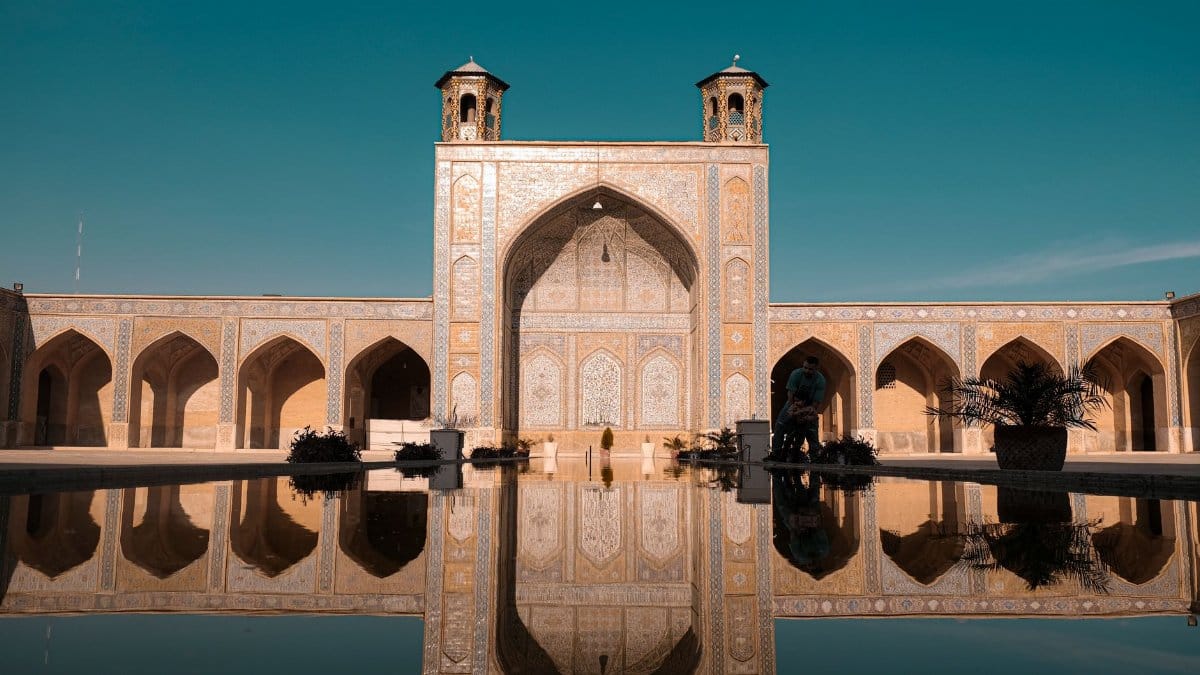
The lights stayed on late across central Tehran as motorcades threaded streets that have learned to read politics in the spacing of security cars. Regional officials said senior Saudi, Pakistani and Turkish delegations were in the capital on October 26, 2026, for Iran Tehran talks intended to keep a brittle pause from collapsing into renewed fighting with Israel and the United States. For families who measure danger by school closures and the price of fuel, the meetings were less a ceremony than a test of whether neighbors can still speak before weapons do.
A capital crowded with messengers
Tehran has hosted hard conversations before, yet this gathering carried a sharper edge. Officials described a sequence of meetings rather than a single grand session, with envoys moving between ministries and guarded guest houses. The point, according to people familiar with the planning, was to slow a slide toward confrontation while each capital still had room to climb down. That is a modest aim, and modesty may be the only realistic one.
The visitors did not arrive as a bloc with one script. Saudi Arabia came with the weight of a regional power that has spent years trying to lower the temperature with Iran after a long season of rivalry. Pakistan arrived with ties to both the Gulf and the wider Muslim world, plus a history of discreet mediation. Turkey brought its own channels to Washington, to Arab capitals, and to actors who rarely share a room. Together they formed a temporary corridor, not an alliance.
Why the calendar feels so short

The fear voiced in several capitals is not abstract. A single strike, a misread radar return, or a militia attack claimed by no state could restart a cycle that diplomacy then spends months trying to halt. Officials worry that commanders on more than one side have plans ready and political permission that could be granted in hours. In that setting, talks are a brake, not a peace treaty.
Residents in Tehran, Beirut, Tel Aviv, and Gulf cities have lived through versions of this suspense. Markets twitch at rumors. Airlines redraw routes. Parents keep children closer to home. The Iran Tehran talks matter because they sit inside that ordinary anxiety, not above it. If the envoys leave with only polite language, the street will notice before the communique does.
What each delegation is really asking

Saudi officials have an interest in shipping lanes, energy facilities, and a region that does not lurch back into open war just as investment plans depend on calm. Their message in Tehran, as described by regional diplomats, has been practical: restrain partners, avoid surprises, and keep a channel open even when public statements grow harsh. Riyadh does not need to love the Iranian system to prefer talks to burning infrastructure.
Pakistan’s role is quieter and, for that reason, useful. Islamabad can speak to Tehran without the baggage of a direct military rivalry in the Levant, and it can remind all sides that escalation rarely stays inside the borders drawn on briefing maps. Turkish diplomats, accustomed to hard bargains, have pressed for timelines. A promise to meet again means little if the next incident arrives first.
Messages aimed past the room
Everyone in those meetings understood that two capitals were not at the table and yet dominated it. Washington and Jerusalem will read any Tehran statement for signs of restraint or for signs of stalling. Iranian officials, for their part, want guarantees that talks with neighbors will not be used as cover for a strike while envoys are still in the air. That suspicion is old, and it is not baseless in a region where negotiations and military preparations often run on parallel tracks.
The Iran Tehran talks therefore function as a signal as much as a negotiation. A visible Saudi motorcade tells markets that Gulf states still believe contact is worth the political cost. A Turkish push for follow up meetings tells Washington that allies prefer a ladder down. Silence after the delegations depart would send the opposite signal, and adversaries are skilled at hearing silence.
The arguments that keep failing

Each side can recite the other’s provocations with weary precision. Iran points to sanctions, assassinations, and strikes on partners. Israel points to missiles, militias, and a nuclear program it calls an existential threat. The United States points to attacks on its forces and on shipping. None of those claims is new, and none is resolved by a weekend of meetings. What can change is the decision to answer the next incident with a larger one.
Diplomats who have worked these files describe a familiar trap. Public audiences demand strength. Military planners demand options. Negotiators are then asked to produce calm without the authority to trade away the very options their capitals advertise. The result is often a statement rich in verbs and poor in commitments. Observers in Tehran were watching for something plainer: a date, a channel, a promise not to widen the fight while that channel is tested.
Faith voices in a political storm
Away from the ministries, religious communities have tried to insert a different vocabulary into a crisis usually described in battalions and barrels. Mosque sermons, church statements, and rabbinical appeals in several countries have urged restraint, protection of civilians, and care for prisoners and the wounded. These voices do not set targeting policy. They do shape whether leaders can sell patience to people who have buried relatives.
In Tehran, pilgrimage calendars and neighborhood charities continue even when headlines scream. Clerics close to the state and clerics wary of it do not agree on foreign policy, yet many share a fear that another war would fall hardest on the poor. Similar fears surface in Israeli synagogues and in Lebanese parishes. A spiritual appeal will not stop a missile. It can make escalation politically costlier, which is a kind of leverage diplomacy sometimes forgets to count.
Households, ports, and the price of rumor
War talk shows up first in invoices. Insurers raise rates on vessels that pass near contested waters. Importers delay orders. Families in Iran, already squeezed by inflation and currency swings, hear that foreign visitors have arrived and wonder whether that means relief or a last warning. In Israel, reserve call ups and shelter drills turn an abstract threat into a rearranged week. In Jordan, Egypt, and the Gulf, officials watch refugee scenarios they hope never to open.
Business leaders rarely speak in the language of envoys, but their behavior is a poll. If flights remain scheduled and tankers keep their routes, the Iran Tehran talks will have bought time even without a signed paper. If insurers and airlines flinch, the meetings will be judged a failure by people who never read the communique. That is an unforgiving standard, and it is the one that matters to middle class households across the region.
What a useful outcome would contain

Seasoned mediators describe a short list. First, a direct channel that functions after midnight, not only during photo opportunities. Second, a shared understanding of which acts would be treated as a widening of the war. Third, a commitment to answer a limited incident with a limited reply, rather than with a regional demonstration. Fourth, a date for the next meeting that does not depend on a new crisis to justify the trip.
None of that requires public embrace or a grand bargain on the nuclear file, Lebanon, Gaza, or sanctions. Those arguments will outlast this week. The narrower task is to keep them from being settled by fire while talks continue. Iranian hosts can offer access and a controlled message. Guests can offer political cover for restraint in their own capitals. Both sides can fail that test while still praising dialogue in front of cameras.
The limits of neighbors as shields
There is a temptation to treat Saudi, Pakistani, and Turkish engagement as a substitute for decisions in Washington, Jerusalem, and Tehran. It is not. Neighbors can carry messages and raise the cost of a rash move. They cannot order a stand down by forces they do not command. If a principal actor has already chosen a strike for reasons of deterrence or domestic politics, hospitality in Tehran will not erase that choice.
Still, outside witnesses change the ledger. A government that widens a war after receiving senior guests must explain itself not only to enemies but to partners who spent political capital on the visit. That explanation may not stop the first blow. It can shape the second and the third, which is where regional wars usually become unmanageable. The guests know this, which is why they accepted the travel risk.
Reading the days after the motorcades leave

The useful test will come in the week after departure, not in the language of the closing remarks. Watch whether proxy attacks taper or multiply. Watch whether official media in each capital amplifies restraint or mocks it. Watch whether military exercises are postponed or showcased. Watch whether the promised channel actually answers when a minor incident appears, as one almost certainly will.
Journalists in the region have learned to distrust pageantry. A handshake can be real and still be useless. The Iran Tehran talks will earn a different judgment if they produce habits: calls returned, claims checked before retaliation, civilians treated as more than scenery in a deterrence script. Those habits are dull. Dull is what families are asking for.
A narrow opening, not a turning point
History in this region is full of openings that closed because someone needed a louder victory than the facts allowed. The delegations in Tehran cannot repeal that pattern in a series of meetings. They can refuse to feed it for a few more days, and then for a few more after that. Stacked carefully, days become a season in which hospitals are not overwhelmed and children stay in school.
That is a smaller headline than peace, and it is the honest one. Officials who briefed on the visits spoke of preventing renewed fighting, not of solving the quarrels that make fighting likely. If the Iran Tehran talks hold that line, they will have done the most that diplomacy can do in a week when the region is already on edge. If they do not, the motorcades will be remembered as traffic, and the lights left on in the capital will look like preparation rather than hope.