
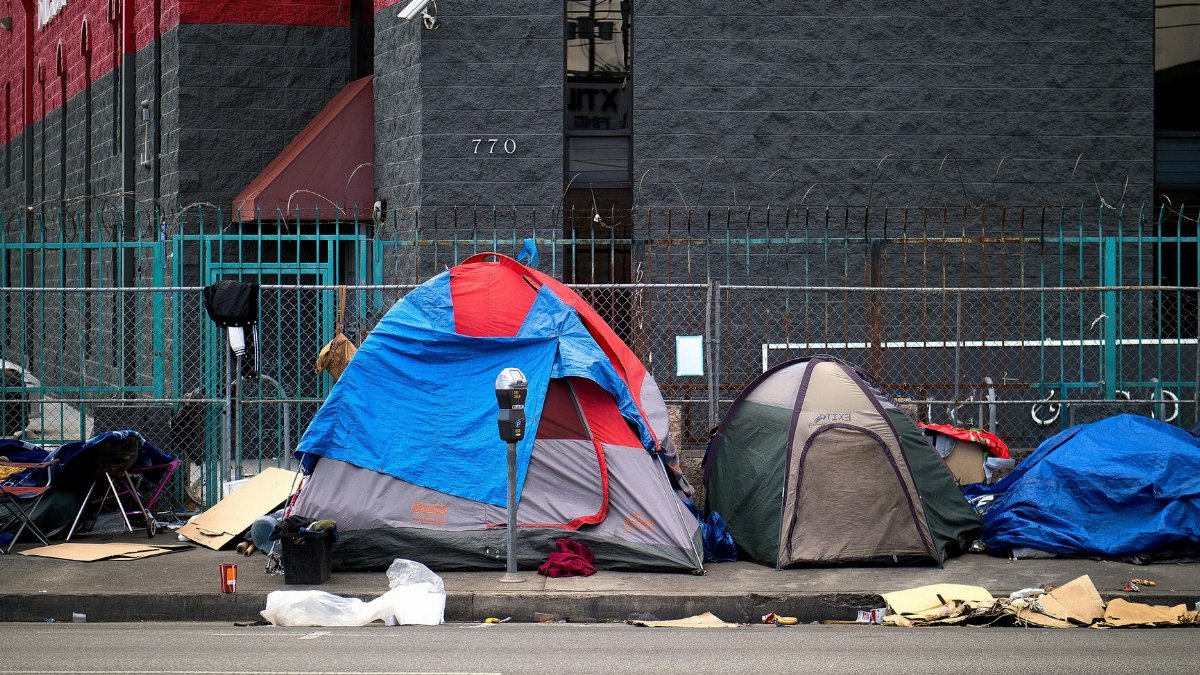
On a wet Tuesday morning in Pioneer Square, a caseworker knelt beside a shopping cart and asked a man whether he still wanted the room that had been held for him overnight. A block away, city crews waited with gloves and trash bags, unsure whether the sidewalk would be cleared by persuasion or by order. That small pause, more than any speech, captures the argument now gathering around Seattle homelessness clearings, and around a mayor who says the city has been moving people without a plan sturdy enough to keep them housed.
A slower promise from City Hall

Mayor Katie Wilson has told aides and neighborhood leaders that she wants a more deliberate approach. The phrase is plain, but the implication is large. For years, Seattle has treated removal of outdoor encampments as both a public safety tool and a humanitarian failure, depending on who is speaking. Wilson is not promising an end to removals. She is promising that removal will no longer be the first sentence in the city’s response.
Her plan, as described by people briefed on it, is to take an outreach model tested in Pioneer Square and stretch it across the city. In that pilot, workers say nearly 90 percent of people living outside in the target area accepted housing. The number is striking, and it will be tested by scale, by skepticism, and by the simple fact that a downtown block is not a hillside in West Seattle or a freeway shoulder in the north end.
What the Pioneer Square trial actually did

The model was less a slogan than a sequence. Outreach teams stayed with the same people for days rather than hours. Shelter and housing offers were specific, not theoretical. A bed with a known address beat a vague referral. Storage for belongings was arranged before anyone was asked to move. Medical appointments and identification paperwork were treated as part of housing, not as afterthoughts.
Neighbors noticed the difference in tone before they noticed the difference in numbers. Complaints did not vanish. Needles, noise, and fear did not vanish either. What changed was the sense that someone with authority was still present after the tents came down. In earlier waves of Seattle homelessness clearings, residents often watched the same corner refill within a week, and business owners learned to measure success in days, not months.
Why speed became the city’s habit
Seattle did not invent encampment removal, and it did not invent the anger that follows it. Complaints from parks, schools, and small shops piled up through the pandemic years and after. Elected officials answered with schedules, maps, and press releases. Crews became fluent in the logistics of notice, bagging, and hauling. The work looked decisive on a morning newscast. It was harder to show what happened to the person who had been sleeping there.
Advocates argued that a clearing without a real offer simply moved suffering to the next block. Some neighbors argued the opposite, that hesitation rewarded disorder and punished people who paid rent and taxes. Both arguments found evidence in the same streets. A deliberate policy has to live inside that argument, not above it.
The mayor’s bet on repetition

Wilson’s bet is that repetition, not novelty, is the scarce resource. The Pioneer Square teams returned. They learned names. They learned which offer a person had already refused, and why. A shelter that bars partners or pets is not an offer to someone who will not abandon either. A room across the city with no bus fare is not an offer to someone who has a clinic appointment at noon.
Expanding that patience citywide will require more than a memo. It will require caseworkers who are not rotated off a block the moment a camera crew leaves, and supervisors willing to report a delay when a delay is the honest result. Seattle homelessness clearings have often been judged by whether a site was empty by Friday. Wilson is asking the public to judge them by whether the people who left are still indoors a month later.
Housing that exists on paper

Outreach cannot conjure apartments. Seattle’s shortage of deeply affordable units is not a mood. It is a count of doors. Temporary shelters can stabilize someone for a night or a season. They cannot substitute for a lease. If the Pioneer Square figure holds only because a finite pool of units was steered toward one neighborhood, the citywide version will stall the moment that pool is shared with every council district.
City budget staff have been asked, according to people familiar with the discussions, to show which units can be reserved for people coming directly from the street, and which are already promised to other wait lists. That spreadsheet will matter more than any slogan. A deliberate clearing that ends in a lobby with no keys is indistinguishable, to the person holding the bag, from the old kind.
Business corridors and the demand for dates

Shop owners in Pioneer Square, the Chinatown International District, and along Aurora have heard versions of this promise before. Many support housing. Many also want a date. They want to know when a doorway will be passable, when a park restroom will reopen, when staff will stop walking guests around a cluster of tents. A policy that sounds humane in a briefing can sound indefinite at 7 a.m. when an employee cannot reach the back door.
Wilson’s team has tried to answer with geographic focus rather than a citywide sweep calendar. Concentrating teams, they argue, produces the 90 percent outcome. Scattering them produces press conferences. The political risk is obvious. Neighborhoods left off the early list will say they are being asked to wait while others are served. Neighborhoods on the list will say they are being used as a laboratory.
The people who do the asking

Outreach workers occupy an uneasy place in this debate. They are praised when someone accepts a room and blamed when someone does not. Their job is to offer, not to compel, and the law around compulsion is narrower than public anger often assumes. A person can refuse a shelter bed. The city can still enforce rules about blocking a sidewalk or camping in a park after notice, but the constitutional and practical limits are real, and law suits have shaped them.
Workers who spoke generally about the Pioneer Square effort, without wanting to be cast as spokespeople, described success as boring. It was paperwork, rides, second visits, and a willingness to hear no without treating no as the end of the file. If Seattle homelessness clearings are going to follow that pattern, the city will have to pay for boredom. Dramatic removals are easier to televise. Quiet persistence is harder to staff.
What changes on the morning of a removal

Under the approach Wilson describes, the morning of a removal would look different even if trucks still arrive. Notice would be paired with a named worker and a named destination. Belongings would be stored at a place the person can actually reach. People with acute medical needs would not be handed a generic pamphlet. If no appropriate bed exists that day, the city would have to say so, and decide whether enforcement still proceeds.
That last choice is where the policy will be judged. A mayor who never clears a dangerous site will lose the neighborhoods. A mayor who clears every site on schedule, regardless of offers, will reproduce the cycle she says she wants to break. Deliberate does not mean endless. It means the reason for moving someone is written down, and the next address is real.
Council, courts, and the public record

Any expansion will pass through the City Council, the budget, and possibly the courts. Council members represent districts with different pressures. Some will want metrics that include crime and cleanliness. Others will want metrics that include returns to homelessness within 30 and 90 days. Both sets of numbers belong in the same report. A policy that publishes only the flattering column will not survive a wet winter.
Legal advocates will watch whether notice is meaningful and whether property is handled lawfully. Business groups will watch whether timelines slip from weeks into seasons. Wilson’s credibility depends on letting those audiences see the same facts. Seattle homelessness clearings have suffered from dueling anecdotes. A public dashboard, updated often enough to be believed, would be a more adult instrument than another round of competing rallies.
The measure that will outlast the announcement

Nearly 90 percent is a powerful figure, and it should be treated as a claim to be audited, not as a banner. If the citywide expansion houses a similar share, Seattle will have earned the right to call its method deliberate. If the share collapses once the easy placements are used, the city will have learned that a pilot is not a system. Either result is useful. Only concealment is not.
The man with the shopping cart in Pioneer Square does not experience policy as a percentage. He experiences it as a room that is either waiting or not, and as a crew that either waits with him or moves him along. Mayor Wilson has asked the city to prefer the first scene. The streets will answer, block by block, whether Seattle homelessness clearings can finally mean a move toward a door rather than a move toward the next corner.