

What should a reader make of a morning when talk of negotiation and the sound of explosions arrive almost together? The phrase Kyiv missile attack peace talks names that collision with uncomfortable clarity. Reports described Russian strikes on the Ukrainian capital hours after the Kremlin signaled, in principle, that it would return to negotiations brokered by the United States. Early accounts put the human cost at one person killed and twenty two wounded. The numbers are small beside the scale of a war that has already remade a continent, and that is part of the problem. A limited toll can be mistaken for a limited message. Residents who spent the night in shelters do not experience it that way. They experience a state that can discuss peace and still choose the sky over their city.
A capital treated as a signal

Kyiv is not only a place where people sleep, work, and send children to school. It is the seat of a government Moscow has tried, and failed, to topple. Striking it sends a message that travels farther than any crater. It tells Ukrainians that distance from the front line is not safety. It tells foreign capitals that Moscow retains the ability to reach the political heart of the country it invaded. And it tells negotiators that battlefield pressure and diplomatic language are not sequential chapters. They are simultaneous instruments.
That is why a strike timed near a diplomatic opening feels less like chaos than like choreography. Even if commanders cite military targets, the political effect is plain. A capital under intermittent fire cannot pretend that talks have changed the weather. Air alerts, shattered glass, and a single death are enough to reset the emotional clock of a city that has learned to measure days by sirens.
Hours, not months, between promise and impact

The reported sequence matters because of its compression. Agreement in principle, then missiles and drones, then funerary arithmetic. Diplomacy usually asks for patience measured in weeks. This kind of news asks citizens to hold two facts in the same afternoon. One fact is that channels remain open. The other is that open channels did not ground the weapons aimed at their neighborhoods.
Historians of war will recognize the pattern without needing a new theory. States often talk while they fight, hoping talks will ratify gains or freeze losses. What feels newer, at least to many outside observers, is how public the contradiction has become. Social media carries both the diplomatic headline and the video of a burning roof before editors have finished their first paragraphs. The Kyiv missile attack peace talks framing is therefore not a slogan invented by commentators. It is a description of how the story now arrives, already joined, in a single feed.
What agreement in principle actually promises

An agreement in principle is a narrow thing. It is not a ceasefire. It is not a map. It is not a guarantee that the next night will be quiet. It means that a government has decided, for the moment, that sitting down costs less than refusing the invitation. The Kremlin’s reported willingness to resume talks brokered by Washington fits that narrow definition. It keeps a door visible. It does not obligate anyone to walk through it without conditions.
Ukrainian leaders have spent years arguing that talks without leverage become a ceremony of surrender. Russian leaders have spent the same years arguing that leverage is precisely what missiles provide. Between those positions sits a practical question for mediators. Can a process survive repeated demonstrations that one party will strike the other’s capital while the invitations are still warm? Process people like to say that talks are valuable even when they fail, because they map the distance between sides. People under fire tend to ask a blunter question. Valuable to whom, and on which night?
Civilians as the uninvited party

Peace talks are conducted by officials. Missile attacks are endured by everyone else. That asymmetry is easy to forget in coverage that lingers on statements from capitals. The wounded in a strike on Kyiv are not delegates. They did not vote on the timing of a diplomatic note. They become evidence in an argument they did not choose to enter.
I have watched, from a safe desk, how quickly casualty figures harden into symbols and how slowly they remain people. One death can be folded into a sentence. Twenty two injuries can be folded into a clause. The folding is a professional habit, and it is also a moral risk. A journalist’s job is not to inflate a limited strike into apocalypse. It is also not to let limited numbers launder the choice to hit a city. Scale and intent are different facts. Both belong in the story.
Drones, missiles, and the grammar of pressure
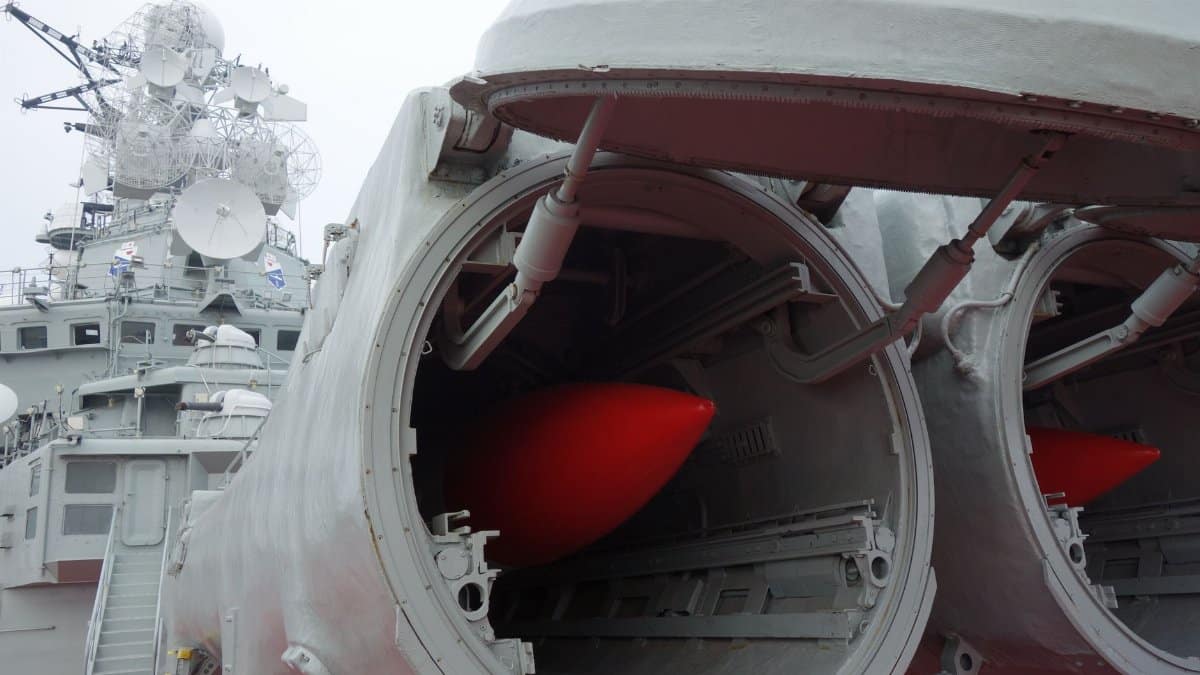
Reports of mixed attacks, missiles alongside drones, fit a method Russia has used throughout the war. Drones exhaust air defenses and attention. Missiles punch through what remains. The combination is technical, but its political grammar is simple. It says that the attacker can vary cost, tempo, and spectacle without abandoning the campaign. A night of drones can look like harassment. A missile that kills can look like a decision. Together they blur the line between routine violence and a message aimed at negotiators.
For Ukraine, the grammar has a defensive translation. Interceptors, shelters, and repair crews are part of statecraft now, as surely as communiques. Every drone that is shot down is a small argument that the capital can still function. Every missile that gets through is an argument that function is provisional. Peace talks do not retire that argument. They sit beside it, sometimes awkwardly, sometimes usefully, never instead of it.
Washington’s narrow corridor

The United States has tried, at different moments, to be armorer, diplomat, and audience for this war. Those roles do not always harmonize. A broker wants both sides to believe that sitting down is safer than staying away. An ally of the defender wants the defender to believe that sitting down will not be punished by abandonment. Moscow wants Washington to believe that pressure on Kyiv is the price of any deal.
A strike so close to a reported opening tests that corridor. If Washington treats the attack as noise, Ukrainian trust erodes. If Washington treats it as proof that talks are futile, the opening closes and the broker has nothing left but weapons and statements. Neither reaction is clean. The honest description is that mediation in an active war is an exercise in absorbing insults to the process without pretending the insults are harmless. The Kyiv missile attack peace talks problem is, in that sense, a test of whether American patience is a strategy or only a mood.
European stakes beyond the blast radius

Kyiv’s night is also a European morning. Energy markets, refugee politics, and defense budgets still move when the capital is hit, even when the strike is not the largest of the war. Governments that have argued for sustained support hear, in each attack, a reminder of why they made that argument. Governments that have grown tired hear a reminder of how long tiredness can last. Both hearings are available from the same facts. That is why a single episode rarely settles a debate in Berlin, Paris, Warsaw, or Brussels. It restocks the debate.
There is a spiritual dimension here that news pages sometimes rush past, though it is not separate from politics. Congregations, kitchens, and hospital corridors become places where people ask whether endurance is a virtue or a sentence. Prayer does not intercept a missile. It does, for many, refuse the idea that violence gets the last word about what a life is for. A broad public can acknowledge that refusal without turning a war report into a sermon. Meaning is one of the things civilians try to keep when buildings fail them.
Memory, repetition, and the risk of numbness

Repetition is the enemy of attention and the ally of the side that can afford more nights like this one. Readers have seen headlines in which Kyiv is struck, talks are floated, and the war continues. The danger is not that the latest episode is identical to the last. The danger is that similarity trains the eye to slide. When the eye slides, the specific hour disappears. The specific hour is the whole point of this story. Talks were not a distant rumor. They were, by the reported timeline, freshly affirmed. The weapons did not wait for the affirmation to age.
Journalism can resist numbness without resorting to inflated language. Name the sequence. Name the toll as reported. Name the uncertainty that always attaches to early figures. Refuse the consolation that a familiar war is therefore a comprehensible one. Familiarity is not comprehension. It is often the opposite.
What negotiators can still learn from a broken night

If talks resume, this episode will sit in the room whether or not anyone mentions it. Ukrainian delegates will hear it as evidence that paper promises do not stop launches. Russian delegates may hear it as evidence that they can negotiate from a posture of demonstrated reach. Mediators will hear it as a warning that calendar diplomacy, the habit of announcing meetings as if announcements were outcomes, has a short shelf life when cities are burning.
Useful talks, if they come, will have to survive that hearing. They will need verifiable restraints, not only atmospherics. They will need a definition of civilian harm that is not left to the attacker’s press office. They will need a public that can tell the difference between a process and a pause in rhetoric. None of that is guaranteed by the fact that someone agreed, in principle, to show up. Showing up is the start of a test, not the grade.
Reading the next headline with a clearer eye

The next dispatch will not settle the war. It may only add another data point to a pattern readers already know too well. Still, pattern is not fate. A capital can be struck and still host a functioning government the next day. A Kremlin can agree to talk and still order weapons into the air. An outside broker can keep a channel open without mistaking the channel for peace. Holding those possibilities apart is an act of civic literacy.
Kyiv missile attack peace talks will keep appearing as a cluster of words whenever violence and diplomacy share a news cycle. The cluster is accurate, and it is incomplete. Accurate, because the timing is the story. Incomplete, because behind the timing are shelters, repair crews, diplomats with limited leverage, and families who will not experience a principle as protection. The honest task, for writers and readers alike, is to keep the cluster from becoming a blur. One death remains one death. Twenty two wounded people remain twenty two lives interrupted. A promise to talk remains only a promise until the sky, for more than a few hours, agrees.