

On a week when Houston residents were still arguing about potholes, property taxes, and whether downtown feels safe after dark, City Hall took up a fight that reaches far beyond the horseshoe. The question was not abstract. It was whether local rules would keep city police at arm’s length from federal immigration agents, or pull them closer after the governor warned that state money could vanish. The ICE ordinance changes passed, and the vote now sits in the public record for anyone willing to look up a district and a name.
What the ordinance actually rewrote
For years Houston has lived with a careful local posture. Police could work with federal partners on serious crime. They were not supposed to become an extension of civil immigration enforcement. That distinction mattered to officers on patrol and to families who call 911 only when they trust the person who shows up.
The ICE ordinance changes tightened that posture. Council amended local policy so that cooperation with federal immigration authorities is harder to limit by city rule alone. Supporters described the rewrite as a clarification: Houston will not obstruct lawful federal work, and it will not risk a funding fight it is likely to lose. Critics heard something else. They heard a city stepping back from protections that kept traffic stops, witness interviews, and neighborhood complaints from turning into immigration encounters.
The text is less dramatic than the speeches. It does not hand Houston Police Department badges to Immigration and Customs Enforcement. It does narrow the space in which a mayor or a future council can draw a bright local line. In a council manager culture that already answers to state law, that narrowing is the point.
Why the governor’s threat changed the math

Governor Greg Abbott has spent months pressing cities and counties to align with state expectations on immigration enforcement. The leverage is familiar in Texas politics: grants, public safety funds, and the threat that Austin will treat noncooperation as a reason to withhold money. Houston’s budget is large, but it is not immune. Parks, streets, drainage, and police overtime all sit downstream of decisions made in the Capitol.
Council members who might have preferred a slower debate found themselves voting under a deadline that was political as much as legal. A funding threat does not have to be airtight to work. It only has to be credible enough that a no vote can be framed, in the next campaign mailer, as a vote to gamble with city services. Several members said as much in the chamber, even when they disliked the substance. The ordinance became a referendum on risk as much as on policy.
That is an uncomfortable way to make local law. It is also how intergovernmental conflict often ends in Texas, where the state holds the stronger statutory hand and cities hold the daily contact with residents.
Police work and the line officers already walk
Houston police have never been sealed off from federal agencies. Joint task forces on gangs, human trafficking, and major narcotics have included federal partners for decades. Those partnerships are popular with commanders because they bring resources the city cannot duplicate. They are also the part of cooperation that almost no one on council wants to unwind.
The harder cases are ordinary. A traffic stop. A call about a fight outside an apartment complex. A witness who is afraid to give a name. Under older local guidance, officers were steered away from asking about immigration status when it was not tied to a criminal investigation. The new language makes that steer less firm. It does not order officers to quiz every driver. It does tell them, and their supervisors, that city policy will not be the shield it once was if a federal agent asks for help that state or federal law already allows.
Union leaders and civil rights lawyers describe that shift in opposite terms. One side says clarity reduces hesitation in dangerous moments. The other says hesitation was the point, because hesitation kept civil enforcement out of routine policing. Both can be true in different calls on the same shift.
Trust in neighborhoods that already feel watched

In Gulfton, Aldine, and parts of the East End, the ordinance is not a procedural footnote. It is a story people tell each other about whether a stolen car or a domestic assault is worth a phone call. Pastors, clinic staff, and school counselors have been hearing the same worry for years, and it sharpened as the council date approached. Parents ask whether a traffic ticket can become a detention. Workers ask whether a job site raid will now find a more willing local partner.
Those fears are not evenly distributed across the city. In neighborhoods with high rates of violent crime, many residents want every lawful tool used against people who shoot, rob, or traffic. They do not experience federal cooperation as an abstraction. They experience it as a possible answer to a block that does not feel safe. Council heard both testimonies, often in the same hour, and the applause lines did not map neatly onto party labels.
Journalists who cover immigration enforcement in Texas have documented how rumor moves faster than statute. A policy change can suppress calls to police even when the written rule is narrower than the rumor. That is a public safety cost, and it belongs in the same ledger as any grant the city hopes to protect.
The chamber, the speeches, and the public roll
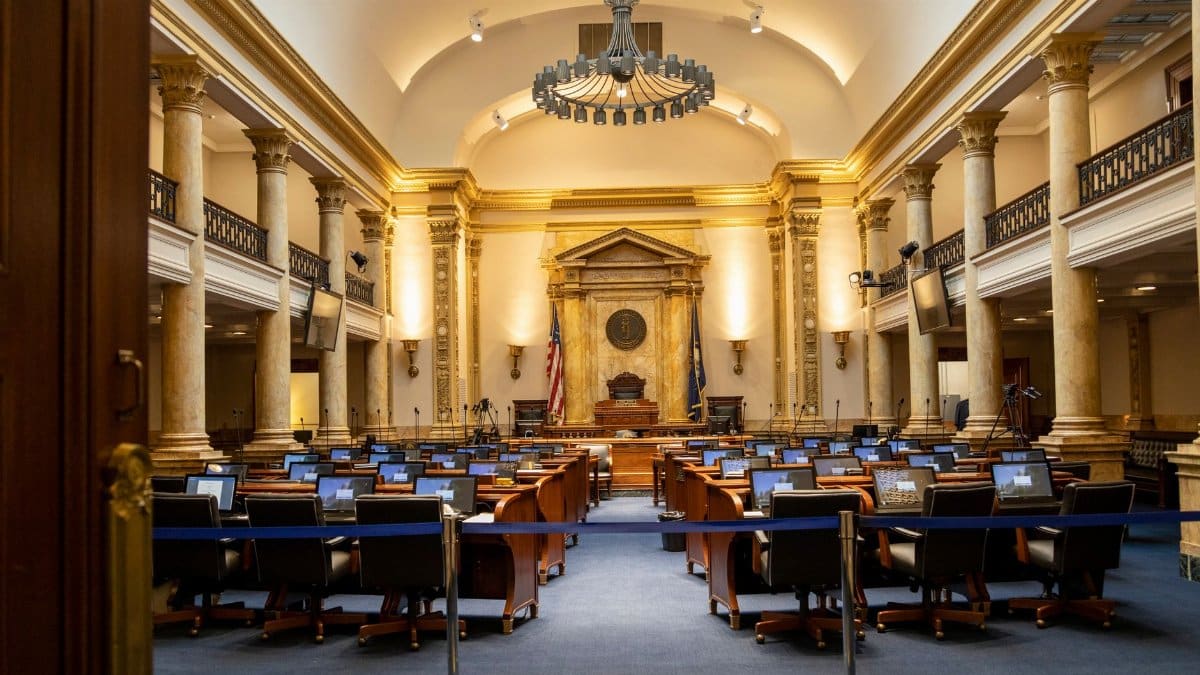
The Houston Chronicle published a member by member account of the vote, which is the right place to start if you want to see how your representative stood when the roll was called. The city secretary also posts agendas, backup material, and minutes. Those records are dull. They are also the only honest way to match a district to a decision. Campaign summaries and social media clips compress a long amendment fight into a single adjective.
What the floor debate showed, even without reprinting every remark, was a split over sequence. Some members wanted amendments that preserved limits on civil detainer style cooperation while accepting help on felony cases. Others argued that partial limits would still draw a state challenge and a funding threat. The majority chose the broader rewrite. Dissenters warned that Houston was trading a local value for a temporary peace with Austin, and that the peace would not last if the political weather changed again.
Readers should treat any shorthand of that vote with care. District boundaries, at large seats, and the mayor’s role in setting the agenda all shape what a single yes or no means. The ordinance text and the roll are public. Interpretation is not a substitute for either.
Money, grants, and what a threat can actually touch

Abbott’s warning was aimed at the purse. Texas cities receive state support for law enforcement equipment, training, certain traffic and criminal justice programs, and disaster related rebuilding that can linger for years after a storm. Not every dollar in the Houston budget is exposed. A large share of city spending is local property tax and enterprise revenue. Still, targeted grants matter to chiefs who are already stretching overtime, and to council members who do not want to explain a sudden hole in a public safety line item.
Legal scholars who follow state local conflicts note a pattern. The threat often arrives before a formal cutoff. The vote happens in that window. Later, courts may narrow what the state can withhold, or the Legislature may write a clearer penalty. By then the local ordinance has already moved. Houston chose not to be the test case. Whether that was prudence or preemption depends on whether you think cities should spend political capital on fights they are structured to lose.
Residents who want the dollar figure should look at the budget office and the grant list, not at a floor speech. The political number and the accounting number are rarely the same.
How this fits a longer Texas argument

Houston is not the first city pushed to revisit a so called sanctuary posture, and it will not be the last. State leaders have framed local limits on immigration cooperation as defiance of federal and state law. City leaders in Dallas, Austin, and San Antonio have answered, at different moments, that policing depends on trust and that civil immigration work is a federal job. Courts have drawn lines. Legislatures have redrawn them. The practical result is a moving target for chiefs and for council attorneys.
The ICE ordinance changes belong in that sequence, not as a sudden conversion. Houston under Mayor John Whitmire has already signaled a more cooperative public safety stance than some earlier city administrations. The ordinance is consistent with that direction. It is also a reminder that “local control” in Texas is real until it collides with a priority the state is willing to fund, sue, or campaign on.
For readers outside Houston, the lesson is structural. A council can write values into an ordinance. A governor with a legislative majority can make those values expensive. The residents who live with both are left to sort rumor from rule.
What immigrants and citizens both asked for

Public comment at City Hall rarely produces consensus. It does reveal what people think government is for. Speakers who favored the amendments asked for one standard: if federal law allows an arrest, local government should not invent a second standard that shields people accused of serious crime. Speakers against the amendments asked for a different standard: local police should solve local crime, and immigration status should not be the price of a witness statement or a victim report.
Both requests are moral claims dressed as policy. A city council cannot fully satisfy both, because they collide in the same patrol car. The honest debate is about where the collision is allowed to happen. Felony warrants and task force work sit on one side of that line for most Houstonians. Civil violations, workplace raids, and status checks during minor stops sit on the other. The new ordinance moves the city’s official voice toward the first camp and weakens its ability to police the second.
Churches and mutual aid groups will keep doing what ordinances do not do. They will tell people their rights, drive them to hearings, and try to calm panic that outruns the text. That work is not a substitute for clear policy. It is what communities do when policy feels like it was written for a different room.
How to read your member’s vote without the spin

Start with your district, not with a headline. Houston’s council mixes district seats and at large seats. Your district member and the at large members all cast votes that affect you. The Chronicle’s account of the ICE ordinance changes is built for that lookup. Cross check it against the city secretary’s posted action. If a member offered an amendment that failed, that amendment is part of the story of the vote, not a footnote.
Then ask what the member said the vote was for. Some framed it as protecting the budget. Some framed it as aligning with the law. Some framed a no vote as protecting witnesses and victims. Those frames are political speech. They are still useful, because they tell you what the member expects to defend in a town hall. A yes vote cast as reluctant budget protection is different, in a later election, from a yes vote cast as full endorsement of federal priorities. The roll call will not capture that tone. The video of the meeting will.
Avoid accounts that collapse sixteen members and a mayor into a single mood. Houston does not have a single mood on this subject. It has districts with different crime rates, different shares of foreign born residents, and different memories of the last storm and the last campaign.
What remains unsettled after the gavel

Passage is not implementation. General orders, training bulletins, and the habits of supervisors will decide what changes on a Saturday night. If the department treats the ordinance as a narrow legal cleanup, daily policing may look familiar. If supervisors read it as a green light to initiate contact with federal agents in a wider set of calls, the lived change will be larger than the preamble suggests. Council can ask for reports. It cannot sit in every roll call at every substation.
Lawsuits are possible, though the city’s choice to move toward the state’s position makes Houston a less likely plaintiff than a city that refuses. Advocacy groups may still test pieces of the policy, especially if an encounter produces a clear harm that a court can see. The more immediate test is statistical and human: whether crime reporting dips in immigrant heavy zip codes, and whether joint federal work on serious offenses actually increases.
Those measures take months. Politics will not wait. The next council campaign will treat this vote as a badge or a liability depending on the district. That is normal. It is also a reason to keep the underlying text in view, so the badge does not replace the policy.
A practical close for anyone still sorting the stakes

If you live in Houston, the useful next step is small and specific. Find your council member. Read the amendment, not only the recap. Watch the portion of the meeting where your member spoke, if they spoke. Then decide whether the ICE ordinance changes match the way you want local police to meet federal agents. That decision will not rewind the vote. It will tell you what to ask at the next town hall, and what you are willing to trade when the state raises the price of disagreement again.
City government is good at announcing clarity and bad at guaranteeing how a policy feels on a dark street. This one is no exception. The record of the vote is public. The consequences are still arriving, one call for service at a time.