
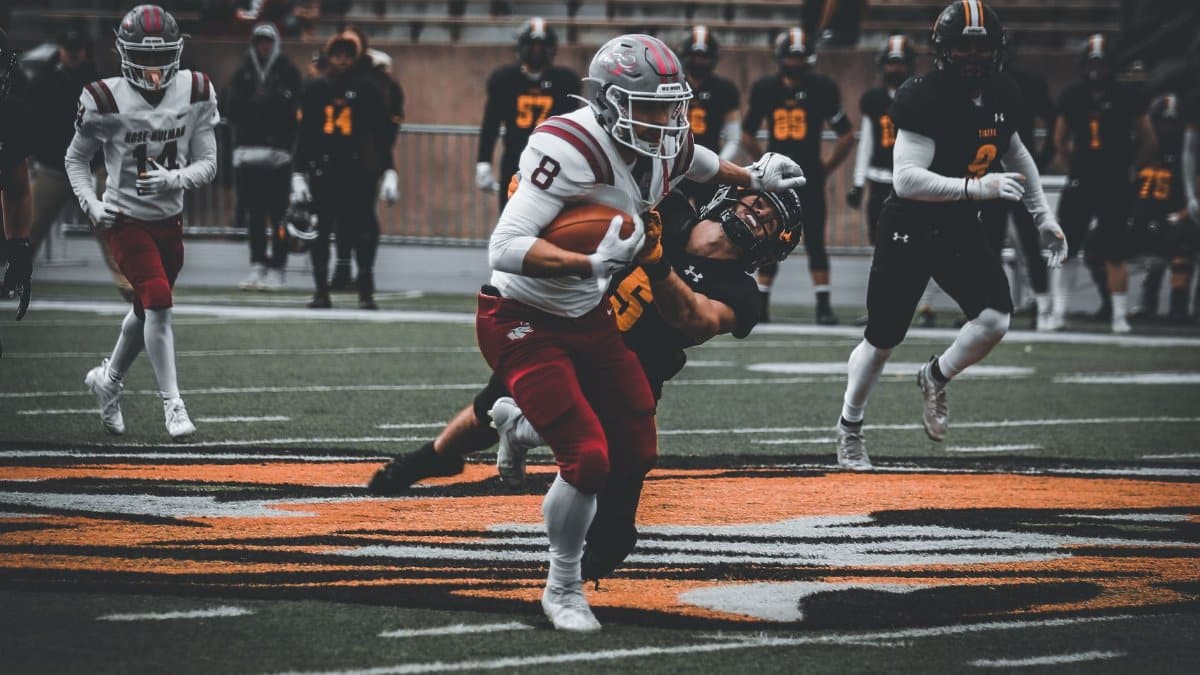
On a warm October night in North Texas, the first thing many households check is not the late news but a glowing list of final scores. Parents still in folding chairs, band students on buses, and coaches walking off the turf all wait for the same confirmation: who won, by how much, and what that does to a district race. Texas high school football turns those numbers into a public record that stretches from small towns to the largest enrollments in the country. Week 8 arrives when excuses thin out and the math of a season starts to harden. A missed extra point in one city can matter, inside its own conference, as much as a rout in a packed suburban stadium. The score is brief. The meaning rarely is.
A public ledger after the lights dim
By the time stadium speakers go quiet, the week has already become a document. Newspapers, league sites, and team accounts post finals in a rush that can last past midnight. Readers want more than a winner. They want the margin, the district mark, and a hint of whether a contender just stumbled. That hunger is not new, but phones have made it instant. A grandparent in another state can see a result before the team bus leaves the parking lot.
The danger is false certainty. Early posts get corrected. A game suspended by lightning may not have a final until the next afternoon. A private school traveling for a tournament may report later than a nearby public school. Anyone compiling Week 8 scores across Dallas Fort Worth and the rest of the state is really compiling a moving record, not a single stone tablet. The honest version says what is final, what is delayed, and what still needs a second look from an official scorer.
Why Week 8 carries extra weight

The University Interscholastic League calendar does not treat every Friday as equal. Early weeks sort talent and expose depth. By Week 8, many teams are deep into district play, where losses are harder to bury. A single defeat can reorder a tiebreaker. A win against a rival can steady a locker room that has spent two weeks arguing with itself.
Coaches talk about November, but October is where November is built. Playing time narrows. A sophomore who was a luxury in September may now be a necessity. Special teams, often treated as an afterthought in August, decide games that look even on paper. Fans who only glance at the final miss that story. The scoreboard shows the outcome. It does not show the punt that flipped field position or the penalty that erased a long gain.
Dallas Fort Worth as a score city

Few regions produce as many simultaneous games as Dallas Fort Worth. Suburban growth has filled Friday schedules with large public schools, smaller city programs, and private academies that draw from wide maps. A reader trying to follow one county can still face dozens of kickoffs. That density is why a regional roundup matters. No parent can be in three stadiums. A clear list lets a community see itself in one place.
The Dallas side and the Fort Worth side do not share one identity, even when they share a media market. Some towns treat a district title as the local holiday. Others measure success by whether a senior class finally beats a neighbor that has owned the series. Week 8 is often when those arguments get fresh evidence. It is also when traffic, ticket lines, and late meals become part of the sports story, because the games are social events as much as athletic ones.
Public leagues and private school circuits

A statewide score list that only covers one association is incomplete. UIL schools play under a classification system tied to enrollment, from the smallest rural programs to Class 6A. TAPPS and other private school groups keep their own districts, rankings, and postseason paths. Mixing those results without labels creates confusion. A win in one circuit is not a direct argument against a loss in another.
Readers still want them on the same page, and that desire makes sense. Families cross those lines every week. A cousin at a private academy and a brother at a public high school can both play on Friday. Texas high school football, in daily conversation, rarely pauses for organizational charts. Good score reporting should pause. It should name the league, the classification when it matters, and the district record beside the final. Context is not decoration. It is how a number becomes information.
How a result travels

The path from whistle to published score is less glamorous than the game. A sideline reporter, a team statistician, or a parent with a reliable habit sends the final. An editor checks spelling of mascots, which in Texas is its own skill. Someone confirms overtime. Someone else notices that a suspended game was wrongly marked final. Then the list goes live, and strangers argue with it.
Social media speeds the argument and sometimes improves it. A coach may correct a district record. A band director may note that weather delayed the third quarter. The same speed spreads mistakes. A transposed digit can change a blowout into a thriller or the reverse. For that reason, a Week 8 compilation should privilege official league reports and on site confirmation over the loudest post. Speed is a service. Accuracy is the service.
What the final hides

A 28 to 24 final can be a masterpiece or a collapse, and the score alone will not say which. Injuries vanish from the line even when they shape the next month. A starting quarterback who leaves in the second quarter may not appear in the public note. A running back who carries 30 times may be spent by Monday. College recruiters read film. Most neighbors read the number and build a story around it.
Weather belongs in that hidden layer too. Heat in early autumn still drains linemen. A sudden storm can shrink a passing game and reward a team that wants to run. Artificial turf and grass change footing. None of that excuses a loss, but it explains why two teams with similar talent produce an odd score. Journalism that only reprints digits flatters the illusion that sport is pure math.
Small towns and large enrollments

State conversation often drifts toward famous suburban programs. That drift is understandable and incomplete. In a Class 1A or Class 2A town, the Friday roster may include students who also work, play in the band, or drive long distances just to practice. A Week 8 win there can fill a cafe on Saturday morning. The population is smaller. The emotional share of the town is not.
Large schools face a different pressure. Depth is real, and so is anonymity. A contributor on a 6A roster can have a decisive night and remain unnamed in a short score note. Fair coverage does not pretend every game is a state semifinal. It does refuse the habit of treating small school results as trivia and large school results as the only news. Both are local news to the people who live them.
Parents, buses, and the long ride home

The score is public. The ride home is private. Win or lose, a bus becomes a classroom in manners. Some coaches ban phones until a talk is finished. Some players already know the district picture because a sibling texted it. Parents in a line of cars trade rumors that may be half right: a targeting call, a questionable spot, a star who will sit next week.
Those conversations shape how a community receives the published list. If the list is sloppy, trust thins. If it is careful, it can cool a rumor. High school sports writing at its best is a modest public service. It does not need inflated prose. It needs names spelled correctly, scores that match the official book, and enough context that a reader who missed the game can understand why strangers are still talking about it at lunch.
A shared ritual under ordinary lights

The assigned shelf for a story like this is sometimes spiritual news, which sounds odd until you watch a town arrange its week around one evening. People dress alike, stand at the same hour, sing, and treat a patch of grass as set apart for a while. That is not a church, and it should not be dressed up as one. It is still a ritual of belonging. For many teenagers it is the most structured community they will enter all week.
Texas high school football carries that weight unevenly. Some families are exhausted by the cost, the travel, and the fear of injury. Others find in the stands a neighbor they would not otherwise meet. Week 8 scores, read on Saturday, are the residue of that gathering. They tell who prevailed. They also hint at where people chose to spend their finite evening. A culture is visible in those choices, whether or not anyone calls the night sacred.
Reading the board without myth

Myth arrives quickly in this sport. A team that wins three straight becomes destined. A team that loses two straight becomes broken. Week 8 is a useful corrective, because the season is long enough to punish both stories. Upsets happen. So do steady, unspectacular marches that never produce a viral highlight. The mature reader looks for patterns: points allowed, turnovers, performance on the road, and whether a thin roster is finally showing wear.
Rankings and computer formulas can help, and they can also flatter the idea that a teenager’s night reduces to a rating. Use them as a map, not a verdict. Compare teams that actually share a district before comparing teams that share only a headline. And remember that a forfeit, a cancellation, or a game moved to Saturday changes the emotional week even when it barely changes a list.
What a careful roundup owes readers

A comprehensive Week 8 score story owes readers three things: breadth, labels, and humility. Breadth means UIL and private circuits, not a handful of famous names. Labels mean league, location, and district status where space allows. Humility means marking late games as late and corrections as corrections. Anything beyond that, including player heroics and coaching disputes, belongs in reported articles with named sources, not in a bare score line.
This account does not pretend to replace the official book or a newsroom scoreboard updated from the field. Inventing finals would betray the very readers who stay up for the truth. The useful companion is a method: check the league, check the time stamp, and treat Texas high school football numbers as claims that can be verified. The games are real. The obligation to get them right is real too.
After the whistle, before the next kickoff

Saturday morning is for film, ice, and a quieter kind of pride or regret. By Sunday, coaches are already installing a plan for the next opponent. Players who starred may be sore. Players who struggled may be desperate for another chance. The published scores remain, a thin public memory of a loud night.
Week 8 will be overtaken by Week 9, then by the sharper air of the postseason. Some of these results will be forgotten even by the people who cheered them. A few will be cited for years, the night a program turned or a senior class finally won the game it had circled. Until then, the fairest tribute is ordinary accuracy. Say what happened. Say who was playing under which banner. Leave the legend for later, when the tape and the record still agree.