
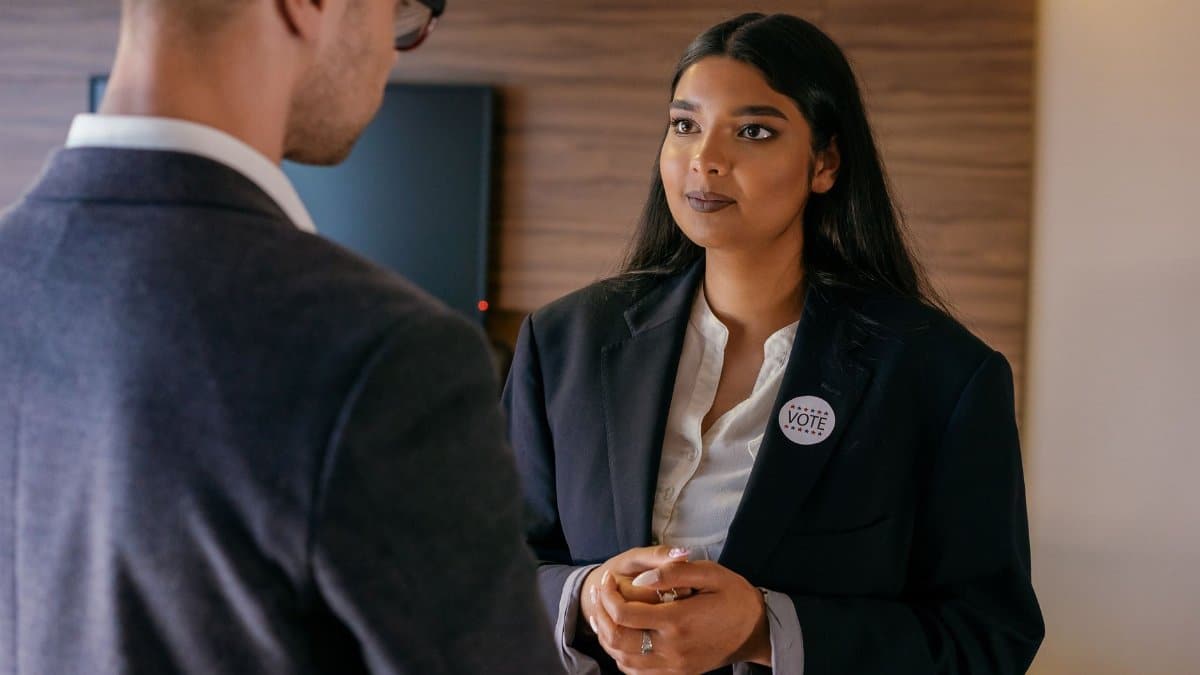
On a bright weekday morning in Pinecrest, butter, coffee, and conversation did more political work than any podium. House Democratic Leader Hakeem Jeffries Miami voters might not have expected between trays of pastries, yet there he was, standing with Eliott Rodriguez at a neighborhood bakery and talking about a House seat Republicans have held through several cycles. The stop was small, almost ordinary, which was the point. In a district where margins are measured in blocks rather than slogans, a counter can be a better stage than a hotel ballroom. People came for breakfast and stayed long enough to hear two Democrats argue that the next Congress will be decided in rooms that do not look like Congress at all.
A visit built to feel ordinary
Campaigns love the photograph of a national figure shaking hands under fluorescent lights. They love it less when the room is quiet and the questions are specific. The bakery stop was designed to look unscripted, even if every campaign stop of this kind is planned down to the parking and the greeting line. Jeffries did not arrive to unveil a new bill. He arrived to put his stature next to a local candidate and to tell donors, volunteers, and skeptics that Florida’s 27th Congressional District is not a lost cause on a spreadsheet.
That message matters because national leaders ration their time. A morning in southern Miami Dade is a morning not spent in a safer district or a fundraising city with easier checks. Choosing Pinecrest signaled that party strategists see a path, or at least a fight worth the airfare. It also signaled something softer: that Democrats want this race to feel rooted in daily life, not imported from Washington talking points.
Why a bakery can outperform a rally
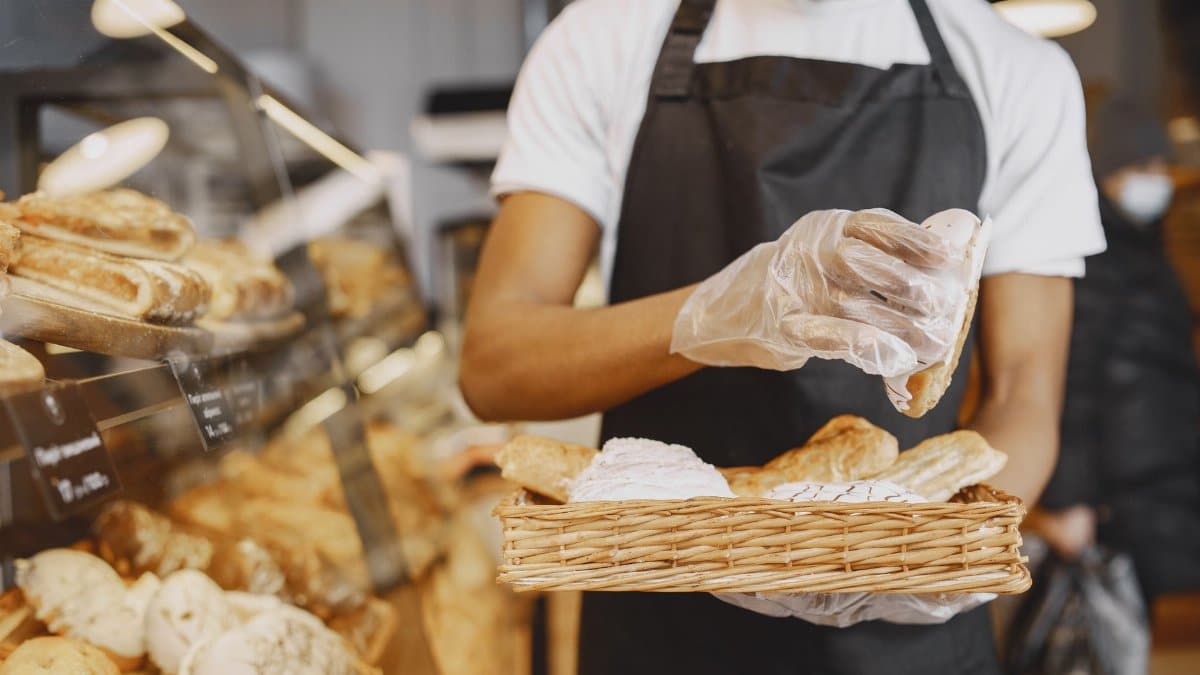
Large rallies reward volume. Bakeries reward recognition. Regulars know who baked the bread, which table fills first, and which neighbor will argue about traffic before politics. A candidate who can stand in that room without rushing the line earns a kind of permission that a television ad cannot buy. Rodriguez, campaigning beside the House Democratic leader, needed that permission more than he needed another generic endorsement graphic.
Food has always been a civic technology in Miami. People settle disagreements over coffee. They introduce candidates the way they introduce cousins. A political visit that respects that rhythm has a chance to be remembered as a conversation rather than an intrusion. The risk is the opposite memory: a famous visitor who treats the counter as a backdrop and leaves before the coffee cools. From the accounts that followed the morning, the stop was meant to avoid that mistake, with time for greetings and local questions rather than a sprint to the airport.
The seat Democrats want back

Florida’s 27th stretches across communities that do not share a single political mood. Parts of the district reward incumbency, bilingual outreach, and a reputation for constituent service. Other pockets shift with national mood, housing costs, and frustration with whoever holds the White House. Republicans have treated the seat as winnable territory in recent cycles, and Democrats have treated it as a regret, a place where organization lagged behind demographics that once looked friendlier on paper.
Paper is a poor guide in Miami. Ancestry, language, church, small business ownership, and memories of governments left behind all cut across party labels. A voter can dislike a Republican president and still trust a Republican member of Congress who returns calls about a passport or a flooded street. Any challenge has to answer that practical test before it can ask for a partisan conversion.
Eliott Rodriguez and the local test

National attention can lift a candidate or swallow one. Standing next to Hakeem Jeffries gives Rodriguez a photograph that donors understand and a signal that the party’s leadership is not treating the race as a courtesy mention. It does not give him the harder asset: a reputation among people who will see his name on a ballot beside a known incumbent. The bakery was useful precisely because it put the lesser known figure in a room where fame is secondary to manners.
Voters in a district like this often ask a blunt question. Will this person be here in February when there is no camera, or only in October when there is? A morning appearance cannot answer that. It can start the answer. If Rodriguez uses the visit as a spark for repeated presence in the same neighborhoods, the photograph ages well. If the visit becomes the campaign, it ages into a poster.
What Jeffries brings that a local race cannot buy

The minority leader, or majority leader depending on the chamber’s balance in a given Congress, carries three things into a local race: attention, money gravity, and a frame. Attention brings reporters who might otherwise skip a bakery. Money gravity tells allied groups that this district belongs on a target list. The frame tells activists that the fight is about the House itself, not only about one member’s record.
There is a cost to that frame. Nationalizing a Miami race can flatten the issues people actually raise at a counter: insurance premiums, rent, small business permits, school crowding, and the feeling that Washington speaks about Florida more than it listens to it. Jeffries has spent years arguing that Democratic power depends on places party elites once wrote off. A Pinecrest morning fits that argument only if the local candidate keeps the issues local after the leader leaves.
The Republican advantage of familiarity

Incumbency in the 27th is not an abstraction. It is name recognition built through Spanish language media, community festivals, and casework. Republican campaigns in Miami have often been better at treating politics as a relationship business. They show up at the same events for years, not only when a wave looks favorable. Democrats who want the seat have to match that stamina, not merely match a poll in a good month.
A visit from party leadership can unintentionally highlight the gap. If the most famous Democrat in the room is a visitor from New York, some voters will conclude that the local operation still needs a guest star. The counterargument is equally available. Serious parties send their leaders where they intend to compete. The distinction will be settled by what volunteers do on weeknights after the pastries are gone.
Language, trust, and the room

Miami politics punishes candidates who treat bilingual life as a costume. People notice who can follow a conversation without a handler, who laughs at the right moment, and who reduces a community to a demographic slide. A bakery in Pinecrest is not a monolith. Customers may speak English, Spanish, or both, and they may resent being addressed as a bloc. The successful campaign stop is the one that sounds like the room rather than like a translated press release.
Trust also has a moral register that has nothing to do with partisan scripture. People want to know whether a candidate will tell them an inconvenient truth about taxes, crime, or migration without sneering at their family history. That is closer to pastoral attention than to messaging discipline, which may be why a small food business can feel more honest than a staged town hall. Nobody confuses a croissant with a sacrament, but they do notice who stays for the second question.
Money, maps, and the temptation to overread one morning

Outside groups will read the visit as a data point. If leadership shows up, advertising reservations may follow. If advertising follows, the race becomes more expensive, and expensive races attract still more outside argument. That cycle can help a challenger become known. It can also bury a challenger under ads that have little to do with Pinecrest and everything to do with national grievance.
Maps tempt the same overreading. A district drawn to be competitive on a computer can be stubborn in person. Turnout in off year specials, presidential years, and midterms does not behave like a single electorate wearing different hats. Democrats who celebrate a bakery photograph as proof of momentum are doing the same wishful math Republicans sometimes do when a national figure lands for a fundraiser. Momentum is a series of unglamorous weeks, not a single morning.
Voters who are tired of spectacle
Many middle aged readers in this region have lived through enough campaign seasons to distrust theater. They have seen leaders promise transformation and deliver gridlock. They have watched local problems, from housing costs to insurance, outlast every headline. For them, the relevant question is not whether Hakeem Jeffries can draw a crowd. It is whether either party will treat their household budget as more than a talking point.
That fatigue is not apathy. It is a filter. People still vote, still argue, still bring relatives to the polls. They simply grant less credit for arrival. A politician who understands that filter will spend less time announcing presence and more time explaining a concrete vote: on health costs, on flood resilience, on the rules that govern a small employer. The bakery is a fine place to begin that explanation. It is a poor place to end it.
The press and the photograph

Local coverage, including reporting in the Miami Herald on the Pinecrest stop, does a service when it records who showed up and what they claimed the visit meant. It does a greater service when it tests those claims against the district’s recent results and against the incumbent’s record. A campaign wants the image. A reader wants the context. Those interests overlap only partly, which is why a short item about pastries and politics can matter more than its length suggests.
Journalists also have to resist the lure of treating every leader visit as a turning point. Most are not. Some are genuine markers that a party has moved a race from wish list to work plan. The honest article holds both possibilities without pretending a counter conversation is a poll. Readers in Miami are perfectly able to enjoy the scene and still ask who is paying for the next mailer.
What the coming months will actually test

The test for Rodriguez is repetition. Can he return to the same blocks, in more than one language, with answers that survive a follow up? The test for Democratic leadership is consistency. Will Hakeem Jeffries Miami attention remain when the calendar gets crowded with closer races and louder donors? The test for Republicans is complacency. A seat held is not a seat owned, especially if voters decide that familiarity has curdled into inattention.
None of those tests will be graded at a bakery. They will be graded in volunteer shifts, in debates that few people watch live, and in the private calculation a voter makes while holding a sample ballot. The morning in Pinecrest was a preface. Prefaces matter only if the book is written.
A small room with a large implication

House control is often described as a national drama of leaders, whips, and televised clashes. The more accurate description is a sum of local permissions. Each permission is granted or withheld by people who may never watch a leadership press conference. When Hakeem Jeffries Miami campaigning takes the form of a bakery visit with Eliott Rodriguez, it is an admission of that arithmetic. Power in the House is downstream of rooms that smell like coffee.
That admission should humble both parties. It should also clarify the work. If Democrats want the 27th, they will have to earn it the way Miami has always required politics to be earned: in person, over time, without assuming that a famous guest finishes the argument. If Republicans want to keep it, they will have to remember that incumbency is a responsibility, not a charm. The pastries will be forgotten. The standard the morning implied will not.