
On a January morning along the Rock Island District, the usual soundtrack is diesel: a low rumble, a sharp horn, a plume that hangs in the cold air above the tracks. Riders shift their weight, check phones, and board cars that have looked much the same for decades. That familiar ritual is what makes the next chapter feel so abrupt. Metra is preparing a Metra battery train for this line, a sleek electric set meant to run without overhead wire and without the smoke riders have learned to ignore. If the schedule holds, passengers could see it in regular service in 2028, the first battery powered electric passenger train of its kind in the United States.
A railroad that still smells like the last century
Metra carries hundreds of thousands of people on a good day across eleven lines that fan out from downtown Chicago toward suburbs, mill towns, and prairie edges. Much of that network still depends on diesel locomotives hauling bilevel coaches, a pattern set long before anyone talked seriously about tailpipe rules in a rail yard. The cars are sturdy. They are also loud, slow to accelerate, and expensive to keep in the condition riders expect after a hard winter.
The agency has spent years talking about modernization while patching an older fleet. Electrification, the classic answer in cities that strung wire a century ago, is costly and politically heavy. Stringing catenary over the Rock Island District would mean years of construction, new substations, and arguments over poles, clearances, and who pays. A battery set offers a different bargain: electric performance on tracks that remain, for now, unwired.
Why the Rock Island District came first

Not every Metra line is a natural laboratory. The Rock Island District runs from LaSalle Street Station south and southwest toward Joliet, through neighborhoods and suburbs that know the railroad as a daily fact rather than a novelty. Distances and station spacing on parts of the route fit a train that can charge at terminals or at selected points and then run on stored energy. Planners like a line where a new train can be seen, timed, and judged without rebuilding the entire map.
There is symbolism in the choice as well. This is not a showcase loop for tourists. It is a working railroad for people going to jobs, classes, hospitals, and ballgames. If a battery train cannot earn trust here, it will not earn trust anywhere else in the system. That is a harder test than a press event, and it is the right one.
What the Metra battery train is meant to do
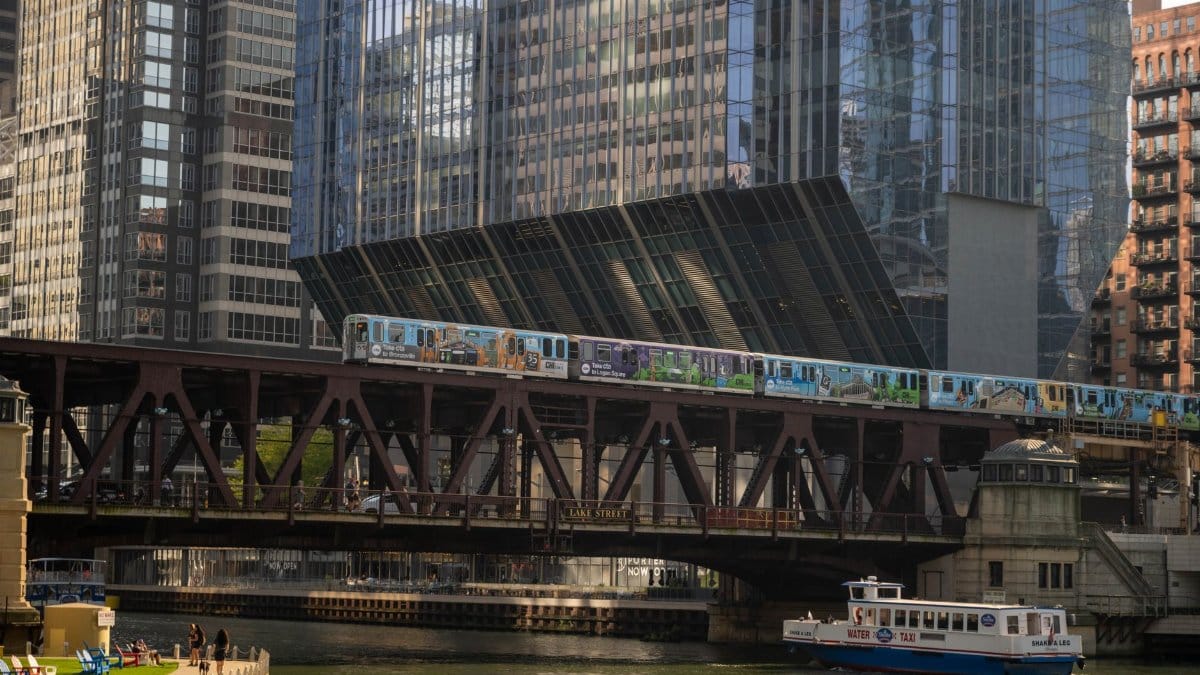
Strip away the renderings and the idea is plain. Motors draw power from large battery packs instead of a diesel engine under the floor or in a separate locomotive. At a yard, a terminal, or a charging point, the train plugs in or connects to a fixed supply and refills. On the road it is quiet, quick off the mark, and free of the exhaust that drifts into stations when a locomotive idles. Regenerative braking, already familiar on modern transit cars, can put some of that stopping energy back into the packs.
None of this is science fiction in Europe, where battery electric multiple units already carry passengers on lines that are only partly wired. What would be new is the American commuter context: bilevel expectations, harsh winters, union rules, federal safety oversight, and a public that measures success in minutes saved and seats that are clean. The Metra battery train has to clear those tests, not merely look modern in a photograph.
A fleet decision hiding inside a single train
One train does not transform a railroad. Leaders at Metra have framed the project as a first move in a larger shift, a way to learn before committing the capital budget to a family of similar cars. That is prudent. It is also a way of admitting how slowly American passenger rail changes. A locomotive ordered today may still be hauling coaches when the children of current riders are buying houses. Choosing batteries is a bet that the next generation of equipment should not lock the region into diesel for another forty years.
The bet has a price. Batteries add weight. They need thermal management in a Chicago August and a Chicago January. They degrade. They must be replaced on a schedule that finance staff can defend to a board. Charging equipment has to be built, staffed, and kept reliable when a storm knocks out power across three counties. A railroad that treats the first set as a mascot will learn the wrong lesson. A railroad that treats it as a prototype with a public timetable might learn the right one.
Riders who left and might come back
Commuter rail in Chicago, as in other big cities, is still living with the aftereffects of the pandemic. Downtown office towers are fuller than they were in the bleakest months, but the five day pattern that once filled morning expresses has thinned. Midday, evening, and weekend trips matter more. A train that is cleaner and more frequent can matter on those trips in a way a faster peak express no longer does.
People do not ride a technology. They ride a promise: that the 7:42 will be there, that the car will not be freezing, that the trip will beat the Kennedy when the Kennedy is a parking lot. If the new train is late because a charger failed, the story writes itself, and it will not be kind. If it is on time and noticeably calmer, riders will do the marketing without being asked. That is the only campaign that has ever really worked on these platforms.
Money, grants, and the politics of a quiet car
Battery trains arrive with a stack of justifications that appeal to different audiences. Climate advocates see a cut in diesel emissions on a corridor that runs through dense communities. Suburban officials see a chance to claim a modern service without waiting for a full electrification program that may never be funded. Federal grant programs, shaped by recent infrastructure law, have favored projects that can show emission cuts and domestic supply chain plans. Metra needs those outside dollars. Fare revenue alone will not buy a new kind of train.
The politics are less sleek than the exterior. Every dollar aimed at a pilot is a dollar not spent on bridges, catenary repairs on the already electric line, or the plain work of replacing cars that are simply old. Riders on lines that will not see a battery set for years are entitled to ask whether they are funding someone else’s photograph. An honest agency says yes, in part, and explains what the rest of the fleet gets in return: data, a vendor relationship, and a path that might later reach them.
What Europe already knows and Chicago still has to prove
It would be a mistake to treat foreign service as a guarantee. Trains that work in Germany or Austria run under different rules, on different schedules, with different ideas about how long a consist should be and how crews are trained. Cold is not a unique Chicago problem, but lake effect snow, road salt carried into yards, and the sheer length of some Metra runs are local facts. Charging time has to fit the way equipment turns at Joliet or LaSalle, not the way a European timetable was drawn.
Still, the existence of working trains abroad changes the argument. Skeptics can no longer say the concept is unbuilt. They can say, correctly, that it is unproven here. That is a narrower claim, and a fair one. The useful response is not a slogan. It is a published test plan: range in winter, charging minutes, failure rates, noise at the platform, and a clear rule for what happens if the packs cannot make the trip.
The workers who will have to trust it

Engineers and conductors will decide, in practice, whether this train is a tool or a headache. A cab that behaves differently under power, a new set of fault lights, a procedure for a battery warning on a dark evening near a grade crossing: those details never make the rendering. Training has to be real, repeated, and paid for. Maintenance shops need lifts, diagnostic gear, and people who understand high voltage packs as well as they understand a diesel prime mover.
Labor negotiations will sit in the background of every modernization story, as they should. New equipment changes work. It can make some tasks safer and others more specialized. Pretending that a sleek train floats above those questions is how projects lose the people who have to run them at 5 a.m. The transformation Metra talks about is as much a change in craft as a change in hardware.
Failure modes nobody should romanticize

Batteries catch fire. It is rare in well designed rail vehicles, and it is not a reason to keep burning diesel forever, but it is a reason for sober design. Yards need isolation procedures. Fire departments along the Rock Island District need to know what they are walking toward. Passengers need cars that can be emptied quickly. Regulators will ask these questions, and they should ask them in public.
There are duller failure modes that may matter more. A charger that cannot keep up with the schedule. A software update that sidelines a set for a week. A supply delay for a replacement module built an ocean away. American rail history is full of promising vehicles that spent their youth in shops. The antidote is boring: spare parts on the shelf, a second charging path, and managers willing to pull a train before it strands a crowd.
Communities along the tracks
Diesel locomotives do not only annoy riders. They idle near homes, schools, and platforms where people wait with children. A quieter, cleaner train will not fix housing or freight conflicts or the long argument over quiet zones. It can still change the daily air at a station. That is a modest good, and modest goods are what transit usually has to offer.
Construction of charging sites will bring its own friction: truck traffic, night work, questions about who lives next to a new electrical installation. Those neighbors deserve straight answers about noise, light, and emergency plans. A project sold as a gift to the region can still be a burden on one block. The agencies that remember that tend to finish. The ones that do not tend to meet a lawyer.
A timetable measured in years, not headlines

Service possible in 2028 is not service guaranteed in 2028. Design, procurement, testing, crew qualification, and the small disasters of any rail project can slide a date. Riders have heard promises before. The disciplined way to talk about this train is to separate announcement from arrival. When the cars are here, when they have run in winter, when the timetable shows them as ordinary equipment rather than a special, then the claim is real.
Until then, the useful public record is a sequence of checkpoints. Has the manufacturer been chosen and held to a delivery window. Are charging sites designed and permitted. Has Metra said what happens to diesel sets displaced by the new train, rather than letting them linger as backup forever. Transparency is not a courtesy. It is how a region decides whether to fund the second train and the third.
What transformation would actually look like

The phrase that hangs over this effort, the sense of being part of history, is easy to overuse. History, on a commuter railroad, is mostly repetition done well. Transformation would not be a single gleaming set on the Rock Island District. It would be a decision, repeated over a decade, to stop ordering the past. It would show up as fewer idling locomotives, shorter dwell times, shops that can fix electric cars, and a capital plan that treats emissions as a cost rather than a slogan.
I have stood on enough Chicago platforms to know that riders will not applaud a concept. They will notice if the car is quiet enough to hear the person across the aisle, and if they reach Joliet without the smell of fuel in their coat. That is a small mercy. It is also the scale on which trust returns to a public service that spent years asking people to come back.
The question 2028 has to answer

By the time regular service is even possible, the region will have spent real money and real attention on a Metra battery train that either works as a commuter vehicle or does not. The answer will not live in a rendering. It will live in winter range, in the minutes a charger needs, in the willingness of crews to take the train out, and in whether people who have a car in the driveway still choose the platform.
Chicago does not need another symbol. It needs a railroad that can change its equipment without losing the plain competence riders already demand. If this train becomes ordinary, a little cleaner and a little quicker, and if the lessons travel to other lines without excuses, then the cautious language of a pilot will have been too small. If it becomes a one off parked for visitors, the history it joins will be the familiar one: a modern idea that never quite became the way people get home.