
On a cool October evening in Center City, a ballroom full of Philadelphia Democrats rose as former President Joe Biden walked in beside Gov. Josh Shapiro, with the familiar figure known as Big Dom close behind them. The Biden Shapiro Philly rally was billed as a fundraiser, yet it carried the feel of a reunion. People who had knocked doors in 2020 and 2024 stood shoulder to shoulder with newer volunteers, phones lowered for a moment, listening for a voice they already knew by heart.
A room that knew the script and still leaned in

Campaign events in this city rarely surprise the regulars. They know when to cheer, when to laugh, and when a speaker is about to land a line about the neighborhood, the Eagles, or the price of groceries. What felt different this time was the mix of generations. Older ward leaders in neat jackets shared tables with teachers and nurses who had come straight from work. The applause was warm rather than frantic. It suggested loyalty more than novelty, a crowd that had already decided where it stood and wanted to hear that decision affirmed.
Shapiro opened with the practical language of a governor who spends his weeks on budgets, roads, and schools. He thanked the room for showing up on a weeknight and reminded them that a fundraiser is also a census of energy. If the chairs are full in October, he said, the phone banks will be full later. Biden listened from a seat just off center stage, nodding at the parts about work and wages, the themes he has returned to for decades.
Why Philadelphia still sets the temperature
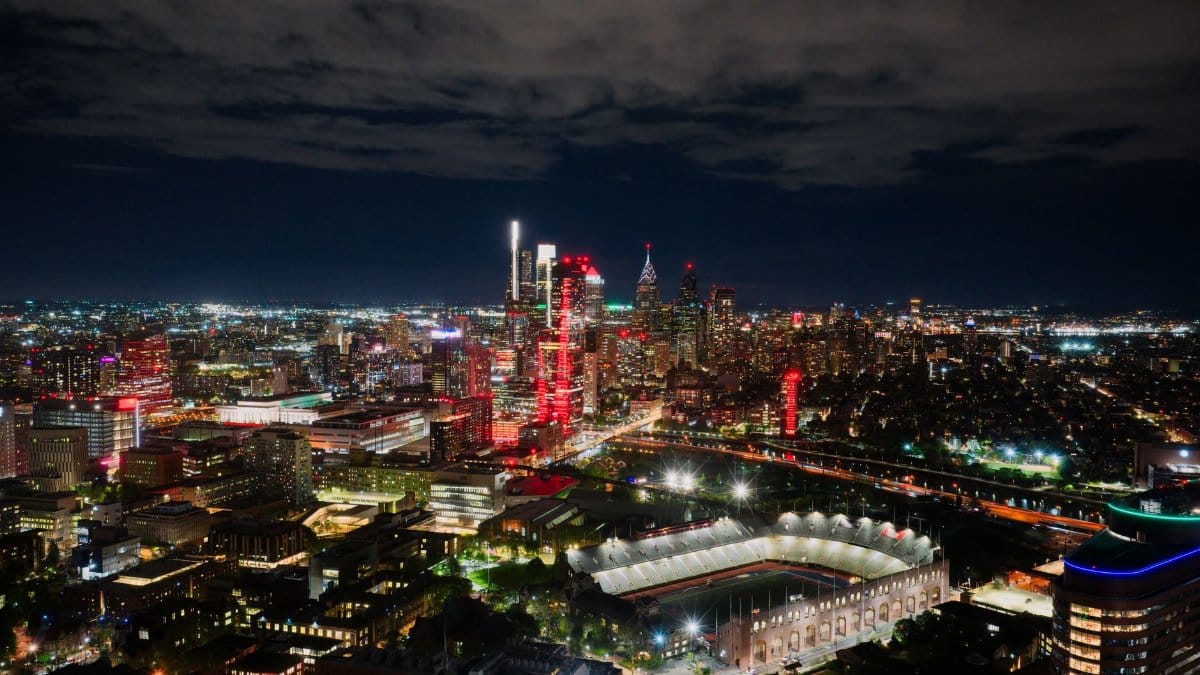
Pennsylvania remains a state where national ambitions are tested block by block. Philadelphia supplies the votes, the volunteers, and the television pictures. A rally here is never only local. It is a signal to donors in other cities and to party organizers in the collar counties who watch to see whether the old coalition still holds. Shapiro understands that geography. His rise depended on sounding like someone who could win a suburb without mocking the city that anchors the state.
Biden, for his part, has long treated Philadelphia as more than a stop on a map. He has family ties nearby and a political memory that reaches back to union halls and parish festivals. When he speaks in this city he does not need to explain why a diner counter or a train platform matters. The audience already lives that life. The task is to connect those ordinary places to a national argument about who government is for.
Big Dom and the civic theater of familiarity

Big Dom is not a candidate and not a party officer. He is a Philadelphia personality whose presence at a political night says something about how this city blends sports, neighborhood status, and public life. His appearance drew its own ripple of recognition, the kind reserved for people who seem to belong to the skyline as much as to any one institution. In a room of speeches, a familiar non politician can loosen the mood. People smiled, took photos, and then turned back to the microphones.
That blend is easy to dismiss as spectacle. It is also a reminder that voters do not sort their loyalties into neat folders. A person can care about a football season and a school budget in the same week. Campaigns that forget the texture of a place tend to sound like visitors. The organizers of this event seemed determined not to sound like visitors.
What Biden chose to emphasize
When Biden took the podium he did not attempt a new theory of politics. He talked about work, about keeping promises to people who punch a clock, and about the danger of treating public office as a private brand. The lines were familiar. Familiarity was the point. In a fundraiser, repetition can be a form of reassurance. Donors and volunteers want to know the message has not drifted into abstraction.
He praised Shapiro without turning the evening into a coronation. The former president has learned, sometimes the hard way, that a party is a coalition rather than a single face. He spoke of governing as a grind, not a highlight reel. Several people in the room later said the most striking moment was not a punch line but a pause, when he looked out and thanked precinct workers by the unglamorous name of their labor: the lists, the doors, the rides to the polls.
Shapiro’s tighter argument
Shapiro’s remarks were brisker. He framed the next stretch of Democratic politics in Pennsylvania as a test of competence. Can the party talk about safety and opportunity in the same breath? Can it defend public schools without sounding defensive? Can it speak to voters who are tired of national noise and still want someone to fix the bridge, the clinic, the bus line? Those questions do not fit on a banner, which may be why they landed. The governor has built a reputation for sounding managerial in a profession that often rewards performance.
He also made a direct ask. Money, he said, is not the mission, but it is the means. A Philadelphia fundraiser that stays polite and vague does not move a field plan in Erie or a mail program in the suburbs. The room understood the transaction. People came to be seen, to hear the headliners, and to write checks. Honesty about that exchange can be more respectful than pretending a ballroom is a town hall.
The money and the map
Fundraisers occupy an uneasy place in American politics. They gather the people who can afford a ticket and ask them to finance outreach to people who cannot. Critics on the left see that structure as a distortion. Organizers see it as arithmetic. Television, digital ads, and field staff cost money, and Pennsylvania’s media markets are expensive. A night like this does not decide an election. It decides whether a campaign can afford to be present in the places that do decide elections.
Philadelphia Democrats have their own internal map. Wards differ in turnout, in income, and in how much they trust party leadership. A Center City ballroom does not represent Kensington or the Far Northeast in any simple way. The speakers nodded at that gap without pretending to close it. They talked about showing up, which is the minimum promise a party can make and the one voters notice when it is broken.
Memory, faith in institutions, and a wary crowd
There is a spiritual dimension to political gathering that has little to do with doctrine. People come because they want to believe that collective effort still matters, that a room of strangers can become a temporary congregation of purpose. In an age of fragmented media, that hunger is easy to mock and hard to satisfy. The Biden Shapiro Philly rally offered a few hours of shared attention. Whether that attention becomes durable trust is a separate question.
Many in the audience have lived through enough cycles to be wary. They have seen wave years and disappointing midterms. They have watched promises about costs and safety collide with the slower reality of statutes and budgets. Their applause was real, and so was their skepticism. A healthy party can hold both. An unhealthy one demands cheer and calls doubt disloyalty.
What the evening did not settle

No single rally settles a nomination fight, a policy dispute, or the mood of a swing state. Biden is a former president with unmatched name recognition and a record that voters have already judged once. Shapiro is a sitting governor with his own ambitions and his own constraints. Standing together signals alignment, not identity. They can share a stage and still face different clocks, different critics, and different definitions of success.
Big Dom’s presence will be remembered in photos more than in platforms. That is fine. Not every figure at a political night is there to move a plank in a platform. Some are there because a city recognizes its own cast of characters, and campaigns that want to feel rooted borrow that recognition for an evening.
How the press and the party will read it
Reporters will measure the event in dollars raised, in who was invited, and in whether any remark travels beyond the room. Party officials will measure it in volunteer signups and in whether county chairs leave feeling included. Both readings can be true. A polished night can still be a thin night if the only people energized are the people who were already coming.
The risk for Democrats in Pennsylvania is not a lack of famous names. It is the gap between a ballroom and a Tuesday in November when the weather is bad and the national story has moved on. Shapiro’s team has argued for years that execution closes that gap. Biden’s career is a long brief for persistence. The Biden Shapiro Philly rally put those habits in the same room and asked donors to fund them. The test will not be the applause. It will be whether the lists get worked when the cameras are gone.
A city that keeps score in ordinary ways

Philadelphia keeps score in ways that national coverage sometimes misses. Did the speaker know which streets flood? Did anyone mention the wage of a home health aide, not only the stock market? Did the event feel like an extraction or like a conversation, even if the conversation was mostly one way? On those measures the night was competent rather than transformative. Competence is not an insult in a profession crowded with spectacle.
Outside, after the program, people waited for cars and talked about the Eagles, about school pickup, about whether they would canvass on Saturday. That small talk is the real afterparty of democratic life. It is unscripted, local, and impossible to fake from a podium. If the party that gathered inside can stay in touch with that sidewalk conversation, the fundraiser will have done more than refill an account. If it cannot, the evening will join a long shelf of well lit rooms that felt important until morning.
The longer argument underneath the cheers

Under the cheers sat an argument about continuity. Should the party lean on a former president whose voice still organizes a coalition, or on a governor who represents the next chapter of Pennsylvania politics? The event refused to choose. It treated continuity as an asset, not a trap. That choice will please people who fear a fractured ticket and frustrate people who want a sharper break with recent years. Both reactions are reasonable. Politics is the art of deciding which risk you would rather live with.
For readers far from Philadelphia, the scene may look like any other fundraiser: suits, signs, a familiar playlist of applause. The details argue otherwise. A governor who must win this state, a former president who still draws a crowd, and a local figure whose mere entrance says you are in Philadelphia and nowhere else. Together they made the Biden Shapiro Philly rally a snapshot of how this party wants to be seen in a pivotal state: rooted, practical, and unwilling to surrender the places where elections are actually won.