
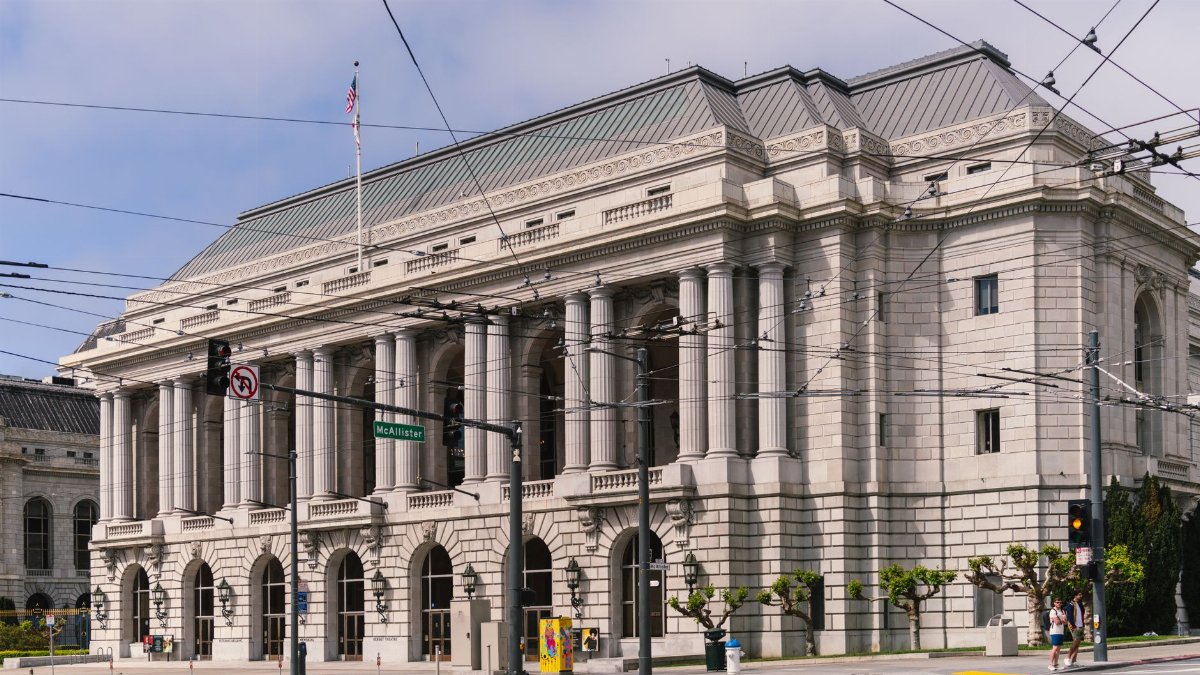
On a weekday when City Hall was crowded with budget talks and neighborhood complaints, a quieter argument moved through San Francisco arts circles. The phrase Ralph Remington Lurie started to stand in for a clash that was never only about schedules or software. Ralph Remington, until recently the director of the San Francisco Arts Commission, says aides to Mayor Daniel Lurie pushed him toward early retirement after a fight over remote work. He describes pressure, not a clean choice. The accusation is personal and political at once. It asks whether a new administration is writing fair rules for public service or simply deciding who belongs in the room.
A departure that did not look like a simple exit

Early retirement can be a gift or a verdict. In Remington’s telling, it landed closer to the second. He has accused the Lurie administration of making continued service untenable, with remote work as the flashpoint. City executives often frame such exits as mutual, tidy, and respectful of family time or health. Employees on the other side hear a different sentence: leave on our terms, or stay and lose standing. San Francisco has watched versions of this pattern in other departments when a mayor wants a faster reset. The arts post is smaller than police or public works, yet it carries a particular symbolism. Who leads the commission signals what the city thinks culture is for, and whether that work is central or ornamental.
The public rarely sees the memos that precede a resignation letter. What it sees is a name vanishing from a website and a bland note about gratitude. That gap is where suspicion grows. If the departure was truly voluntary, the city can say so with records, timelines, and a clear account of the remote work rule that was applied. If the departure was managed, the city owes a plainer explanation than silence. Either way, the story is no longer private. It has entered the civic argument about how power is used when the cameras are pointed elsewhere.
What the Arts Commission is actually for
The commission is not a gallery with a ceremonial title. It steers public art, cultural grants, and the civic rituals that make a neighborhood feel claimed rather than merely managed. Directors negotiate with artists, property owners, and budget analysts who speak different languages. They also sit inside a mayor’s universe of appointments, expectations, and visibility. A director who works from home part of the week may still be in constant contact with staff and applicants. A mayor who wants bodies in the building may read absence as drift. That gap in definition is where this conflict lives.
The keyword story of Ralph Remington Lurie is, at bottom, a fight over what presence means in a public job. Presence can mean a desk, a badge swipe, a face in a Monday meeting. It can also mean judgment, relationships, and the ability to say no to a bad mural or a rushed grant. Cities that confuse the first definition with the second often discover, too late, that compliance is not the same thing as leadership. San Francisco, still arguing with itself about downtown recovery and the purpose of office life, is an especially sharp place for that confusion to surface.
Remote work as policy and as pretext

Remote work became ordinary during the pandemic and then became a loyalty test. Private companies swung from celebration to crackdown. Governments followed, sometimes with more ceremony and less honesty. A rule that applies to every manager is one thing. A rule that appears after a personality clash, or after a mayor’s inner circle decides a director is not their person, is another. Remington’s account places the dispute in that second category. He is not, on the public telling, denying that City Hall may set expectations. He is saying those expectations were used to push him out.
Readers should hold two ideas at once. First, a mayor has authority over department heads and may insist on in person collaboration when the work requires it. Second, authority can be exercised cleanly or coarsely. If aides framed retirement as the only dignified door, that is not ordinary management. It is a forced choice dressed up as courtesy. The distinction matters because early retirement affects pension timing, reputation, and the next job. It is not a scheduling inconvenience. It is a career event with a paper trail, or it should be.
How a new mayor builds a team
Daniel Lurie arrived at City Hall with a mandate to look different from the recent past: less performative, more operational, closer to neighborhoods that felt ignored. New mayors almost always reshuffle. They inherit directors they did not choose, and they want people who will carry a message without constant translation. That instinct is human and, within limits, legitimate. The limit is the civil service bargain. Public executives are not campaign staff. They are stewards of programs that outlast a single term.
When reshuffling is done in daylight, through announced goals and open searches, the city can judge it. When it is done through pressure, hints, and a retirement conversation that feels prewritten, the city is asked to trust a process it cannot see. The Ralph Remington Lurie episode, as it is now being discussed, tests that trust. Arts leaders are watching not only for the fate of one director but for the temperature of the building. If disagreement over work location can end a tenure, other disagreements will be edited before they are spoken. That is how institutions grow quiet, and quiet institutions make worse art and worse policy.
The cost of an unfinished explanation

Silence is a strategy with a short shelf life. Artists applying for support want to know whether criteria are stable. Commissioners want to know whether their director was undermined or simply chose to go. Reporters, including those at the San Francisco Chronicle who first laid out the accusation in detail, will keep asking for documents. Email, calendar entries, and human resources guidance are dull until they are the only way to separate a claim from a counterclaim. Without them, the public is left with narrative against narrative.
Remington has put his name on a serious charge. The administration, if it believes the charge is wrong, has every reason to answer with specifics rather than atmosphere. What was the remote work standard? When was it announced? Who applied it, and to whom else? Was retirement offered, urged, or treated as inevitable? Those are not gossip questions. They are the minimum a serious city asks when a senior official says he was shown the door. A refusal to engage does not prove guilt. It does prove that the city prefers the story to fade.
Culture is not a side office

It is tempting, in a city worried about crime, housing, and empty storefronts, to treat the arts post as secondary. That temptation is a mistake. Public art and cultural grants are how a city tells residents they are more than taxpayers and complainants. They are also how San Francisco competes for the visitors, students, and makers who still associate the place with invention rather than dysfunction. A bruised commission does not cancel that identity overnight. It does signal that the people charged with tending it can be treated as interchangeable.
There is a spiritual dimension here, though not a churchly one. Shared beauty is one of the few civic experiences that does not sort people by precinct or income before it begins. A mural, a performance in a park, a grant that lets a small company survive another season: these are acts of regard. When the leadership of that work is unsettled by palace politics, the loss is not only administrative. Residents feel it later, as fewer risks taken and fewer reasons to gather. The argument over one director is also an argument over whether regard is a priority or a press release.
What colleagues and artists are entitled to know

People who worked with Remington will have their own inventories of strengths and failures. No director is universally loved, and affection is not the standard. The standard is whether the exit matched the reasons given, and whether those reasons would have been applied to someone the mayor preferred. Staff inside the commission deserve clarity about reporting lines and about whether remote work is now a fireable offense, a negotiable practice, or a privilege reserved for the favored. Ambiguity is not flexibility. Ambiguity is how fear gets managed without ever being named.
Artists outside the building have a narrower but real interest. They need deadlines honored, feedback that is honest, and a sense that decisions are not being remade every time a political aide forwards a complaint. Turmoil at the top slows all of that. It also invites cynicism, which is expensive. Cynicism tells a painter not to bother with a public process, and tells a donor that City Hall cannot keep a promise from one fiscal year to the next. The administration can reduce that cynicism with a plain account. It cannot reduce it with warmth alone.
A record the next appointment will inherit

Whoever follows Remington will walk into a room that has already heard the accusation. The next director will be measured, fairly or not, against the claim that independence is unwelcome. That is an unfair burden and also an unavoidable one. The wise response from City Hall is not a loyalty oath. It is a written set of expectations: where work happens, how disagreements are raised, what early retirement conversations may and may not include, and who is in the room when they occur. Rules that are visible can be criticized. Rules that live only in aide to aide conversation cannot.
The Ralph Remington Lurie matter will not decide the Lurie mayoralty. Housing, public safety, and the budget will do more of that work. But small cases teach large habits. If aides learn that a difficult director can be eased out without a full accounting, they will use the tool again. If they learn that the city will ask hard questions in public, they will choose cleaner methods. Remington’s charge is a test of that lesson. Answering it is not a favor to him. It is a favor to the next person who has to tell a mayor something inconvenient and still hopes to keep the job.
What readers should watch for next
Watch the documents, not the adjectives. A city that believes it acted properly can show the policy, the dates, and the alternatives that were offered. A former director who believes he was pushed can point to the same papers and to the words that were used when retirement entered the conversation. Until those materials are on the table, certainty is a performance. San Francisco has had enough performances.
Watch also whether the arts budget and the commission calendar stay steady while personalities change. Continuity is the quiet proof that a department is more than its director. Disruption, delayed grants, or a sudden taste for safe projects would suggest the opposite. And watch the language City Hall uses about work and presence. If remote work is a real operational need, say where and why. If it is a proxy for trust, say that too, and then build trust by means other than the door.
The fairest reading, for now, is narrow. Ralph Remington says he was pressed into early retirement amid a remote work dispute with Mayor Daniel Lurie’s aides. That claim is serious enough to require an answer in full sentences, not in shrugs. The phrase Ralph Remington Lurie will fade if the facts are ordinary. It will stick if the facts show that a cultural post was cleared to make a political point. Residents do not need to pick a side before the record is complete. They do need to insist that the record be complete. A city that funds art in public should be willing to explain power in public, with the same plainness it asks of everyone else.