
The chair reserved for Ken Paxton stayed empty under the studio lights, and the absence did more work than a rebuttal might have. Viewers who tuned in for a clash instead watched one candidate answer while the other remained offstage. In that uneven setting, the Talarico Paxton CNN town hall became a solo examination of a Democrat trying to sound like Texas rather than like a national party memo. James Talarico used the time to defend his legislative record, to fault President Biden on border security, and to promise that oil and gas workers would not be written out of the state future.
An empty chair under bright lights

Town halls are built for friction. A moderator, a live audience, two politicians who would rather not grant each other a clean sentence. When one participant declines to appear, the format does not collapse so much as change shape. The remaining speaker inherits both the questions meant for him and the silence meant to indict his rival. That is what happened when Attorney General Ken Paxton did not take the stage. The cameras still rolled. The audience still waited. Talarico, a Democratic state representative from the Austin area who is testing a statewide argument, had to fill a room designed for two.
Absence is not the same as defeat. Campaigns skip forums for reasons that range from scheduling to strategy to a calculation that the other candidate will overreach if left alone. Viewers at home could not see those deliberations. They could see only a vacant seat and a Democrat who treated the vacancy as an invitation to define the race on his own terms.
Who walked into the studio

Talarico is not a familiar face to every Texas voter, which is both his burden and his opening. He is young by Senate standards, a former public school teacher, and a legislator known in Austin for long floor speeches that mix policy detail with the cadence of a sermon. He is also a seminarian, which matters in a state where faith is not a private hobby but a public language. Supporters hear moral seriousness. Skeptics hear a progressive trying to baptize positions that still lose in rural counties.
Paxton, by contrast, needs little introduction. As attorney general he has been a fixture of Republican politics, a combatant in national lawsuits, and a figure whose own legal troubles have never fully dislodged him from the party base. A joint appearance would have set seminary rhetoric against prosecutorial bravado. Without that pairing, the evening asked viewers to judge Talarico in isolation, which is a harder and fairer test than many candidates receive.
The record he chose to defend
Given the microphone, Talarico did not open with a biography. He defended votes and bills, the unglamorous material of a legislature that most Americans never watch. He pointed to work on public schools, on the cost of living, and on the idea that state government should not treat teachers, nurses, and rural hospitals as afterthoughts. The defense was less a highlight reel than an argument that competence can be a moral claim.
That choice carries risk. Legislative records are easy to distort in a thirty second advertisement and hard to explain in a paragraph. A town hall rewards the candidate who can translate a committee amendment into a kitchen table consequence. Talarico tried. He spoke of classrooms without enough staff, of families priced out of care, of a Capitol that performs outrage more readily than it passes durable law. Whether those examples stick will depend less on CNN than on whether county parties and church basements repeat them.
A Democrat willing to fault Biden on the border
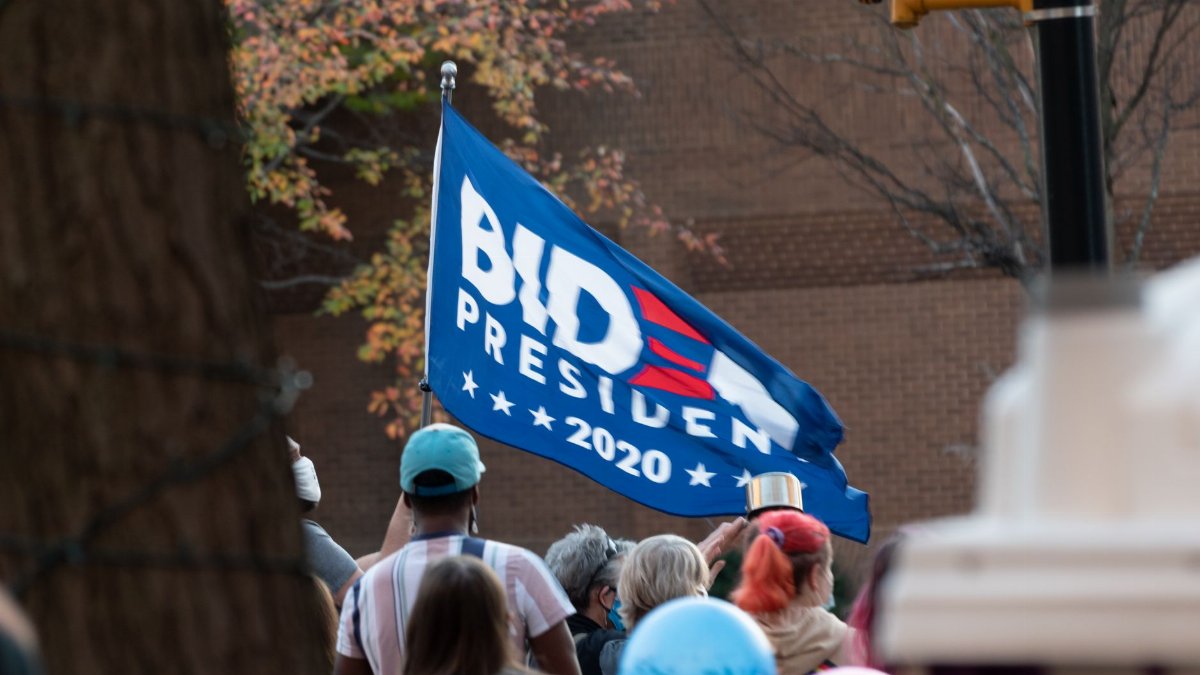
The sharpest departure from national Democratic habit came on immigration. Talarico criticized President Biden on border security, arguing that Washington had failed to match urgency with order. He did not adopt the vocabulary of mass deportation spectacles. He did say, in substance, that a party hoping to win Texas cannot pretend the border is only a talking point invented by the other side.
For a broad audience, the distinction matters. Many Texans live with the daily facts of crossings, smuggling, strained cities, and political theater that solves little. They also live with neighbors who are immigrants, with industries that depend on labor, and with churches that baptize people the campaign ads would rather not name. Talarico tried to occupy that narrow ground: security without cruelty, enforcement without forgetting that the people arriving are still people. Critics on his left will call it a concession. Critics on his right will call it insufficient. Both reactions are predictable. The more interesting question is whether suburban and Hispanic voters hear a Democrat finally speaking in sentences they already use at home.
Oil and gas jobs as a loyalty test

Energy is the other place where national party language often dies on contact with Texas. Talarico pledged to protect oil and gas jobs, framing the industry less as a symbol in a climate debate than as a payroll in Midland, Houston, and dozens of smaller towns. He did not deny that the climate is changing. He argued that a transition which treats workers as collateral will lose the politics and, just as important, lose the trust required to govern.
That pledge will be read in two ways. Environmental advocates may hear a retreat. Roughnecks and refinery families may hear, at last, a Democrat who does not flinch at the word job. The Talarico Paxton CNN town hall put the pledge on television, where it cannot be walked back as a local aside. If Talarico is serious, he will have to say what protection means when prices fall, when federal rules tighten, and when younger voters demand faster change. A promise without a mechanism is a campaign slogan. A mechanism without a promise is a white paper nobody reads.
Faith as more than a credential
Because this race brushes against spiritual life as much as against statutes, the religious register of the night deserves its own attention. Talarico does not hide his formation in the church. He speaks of neighbor love as a political obligation, not as a soft aside after the real argument. In a category of public life crowded with performative piety, the risk is obvious. Voters have heard scripture quoted in service of tax policy, war, and grudges. Another citation will not move them.
What might move them is consistency. If the same moral language that defends the stranger also defends the worker whose plant might close, and also defends the student in an underfunded district, then faith functions as a through line rather than as decoration. The town hall gave him a chance to attempt that through line without a rival interrupting to call it naive. Whether congregations find it credible is a slower verdict than any overnight clip can deliver.
What Paxton gained by staying away
Strategy is not always cowardice, and it is not always wisdom. By skipping the forum, Paxton denied Talarico a direct foil and denied himself a chance to prosecuting the Democrat in real time before a national audience. His allies can argue that CNN is hostile terrain and that Republican primary voters do not need a cable network to know where their attorney general stands. His opponents can argue that a statewide hopeful who will not sit for open questions is asking for trust he has not earned.
The practical effect is simpler. News coverage of the Talarico Paxton CNN town hall will lead with the empty chair, then with the lines on Biden and on energy, because those are the sentences that travel. Paxton remains a powerful brand in Republican Texas. Brands can survive missed evenings. They cannot forever survive the impression that scrutiny is optional. At some point a rival, a prosecutor, a primary opponent, or a general election moderator will insist on answers that a press release cannot supply.
How a network shapes a Texas argument

Cable town halls are neither debates nor sermons, though they borrow from both. The moderator chooses which voter questions rise. The clock punishes complexity. A candidate who speaks in paragraphs can sound thoughtful or evasive, depending on the cut. Talarico, whose habit is the long explanation, had to learn the shorter form without sounding clipped into emptiness.
There is a democratic good in putting a lesser known legislator in front of people who did not already follow his committee work. There is also a distortion. National audiences hear Texas as a symbol: border, oil, guns, church. Residents hear a budget, a grid, a school finance formula, a hospital that might close. The best moments of the hour were those in which Talarico dragged the symbol back toward the spreadsheet. The weaker moments were those in which a national frame threatened to swallow the local fact.
The voters this message is built to reach

A Democrat running statewide in Texas is not hunting a silent majority of progressives. He is hunting defectors, irregular voters, and people who split tickets when a Republican seems reckless or a Democrat seems contemptuous of their work. The border criticism and the energy pledge are aimed at that slice. So is the schoolteacher biography, which still carries weight with parents who do not care which consultant wrote the education plank.
Spiritual voters are part of that slice, not a separate species. Many attend churches that lean Republican and still flinch at cruelty, corruption, or indifference to the poor. They are not waiting for a candidate to recite a creed. They are waiting to see whether private conviction survives contact with donors, with party pressure, and with a news cycle that rewards the harshest adjective. The town hall was an early exhibit, not a final exam.
The Senate map and the long argument
None of this occurs in a vacuum of personality. Texas Senate politics reward familiarity, money, and a Republican electorate that has not lost a statewide race in a generation of regular cycles. Any Democrat must explain not only why he is right but why the map might bend. Talarico implicit answer is that the party has been talking past the state, and that a candidate fluent in faith, schools, and energy jobs can reopen a conversation others closed.
History is unsentimental about that theory. Charisma does not redraw districts. A good hour on television does not fund a field program in the Valley, in the suburbs north of Dallas, or along the coast. Still, campaigns are sequences of permissions. Voters permit themselves to listen. Donors permit themselves to write checks. Reporters permit themselves to treat a candidacy as more than a protest. The Talarico Paxton CNN town hall was an attempt to earn the first of those permissions while the better known Republican declined to contest the hour.
Lines that will follow him

Three claims will outlive the broadcast. He defended his record rather than apologizing for being a Democrat in a red state. He criticized Biden on border security rather than reciting a national script. He pledged to protect oil and gas jobs rather than treating the sector as an embarrassment to be managed off camera. Each claim can be stress tested. Records contain votes opponents will isolate. Border criticism will be called too soft or too harsh. An energy pledge will meet a specific bill, a specific layoff, a specific summer of heat and grid anxiety.
Journalism should hold those claims to the standard Talarico invited. If he meant them, the next forums, including ones Paxton might actually attend, ought to demand detail. How many agents, what asylum process, which worker protections, which emissions path that does not pretend Houston can become a postcard overnight. Moral language without operational language is how politics loses serious people.
What the hour could not settle

A single town hall cannot tell Texans who should represent them in the Senate. It can tell them what one candidate sounds like when the other chair is empty, and what he is willing to say when the party line would be safer. Talarico sounded like a Democrat trying to be intelligible to people who have stopped listening to Democrats. That is not the same as winning. It is the precondition for being heard at all.
Paxton absence leaves his own case unargued in that room. He will argue it elsewhere, in friendlier studios and in courtrooms and in rallies where the questions are softer. Voters who want a comparison will have to assemble it themselves from fragments. That is an unfair burden, and it is also ordinary politics. The Talarico Paxton CNN town hall will be remembered less as a debate than as a portrait of a candidate under lights he did not have to share, saying the difficult things his party often saves for later, and betting that Texas might still reward a voice that refuses both contempt and evasion.