
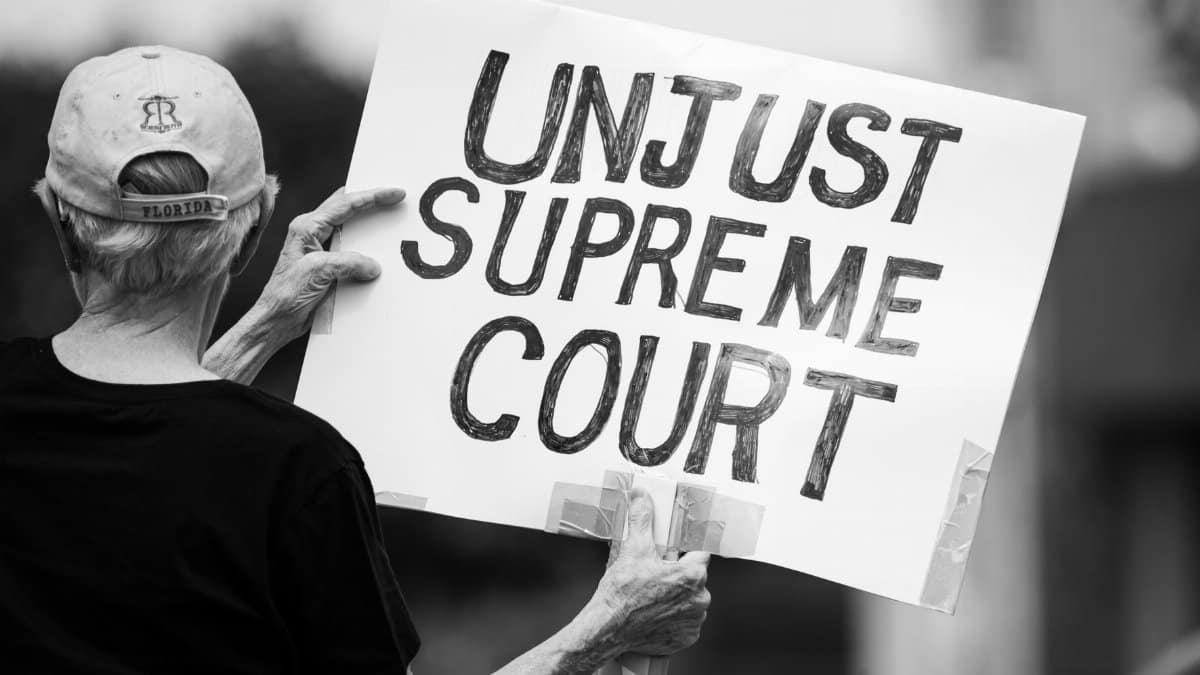
On the first Monday in October, the marble front of the Supreme Court takes a hard morning light, and the city around it seems to hold its breath for a moment. Clerks cross the plaza with thick folders. Advocates rehearse a first sentence they have already said a hundred times. For people far from Washington, the ritual can look ceremonial, almost distant, yet the disputes set for argument will reach city budgets, classrooms, gun shops, and immigration courts. The Supreme Court October docket brings together climate liability, deportation, rifle bans, and a Colorado preschool fight, a cluster of cases that asks how far judicial power should travel into ordinary life. What follows is not a prediction of votes. It is a map of the questions the justices have chosen to hear, and of the public arguments that will surround them.
A term that arrives in the kitchen, not only the courtroom

A new term always carries ceremony. Robes, a formal call to order, and the quiet of a chamber built to slow people down. The substance this year is less ceremonial. Each major dispute touches a choice that governments and families already make without waiting for a footnote. Cities wonder who should pay when storms and heat impose costs that budgets cannot absorb. Families in removal proceedings ask what process is due before a life is uprooted. State legislators defend limits on certain rifles. Parents and preschool operators in Colorado argue over faith, public programs, and equal treatment.
Readers who follow the Court from a distance often meet it through a headline after the fact. The more useful habit is to watch the questions as they are framed. A grant of review is itself a decision about what the country will argue over for months. The opinions, when they come, will be narrower or broader than the rallies outside suggest. The arguments, though, reveal the real stakes early.
Climate liability and the bill for harm
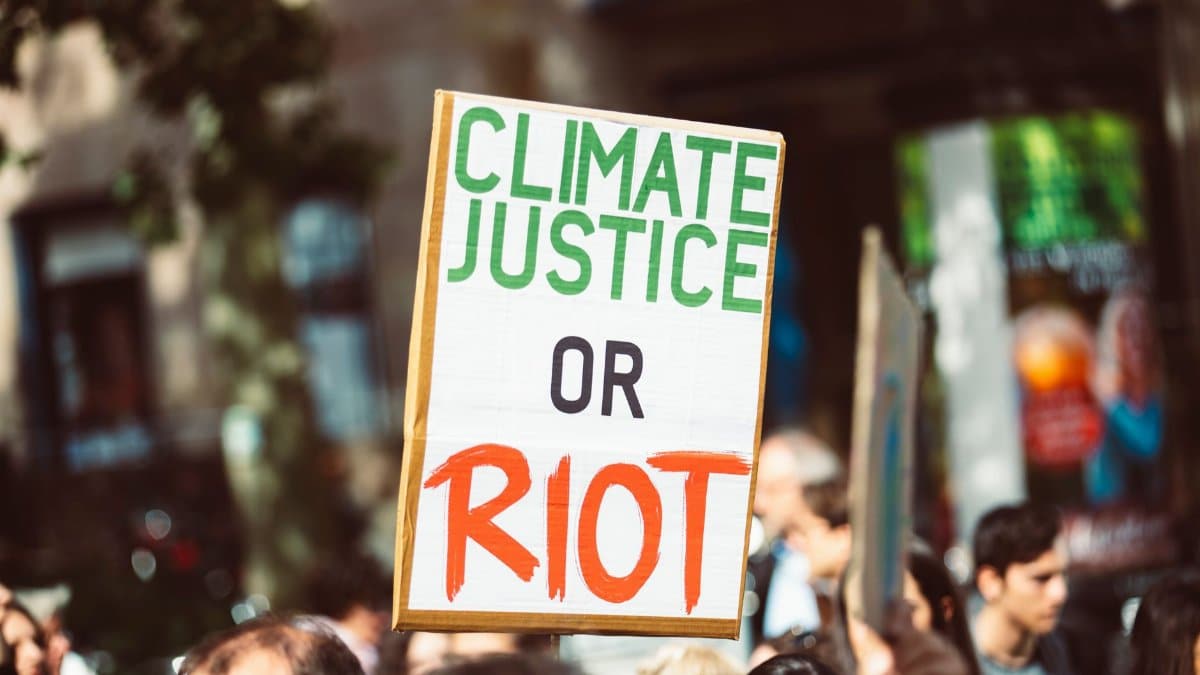
Climate cases have moved from the realm of regulatory theory into fights about money, duty, and proof. States, cities, and private plaintiffs have tried to place some of the cost of floods, fires, and rising insurance on companies that produced or sold fossil fuels, sometimes alleging deception about known risks. Industry defendants answer that energy policy belongs to Congress and to federal regulators, not to scattered juries applying state tort law. They also argue that emissions cross every border, so a local courtroom is the wrong place to assign a global harm.
The Supreme Court October docket puts that collision in front of nine justices who have already shown skepticism toward broad agency power and toward state lawsuits that look like national policy in another costume. The legal questions sound technical. Who may sue. Which law supplies the rule. Whether a claim is displaced by federal statute. The human question is plainer. If public treasuries are paying for damaged roads, lost housing, and emergency response, is a lawsuit a legitimate way to shift part of that cost, or a way to regulate by verdict what legislators have not regulated by statute.
Nothing in the briefing will settle the science of warming. The Court is not a laboratory. What it can decide is which doors remain open. A narrow ruling on jurisdiction would still shape whether climate liability remains a live strategy for mayors and attorneys general, or becomes a theory largely closed by federal supremacy. Official calendars and orders are posted by the Court itself at https://www.supremecourt.gov/, and they are a better guide than any rumor about how a case will land.
Deportation and the reach of executive power
Immigration arguments rarely stay inside immigration law. They become arguments about the presidency, about statutes written in another decade, and about how much process a person receives before removal. Administrations of both parties have claimed wide discretion to set priorities, to pause certain removals, or to speed them. States have sued when they believe a president is refusing to enforce the law. Individuals have sued when they believe speed has swallowed a hearing.
On the Supreme Court October docket, deportation disputes test that tension again. One side stresses sovereignty and the practical impossibility of full trials for every person the government seeks to remove. The other stresses that liberty and family ties are not abstractions, and that a mistake, once executed, is hard to undo from another country. Congress has written dense rules about who may be removed, who may seek relief, and which courts may review which errors. The justices often answer by reading those rules closely rather than by announcing a grand theory of migration.
Still, the practical effect will not feel narrow to the people inside the system. A decision about stays, about what counts as a final order, or about whether states may challenge federal enforcement choices can change the tempo of removals for months before any statute is amended. That is why immigration lawyers and statehouses read the same transcripts with different hopes and the same anxiety.
Rifle bans after a rewritten Second Amendment

Gun cases now arrive in the shadow of a historical test. The Court has told lower judges to ask whether a modern restriction is consistent with the nation’s tradition of firearm regulation, not merely whether it serves an important public goal. States that ban certain semiautomatic rifles, often described in statutes by features such as detachable magazines and pistol grips, say those laws answer mass public killings and fit within a long record of restricting especially dangerous weapons. Challengers say the rifles are in common use for lawful purposes, and that a ban on a common arm cannot be squared with the constitutional text.
The briefing will be thick with eighteenth and nineteenth century analogues. Readers should not mistake that history lesson for a retreat from the present. The question is whether a state may keep a category of rifle out of civilian hands, and what evidence of tradition is enough to justify that choice. A broad opinion could unsettle similar laws in other states. A narrow one could turn on how a particular statute defines the banned weapon, leaving neighbors with different rules and a fresh round of litigation.
Public safety officials will hear one risk. Gun owners will hear another. Both are describing the same judicial method applied to a weapon that did not exist when the amendment was ratified. That gap between past examples and present technology is the live wire in the case, and it will not be resolved by slogans about rights or about carnage.
A Colorado preschool and the boundary of equal treatment

Preschool is an odd place for a constitutional crisis, which is exactly why the Colorado case will draw readers who skip the more technical grants. The dispute, as it has been described in previews of the term, sits where public programs meet religious conviction. A preschool connected to a faith community, or parents seeking a place in such a school, can collide with state rules on nondiscrimination, curriculum, or participation in publicly supported early education. One side frames the case as a demand that religious people abandon their beliefs at the door of a public benefit. The other frames it as a demand that the state subsidize exclusion, or excuse a private operator from rules that apply to everyone else who takes public support.
The Court has spent several terms drawing lines between status and conduct, between neutral funding and targeted hostility to religion. Those lines are easier to state in an opinion than to apply in a small school with a handful of classrooms. A ruling that sounds modest on paper can still tell legislators how to write the next voucher, grant, or licensing rule. Families will experience it as a yes or a no about a morning drop off, not as a seminar on the First Amendment.
Care is warranted in describing facts that briefing will sharpen. The principle in contest is already clear enough to matter. Equal treatment can mean identical rules for every participant. It can also mean room for religious difference inside a public scheme. The preschool case asks which of those meanings the Constitution requires when the children involved are too young to argue the point themselves.
How the justices tend to shrink a large fight
People outside the building often imagine a single sweeping answer. Inside, the craft is usually the opposite. Justices look for a statutory hook, a jurisdictional defect, a limiting construction that decides the dispute without settling every cousin of the dispute. That habit frustrates advocates who want a landmark and reassures advocates who fear one. It also means early commentary can overread a grant of review. Accepting a case signals that the lower courts are divided or that the question is important. It does not sign the final paragraph.
Watch for the hypotheticals at argument. A justice who asks what happens to a different weapon, a different emission, a different preschool policy is testing the edge of a rule, not announcing a vote. Those edges are where later cases begin. A term is a sequence, not a single afternoon.
States, cities, and the audience that must comply
The most attentive readers of this term may be attorneys general and city lawyers, not television anchors. They have to translate an opinion into advice that a mayor can use. If climate claims are narrowed, budget officers will stop treating lawsuits as a plausible recovery stream and will look again at bonds, insurance, and federal aid. If deportation review is tightened or loosened, state social service agencies will feel the change in caseloads. If rifle laws fall or stand, police departments and retailers will rewrite compliance manuals before the next legislative session. If the preschool ruling resets the religion cases, education departments will reopen rules they thought were settled.
That translation work is unglamorous and decisive. A Court opinion does not staff a classroom or clear a drainage ditch. It tells the people who do those jobs which tools are lawful. The gap between announcement and administration is where public trust is either kept or spent.
Oral argument as a window, not a verdict

Argument transcripts reward patience. They show which facts the justices treat as fixed and which they treat as contested. They show whether a case is really about procedure, in which event the practical winner may be the party who can survive another round below. They also show disagreement among justices who are often lumped together in outside commentary. A conservative majority is not a choir. A liberal dissent is not a single voice. The interesting moments are the questions that do not match the expected script.
For a general audience, the useful discipline is to separate the performance from the holding. A sharp question is not a vote. A concession by a lawyer can matter more than an hour of rhetoric. When opinions arrive, months from now, the reader who remembers the question presented will be less surprised than the reader who remembers only the loudest line from the steps.
Trust, conscience, and a secular bench

I do not look to the Court for pastoral care, and neither should anyone else. It is a legal institution with a secular charge, even when the cases touch belief, life, and the duties people feel toward neighbors they will never meet. Still, the public often approaches a term with a moral vocabulary. Climate liability sounds like responsibility for harm one helped cause. Deportation sounds like mercy and order in conflict. A rifle ban sounds like the protection of children against the freedom to own a powerful weapon. A preschool case sounds like fairness to faith and fairness to those who might be turned away.
Those moral frames are not irrelevant. They explain why the arguments draw crowds. They are also incomplete. The justices are asked to fit those intuitions into text, precedent, and a division of labor among branches. When they do that fitting badly, in the eyes of one side or the other, the wound is not only legal. It is a wound to the sense that the rules are shared. A term cannot repair that sense by itself. It can avoid making the wound deeper if the opinions show their work and stay within the disputes actually brought.
What the coming months will and will not settle

By late spring, some of these cases will have names that casual readers remember and others will have slipped back into the specialist press. That uneven memory is normal. It is also a reason to keep the list of questions nearby while the arguments unfold. Climate liability may be trimmed without ending every state lawsuit. Deportation review may turn on a statutory phrase that Congress can rewrite. Rifle bans may survive in one form and fail in another. The Colorado preschool dispute may be decided on funding conditions that other states do not use.
None of that is a counsel of indifference. It is a counsel against treating every argument day as the last word on a subject that legislatures, agencies, and voters will keep revisiting. The Court can close a path. It rarely ends the underlying disagreement.
Reading the term without a rooting interest alone

There is a way to follow this work that is neither cynical nor naive. Assume the justices are doing a serious job with materials that do not yield a single honest answer. Assume also that their choices will distribute benefits and burdens, and that those distributions deserve plain description. The Supreme Court October docket is a set of controversies chosen for decision, not a mirror that flatters every reader. Climate costs, removal orders, rifle restrictions, and a preschool’s rules will look different depending on where one sits. The obligation of a public account is to say what is being asked, what is not being asked, and what a ruling can actually change.
The first Monday is a beginning, not a climax. The briefs are already long. The country is not required to love the method. It is required, if it wants to understand the government it has, to watch the method work on problems that will not wait for a more convenient term.