

In a season when every new model seems to arrive faster than the last argument about it, diplomats in Washington have chosen a quieter instrument. After a summit that mixed commerce, security, and the language of restraint, the United States and China agreed to open what officials are calling a US China AI channel, a standing line for safety questions that neither capital wants to leave to press conferences alone. The same meetings extended a trade truce and kept military contacts from going dark. For readers who have watched this rivalry harden, the news is less a thaw than a decision to keep talking while the machines get faster.
A line meant for accidents, not applause

The channel is not a treaty and it is not a joint laboratory. It is closer to a hotline with a research brief attached. Officials on both sides described a November dialogue in which safety experts, not only foreign ministers, would sit with one another and walk through risks that do not respect borders: systems that deceive their operators, models that leak dangerous know how, and automated tools that might misread a military signal as an attack. The point, as people close to the talks have framed it, is to reduce surprise. Surprise is expensive in politics and ruinous in a crisis.
Americans have heard versions of this promise before. Arms control in the nuclear age began with the same modest claim, that two rivals could describe their fears without surrendering their advantages. Artificial intelligence is not a bomb, and the analogy breaks if anyone pushes it too hard. Code can be copied. Talent moves. A lab in one city can change the risk picture before a communique is translated. Still, the instinct is familiar. When the downside is shared, silence is a policy choice, not a neutral habit.
Why the capitals returned to the table

Washington and Beijing did not rediscover affection. They rediscovered cost. American firms want predictable access to a vast market and to supply chains that still run through Chinese factories. Chinese leaders want chips, capital, and a pause in the kind of export fights that rattle growth. Both governments face publics who are proud of national champions and uneasy about what those champions are building. A summit that produced only slogans would have looked empty. A summit that produced a schedule looks, at least, like work.
The trade truce that traveled with the safety talks matters for the same reason. Tariffs and licensing rules are not technical footnotes. They decide which companies can train the next generation of systems and which cannot. Extending the truce does not settle those fights. It buys months in which negotiators can argue without lighting a new fire under prices, jobs, and election calendars. Readers should treat that extension as fragile. Truces last until someone decides the other side is cheating, and in this relationship the accusation is never far away.
Commerce sitting in the same room as caution

It is tempting to split the story into two columns, money on one side and safety on the other. The summit refused that split. Trade officials and security officials were negotiating in overlapping days, sometimes overlapping sentences. That is how power actually works. A promise to discuss model evaluation means little if the chips required for evaluation are stuck in a customs dispute. A promise to ease tariffs means little if one side believes the other is using commercial access to harvest military advantage.
For middle aged readers who remember earlier technology shocks, the pattern is not new. Personal computers, the internet, and smartphones each arrived as consumer goods and then revealed themselves as instruments of state power. Artificial intelligence is completing that turn in public. The question is whether governments can talk about the instrument while they are still fighting over the market. The Washington meetings suggest they will try, because the alternative is to let companies set the pace and diplomats clean up afterward.
Military nerves and the fear of a misread signal
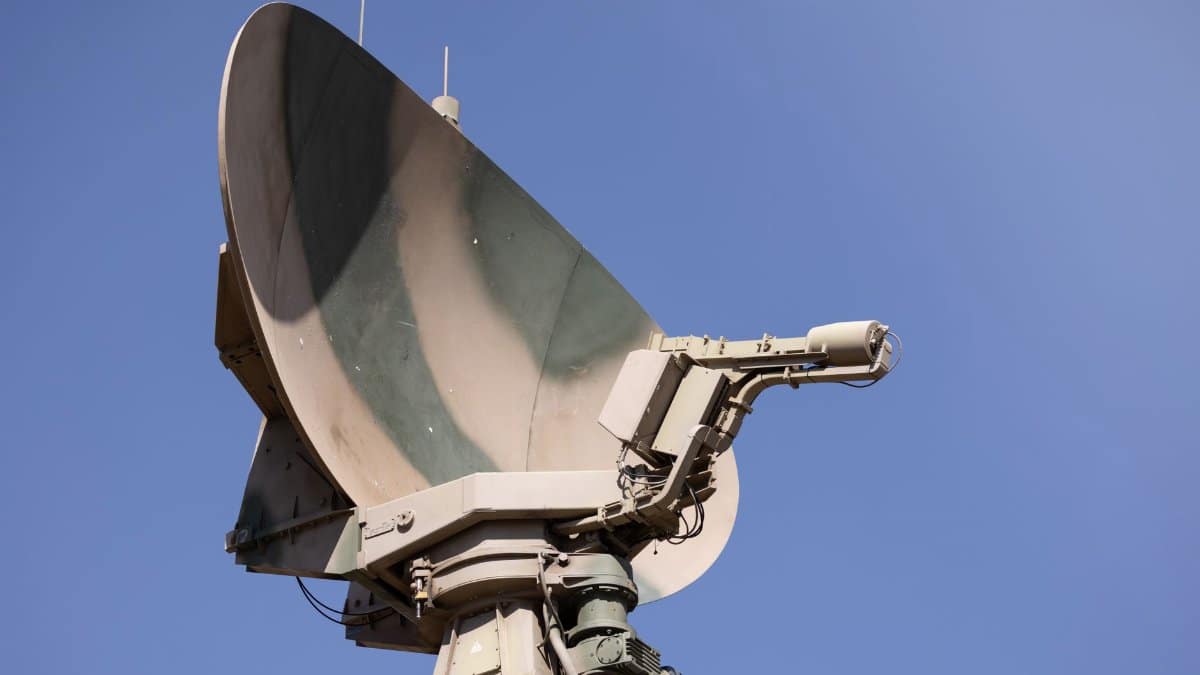
The most sober part of the agreement is the decision to keep military conversations going alongside the civilian safety work. Modern forces already use software to sort radar tracks, plan logistics, and suggest targets. None of that requires a science fiction leap. It requires only that a tired officer trust a screen a little more than the last officer did. If two armed forces are also political rivals, a software error can look like intent. Intent, once assumed, is hard to walk back.
A channel cannot stop a commander from making a bad call. It can, in the best case, give that commander a number to dial and a shared vocabulary for what the screen might be doing. Veterans of past crises, from the Cuban missile standoff to later near misses at sea, have said versions of the same thing for decades. You want the other side to have someone awake who understands your language. The US China AI channel is an attempt to build that someone before a bad night, not during one.
What the November dialogue will have to prove

November is close enough to concentrate minds and far enough to tempt delay. A useful first meeting would be narrow. Participants could compare how each government tests systems before release, how they handle reports of dangerous capabilities, and how they notify the other side when a civilian model shows military potential. They could agree on who picks up the phone at two in the morning. They could admit, in writing, what they will not discuss, so that secrecy is not confused with bad faith.
A useless meeting would produce adjectives. Safe, responsible, trusted, inclusive. Those words have already had a long career in communiques. What readers should watch for is whether the two sides name a second date before the first meeting ends, and whether working groups include people who actually evaluate models rather than only people who draft speeches. Process is not glamour. In this field, process is the product.
Companies, labs, and the audience outside the room

Neither government fully controls the engineers whose work the channel is meant to discuss. American labs answer to boards, investors, and a thicket of emerging rules. Chinese labs answer to commercial pressure and to a party state that can redirect them with a phone call. That asymmetry will sit in every session. So will a shared complaint from researchers who want clearer lines: tell us what counts as a dangerous capability, tell us when we must stop, and do not change the answer after we have spent a year building.
The public is the other audience, and it is not a technical one. People want to know whether their jobs, their medical records, and their children’s classrooms are being rearranged by systems nobody elected. A diplomatic channel will not answer those household questions. It can still matter to them. Rules that two rival governments can both describe are harder for any single company to ignore. Fragmented rules are easier to shop around.
Trust is thin, and dialogue will not thicken it quickly

Honesty requires a colder paragraph. Beijing and Washington do not trust each other’s intentions on technology. Each has accused the other of theft, of military buildup, and of using open research as a cover. A new forum does not erase indictments, export bans, or naval encounters. If one side treats the channel as a stage for delay while it races ahead, the other will notice, and the forum will join a long list of dialogues that produced photographs and little else.
There is also a domestic risk. In both countries, talking to the rival can be painted as softness. Leaders who extend a truce will be asked what they got. Safety protocols do not photograph well. A tariff pause does. The political incentive, then, is to advertise commerce and whisper caution. Readers who care about the caution should not wait for it to lead the evening news. They should look for the dull documents: agendas, participant lists, and whether military officers remain in the room after the cameras leave.
A moral weight that diplomacy alone cannot carry

Some of the unease around these machines is not strategic at all. It is the older question of what we owe one another when a tool can imitate care, counsel, and judgment. Faith communities, educators, and families have been asking that question in kitchens long before foreign ministers put it on a summit schedule. A channel between governments will not settle whether a person should confess to a program, trust a diagnosis from a model, or let a classroom run on automated praise. Those are civic questions, and they belong in congregations, school boards, and statehouses as much as in Washington meeting rooms.
Still, the spiritual instinct and the diplomatic instinct share a premise. Power that is not examined becomes careless. Restraint is not the opposite of ambition. It is the condition under which ambition does not consume the people who hold it. If the talks in November remember that, they will be worth the airfare. If they forget it, the channel will be another wire that nobody picks up when it matters.
What a careful reader should track from here

Three markers will tell whether this week was a turning point or a press release. First, whether the November meeting happens with technical staff in the chairs, not only protocol officers. Second, whether the trade truce survives its first real test, a dispute over a shipment, a license, or a speech that plays well at home and badly abroad. Third, whether military contacts continue when something uncomfortable happens at sea or in the air, which is precisely when contacts are most tempting to cut.
None of those markers requires a reader to become an expert in model weights or export codes. They require attention, which is the one resource journalism can still ask for without embarrassment. The rivalry will continue. Companies will keep shipping products. The useful question is whether two governments that do not like each other can still describe a shared danger in time to avoid acting it out.
The channel is a habit, not a prize

History is unkind to summits that announce a new era and then return to the old one by Thursday. It is slightly kinder to habits. A phone list. A quarterly meeting. A rule that a dangerous finding gets a human explanation before it gets a headline. The US China AI channel will succeed only if it becomes boring in that specific way, present when nothing dramatic is happening, so that it still exists when something dramatic does.
I do not expect friendship from this arrangement, and I would distrust any commentary that promised it. I do expect that adults who command economies and arsenals can keep a calendar. After this summit, they have one. November will show whether they intend to use it, and whether the trade truce beside it is a bridge or a pause before the next shove. The machines will not wait for the answer. The governments, for once, have said they will not wait either.