
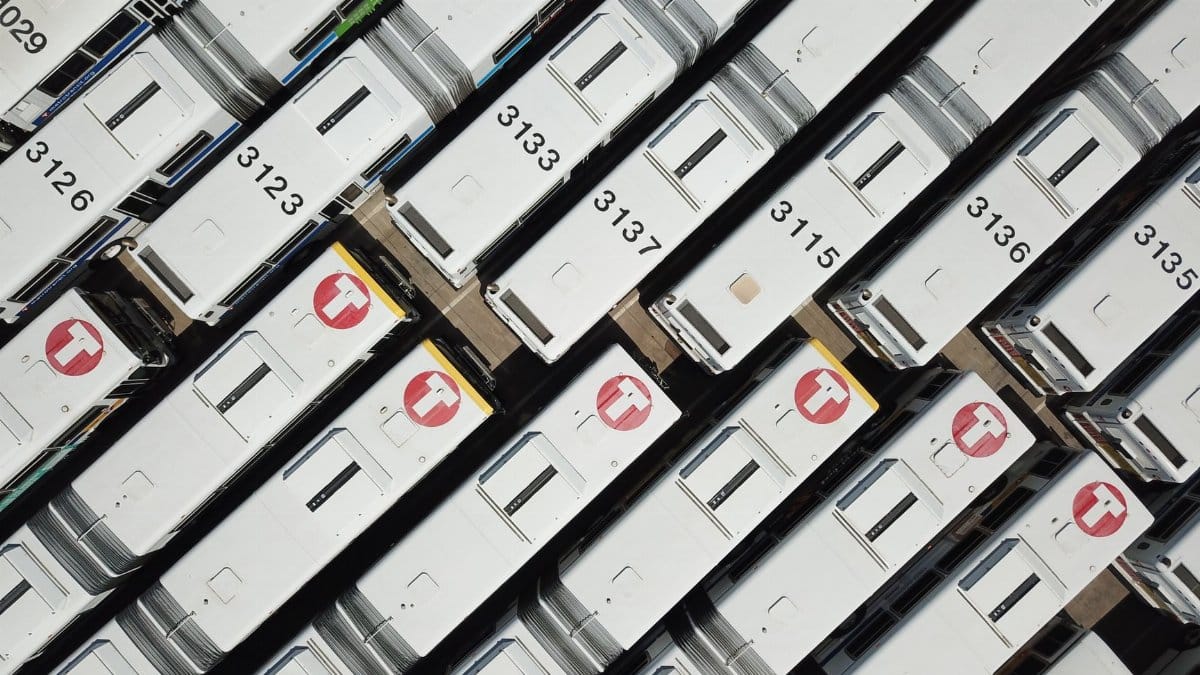
On a weekday morning along Market Street, the doors of an aging train open and close with a tired certainty. Riders shift their bags, check the time, and calculate whether the next connection will hold. That small private arithmetic, repeated across Philadelphia and its suburbs, is the real setting for a fight now centered on SEPTA Accelerate funding. The agency has asked state leaders in Harrisburg to pay for new trolleys, new cars on the El, and more frequent Regional Rail, rather than accept another season of thinner service. The request is practical. It is also a test of whether Pennsylvania still treats getting to work, school, and a hospital appointment as a public obligation.
A system asked to carry a region

SEPTA is not a boutique service for people who prefer not to drive. It is the circulatory system of southeastern Pennsylvania: buses on neighborhood streets, trolleys in West Philadelphia and along historic corridors, the Market Frankford Line that locals still call the El, the Broad Street Line, and a Regional Rail network that ties city neighborhoods to office parks, colleges, and older suburban towns. When any piece falters, the delay does not stay on the platform. It shows up as a missed shift, a late pickup, a fare paid for a ride that never quite arrives.
For years the agency has described a widening gap between what riders need and what the current budget can sustain. Labor, parts, electricity, and the simple aging of steel and concrete all cost more. Ridership recovered unevenly after the pandemic. Dedicated state support has not kept pace with the ambition politicians voice when they talk about growth, climate, and access to jobs. The result is a familiar American pattern: a transit system praised in speeches and starved in appropriations.
What Accelerate is selling

The Accelerate plan, as SEPTA has presented it to lawmakers and the public, is an argument against managing decline. Instead of another list of routes to thin and stations to shortchange, the agency is asking for the money to replace worn vehicles and run the service people already depend on more often. New trolleys would matter on streets where a single disabled car can tangle traffic and strand a whole line. New El cars would matter on a route that functions as a spine for working class neighborhoods from the Delaware to the western edge of the city. More frequent Regional Rail would matter for riders who now plan their evenings around a schedule that feels more like a suggestion than a promise.
Frequency is not a luxury. On a bus or a train that comes every few minutes, a missed connection is an inconvenience. On a line that comes once an hour, it can end a shift or a class. SEPTA Accelerate funding is, in that sense, a bid to buy time back for people who do not control their own clocks.
Trolleys that still organize daily life
Philadelphia’s trolleys are easy to romanticize and harder to maintain. They run in mixed traffic, stop often, and carry students, hospital workers, shoppers, and older residents who have no interest in a car. A modern fleet would not erase congestion. It would reduce the breakdowns that turn a routine ride into an hour of standing in the street, wondering whether to walk.
Riders notice the small failures first: a door that sticks, a car that smells of heat and metal, an announcement no one can hear. Those details are not trivial. They are how a public system either earns trust or spends it. Replacing vehicles is also a safety and accessibility question. Newer cars can board more cleanly, carry wheelchairs with less theater, and fail less often in weather that older equipment was never asked to survive this long.
The El and the cost of unreliability
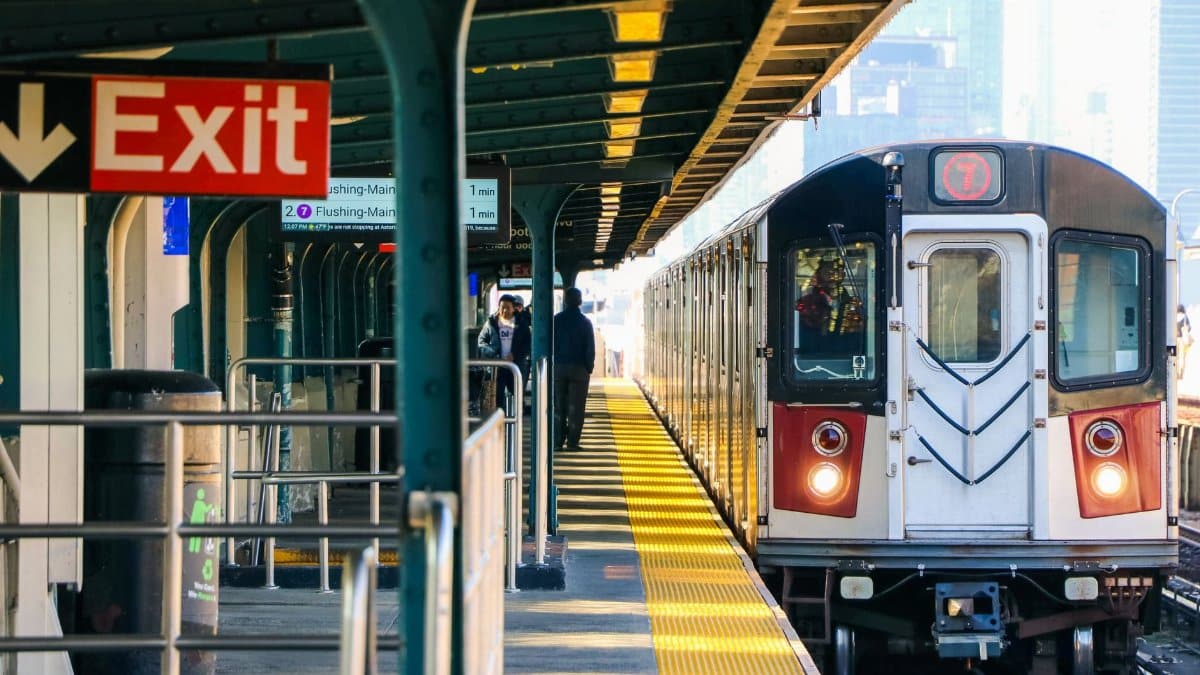
The El is where the region’s inequality is hardest to aestheticize. It moves enormous numbers of people who are going to warehouses, hospitals, restaurants, and offices that do not offer remote work as a courtesy. When cars are old, maintenance windows grow, and crowds stack up at peak hours, the people with the least slack absorb the delay.
A funding plan that puts new El cars near the center of the request is making a moral claim as well as an engineering one. Reliability is a form of respect. It says the trip from Frankford or 69th Street is not a lesser version of a suburban commute. It is the commute. Lawmakers who speak easily about workforce participation should be asked, plainly, how a worker is supposed to participate when the train that gets them there is the part of the budget everyone hopes to postpone.
Regional Rail and the suburbs that say they want growth
Regional Rail is often discussed as if it belonged to a different public: office workers, college towns, stations with parking lots and coffee. That picture is incomplete. The trains also serve city neighborhoods, shift workers, and families trying to reach jobs that left the old streetcar corridors decades ago. More frequent service would not only comfort existing riders. It would make the network usable for people who cannot build a life around a sparse timetable.
Suburban officials like to talk about housing near stations and about keeping employers from leaving. Those goals collapse if the train is an afterthought. A region that zones for growth around rail and then declines to fund the rail is not planning. It is advertising.
Harrisburg and the habit of the shortfall
The decisive audience is not a planning conference. It is the Pennsylvania legislature, where transit funding competes with roads, schools, tax politics, and the durable belief that a train in Philadelphia is someone else’s problem. SEPTA’s leaders have framed the choice as investment versus cuts. That framing is politically sharp because cuts are no longer abstract. Riders have already watched service shrink, headways stretch, and promises of restoration slide into the next fiscal year.
A dedicated, predictable stream of support would let the agency order vehicles, schedule overhauls, and hire with something other than dread. Stopgap budgets produce stopgap maintenance. You cannot run a railroad on a hope that a late night deal in the capital will arrive before the next timetable change. SEPTA Accelerate funding is the phrase the agency is using to describe that longer commitment: not a one time ribbon cutting, but the money to buy cars, run them often, and stop treating crisis as the normal operating plan.
Riders who have already done the math

Ask people on the platform what they want and the answers are rarely visionary. They want the bus that the app said was six minutes away. They want a train that is not so packed that a child cannot board. They want fares that do not climb while the ride gets worse. They want stations that feel safe enough to wait in after dark, which is a staffing and design problem as much as a policing one.
Those expectations are modest, which is why the failure to meet them stings. Philadelphia’s transit riders have been told, in successive budget cycles, that patience is a civic virtue. Patience has a class character. The person who can summon a car, or who works from a kitchen table, can afford to be patient. The person counting transfers cannot.
What the money would change, and what it would not

No appropriation will fix traffic on Baltimore Avenue by itself, or make every regional train glamorous, or settle every labor dispute. Funding is not a personality. It does not guarantee competent management, honest procurement, or a board that listens when riders say a change has failed. Those are separate duties, and SEPTA should be held to them whether or not Harrisburg writes a larger check.
Still, there are things money plainly buys: vehicles that are not held together by deferred maintenance, crews enough to run the published schedule, and frequency that makes the network feel like a network rather than a set of isolated gambles. Without that base, talk of innovation is decoration. You cannot app your way out of a car shortage.
The bill for waiting

Delay has a price, and it is not only paid in the agency’s bond outlook. Every year of worn equipment raises the chance of a breakdown that cascades through a line. Every year of thin Regional Rail service teaches a potential rider to drive, which then becomes the argument for not funding the train. Cuts create the ridership decline that is later cited as proof that transit is a lost cause. The circle is convenient for opponents and punishing for everyone else.
There is also a labor market cost that rarely appears in a hearing room photo. Employers in hospitals, hotels, universities, and logistics already struggle to hire people who can arrive on time from across the region. A weaker SEPTA makes that struggle structural. The Accelerate request is, among other things, an economic development memo written in the language of trolleys and rail cars.
A future that has to be funded to be real

SEPTA’s Accelerate plan sells a better transit future because the present is no longer a stable place to stand. New trolleys, new El cars, and Regional Rail that comes often enough to trust are not ornaments. They are the minimum equipment of a serious region. The legislature can call that vision expensive. It should also be asked what the alternative has already cost, in missed work, in cars bought by people who would rather not own them, and in a public system slowly taught to expect less of itself.
SEPTA Accelerate funding will not settle every argument about fares, safety, or management. It would decide a prior question: whether Pennsylvania intends to run the transit network it already has, or to manage its fade and call the fade a strategy. Riders boarding this morning already know which of those futures they are living in. The rest is a vote.