

On a cold morning outside Mercy Hospital, the picket signs came down before the coffee had gone cold. Physicians who had spent four days away from clinics and wards learned that a tentative agreement was in hand. The Mercy Allina doctor contract, still subject to a member vote, is the sort of document most patients never read and yet feel in every rushed visit and every delayed callback. Reporting in the Star Tribune described a bargain that advanced professional autonomy and left sick pay unresolved. For a public that treats medicine as both service and science, that split is not a technical footnote. It is the difference between a physician who can refuse an unsafe pace and a physician who cannot stay home when ill.
A bargain that is finished and not finished

A tentative deal is a pause, not a signature. Union physicians and Allina Health have a text they can take back to their own people. Until members ratify it, schedules, staffing grids, and the daily habits of a hospital remain in a kind of suspense. That suspense matters in a place like Mercy, where emergency arrivals do not wait for labor law to catch up. Administrators must plan coverage. Physicians must decide whether the language on the page matches the pressure they felt on the floor. Patients, who were not at the table, inherit whatever clarity or ambiguity survives the vote.
The Mercy Allina doctor contract therefore sits in an awkward public light. It is news because a walkout happened. It is also unfinished business because a walkout ends only when the people who walked believe the return is worth it. In that gap, rumor travels faster than the agreement itself. Neighbors hear that doctors won, or that doctors lost, and both sentences can be partly true.
Autonomy as more than a slogan

Autonomy language is easy to dismiss as professional vanity. In practice it is closer to a safety rule. When a health system can dictate panel sizes, visit length, documentation load, and the sequence of clinical decisions without a meaningful check, the physician becomes a throughput device. The reported gain in this round is language that gives doctors a firmer claim on how care is organized, not a blank check to ignore budgets. That claim can cover who sets the pace of a clinic day, how disagreements about unsafe assignments are raised, and whether clinical judgment can be overridden by a template written far from the bedside.
Readers should not romanticize the point. Autonomy without resources is a speech. Resources without autonomy can still produce careless medicine. The interesting part of this settlement, if members accept it, is the attempt to write professional judgment into a contract rather than leaving it to custom. Custom bends when volumes rise. Contract language bends more slowly, and that slowness is often the point.
The sick pay question that did not move

Sick pay is the part of the story that resists abstraction. A physician with influenza in an exam room is not a symbol of dedication. The physician is a vector. Families understand this instantly when a school sends a child home. Hospitals sometimes understand it less clearly when the absent clinician is also the revenue line. The reporting indicates that sick pay did not come with the autonomy language. That absence will shape how many physicians read the rest of the text. A contract can honor judgment in the abstract and still punish the body that has to exercise it.
There is a moral oddity here that does not require a sermon to notice. Institutions named for mercy ask the sick to trust them. Those same institutions, in this round, did not agree to pay physicians for the ordinary fact of being sick. Colleagues cover. Patients wait. The physician who stays home absorbs the loss. Over a career, that incentive teaches people to work through illness, which is precisely the lesson a hospital should not want to teach.
Four days that rearranged a campus

Four days is not a long strike by the standards of industrial history. In a hospital it is long enough to expose every contingency plan. Elective work can be postponed. Emergencies cannot. During a physician walkout, the public sees both the power of organized clinicians and the fragility of a schedule built on their presence. Nurses, technicians, and remaining physicians absorb strain that no press release fully captures. The people on the sidewalk are not abandoning patients in a cartoon sense. They are using the only leverage a contract negotiation eventually offers, which is the withdrawal of labor.
That leverage is ethically heavy, and physicians know it. Many of them chose the work because they do not like to leave a room unfinished. A short walkout forces a confrontation between that temperament and the slower violence of understaffing, unpaid illness, and decisions made by people who do not see the last patient of the day. The sidewalk is where that confrontation becomes visible to commuters.
Allina as a system, not a single doorway
Allina Health is not Mercy alone. It is a regional system with clinics, hospitals, and a balance sheet that has to satisfy bondholders as well as families in Coon Rapids and beyond. System logic rewards standardization. A protocol that works in one site is copied to another. A productivity target tested in a quiet month becomes the expectation in a hard month. Physicians experience that copying as a loss of local sense. Executives experience resistance as a threat to coherence. Both descriptions can be accurate at once.
The negotiation at Mercy is therefore a local fight with system consequences. If autonomy language holds, other sites will ask why their physicians lack it. If sick pay remains off the table, other units will hear that illness is still a private cost. Labor relations inside a health system travel by hallway conversation as much as by formal notice. A tentative text in one hospital becomes a template, a warning, or both.
What patients actually lost and kept

Patients are poorly served by stories that treat them only as hostages of a strike. Many appointments moved. Some people waited longer in pain or anxiety. Some found care elsewhere. Those costs are real and should be stated without softening. They are also not the only costs in view. A clinic that runs physicians through illness, or that strips them of say over unsafe volume, produces its own delays, errors, and quiet exits. The walkout made one set of costs sudden. The contract fight is about costs that usually arrive as a shorter visit and a doctor who looks past the patient at a screen.
Trust, once spent, is hard to repurchase with a billboard. People who saw picket lines outside a hospital they depend on will remember the image longer than they remember the clause on autonomy. The task for both sides, after a vote, is to show that the interruption bought something patients can feel: a clinician who is present, rested enough to think, and permitted to practice like a professional rather than a timed station.
Mercy as a word that still means something

The hospital carries a name older than any health system. Mercy, in the ordinary moral vocabulary of this country, means relief given when it is not strictly owed, and care that does not wait for a perfect payer. A labor dispute does not cancel that inheritance. It tests it. A public that hears the word on a building has a right to ask whether the institution behaves as if the word still binds the people who run it and the people who heal inside it.
This is not a call to confuse a contract with a creed. It is a reminder that clinical work has always carried a vocational strain. Physicians speak of calling even when they also speak of wages, childcare, and student debt. Those registers do not cancel each other. A society that wants mercy at the bedside cannot treat the bearers of that mercy as infinitely elastic. The Mercy Allina doctor contract is one place where that tension gets written down in plain operational terms.
Why physicians organized in the first place

Physician unions still surprise people who remember an older image of the independent doctor. Employment changed the picture. When a hospital or system is the employer, the romantic solo practice is mostly gone. What remains is a workforce with licenses, obligations, and surprisingly little formal power over the conditions of the job. Organizing is the unromantic answer. It trades individual prestige for collective procedure. It also exposes physicians to the same public skepticism that meets other unions: the charge that professionals with high incomes have no standing to withhold work.
Income does not erase the structure of employment. A well paid person can still be scheduled into harm, denied a sick day, or told that clinical judgment yields to a dashboard. The physicians at Mercy organized because individual complaints were not moving the institution. A four day walkout is evidence that the complaint had become collective. Whether the tentative text answers it is a question only the members can close.
The vote that still has to happen
Ratification is where rhetoric meets the kitchen table. Members will read autonomy language against the sick pay gap and decide which disappointment they can live with. Some will see a foothold worth keeping. Others will see a settlement that blesses the very exhaustion they struck to resist. Leaders on both sides will urge calm. The interesting votes are often quiet, cast by people who covered extra shifts and now have to judge whether the paper in front of them would have changed last winter.
A no vote would reopen a conflict the campus has only just set down. A yes vote would lock in a compromise that leaves a visible wound. Either outcome is legitimate labor democracy. What would be illegitimate is pretending the public has no stake. The Mercy Allina doctor contract will shape who is in the room when a frightened family arrives after midnight.
A season of clinician unrest
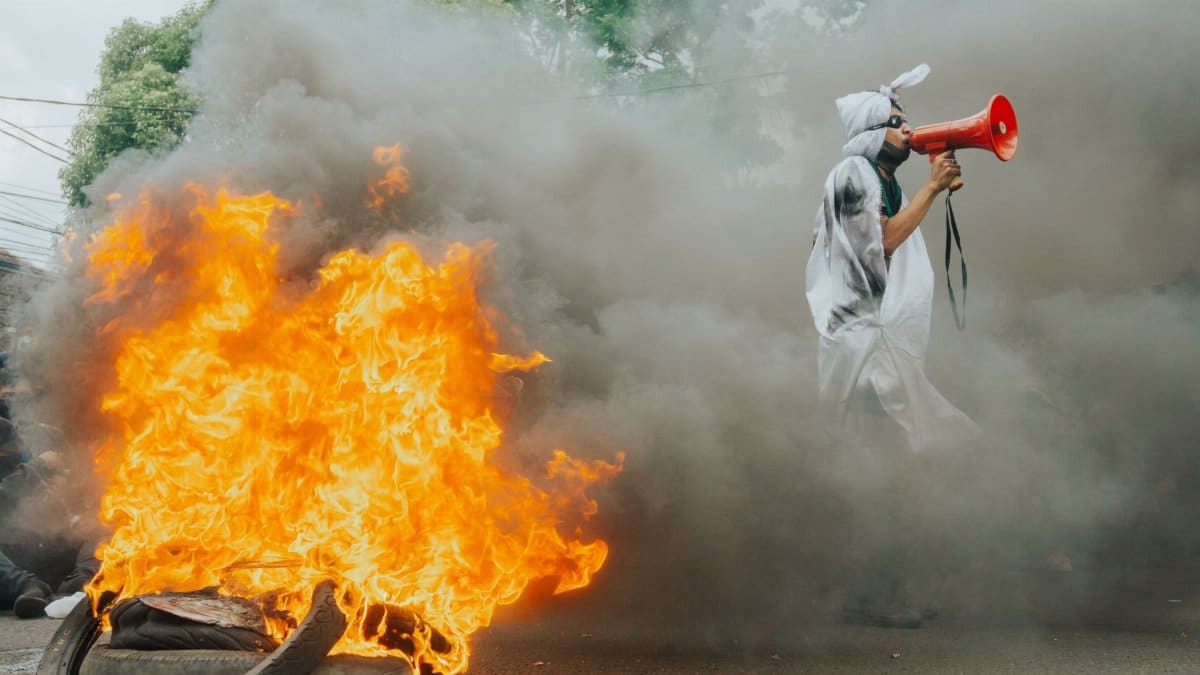
This dispute does not stand alone. Across the country, nurses, residents, and attending physicians have tested whether clinical labor can bargain like other essential work. The themes repeat: staffing, safety, pay for time away from the job when the body fails, and protection from productivity schemes that treat a human encounter as a unit of output. Each settlement teaches the next bargaining table what is winnable. Each failed demand teaches what an employer believes it can refuse.
Observers should resist the tidy narrative that one side is greedy and the other is saintly. Health care in the United States is an expensive, fragmented enterprise. Systems face real costs. Physicians face real moral injury when the enterprise asks them to pretend those costs are only theirs. The useful journalism is specific. Here, the specific facts on offer are a short strike, a tentative text, a reported gain on autonomy, and a reported miss on sick pay.
How a reader might watch the next weeks

The next weeks will be less photogenic than the picket. There will be a vote, a statement, and then the ordinary resumption of rounds. Watch whether clinic templates actually change. Watch whether physicians who are ill stay home without penalty, or whether the missing sick pay continues to govern behavior more firmly than any preamble about values. Watch whether Allina treats the autonomy language as a living process or as a paragraph to be managed. Watch whether patients notice shorter fuses or steadier care.
None of that requires taking a side in advance. It requires remembering that a hospital is a moral institution whether or not it invites the description. Contracts are how modern moral arguments get enforced when goodwill runs out. The walkout at Mercy was a hard method aimed at a human problem. The agreement, if it holds, will be judged not by the relief of a settled headline but by the ordinary Tuesday that follows, when someone sick needs a doctor who is well enough, and free enough, to help.