
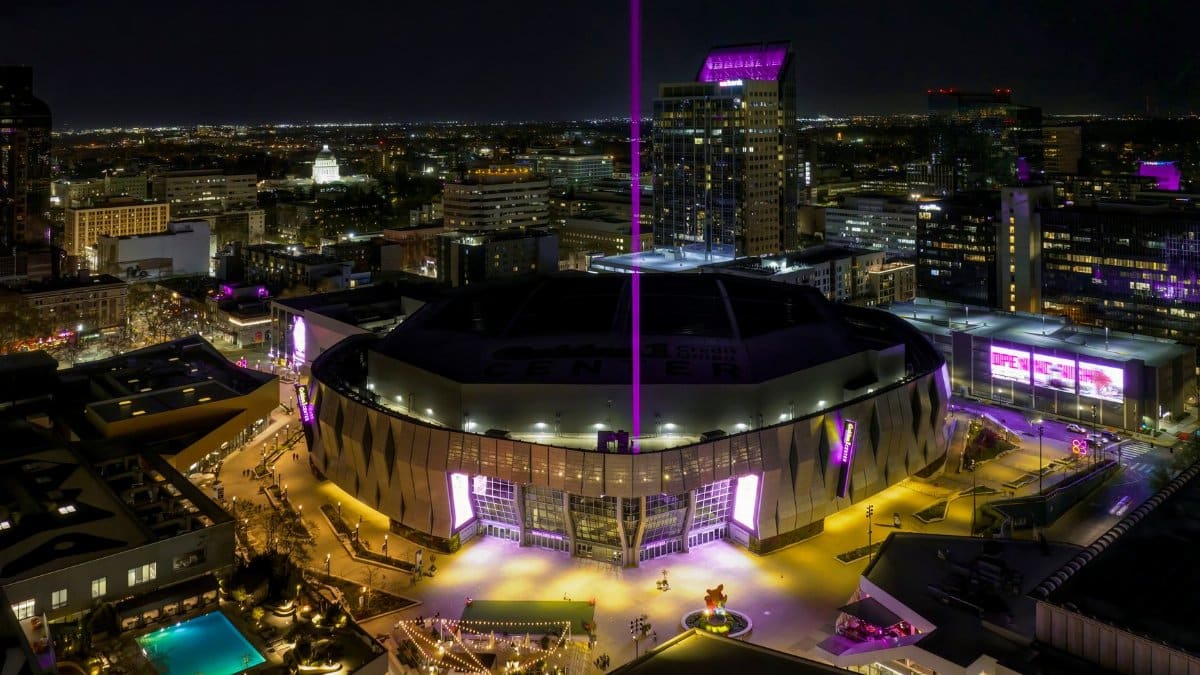
On a weeknight when the bay still held a low fog, Chase Center filled before the introductions finished. People stood in the aisles with programs folded in their hands, talking as if the building itself had become part of the roster. Golden State beat Seattle 70 to 57, a spare score that nonetheless kept a larger claim alive. The phrase Valkyries Storm sellout has begun to mean more than a full ledger. It names a habit: a home floor that does not go quiet, and a franchise still learning how much noise a new crowd can carry.
A building that treats attendance as a promise
Sellouts are easy to romanticize and harder to sustain. In a region already crowded with championship banners, a new women’s team does not inherit devotion. It has to earn the walk from the train, the price of the seat, and the decision to stay through a grinding third quarter. Chase Center has become the test. When the lights drop and the floor is the only bright thing in the room, the question is not whether celebrities will appear. The question is whether ordinary fans will keep coming back on nights that are not national television events.
That is what made this visit from Seattle feel larger than a midweek assignment. A full house is a kind of contract. The players owe effort. The crowd owes attention. Both sides kept the bargain. I have sat in enough half empty arenas to know the difference. Empty seats change the sound of a missed shot. Full seats change the courage of a contested one.
What 70 to 57 actually revealed

The final margin was thirteen points, not a blowout in the old playground sense and not a nail biter either. It was a professional win built on stops, patience, and a refusal to let Seattle’s size turn the paint into a refuge. Golden State did not need a spectacular shooting night to make the result feel decisive. The hosts dictated the terms. They slowed the game when slowing helped, and they closed space when Seattle tried to reset.
Low scoring basketball can look modest on a phone screen. In the building it felt exacting. Every possession had weight because neither side was pouring in easy points. Fans who came for flash still got a lesson in leverage: a team can rout an opponent without ever looking reckless. Control, repeated for forty minutes, is its own kind of force.
Seattle arrives with history and leaves with a lesson
The Storm are not a novelty opponent. They carry a franchise memory of titles, of stars who defined an era, of nights when visiting arenas had to brace for them. That pedigree still matters. Younger teams measure themselves against it whether they admit the measuring or not. Beating Seattle at home, in front of a crowd that expected the win and still had to watch it be assembled, is a different credential than beating a struggling side on the road.
Seattle’s veterans tried to impose an older geometry: post position, offensive rebounds, a tempo that punishes impatient defenses. Golden State answered with length at the right moments and enough discipline to avoid foul trouble becoming the story. The visitors were never embarrassed. They were contained. In a league this tight, containment is often the whole argument.
Why a sellout still counts in a sports saturated city
San Francisco and Oakland have spent decades arguing about which arena deserves the night. Baseball, football, and men’s basketball already occupy the civic imagination. A sellout for a WNBA club is therefore not a cute sidebar. It is evidence that attention can be redistributed. Families who once treated women’s basketball as something to sample have started treating it as something to schedule. That shift is cultural before it is statistical.
The phrase Valkyries Storm sellout captures a collision of brands and a collision of expectations. One side brings a settled identity. The other is still writing its first chapters in public. When those chapters keep ending with every seat filled, the writing gets easier for sponsors and harder for skeptics. Skeptics remain useful. They force a franchise to prove that the crowd is not a one month fashion.
Money, yes, but also the shape of a Tuesday
A full Chase Center is an economic fact. Concessions, merchandise, parking, and broadcast optics all improve when the camera cannot find bare chairs. Front offices know this and sometimes talk about it too loudly. Fans know it too, and they are right to resist being treated as a metric. The healthier reading is simpler. People spend money where they feel regarded. They return where the product respects their time.
On this night the product was defense, ball security, and a home team that did not drift after an early lead. That is regard. It tells a commuter who left work early that the evening will not be wasted on lazy offense and lifeless transitions. Winning helps. Caring in the details helps more, because details are what a repeat customer can actually see.
A young club and an old appetite
Expansion teams often live in a strange season of grace. Losses are explained as growing pains. Wins are celebrated as proof of concept. The grace period ends the moment the standings start to matter. Golden State is pressing against that edge. Staying in the conversation for a top seed means the schedule is no longer a tutorial. It is a argument, night after night, about who deserves the easier path later.
Appetite is the right word. Hunger can sound desperate. Appetite suggests a team that wants the right portions: stops in the fourth, mature shot selection, no victory laps with eight minutes left. The rout of Seattle fit that appetite. It was firm without becoming sloppy. New franchises that learn firmness early tend to age better than those that learn only flair.
Defense as a public ritual

There is a spiritual dimension to a crowd that rises for a charge or a deflected pass, and it has nothing to do with doctrine. It is the old human pleasure of watching a group protect something together. When Golden State dug in, the building answered with a sound that was less cheer than insistence. Insistence is what home court is supposed to be. Not noise for its own sake, but a shared refusal to let the visitor breathe.
Players feel that refusal in their legs. A contested layup becomes a pass. A pass becomes a turnover. A turnover becomes the kind of run that turns a close game into a thirteen point decision. None of this requires mysticism. It requires repetition, trust, and a room willing to stay loud when the highlight is a stop rather than a dunk. Chase Center, on this evidence, is willing.
The top seed conversation, held without hysteria

Staying in a top seed conversation is not the same as clinching anything. The WNBA season is long enough to punish anyone who treats June momentum as a deed. Injuries, road trips, and the simple variance of a make or miss can reorder a table in a week. Still, conversations have consequences. They change how opponents scout you. They change how your own players carry themselves in shootaround. They change which national windows find your games.
Golden State earned another week inside that talk by handling a quality visitor at home. The margin matters less than the manner, and the manner was adult. Adult teams do not need to announce their ambitions in postgame microphones. The scoreboard does a cleaner job. 70 to 57 said the hosts were ready for a visitor with a résumé, and ready in front of people who had paid to see readiness.
What the crowd is actually purchasing

Tickets buy a seat. What people seem to want, beyond the seat, is membership in a story that is not already finished. Championship franchises sell memory. New franchises sell participation. You can watch a banner and feel pride. You can watch a first chapter and feel authorship, which is a riskier and often deeper bond. The risk is that the chapter might disappoint. The bond survives if the club keeps showing up with a plan.
Merchandise lines after a win are a crude indicator, but they are not a false one. People take something home when they want the night to last past the train ride. A Valkyries shirt on a Wednesday morning in a downtown office is a small public vote. Enough of those votes, repeated after nights like this Seattle visit, become a constituency. Constituencies outlast hot starts.
The road does not care about your building

Home sellouts can spoil a team if the players start believing the roar is portable. It is not. The next gym will be louder for the other side, or colder, or both. Officials will swallow whistles that Chase Center might have drawn. Role players who looked certain in front of friends will miss open looks in front of strangers. The test of this win is therefore not the final horn in San Francisco. It is the first five minutes of the next road tip.
Good organizations say this out loud, then prove they mean it with practice plans rather than slogans. Golden State has the outline of that organization: a crowd that arrives, a defense that travels in theory, and a result that did not depend on one hot hand. Theory still has to survive the suitcase. Fans who understand that will not panic at the first quiet road loss, and they will not overread a home rout either.
Reading the streak without turning it into myth

Streaks flatter and distort. A run of sellouts can hide soft opponents, lucky schedules, or a novelty that has not yet met fatigue. It can also reveal something sturdy: a city that has decided a team belongs on the weekly calendar. The honest approach is to separate the two. Attendance is a leading indicator of affection. Winning is a leading indicator of quality. When they move together, as they did against Seattle, the story is allowed to get a little larger. It is not allowed to become prophecy.
Journalists do the sport no favors by declaring a dynasty in year one or by sneering at every full house as marketing. The middle path is available and more interesting. Watch who guards. Watch who closes. Watch whether the seats stay full when the opponent is ordinary and the weather is bad. Those are the nights that sort fashion from institution.
A night that belonged to the hosts
Seattle will have other chances, at home and on return visits, to answer this score. Golden State will have other chances to waste the capital a sellout creates. For one evening the exchange was clean. The visitors were routed in the only sense that matters in a half court league: they were denied the spots they wanted, and they never found a second life. The hosts left with a win, a roaring building, and another mark in a streak that has become part of the local sports weather.
Call it the Valkyries Storm sellout and you will be understood in this city now, even by people who do not track every assist. The words point to a specific result, 70 to 57, and to a broader habit of filling the room. Habits are how franchises become neighbors rather than attractions. Neighbors get invited back. Attractions get sampled once.
What to watch when the lights come up again
The next home date will tell more than any column can. If the building fills again, the streak is a pattern. If the defense travels, the top seed talk is earned rather than borrowed. If younger players keep making the simple play under noise, the roster is maturing in public, which is the hardest place to mature. None of those outcomes is guaranteed. All of them are now plausible, which is a better place for a new club to stand than plausible used to be.
Sports pages love a turning point because turning points photograph well. This game may not be one. It may simply be a well played night in a well filled arena, the kind of night that institutions are made of when nobody is insisting on myth. That is enough. A crowd that keeps its promise, and a team that answers with a controlled win over Seattle, do not need a larger caption. The Valkyries Storm sellout already says what happened, and it hints, without promising, at what could happen next if the work stays this plain and this serious.