

On a weekday morning in a Los Angeles preschool classroom, a teacher holds up a picture of a red apple and waits. One child answers in Spanish. Another tries the English word, then looks to a classmate for help. A third repeats both. For years, that small exchange has been the point of dual language rooms funded in part by Head Start: children learn the language of school without being asked to leave the language of home at the door. A federal plan now moving through public comment would narrow that practice. The Head Start English-only proposal, as described by the Los Angeles Times, would press programs toward English as the language of instruction and could reshape rooms that serve thousands of young children across the city. The comment window runs through Oct. 6.
A city built on more than one language

Los Angeles is not a laboratory for a single tongue. Spanish fills grocery aisles, bus stops, and church basements. Armenian, Korean, Chinese, Tagalog, and dozens of other languages share the same sidewalks. Preschool is often the first public room a child enters, and for many families it is also the first place where home speech meets the expectations of American schooling. Dual language classrooms grew in that setting because teachers saw what happened when a four year old was told, by silence if not by rule, that the words used with a grandmother did not belong. The city did not invent bilingual early education. It simply had too many children, and too much evidence from daily life, to pretend that English arrived alone.
What the overhaul would ask programs to do

The Los Angeles Times report frames the Trump administration overhaul as a shift in how Head Start programs may use languages other than English during the day. Instruction, materials, and the ordinary back and forth of circle time could be pulled toward English even in rooms built to hold two languages at once. Precise regulatory text still sits inside a public comment process, which means the final shape is not yet fixed. That uncertainty is itself the story for local directors. They cannot yet tell a parent whether a Spanish story hour survives, or whether a teacher may still explain a feeling, a rule, or a scraped knee in the language a child actually understands. Planning a school year on a rule that is still in draft is a particular kind of strain.
Why dual language rooms took root here

Head Start was created to give children from families with low incomes a fairer start, not to police the sound of their kitchens. In Los Angeles, fairer often meant bilingual. A child who can name colors in two languages is not behind. A child who can follow a direction only after panic subsides is not ahead. Programs paired English with home languages because attendance, trust, and early literacy all suffered when families felt shut out. I have sat in enough parent meetings, as a reporter and as a neighbor, to know that the first question is rarely ideological. It is practical. Will my child be safe, seen, and able to ask for help before the English catches up?
Teachers who already work in two registers
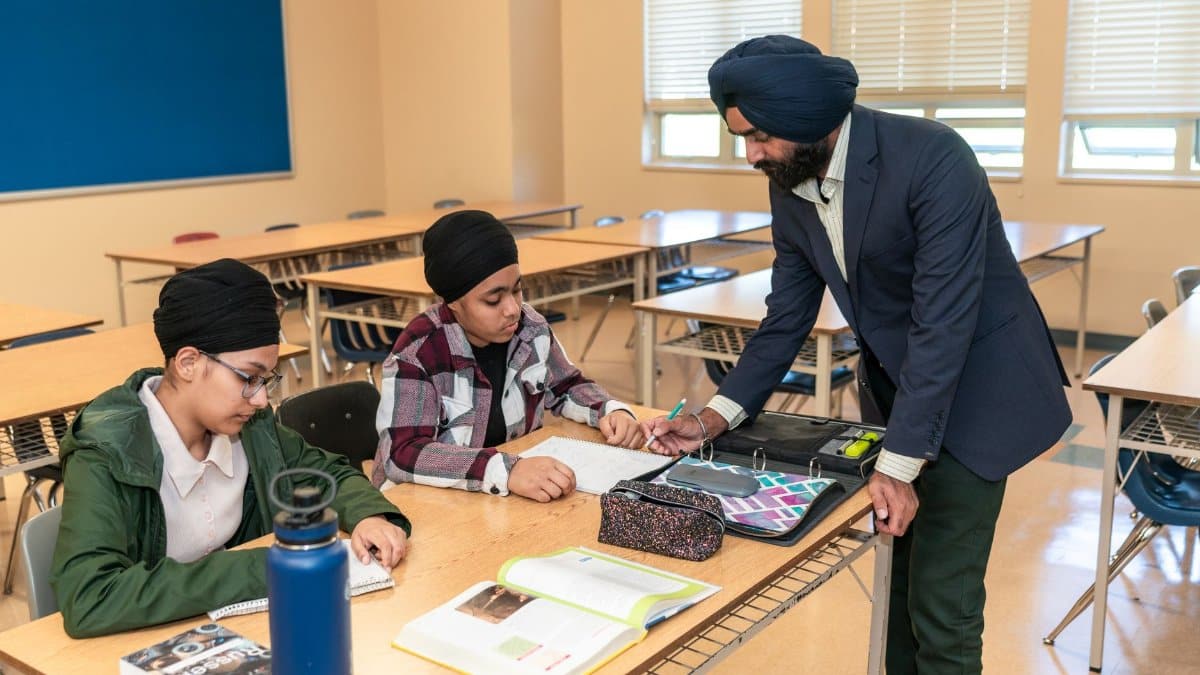
The people who would carry any new rule are not theorists. They are aides who switch languages mid sentence because a child is crying, and lead teachers who label shelves in English and Spanish so a new student can find a coat. Training, hiring, and the scarce supply of credentialed bilingual staff took years to assemble. An English centered mandate would not simply swap one poster for another. It would recast the job. Some teachers would comply and feel the loss in the room. Others would leave for districts or private programs that still value the second language. Los Angeles already struggles to staff early education. A rule that makes the work narrower can make the shortage wider.
Families who hear the proposal as a verdict

For parents, language policy lands as a judgment about belonging. A mother who works a night shift may rely on a grandmother who speaks only Spanish to reinforce what the child learned that day. If the classroom stops using Spanish, the bridge between school and home thins. The same is true for families speaking Mandarin in the San Gabriel Valley or Armenian in Glendale, even when the loudest local debate is about Spanish. The Head Start English-only idea, whatever its authors intend, reads to many of those parents as a statement that their speech is a problem to be solved rather than a resource to be used. That reading may be harsher than the legal text. It is still the reading that will decide whether families stay enrolled.
What the research record actually supports

Serious reviews of early learning do not treat home language as an obstacle to English. A National Academies report on children and youth learning English describes home language support as compatible with English growth, and often as a help to it, when programs are well designed. The report, Promoting the Educational Success of Children and Youth Learning English, is not a Los Angeles political document. It is a synthesis used by educators who have to choose materials, staffing, and time. Local programs can point to that record when they comment. They should also be honest about limits. Poorly run bilingual rooms do not magically outperform strong English immersion. Quality, dosage, and teacher skill still decide outcomes. The question is whether a federal overhaul assumes quality only exists in one language.
The comment clock and who is likely to speak

Public comment through Oct. 6 is the formal path for disagreement, support, and revision. Agencies collect letters. Advocates organize. Program directors translate dense proposals into language a board can vote on. The risk in a short window is not silence from national groups. Those groups know the docket. The risk is that classroom teachers, family child care providers, and parents working two jobs never see the notice in time. Los Angeles has community organizations that can translate a proposal and host an evening meeting. Whether they reach the families most affected, in the languages those families use, will shape whose experience enters the record. A comment period that is legally open can still be practically narrow.
Civil rights, access, and the fear of a softer exclusion
Head Start sits inside a larger web of civil rights expectations. Children are entitled to a meaningful education, and families are entitled to information they can understand. An English focused rule does not, by itself, erase those duties. It can, however, make them harder to meet if interpretation, bilingual staff, and translated notices are treated as optional extras rather than as the means of access. Lawyers will argue the boundaries. Parents will feel them sooner, in a form that is never mailed home because no one on staff can write it, or in a conference that ends before a father understands why his child was marked behind. Exclusion does not always arrive as a locked door. Sometimes it arrives as a meeting held only in English.
Urban rooms and the rest of the map

Los Angeles will draw the cameras because the scale is obvious and the politics are familiar. The same proposal would also reach smaller Head Start grantees in farm towns, tribal communities, and suburbs where a single bilingual aide holds a program together. A city dual language room can sometimes reassign staff. A rural site may have no second teacher to call. If the Head Start English-only plan is written as if every program resembles a large urban agency, it will misfire twice: once in Los Angeles, where bilingual capacity is real but fragile, and again in places where that capacity was never more than one person. Federal rules travel. Local conditions do not.
Money, enrollment, and the quiet threat of empty seats

Head Start funding follows children who are enrolled and who stay. If families pull out because they no longer trust the language practice, slots do not sit empty in a moral vacuum. They sit empty in a budget. Programs then face a cruel sequence: lose the families who needed bilingual support, fail to refill seats quickly, and look less viable when the next grant cycle arrives. Directors in Los Angeles already manage waiting lists, rent, and staff turnover. They do not need a language fight to discover scarcity. They do need clarity before they promise parents a model they may not be allowed to keep. Uncertainty is expensive even before a final rule is signed.
A moral question that is not only political

There is a spiritual dimension to this fight that policy language rarely admits. How a community speaks to its smallest members is a statement about whose voice counts as human in the room. Many faith communities in this city already run or host early learning, and they have long treated language as a form of hospitality rather than as a test of loyalty. You do not ask a guest to stop sounding like home before you offer a chair. Public programs are not churches, and they should not be governed by sermon. They can still learn from that ethic of welcome. A child learning English is not a project of national purity. The child is a person already in the middle of a life.
What parents and programs can still do

Between now and Oct. 6, the useful steps are ordinary and specific. Read the proposal rather than the slogan attached to it. Comment with examples from real classrooms: what a dual language circle time looks like, how a home visit works when the visitor shares the family’s language, what happens to behavior and attendance when that support disappears. Name the ages. Name the languages. Avoid abstractions that let a reviewer imagine only politics. Providers can also tell families, in the languages families use, that a comment window exists and that individual letters matter more than a single form letter copied a thousand times. The Los Angeles Times account is a starting point, not a substitute for the docket itself. Readers can follow the paper’s reporting at its story on the proposal and the program’s own public materials at HeadStart.gov.
What the city will not be able to undo quickly

Even if comments soften the draft, trust moves slower than rulemaking. A family that hears, for a season, that Spanish or Korean is unwelcome in a publicly funded room may not return when the poster changes back. Teachers who leave do not reappear because a sentence in a federal register is revised. Los Angeles spent decades building dual language habits in early education. Those habits live in people, not only in curricula. The Head Start English-only debate will be scored in Washington as a fight about standards. On the ground it will be scored in whether a child still hears both of the languages that make a morning intelligible.
The apple, the word, and the wait

Return to the picture of the apple. The pedagogical point was never the fruit. It was the pause, the permission to answer in the language that arrived first, and the patient second try in English. A national program can value English, as it should in a country where English opens work, ballots, and further school, without treating every other language as a delay. Thousands of Los Angeles children sit in that pause every weekday. The comment period is short. The consequence of getting the rule wrong will last longer than the news cycle that carries the Head Start English-only plan across the city. What remains is a choice about whether early education widens a child’s world or asks that world to shrink before the child can tie a shoe.