
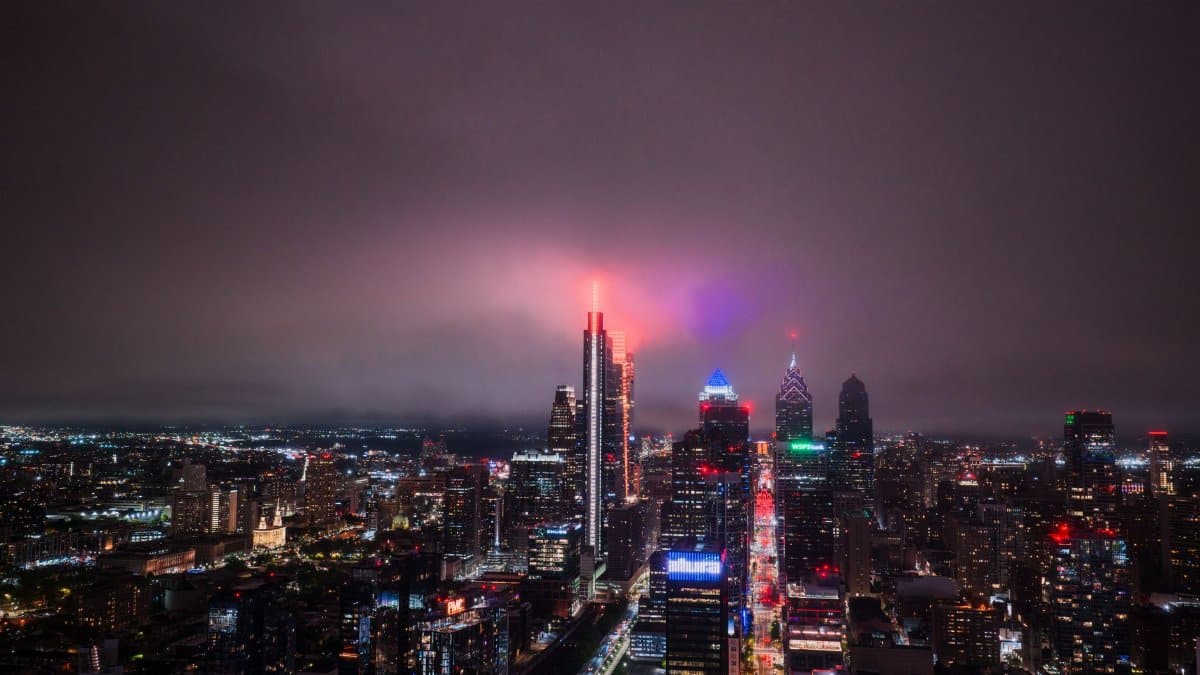
On a wet evening at Broad and Spring Garden, the light turns yellow and the car in the next lane still rolls through. A camera housing sits above the corner, small enough that most people never look up. That quiet hardware is now at the center of a claim city officials carried to Harrisburg: fewer drivers are treating red as a suggestion. According to the Philadelphia Parking Authority, violations at existing sites fell by as much as 17.4 percent, a figure that has renewed the argument over Philadelphia red light cameras.
What officials carried to the Capitol
The authority told state lawmakers that the drop showed up at intersections already under automated enforcement, not only at brand new sites where any camera might startle drivers into temporary caution. The distinction matters. A one season dip after a fresh installation can be nerves. A decline at corners that have been watched for years suggests a habit is changing, or at least that some repeat offenders have learned the corners by name.
The Inquirer reported the testimony as part of the periodic fight over whether Pennsylvania should keep the program alive. Lawmakers do not treat these cameras as a settled utility. They treat them as a permission that expires, which means every few years the city must walk back to the Capitol with numbers, crash talk, and a defense against the charge that the lenses exist to raise cash.
Readers who want the underlying account can find it in the Inquirer report on the violation drop. The percentage is the authority’s, offered in a political setting, and it deserves to be read that way: as evidence presented by the agency that runs the system, not as an independent audit published in a journal.
Why a percentage is not a verdict
A 17.4 percent decline sounds clean. Streets are not. Violation counts move with traffic volume, construction detours, school calendars, and whether a corner was repaved and restriped in the same year the camera stayed put. If fewer cars pass a sensor, fewer tickets can follow even if the share of drivers who run the light barely changes. If more cars pass and tickets still fall, the behavioral claim gets stronger.
The authority’s phrasing, as much as 17.4 percent, also signals a range. Some corners improved more than others. Averaging them into a single civic victory would flatten the map. Philadelphia is not one intersection. A camera on a wide arterial with a long yellow may tell a different story from a camera at a tight neighborhood crossing where the yellow feels short and the cross street is always full.
Good reporting on this subject asks for the denominator. Tickets per thousand vehicles, not raw citations, is the fairer comparison. Crash reports, especially right angle crashes, matter more than ticket totals if the public goal is fewer broken bodies rather than fewer envelopes in the mail. Until those companion figures sit beside the violation drop, the headline number is a start, not a closing argument.
How the system actually works
Philadelphia red light cameras do not pull a driver over. They photograph a vehicle that enters an intersection after the signal has turned red, typically capturing the plate and the signal state. A reviewer, not the machine alone, is supposed to confirm that the image shows a violation rather than a legal stop past the line or a turn permitted on red. The notice goes to the registered owner. It is a civil penalty, not a criminal charge, and it does not put points on a license the way an officer’s stop often does.
That design is the feature supporters praise and the feature critics distrust. No traffic stop means no roadside confrontation, which can be safer for officers and for drivers. It also means no conversation, no discretion in the moment, and no easy way for a visitor to explain a confusing signal. The appeal process exists on paper. Using it requires time, a mailed notice that actually arrives, and a person willing to spend an afternoon arguing with a photograph.
Owners who lend a car, share one, or have a plate that was misread learn the system’s blunt edge quickly. The camera sees a vehicle. The law then looks for a person to bill. Those are not always the same story.
The safety case, stated without romance
Red light running is not a manners problem. It is one of the more violent ways a routine drive ends. A car entering on red meets cross traffic that has a green and a reasonable belief that the box is clear. The resulting crashes tend to be side impacts, the kind that bypass the crumple zones engineered for a head on hit. Pedestrians and cyclists, already exposed, have even less protection when a driver decides the yellow was negotiable.
The Insurance Institute for Highway Safety has long tracked this behavior and the camera programs meant to curb it. Its overview, available at the institute’s red light running page, is a useful starting point for readers who want national research rather than a city press statement. The broad pattern in that literature is that cameras are associated with fewer red light violations and fewer right angle crashes at treated intersections, alongside a sometimes stubborn debate about rear end crashes when drivers brake harder to avoid a ticket.
Rear end risk is the honest complication. If people slam to a stop because they fear a fine, the driver behind them may not. A program that trades one crash type for another has not automatically made a corner safer. Philadelphia officials, if they want the violation drop to carry the day in Harrisburg, should publish crash trends at the same sites, broken out by type, for the same years as the ticket decline. A citation chart without a crash chart is an incomplete safety brief.
Money, and why people smell a motive

Every automated enforcement debate in this country eventually reaches the same suspicion: the camera is a toll booth with a moral alibi. Philadelphia is not exempt. Fines fund operations, vendors, and, depending on the statute, other public uses. When an agency both runs the program and cites its success, residents are entitled to ask who profits if the numbers stay high, and who loses politically if the numbers fall so far that the program looks unnecessary.
A falling violation count actually complicates the revenue critique. If fewer people are caught, the city is collecting less from those particular corners, at least before any expansion. That is awkward for the pure cash grab theory and convenient for officials who want to say the medicine is working. It is also temporary. New intersections, higher fines, or looser review standards could refill the account. Trust depends on whether expansion follows safety data or follows budget holes.
Transparency is the cheapest credibility the authority can buy. Publish site by site totals. Publish how many notices are dismissed. Publish how often the reviewer overrules the camera. People forgive a fine they understand. They do not forgive a black box that only speaks when it wants money.
The corners that never make the hearing
Hearings in Harrisburg talk about percentages. Neighborhoods talk about a specific pole, a specific school crossing, a specific left turn that feels one second too short. In parts of the city where traffic enforcement by officers has been uneven for years, a camera can look like the only consistent rule on the block. In other parts, it can look like another device aimed at people who cannot easily absorb a civil fine on top of rent, insurance, and a long commute.
Geography is policy. If cameras cluster on corridors used by working people who drive because transit does not reach a night shift, the safety benefit and the financial burden land on the same households. If cameras protect crossings where children walk to school, the moral math changes. Philadelphia has both kinds of corners. Treating the network as a single virtuous machine ignores who waits at which light.
Engineers can do some of this work without a lens. Longer yellows, where the timing is genuinely short, reduce violations before any ticket is printed. Better sight lines, fewer confusing turn bans, and signals that do not leave a pedestrian stranded in the middle of an eight lane road are not glamorous. They also do not require a vendor contract. A city serious about red light running should fix the timing it controls and then measure what the cameras still need to do.
Drivers who feel judged by a box

Talk to people who have received a notice and the story rarely begins with contrition. It begins with the yellow. Was it short. Did the truck in front hide the signal. Did the driver stop past the stop bar but before the crosswalk, legal in spirit and illegal in the frame. Some of those defenses are excuses. Some are real, and the photograph cannot always tell them apart.
There is also a quieter group that never gets a ticket and still changes behavior. They brake earlier on corridors they know are watched. They stop taking the rolling right on red at a corner that once felt harmless. That is the compliance officials want, and it will never show up as a grateful quote in a hearing. It shows up as an empty violation log, which is easy to undercelebrate because it does not produce a press conference.
Resentment still has a public cost. If enough drivers decide the program is a trap, they do not only hate the fine. They discount every other safety message the city sends, from bike lanes to speed limits near parks. Legitimacy is a safety tool. Waste it, and the next true warning sounds like marketing.
Harrisburg’s habit of temporary permission
Pennsylvania has never quite decided that automated enforcement is ordinary government. The red light program lives on authorization that must be renewed, which turns a traffic operation into a recurring political audition. Supporters say that sunset dates keep agencies honest. Critics say the dates exist because lawmakers do not want to own the cameras in an election year, so they rent them to the cities and demand a performance review.
The latest numbers are ammunition in that audition. A double digit drop at existing sites is the sentence officials hoped to carry north. Opponents will answer that self reported success is not independent success, that crashes matter more than citations, and that a program which needs constant reapproval has not earned permanence. Both instincts can be true at once. Oversight is not hostility. Hostility is refusing to read the crash file.
What the Capitol should not do is treat the renewal vote as a referendum on whether drivers are annoying. The vote is about whether a specific tool, used at specific corners, under specific review rules, reduces serious harm enough to justify the fines and the surveillance. That is a narrower question, and a better one.
What other cities already learned
Philadelphia is late to none of this. Cities across the country installed cameras, watched violations fall, fought lawsuits, lost public trust when yellow times looked shady, and in some places ripped the hardware down after a political reversal. The places that kept programs tend to share a few plain habits: public site lists, stable yellow intervals that meet engineering standards, civilian review that is more than a rubber stamp, and revenue rules that do not let the operating agency treat tickets as a private harvest.
The places that lost the programs often skipped those habits and then acted surprised when voters called the cameras a racket. A violation decline, by itself, did not save them. Trust did, or did not. Philadelphia red light cameras will be judged by that older record as much as by this season’s percentage. Officials who cite only the flattering slice of national research should expect residents to cite the cities that shut the lenses off.
A modest standard for the next report

If the authority returns to Harrisburg next year, the useful packet is short. For each existing site: vehicles passing, violations issued, violations dismissed, right angle crashes, rear end crashes, and injury crashes, compared with the years before the camera and with similar corners that have no camera. A paragraph on yellow timing. A paragraph on where the money went. No slogans.
That packet would let a skeptical reader test the claim that fewer Philadelphia drivers are running red lights. It would also let a supporter argue from something sturdier than an agency’s best number. Until then, 17.4 percent is a reason to look harder, not a reason to stop looking.
The light, still red
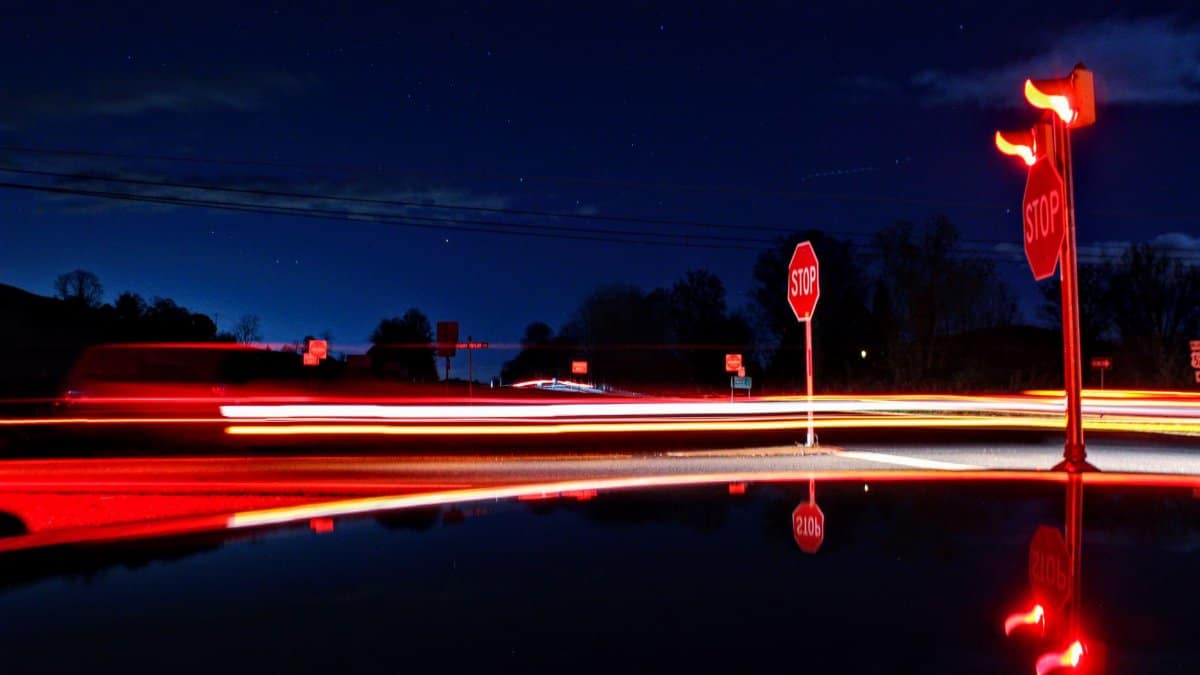
Stand again at Broad and Spring Garden after the rain. Most drivers stop. A few still go. The camera does not persuade them with a speech. It threatens a bill, and for some people that threat is enough. For the pedestrian waiting on the corner, the motive inside the car is irrelevant. What matters is whether the box stays empty when the signal says it should.
Philadelphia red light cameras can be part of that outcome if the city treats them as a measured tool rather than a moral trophy or a cash drawer. The new violation figures point in a better direction. They do not close the case. A safer intersection is a place where the count of tickets and the count of wrecks both fall, and where the people who live beside the pole can see the math. That is a plain standard. It is also the only one worth taking back to Harrisburg.