
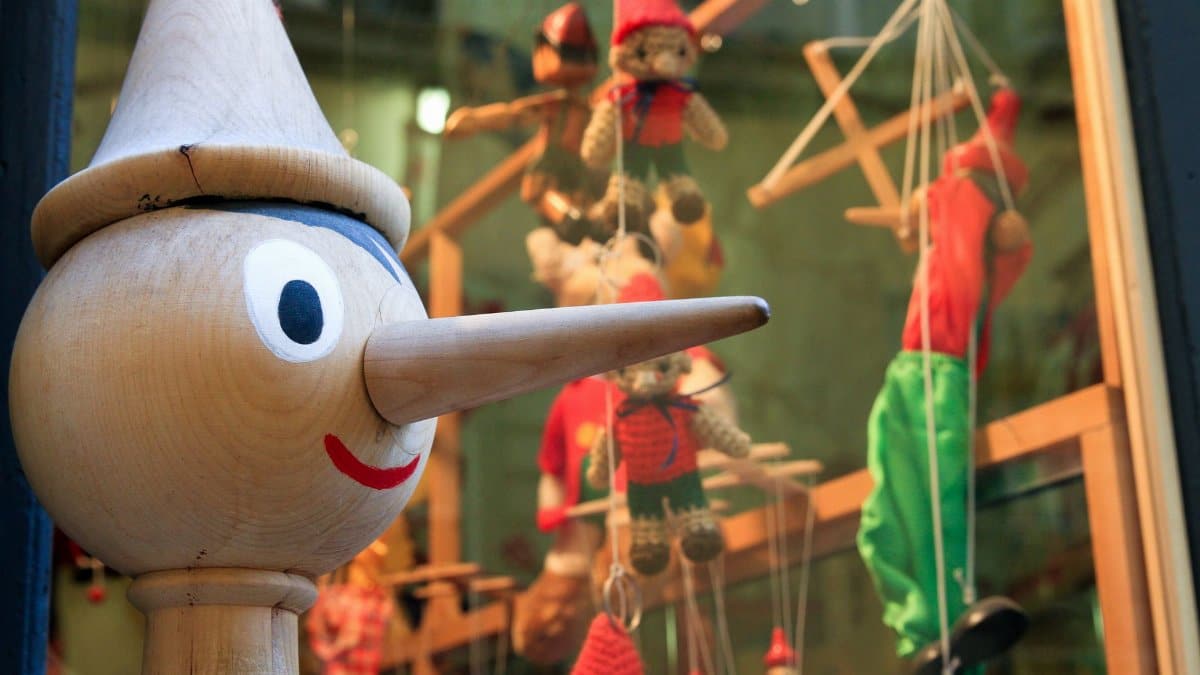
On a Saturday afternoon in Minneapolis, a wooden boy the size of a parade float lurched into the light, and the room answered with the kind of gasp usually reserved for fireworks. Parents leaned forward. Children pointed. For a few seconds the stage belonged entirely to scale, color, and noise. That opening image is the problem, and the pleasure, at the heart of any serious CTC Pinocchio review: a company famous for craft has built a show so large that Carlo Collodi’s stubborn little fable can barely be heard underneath it.
A tale that was never only cute
Collodi did not write a cuddly origin story for a toy. His nineteenth century serial, later bound as a book, sends a disobedient puppet through hunger, hanging, deceit, and a country where boys are turned into beasts because they refuse school and work. The nose grows. The conscience talks. The sea nearly swallows him. Redemption, when it comes, is earned by care for someone else, not by a wish granted from a star. American retellings have sanded those edges for generations, and audiences have come to expect songs, slapstick, and a blue fairy who fixes what the boy will not fix himself.
Children’s Theatre Company is not a theme park, and it has often trusted young viewers with harder material than the market assumes they can hold. That history makes the current production feel like a swerve. The room is handsome. The invention is real. The moral pressure that gives Pinocchio its afterlife is treated as scenery.
What the company put on the stage
Greg Banks shaped the script, a writer and director who knows how to speak to a mixed house without talking down to it. Dean Holt, a CTC veteran with a gift for physical precision, carries the title role. Victor Zupanc’s music threads the evening, sometimes wry, sometimes lush, always ready to lift a scene when the plot stalls. Around them, designers build a world of ropes, painted horizons, and creatures that read clearly from the back row. Nobody who paid for tickets will leave saying the show looked cheap.
The trouble is not competence. The trouble is proportion. When every entrance arrives with a flourish, the quiet transactions that matter in Collodi start to look like pauses between effects. Geppetto’s loneliness becomes a setup. The cricket’s warning becomes a gag with a punch line waiting in the wings. The journey to school, which in the book is a test of whether a creature can choose duty over appetite, plays as a comic delay on the way to the next big picture.
Collodi’s point, stated without varnish

The original story is a moral engine disguised as a picaresque. Pinocchio is not born good and then corrupted by the world. He is born unfinished, and the world offers him endless ways to stay that way. Foxes and cats sell him shortcuts. A puppet master sells his labor. Pleasure Island sells him the fantasy that freedom means never being told no. Each episode asks the same question in a new costume: will you become a person, which in Collodi’s terms means someone who works, tells the truth, and looks after a father, or will you remain a thing that other people use?
That question does not require a sermon. It requires sequence. Cause has to meet consequence often enough that a child can feel the pattern. A production that races from marvel to marvel can still be delightful and still miss the pattern. Oversized, here, is not only a comment on puppets and sets. It is a comment on emphasis. The spectacle is larger than the choice.
How Banks opens the story and where it thins

Banks has a light hand with language, and there are stretches where the adaptation remembers the book’s bite. A lie lands. A promise frays. An adult onstage refuses to rescue the boy from a mess he made. Those moments remind you why this company hired this writer. Then the evening widens again, as if afraid the room will grow restless if it is not amazed. Comic business multiplies. Side characters arrive already amplified. The through line, which should be the slow education of a willful puppet, becomes a variety bill with a famous name on the poster.
None of this is careless in the amateur sense. It is a calculated bet that families come for wonder first and lesson second. The bet is not crazy. It is also how a classic loses its spine. Collodi’s humor was never gentle for its own sake. It was the sugar on a warning. Strip the warning and the sugar is only sugar.
Dean Holt inside a very large costume of idea

Holt is the reason the evening does not collapse into pure display. He has always been able to make a body tell a story before a line does, and he finds small truths inside a role that the design keeps trying to inflate. A hesitation before a lie. A reach toward Geppetto that arrives a second too late. A slump when the easy road turns out to be a trap. In those seconds you can see the actor protecting Collodi from the production’s own appetite for size.
He cannot do it alone. When the staging insists that Pinocchio is an event rather than a character in trouble, even a precise performance reads as a feature of the event. The boy becomes the mascot of his own show. That is a loss, because Holt is clearly interested in the harder assignment: a creature learning, badly and late, how to be responsible for someone who cannot save himself.
Music that decorates more than it judges

Zupanc’s score is skilled, and in a different production it might have done moral work. Music can mark the difference between a temptation and a reckoning. It can let a theater full of children feel dread without a lecture. Here the songs mostly congratulate the pictures. They swell when the stage swells. They twinkle when the fairy arrives. They rarely withhold beauty as a way of saying that something has gone wrong.
That choice is understandable in a house built for young audiences. It is also a choice. A score that always soothes teaches a lesson of its own: no matter what the puppet does, the evening will remain pleasant. Collodi’s book does not offer that guarantee. Boys are hanged in it. Boys bray. Fathers search until they are wrecked. A family show need not reproduce those cruelties in full. It does need some musical or dramatic weather that says consequence is real.
The audience this show imagines
Watch the house and you learn whom the production thinks it is serving. Younger children track the creatures and laugh at the falls. Older children catch the jokes about lying and school. Adults, especially those who grew up on the softer film versions, seem grateful that nobody has made the afternoon grim. The contract is comfort plus craft. CTC can fulfill that contract better than almost any company in the country, which is why the shortfall stings.
A mixed age audience is not an excuse to flatten a story. It is a reason to stage the story in layers. The five year old gets the chase. The ten year old gets the pattern of bad deals. The parent gets the ache of raising someone who will not listen. When every layer is painted in the same bright key, only the first layer fully lands. The others become optional program notes.
Spectacle as a kind of avoidance

There is a spiritual habit hiding inside this aesthetic one, and it is worth naming because the tale itself is a spiritual habit in disguise. Collodi, writing in a Catholic culture that took formation seriously, treated becoming human as a discipline. You are not automatically a soul with rights to endless amusement. You are a project. Work, truth telling, and care are not accessories. They are the means by which a puppet stops being wood.
A theater can believe that without preaching it. What it cannot do is replace formation with astonishment and still claim the fable. Astonishment is not the enemy. Astonishment without memory is. If the biggest images are the fox’s con, the island’s party, and the final transformation, and if those images are staged at equal volume, the audience remembers parties and magic. It does not remember the cost of the parties. Oversized design becomes a way of not sitting with the smaller, sharper scenes where a character simply fails and has to live with it.
What a CTC Pinocchio review ought to credit

Fairness matters, especially toward a company that has spent decades arguing that children’s theater is an art form rather than a babysitting service. The production is cleanly performed. The visual wit is frequent. Holt’s commitment is obvious. Banks’s best passages have rhythm and bite. Zupanc knows how to keep a long afternoon from sagging. Families will have a good time, and a good time is not nothing in a culture that often hands children screens and calls it care.
Credit, though, is not the same as acquittal. A CTC Pinocchio review that stops at “the kids loved it” has not done the job the source material demands. Loving it is easy when the hard parts have been enlarged into pageant and then hurried past. The question is whether a child leaves with any new suspicion of easy promises. On the evidence of this staging, that suspicion is optional.
Where the moral core could have lived

The core does not require gloom. It requires a few scenes played at human scale and left alone long enough to hurt a little. Geppetto building a son because he is lonely, then discovering that a son is not a cure. Pinocchio selling his schoolbook for a ticket. The cricket ignored until ignoring becomes a habit. The moment in the water when rescue depends on the boy’s effort, not on a deus ex machina with better lighting. Those scenes exist in Banks’s material. They are simply not allowed to be the loudest things in the room.
Imagine the same designers working in reverse: beauty withheld until it is earned, comedy used as a blade rather than a cushion, music that sometimes refuses to resolve. CTC has made shows in that key before. The talent in the building knows how. This Pinocchio chooses the parade. The parade is impressive. It is also a way of stepping around the story’s demand that someone change.
Parents, schools, and the softer American Pinocchio
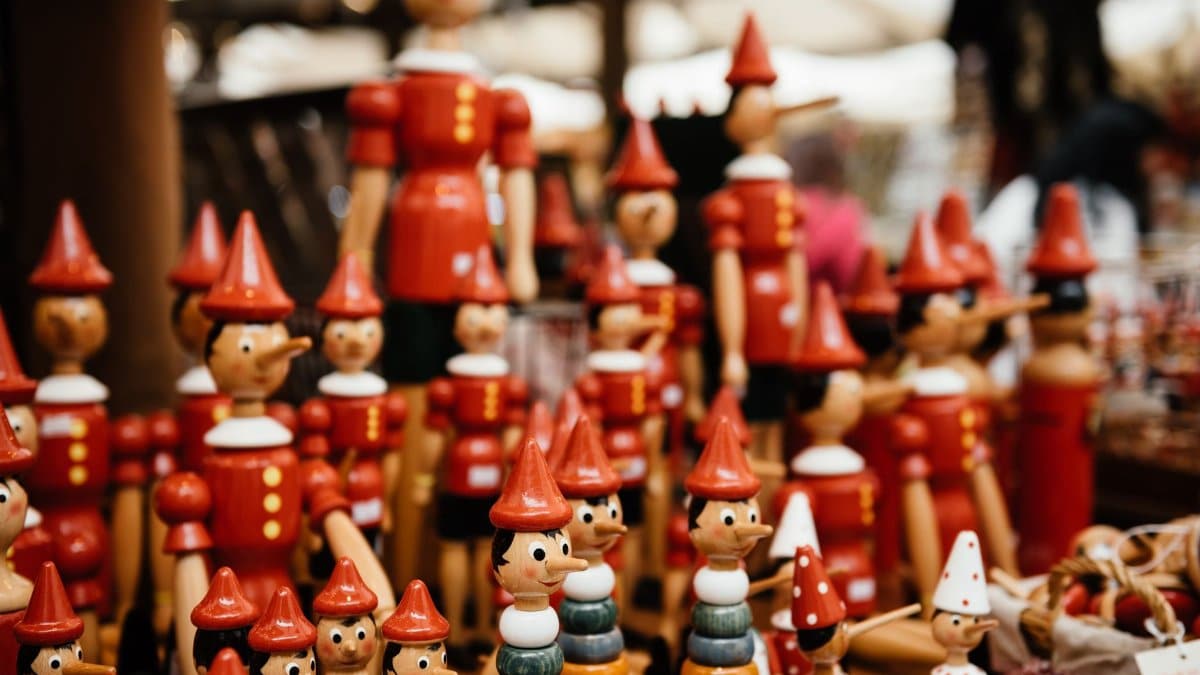
Part of the mismatch is cultural, not merely directorial. For many adults in the seats, Pinocchio means a studio film with a conscience named Jiminy and a ending that feels like a reward for wanting hard enough. Collodi’s book is meaner and funnier and more interested in labor. When a major children’s company stages the title, it inherits both lineages and has to choose. This production nods at the book and then behaves like the film’s grandchild: sincere, busy, and reluctant to let a child sit in discomfort for more than a minute.
Schools that book the show as a literature companion will get a lively illustration and a thin argument. That is not a scandal. It is a missed chance. The argument is the reason the book survived. A puppet who wants to be a boy is a hook. A puppet who learns that boyhood, or personhood, is a moral achievement is a classic.
The reviewer’s uneasy applause

Leaving the theater, you can applaud the makers and still feel that the evening protected its audience from the very friction that makes the fable worth retelling. Rohan Preston’s complaint, that spectacle crowds out the moral core, is not a critic’s allergy to fun. It is a description of a proportion problem. Fun is present. Craft is present. Collodi’s point, the slow and sometimes humiliating work of becoming responsible, is present mostly as a caption under brighter pictures.
Another CTC Pinocchio review might emphasize access, joy, and the sight of children rapt for two hours away from their phones. Those goods are real, and dismissing them would be snobbery. They are also goods this company can deliver while still honoring the tale. The choice to go oversized is a choice to spend the budget of attention on awe. Awe fades in the parking ramp. A clearly staged consequence can follow a child home.
What remains after the lights warm up

What remains is a handsome diversion with a famous name and a muffled warning. Holt’s best moments linger, small proofs that an actor can still find a soul inside a parade. A few of Banks’s sharper exchanges linger too. The rest dissolves into a memory of size: big puppet, big island, big finish. For a company of this caliber, dissolution is the disappointment.
Collodi asked whether a made thing could become a person by telling the truth and caring for a father. The stage asks whether a family will be amazed. Amazement is a fine afternoon. It is not the point. Until CTC lets the smaller choices outweigh the larger pictures, this Pinocchio will keep missing the story it is expensive enough, and talented enough, to tell. A final CTC Pinocchio review can say it cleanly: the show is big, the makers are able, and the moral core is still waiting for a production willing to be smaller where it counts.