
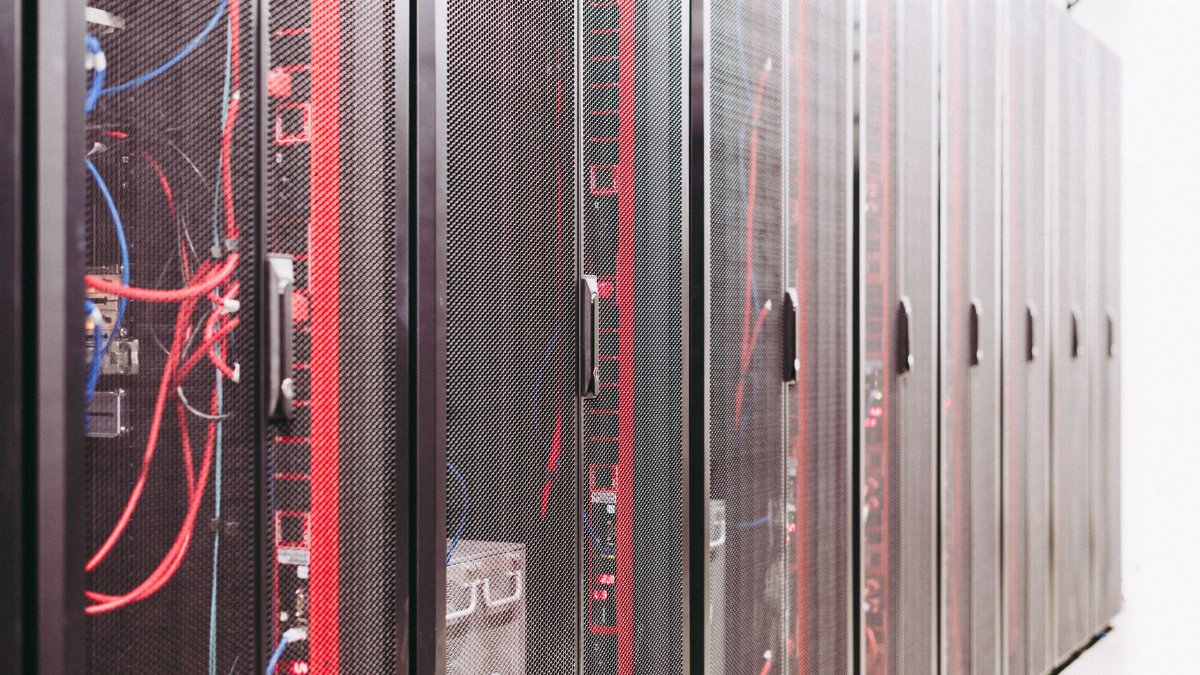
The lights in a suburban kitchen do not announce who else is drawing from the same wires. A family opening a bill sees only a total, a due date, and a quiet rise that no one at the table voted to approve. Somewhere beyond the subdivision, warehouses of servers hum through the night, training models and storing the photographs, searches, and transactions of a nation that rarely thinks about the current behind the screen. Lawmakers in Washington have now put that hidden load into legislative language. The House has approved a data center energy bill meant to push more of the power cost of artificial intelligence facilities onto the companies that build them, rather than leaving households to absorb the strain through ordinary rates.
What the House measure tries to change

The vote did not invent the conflict between digital growth and the electric bill. It tried to name a principle that ratepayer advocates have been pressing in hearing rooms for several years. Large computing campuses should pay for the generation, transmission, and local upgrades their arrival requires, instead of socializing those costs across every meter on the system. Supporters describe the measure as a fairness correction. Critics call it a blunt instrument that could slow investment, complicate utility planning, and invite lawsuits over who counts as a data center and what share of a new power line is truly caused by one customer.
In plain terms, the data center energy bill asks regulators and utilities to draw a brighter line between ordinary load growth and the sudden arrival of facilities that can consume as much electricity as a small city. That line is easier to applaud in a floor speech than to write into tariffs. A new substation may serve a server hall and also steady voltage for a hospital two miles away. A gas plant built to cover evening peaks may run harder because of computing load at noon. Allocating those overlapping benefits is the hard work the statute would hand to agencies that already move slowly.
Why the monthly bill became a political fight
Electricity used to be a background expense, noticed mainly when a summer scorcher arrived or a storm took the lights. Inflation changed that habit. Households began reading the bill the way they read the grocery receipt, line by line, looking for the culprit. In parts of the country where new computing campuses clustered near existing plants, neighbors started to connect the cranes on the horizon with the higher charges at home. Politicians, who can survive many abstract debates, rarely survive a clear story in which a distant corporation appears to enjoy a discount while a retiree on a fixed income does not.
That story is not always precise. Some of the recent increase in bills comes from storm repairs, fuel prices, deferred maintenance, and the cost of replacing aging coal units. Still, the political power of the story does not depend on perfect accounting. It depends on sequence. A town hears that a campus will bring construction jobs. Then it hears that the utility needs billions in new equipment. Then the bill arrives. The House debate was, in part, an attempt to get ahead of that sequence before it hardened into a national grievance.
How server campuses rewrote the demand picture
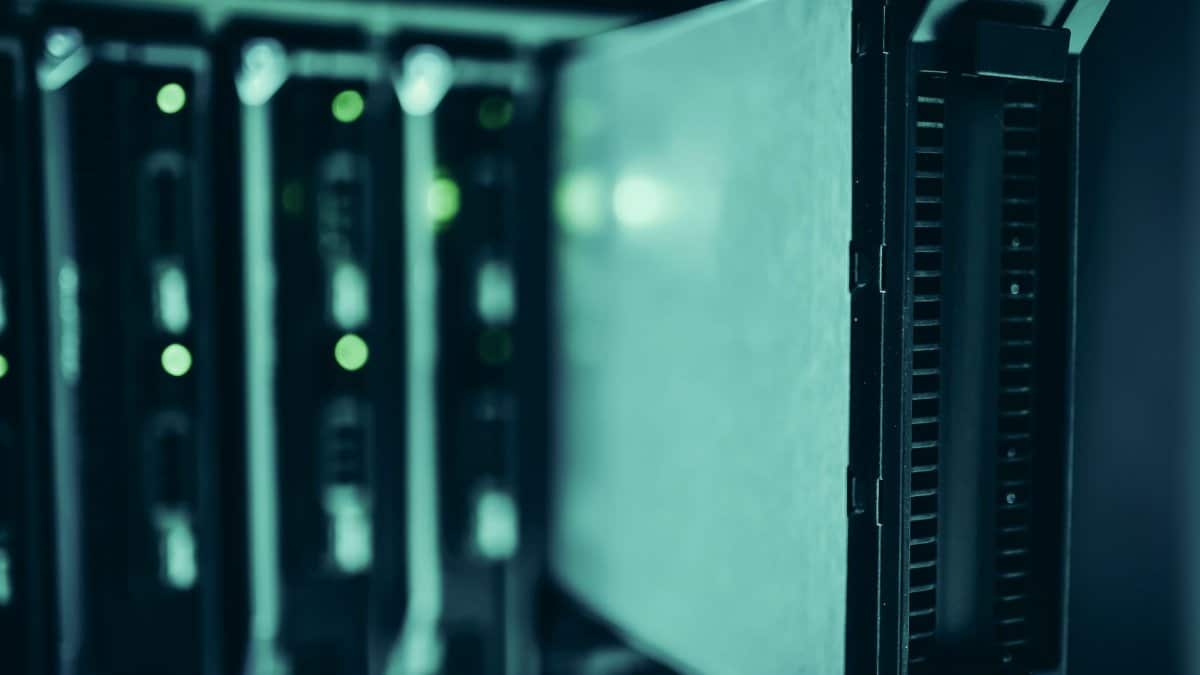
For a long stretch of the last decade, American electricity use was remarkably flat. Efficiency in lighting, appliances, and factories offset population growth. Planners grew used to a gentle slope. The return of sharp growth, driven by artificial intelligence training, cloud storage, and the ordinary digitization of work, broke that calm. A single campus can request hundreds of megawatts, sometimes with a timetable measured in a few construction seasons rather than a decade of gradual additions.
Utilities like predictable customers. A factory with a known shift schedule is easier to serve than a training cluster whose consumption can swing with the arrival of a new model. Operators of these facilities argue that they are willing to pay, and many already sign special contracts. The dispute is over whether those contracts capture the full system cost, including backup generation, transmission across long distances, and the risk that a project is announced, triggers upgrades, and then shrinks or moves. Households cannot renegotiate when the forecast changes. That asymmetry sits at the center of the argument.
The promise and the fine print of cost sharing

Cost sharing sounds like simple justice. The customer who causes the cost should bear it. In utility law, cause is a contested word. If a region was already short of transmission, a new campus may be the occasion for a line that other customers also needed. If the campus agrees to curtail use during the hottest hours, it may reduce the need for an expensive peaking plant even while its annual consumption remains enormous. A statute that ignores those nuances can produce a new unfairness in the name of correcting an old one.
The data center energy bill, as described by its backers, tries to require contribution toward incremental infrastructure and to limit the quiet shifting of upgrade costs into general rates. The fine print will matter more than the headline. Definitions of incremental load, exemptions for smaller facilities, treatment of campuses that bring their own generation, and the timing of payments will decide whether the law changes bills or merely changes paperwork. Companies with sophisticated counsel will read those clauses first. Families will feel the result later, if they feel it at all.
What utilities fear and what they want
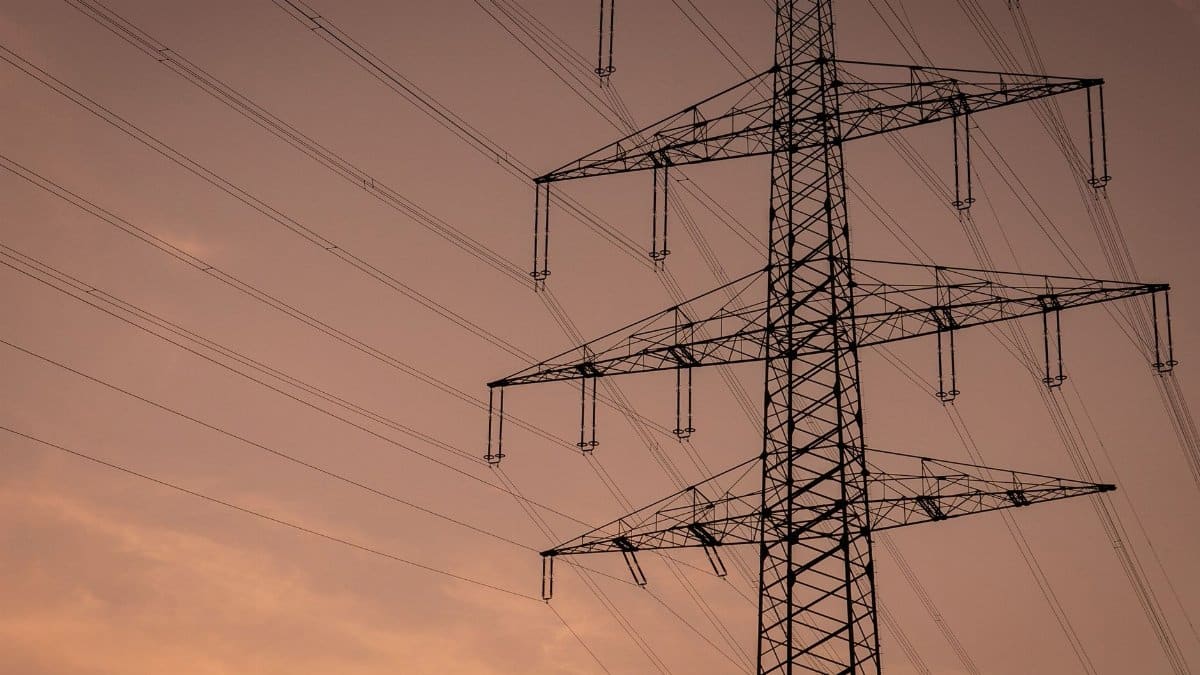
Investor owned utilities and public power systems do not speak with one voice, but they share a planning problem. They are asked to connect huge new loads quickly, keep reliability high, and avoid rate shock, all while state and federal climate rules push them away from the plants that were easiest to run around the clock. A federal requirement that large computing customers pay a defined share could help a utility say no to a sweetheart rate. It could also freeze negotiations that were already producing bespoke deals tailored to local wires and local politics.
Rural electric cooperatives worry about a different scale. A single campus can dwarf every other customer on a small system. If that customer leaves, the cooperative may be left with debt sized for a neighbor that no longer exists. Household members of the cooperative cannot walk away from that debt. Any serious reading of the House measure has to ask whether it protects those small systems or merely assumes that every utility is a giant with a deep equity market behind it.
States already testing their own rules

Washington is late to a conversation that state capitals and utility commissions began when the first mega campuses filed interconnection requests. Some states have paused tax incentives. Others have required special tariffs, minimum bills, or proof that a project will not degrade service for existing customers. A few have welcomed the load as a way to finance new clean generation that households alone could not underwrite. The variety is the point. Electricity regulation in this country is a federal and state braid, not a single switch.
A House bill can set a floor or a signal. It cannot, by itself, redraw every tariff from Maine to Arizona. If the Senate takes up the idea, the useful question is whether federal language will crowd out careful state experiments or give those experiments a common backbone. Companies deciding where to build already compare tax abatements, water rules, and interconnection queues. Adding a national cost rule would become one more line on that spreadsheet, which is exactly what sponsors intend and exactly what opponents say will send projects to friendlier jurisdictions, including those overseas.
Jobs, tax breaks, and the local bargain

Communities do not experience a data center as a kilowatt hour. They experience it as a construction trailer, a widened road, a promise of tax revenue, and a worry about wells and noise. The permanent workforce is often smaller than the renderings suggest. The tax payments can be large, especially where local officials negotiated well, and painfully small where abatements were handed out in a hurry to beat a neighboring county. The energy bill debate is tangled with that bargain. A town that gave away the tax base and then inherits higher electric rates has made the worst trade available.
Labor unions have reasons to like the construction wave and reasons to insist that the power system funding it be durable. A project that cannot pay its true electric cost is not a stable source of work. A project that can pay, and does, can anchor a decade of line work, plant work, and maintenance. The House argument, stripped of partisan costume, is about whether public power to approve, connect, and upgrade should be treated as a subsidy or as a service with a price.
Climate goals meet a surge in load

Clean energy advocates are split in a way that does not map neatly onto party labels. Some see the surge in computing demand as a disaster for emissions, a reason to keep fossil plants running past their planned retirement. Others see a buyer with a balance sheet large enough to sign long contracts for wind, solar, nuclear restarts, and newer technologies that still need a first customer. Both descriptions can be true in different counties in the same month.
If large users are required to cover more of their impact, they may invest more seriously in efficiency, in locating near existing surplus power, and in generation they control. They may also lobby harder for faster permits on gas plants that can be built before the wires catch up. The climate outcome is not written in the title of the bill. It will be written in what kind of megawatt the new payment rules make cheaper to build. Lawmakers who speak only of fairness and never of the source of the electron are leaving half the ledger blank.
A moral question hiding in the statement

There is a spiritual dimension to a shared grid that technical hearings rarely name. A power system is a covenant among strangers. The household that uses little, the factory that uses much, and the new campus that uses vastly more are bound by wires none of them owns outright. Religious traditions that speak of stewardship, of not laying burdens on the poor, and of telling the truth about what one consumes have something to say here, even if they never mention a server rack. A society that celebrates intelligence in machines while quietly shifting the cost onto people with the least room in the budget has a confession to make before it has a technology to boast about.
That is not an argument for halting computation. Medicine, science, and ordinary commerce now depend on it. It is an argument for honesty in the price. The data center energy bill is one attempt, imperfect and political, to put honesty into statute. Whether it succeeds will depend on senators, regulators, and the willingness of the largest firms to accept that scale creates duties as well as profits.
Lobbying, the Senate, and the next draft
No one should mistake a House passage for a settled law. The Senate has its own map of states that want the jobs and states that are already angry about bills. Industry groups will arrive with studies, outage scenarios, and warnings about falling behind foreign rivals. Consumer groups will arrive with sample bills and photographs of substations rising behind fences. Both packets will contain truth and theater. The staff who draft the next version will decide which definitions survive.
Readers trying to follow the fight can ignore much of the slogan language and watch three things. First, whether large users must pay before equipment is built or only after it is used. Second, whether a company can avoid the rule by slicing a campus into entities that each fall under a size threshold. Third, whether existing contracts are grandfathered for so long that the rule arrives after the costly wave has already been financed. Those three choices will do more to shape a household budget than any adjective spoken on the floor.
What households should watch next
Most people will never read the legislative text, and they should not have to. They can ask their utility, in plain language, whether a new computing customer is paying for the upgrades appearing in the capital plan. They can ask state commissioners whether special rates are public or sealed. They can ask local officials what tax revenue was promised and what revenue actually arrived. Those questions are not hostile to growth. They are the minimum due diligence of people who share a grid.
The House has moved a data center energy bill from talking point to recorded vote. That is a beginning, not a rescue. If the final law is careful, the largest new users of electricity will carry more of the weight their ambition creates, and ordinary bills will be a little more intelligible. If it is careless, the country will get another layer of process without a change in who pays. The servers will keep humming either way. The question is whether the people who never see them will keep paying for the sound.