

On a Tuesday night in late October, a Los Angeles teacher spread her sample ballot across the kitchen table and realized she still did not know which measures would change her rent, her commute, or the person who runs the state. That small domestic scene is playing out in apartments and farmhouses from Eureka to El Centro. The California 2026 voter guide that follows is meant for readers who have a ballot in hand and only a little time left before November 3.
What this election actually decides
California’s general election is not a single contest. It is a stack of choices that reach from the governor’s office down to local measures that can alter a street, a school, or a tax bill. Statewide, voters are choosing a governor and an attorney general, along with other constitutional officers whose names rarely dominate dinner conversation but whose decisions shape courts, contracts, and consumer protection. In Los Angeles, the mayor’s race sits on the same ballot for city residents, which means millions of people are weighing a local executive and a statewide executive in one evening.
Propositions on taxes and housing sit beside those names. A yes or no on a fiscal measure can outlast a politician’s term. That is why a last minute reading plan matters more than a last minute hunch.
A practical order for a crowded ballot
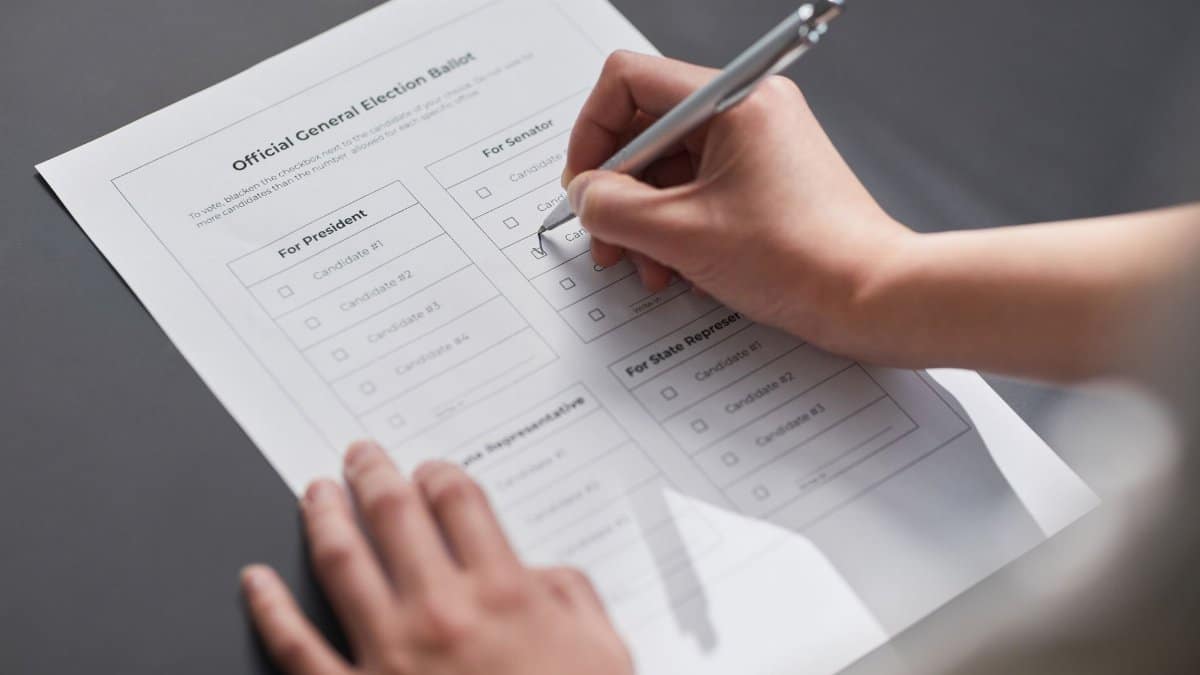
Start with the offices you already understand, then move to the measures you do not. Most people can describe what a governor does. Fewer can explain a bond, a constitutional amendment, or a local parcel tax in a single sentence. Read the ballot label first, then the official summary, then the arguments for and against. If a measure’s fiscal note is longer than the campaign slogan, trust the note more than the slogan.
Write your choices on the sample ballot before you touch the real one. That small habit cuts down on skipped contests and on the panic that comes from trying to decode legal language under a kitchen light at 9 p.m.
The governor’s office and the stakes of an open era

The governor appoints judges, proposes budgets, signs or vetoes laws, and becomes the public face of the state in fire season, budget season, and every season in between. California’s economy is larger than that of most countries, so the person in that office negotiates with Washington, with cities, and with industries that employ millions. Voters should ask how each candidate would handle housing supply, water, wildfire, and the state’s long argument over taxes and spending.
Do not grade a gubernatorial campaign only by television tone. Look at prior office, voting record if the candidate has one, and the people and donors who have already placed a bet. Endorsements are not commands. They are clues about coalitions.
Why the attorney general race belongs on your short list

The attorney general is the state’s top lawyer. The office defends California in court, oversees consumer protection, and sets priorities for investigations that can reach banks, polluters, and public agencies. In a polarized decade, this job has also become a stage for fights with the federal government over immigration, environment, and civil rights. That visibility can obscure the quieter work: how the office treats local prosecutors, how it handles police accountability, and how it uses settlement money.
A useful question is simple. Whose interests would this lawyer put first when a powerful institution and an ordinary resident are on opposite sides of a case?
Los Angeles and the mayor’s unfinished city

For voters inside Los Angeles, the mayor’s race is not a sideshow. The mayor does not run the school district and does not control every dollar in the county, but the office sets the agenda on homelessness, street safety, and how the city talks to Sacramento. Housing politics in Los Angeles spill into statewide law. A mayor who treats encampments as only a policing problem, or only a housing problem, will collide with the other half of that reality within months.
Read the local arguments with the same care you give the governor. City measures can raise sales taxes or rewrite land use rules that affect a single neighborhood more than any statewide speech.
Taxes, bonds, and the fine print on your wallet

Tax propositions rarely say “this will cost you” in plain speech. They talk about fairness, investment, or relief. Translate each one into household terms. Who pays? For how long? Can the Legislature change the rules later, or is the measure locked into the constitution? A temporary tax that renews itself through a friendly future vote is not the same thing as a sunset that actually ends.
Bonds are loans. They build things voters can see, such as schools, water systems, and transit, and they also commit future budgets to interest. If a campaign cannot say what the project list is and who oversees the spending, that absence is information.
Housing measures and the gap between promise and permit

Housing propositions tend to promise more homes, lower rents, or stronger tenant protections. Those goals can conflict. A measure that speeds permits may unsettle neighborhoods. A measure that tightens rent rules may slow new construction. Neither side owns the moral high ground by default. Ask what the text actually changes in zoning, in eviction procedure, or in funding for affordable units.
California’s housing shortage is not a slogan. It is visible in adult children living in childhood bedrooms and in workers commuting across county lines. Still, a ballot measure is only as good as its mechanism. If the mechanism is vague, enthusiasm is not a substitute.
How to vote if you are almost out of time

California mails ballots to registered voters. If yours never arrived, or if you moved and never updated your registration, do not assume you are locked out. Check your status with the secretary of state or your county elections office, and ask about provisional and conditional options that state law provides. Drop boxes and vote centers have posted hours. A postmark rule is not the same thing as a deadline to hand a ballot to a person. Read the instructions on your envelope before you seal it.
Sign the envelope the way you sign official forms. A mismatched signature is one of the few bureaucratic reasons a valid vote gets held for review. If the county contacts you about a signature, answer. That cure process exists so a clerical mismatch does not erase a choice.
What official language is for

Campaign mail is designed to move you. The voter information guide published by the state is designed, imperfectly, to inform you. Use the official title and summary, the legislative analyst’s fiscal review when one appears, and the arguments submitted by proponents and opponents. Those arguments are advocacy, but they are advocacy that has to live next to a rebuttal. That pairing is more useful than a single video ad.
If a claim sounds enormous, look for the page where the analyst says what the measure would actually do. Grandeur usually shrinks there. So does panic.
Local contests that never make the national segment

Judges, school boards, water districts, and city councils decide daily life with less fanfare than a governor. A superior court judge may appear unopposed. A community college board may control land that developers have wanted for years. These races reward ten minutes of reading. Local newsrooms, league voter pamphlets, and candidate forums are uneven in quality, but they are closer to the ground than a statewide television buy.
If you cannot research every line, pick the contests that touch your street and your taxes, and leave the rest blank rather than guessing. An undervote is cleaner than a random mark.
How to read a poll without being ruled by it
Late polls describe a moment. They do not cast a ballot. Horserace numbers can be wrong in low turnout local races and noisy in statewide ones when many voters are still undecided. Use polling, if you use it at all, as a hint about which contests are close enough to deserve your attention. Do not use it as a reason to skip a down ballot measure that will govern your county for a decade.
The same caution applies to social feeds. A viral clip is not a voting record. A meme is not a fiscal note.
A short checklist before you seal the envelope

Confirm you completed every contest you meant to complete. Confirm the envelope is signed and dated if dating is required. Confirm you know where it goes: a drop box, a vote center, or the mail, with enough time for the rules that apply to that method. If you vote in person, bring whatever identification your county lists, and allow time for a line.
Tell one other person in your household the deadline. Shared knowledge is the least romantic and most effective turnout tool available to a family.
After the polls close
California counts mail ballots that arrive within the legal window, and close races can take days. That delay is not, by itself, evidence of fraud. It is evidence of a system built around mailed paper and signature checks. Campaigns will declare victory early. Newsrooms will project winners when the math allows. Your obligation ends when your own ballot is properly cast, not when a graphic turns red or blue.
If you want to watch returns, use your county’s official site alongside a newsroom you trust. If a contest is close enough for a recount or a cure period, the story is not finished on election night. Patience is part of citizenship here, even when it frustrates the appetite for a clean ending.
Where to keep reading without getting lost

The secretary of state’s election pages, your county registrar, and the state voter information guide are the spine of any serious California 2026 voter guide. Local newspapers still publish questionnaires that campaigns answer in their own words. Nonpartisan explainers can help with propositions if they show their sources and separate summary from endorsement. Treat anything that will not name its author, its funders, or its text as entertainment.
Language access matters. Ballots and guides are offered in multiple languages under state and federal rules. If a household needs a translation, ask the county rather than relying on a forwarded message that may be outdated or false.
The quiet civic act

There is no spiritual reward built into a ballot, despite the way some campaigns talk about destiny and renewal. There is a civic one. You are choosing people who will spend public money and measures that will bind strangers you will never meet. That is ordinary and enormous at once.
If you have fifteen minutes, use them on the proposition you understand least. If you have an hour, use it on the governor, the attorney general, and the local executive who will still be in office when the ads have vanished. The California 2026 voter guide you assemble for yourself, from official text and a little skepticism, will always beat the one a stranger shouts at you from a screen.
November 3 will arrive whether the kitchen table is clear or not. The ballot does not require perfection. It requires a signature, a choice, and enough attention to know what you just agreed to live with.