
On a weeknight when most of Will County was thinking about traffic, school schedules, and the price of groceries, a county board member put two ideas that rarely share a sentence onto the public agenda: cameras and restraint. Destinee Ortiz wants her colleagues to consider a Will County Flock ban, along with a pause on new data centers, arguing that tools sold as safety infrastructure may be collecting more than residents ever agreed to give. The proposal is not a finished ordinance and it is not yet a countywide rule. It is a political ask, the kind that forces a region south of Chicago to decide how much automated watching it will tolerate in the name of quicker police work.
A board member forces a choice into the open

Ortiz has framed the request as a matter of local control. Flock cameras, the automated license plate readers marketed by Flock Safety, have spread through police departments across the country with relatively little public debate at the moment of purchase. A data center boom has followed a similar path, arriving as a land use question long after companies have already scouted power, water, and fiber. By pairing the two issues, Ortiz is asking Will County to treat technology not as an inevitable upgrade but as a policy choice with winners, costs, and people left out of the pitch deck.
That pairing will strike some colleagues as unrelated. Plate readers sit on poles near intersections. Data centers sit on large parcels and draw megawatts. The common thread, in her telling, is extraction: one system extracts movement data from public roads, the other extracts electricity, water, and tax attention from a county that still has to fund schools, roads, and emergency services. Whether the board accepts that frame will shape the rest of the argument.
What the cameras actually record

Flock systems photograph vehicles, read plates, and store time and location so investigators can search for a car tied to a crime. Supporters describe a force multiplier. A stolen truck that once vanished into the grid can be flagged when it passes a camera miles away. Departments share hits through networks that cross city and county lines, which is precisely why critics worry that a local install is never only local.
The images are not body camera footage of an arrest. They are a log of ordinary travel: commutes, school drop offs, medical visits, church parking lots, and the late drive home. Most of those trips have nothing to do with a case file. The policy question is whether a government should build a searchable memory of them anyway, and who gets to query that memory when the original justification has faded.
Privacy as a civic claim, not a slogan

Ortiz has tied her push to privacy and to the sense that residents were not given a plain account of retention, sharing, and error. That claim lands differently depending on whom you ask. Civil liberties advocates have spent years warning that plate reader networks can reveal patterns of life without a warrant in the traditional sense. Police leaders answer that the same networks close cases that would otherwise stall, including violent crimes and vehicle thefts that leave families afraid to park on their own streets.
A serious debate does not require pretending those goods are fake. It requires asking what limits travel with the cameras: how long images are kept, which agencies may search them, whether immigration or federal partners get a back door, and what happens when a misread plate sends officers to the wrong driveway. A Will County Flock ban would be one answer. Tighter contracts, public dashboards, and sunset clauses would be others. The board has not yet chosen among them.
Why a data center moratorium sits in the same resolution

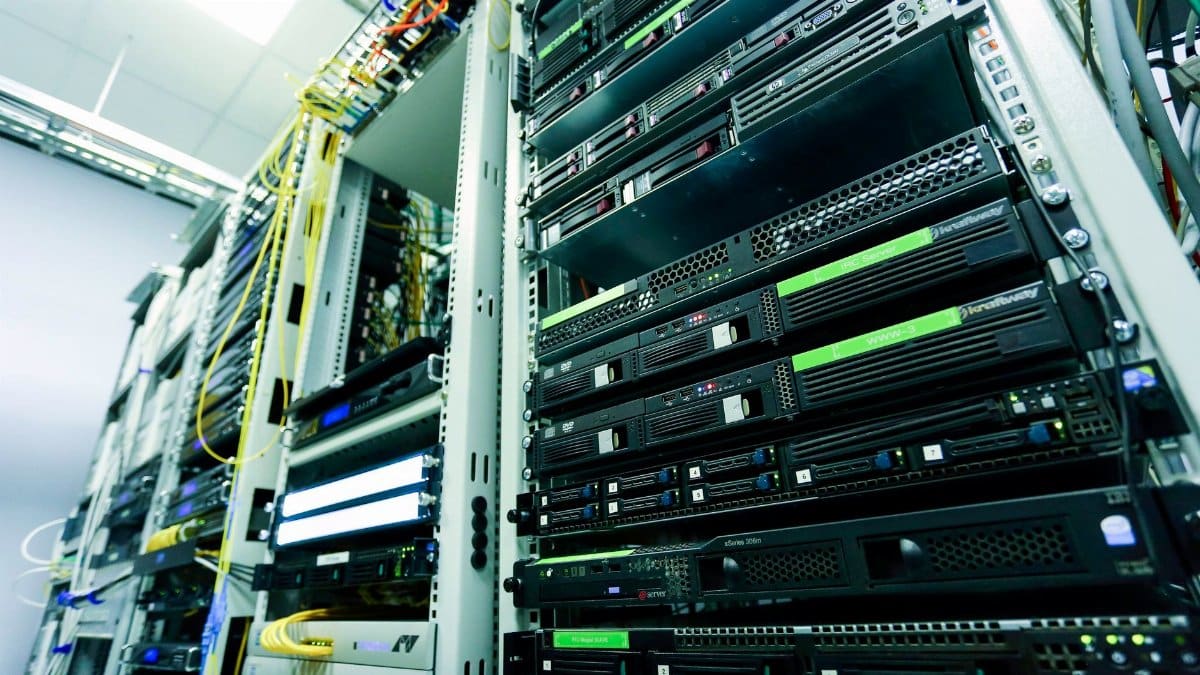
The second half of the proposal is a moratorium on data centers, driven by resource concerns. These facilities are not abstract clouds. They are buildings that need reliable power, cooling water, heavy construction traffic, and often generous local incentives. In regions already arguing about grid strain and residential growth, a pause is a way to say the county should finish its homework before the next site plan arrives.
Moratoriums are blunt. They can chill investment that a town actually wants, and they can be challenged if they look like a permanent ban dressed up as a study period. They can also be the only moment when residents get to ask basic questions before concrete is poured: Who pays for substation upgrades? What happens to water in a dry summer? How many permanent jobs remain after construction crews leave? Ortiz is betting that Will County would rather answer those questions late than discover them in a rate case.
Safety arguments that the board will hear

Law enforcement allies are unlikely to stay quiet. Plate readers have become routine in suburban policing, and chiefs will arrive with case examples: a kidnapping vehicle spotted within minutes, a burglary ring mapped across town lines, a hit and run driver identified because a camera caught a partial plate. Those stories are emotionally strong, and they are not always answered well by abstract talk of databases.
The counter is not that crime is unimportant. It is that a tool can solve real cases and still be governed badly. Sharing agreements written by vendors, retention periods set by default, and searches that no local official can fully audit are governance problems, not plot points in a thriller. A board member who wants a ban is really asking whether the county can supervise a system it did not design and does not fully own.
Residents in the middle of the pitch

Will County is not one mood. It includes older suburbs, new subdivisions, warehouse corridors, and farmland that is no longer as quiet as it looks on a weekend drive. Some residents will hear camera ban and think of slower police response. Others will hear data center pause and think of lost tax base. Still others, especially people who have been misidentified by technology or over policed in past decades, will hear both proposals as a rare official admission that convenience is not the same thing as consent.
Public comment, if the board takes this up in earnest, will likely split along those lines. The useful comments will be specific. How many cameras are already up? Which departments share data, and with whom? What is the proposed length of any data center pause, and what study would end it? Vague fear and vague reassurance both waste the hearing.
The practical limits of a county prohibition
Even a determined board cannot wish away every camera on a state road or every server hall already entitled under municipal zoning. Counties, cities, and park districts do not share one switch. A Will County Flock ban, if it moved from talking point to ordinance, would need a clear target: county purchases, county property, sheriff participation in regional networks, or encouragement to local governments. Each target has a different legal shape and a different chance of sticking.
That is not a reason to dismiss the effort. Local governments often govern by procurement even when they cannot govern by universal ban. Refusing to buy, refusing to share, and refusing to host are real powers. They are smaller than a slogan and more durable than a press release.
Power, water, and the quieter half of the fight

Data centers have a way of sounding futuristic until the permit packet arrives. Then the questions are old: noise, lights, truck routes, backup generators, and whether a tax abatement outlives the political memory of the board that granted it. A moratorium gives planners time to write rules that match the scale of the buildings, including water budgets and requirements that emergency power does not become a permanent diesel neighborhood.
Critics of delay will say the region is competing with other counties for the same projects, and that a pause simply exports the tax base. That argument deserves a number, not a mood. If the public benefit is real, it can survive a defined study window. If it depends on rushing past unanswered utility questions, the rush is the tell.
Trust is the resource neither proposal can manufacture

There is a reason debates like this feel larger than hardware. People will accept a camera on a corner, or a warehouse of servers on a former field, when they believe the institution in charge will tell them the truth later. They resist when the institution treats disclosure as a courtesy. Ortiz is testing whether Will County still has enough trust to slow down. The answer will not come from a single vote. It will come from whether colleagues demand documents, timelines, and sunset language instead of trading anecdotes until the room empties.
I have watched similar fights in other suburbs end in a muddle: a partial restriction nobody can explain, a moratorium that expires in silence, a vendor contract renewed because nobody wanted to reopen the argument. The alternative is slower and less cinematic. It is also how self government is supposed to look when the product on offer is surveillance or scarce power.
What a careful ordinance would have to say

If the board moves past the proposal stage, the text will matter more than the headline. On cameras, careful language would name retention limits, ban uses unrelated to a stated investigative purpose, require a public log of searches, and forbid sharing with agencies that have not been approved in the open. It would also say what happens to data already collected if a department leaves the network. On data centers, careful language would define the pause, list the studies required to lift it, and stop local officials from quietly carving out favored sites.
None of that is glamorous. All of it is the difference between a talking point and a rule a future board can follow when the original sponsor is gone.
Politics inside the board room

County boards are coalitions, not pulpits. Ortiz will need members who do not share her entire critique but dislike unchecked contracts, surprise utility loads, or vendor terms written somewhere else. She will also face members who see any restriction as a slight against police or against growth. The path, if there is one, runs through amendments: a study before a ban, a ban on new county cameras without a ban on existing municipal ones, a moratorium measured in months rather than in a vague forever.
Compromise is not the same as surrender. A narrowed Will County Flock ban that still forces disclosure and limits sharing would change practice. A moratorium with a deadline and a published checklist would change land use. A resolution that only scolds technology and then expires would change very little.
The regional pattern this fight joins

Will County is not inventing the tension. Cities and counties across the country have argued about plate readers after learning that search access reached further than local chiefs first described. Others have slowed data center approvals after residents asked who pays when the grid needs a rebuild. The local version matters because the details differ: which sheriff participates, which municipalities already signed, which substations are near capacity, which farmland is already spoken for.
National arguments can clarify the stakes. They cannot substitute for the contract in the clerk file. Anyone covering this story, or voting on it, should read that file before repeating a slogan from either side.
Questions the public can still insist on

Residents do not need a technical degree to follow the next hearing. They can ask how long images remain searchable, whether a mistake can be corrected, and whether a search requires a case number. They can ask which data center proposals are already in the pipeline and whether a moratorium would touch them. They can ask what the county would lose in mutual aid if it stepped back from a camera network, and what it would gain in bargaining power if it stayed only under stricter terms.
Those questions are ordinary. They are also the whole game. Technology vendors prefer a story in which the only choice is adoption or naivete. County government exists to offer a third choice: adoption with conditions, delay with a purpose, or refusal with a reason written down.
Where the proposal stands

As of the public description of her effort, Ortiz has sought a ban on Flock cameras and a moratorium on data centers, citing privacy and resource concerns. Seeking is not passing. Committees can bury a referral. A majority can amend it into a study. A minority can keep the issue alive by demanding votes on the record. What happens next depends less on the drama of the first announcement than on whether board members are willing to attach their names to limits that vendors and some police leaders will dislike.
For a county that sits in the path of both Chicago spillover growth and a national hunger for computing power, the argument is timely. Cameras and server halls will keep arriving with confident brochures. The brochure is not the policy. The policy is whatever Will County agrees to live with after the brochure is put away, and whether that agreement was made in daylight.