
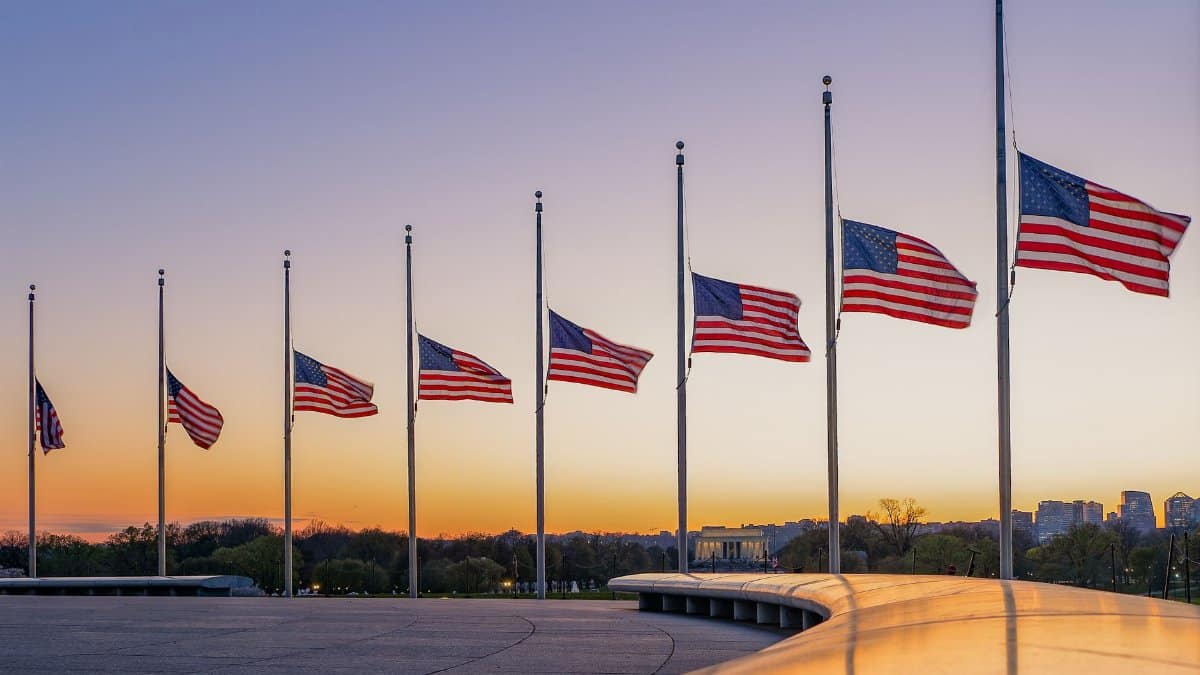
In a gesture that blends state protocol with deep cultural reverence, Washington has lowered its flags in memory of a beloved entertainer whose influence stretched far beyond stages and screens. The decision by Governor Bob Ferguson to keep Washington flags at half staff through September 1, 2026, marks an unusual extension of official mourning for Dolly Parton, who passed at age eighty. This tribute arrives alongside the restoration of her Imagination Library program, which had faced cuts in recent years. The combination of symbolic display and practical revival highlights how Dolly Parton Washington flags have come to represent both loss and renewed commitment to early childhood literacy across the state. Observers note that such honors usually go to political figures or military leaders, yet the response here reflects the personal connections many residents feel to her work in storytelling and generosity.
Official Order Behind the Flag Display

Governor Ferguson issued the proclamation shortly after news of the passing spread, directing all state buildings and public institutions to observe the lowered position for an extended period. The order emphasizes the entertainer’s contributions to education and community welfare rather than her musical achievements alone. Officials explained that the timeline through 2026 allows schools and libraries time to mark the occasion with programs tied to the restored Imagination Library. This measured approach avoids rushed ceremonies and instead encourages sustained reflection on how one individual’s efforts can shape policy at the state level.
Restoration of the Imagination Library Initiative

The Imagination Library, which mails books each month to enrolled children from birth to age five, had seen funding shortfalls that left thousands of families without access in several counties. State legislators approved new appropriations last month to bring the program back to full operation. Advocates credit the timing of the flag tribute with accelerating the budget vote, as public attention turned toward the entertainer’s long standing focus on reading access. Families in rural areas report immediate sign up increases once the announcement reached local news outlets.
Public Response Across Communities

Residents in Seattle, Spokane, and smaller towns have gathered at libraries and community centers to share memories of receiving books through the program. Many describe how the monthly deliveries created family reading routines that continued even after children entered school. The presence of Washington flags at half staff has prompted informal displays of photos and handwritten notes in town squares. These gatherings remain peaceful and focused on gratitude rather than spectacle, consistent with the entertainer’s own preference for quiet generosity.
Historical Precedents for Extended Mourning

State records show that Washington has lowered flags for former governors and national leaders, yet the duration here exceeds most prior instances. Historians point out that the choice reflects evolving views on who qualifies for such recognition when cultural figures demonstrate measurable effects on social programs. The decision drew support from both parties in the legislature, suggesting broad agreement on the value of acknowledging private citizens whose work intersects with public goals.
Connections to Literacy Outcomes

Studies from the state education department indicate that children enrolled in the Imagination Library show higher kindergarten readiness scores in vocabulary and print awareness. With the program restored, officials project that participation could reach previous peaks within eighteen months. The flag tribute serves as a visible reminder that these gains depend on continued investment, turning a ceremonial act into an ongoing prompt for policy attention.
Media Coverage and National Attention

Outlets beyond the Pacific Northwest have picked up the story, noting the unusual pairing of half staff flags with a literacy program revival. Commentators suggest the approach could influence how other states commemorate figures whose legacies involve direct service rather than elected office. Local journalists have interviewed recipients now in high school who still keep their early book collections, illustrating the long reach of the initiative.
Future Plans for Statewide Remembrance

Education leaders plan a series of author visits and reading events timed to coincide with the flag period. These activities aim to keep the focus on active participation rather than static memorials. The governor’s office has indicated openness to extending the program model to additional age groups if enrollment data supports further expansion. Such steps would build directly on the foundation laid during the period of official mourning.