
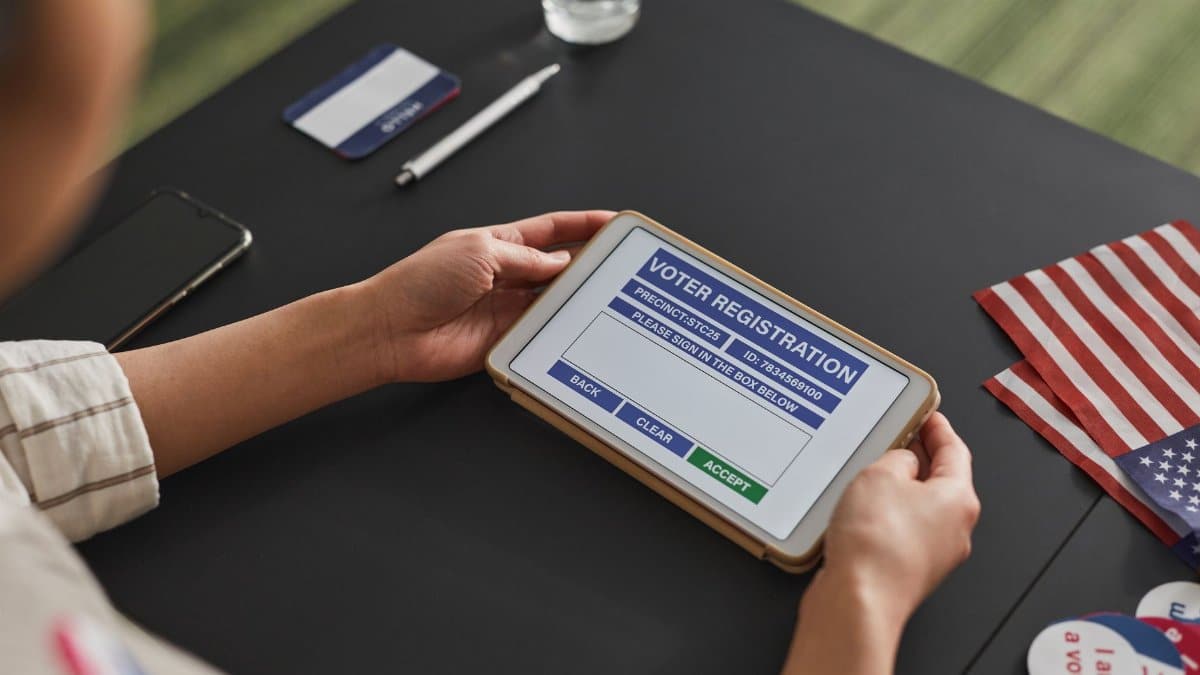
In a county elections office on the edge of a Western city, the work of democracy looks less like a rally and more like a sorting room. Trays of envelopes move from table to table. Workers compare a signature on a return envelope with the one kept on file. A supervisor takes a call from a voter who wants to know whether a ballot arrived. Into that ordinary machinery, campaigns this season are trying to place a new demand. Voter ID measures on November ballots would ask citizens whether a ballot returned by mail should carry proof of identity, not only a signature, before it is counted.
A quieter fight than the television ads suggest

Voting rules rarely arrive as a single national law. They arrive as a patchwork of statutes, court orders, and, in some states, questions printed on the ballot itself. This November the list includes proposals that would tighten identification, alter how ballots are handled, and in a few places change who may help a neighbor return an envelope. The identification push aimed at mailed ballots is the piece most likely to change a habit millions of people now treat as routine.
Supporters describe the idea as common sense. A person shows a card to board a plane or to pick up a prescription, they say, so a ballot should not be easier to cast than a library book. Opponents answer that a library card is not a constitutional right, and that a polling place and a kitchen table are not the same setting. Both sides are talking past a practical problem. Identification at a precinct can be checked by a person standing a few feet away. Identification attached to an envelope has to survive the mail, a scanner, a privacy rule, and a deadline.
What proof of identity would mean for a mailed ballot
Most states that require identification do so when a voter appears in person. The worker looks at a driver license, a passport, a tribal card, or another document the statute names. If the name and the registration record match, the voter receives a ballot. The check is immediate. A mismatch can sometimes be fixed before the voter leaves the building.
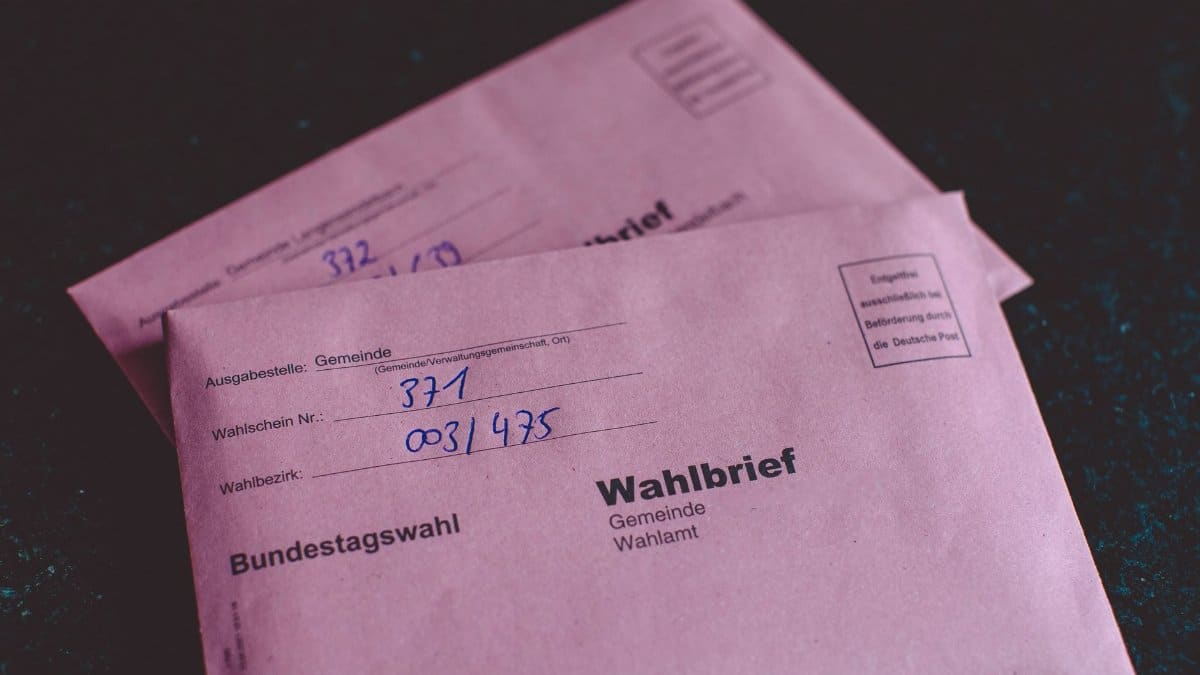
A ballot sent by mail cannot be examined that way. The voter is not in the room. Election workers see paper, or a digital image of paper. Proposals grouped under Voter ID measures typically try to bridge that gap in one of a few ways. Some would require a voter to write an identification number, such as a driver license number or the last digits of a Social Security number, on the return envelope. Some would require a photocopy of a photo card inside the envelope. A smaller set of ideas would create a personal identification number issued by the state and printed on the ballot materials.
Each option creates a new failure point. A number can be copied wrong. A photocopy can be forgotten. A personal number can be lost in a stack of junk mail. States that already use signature comparison know how often a honest voter produces a mark that does not match the old card on file. Adding another field does not remove that problem. It stacks a second one on top.
The case made by people who want the change
The argument for stricter rules is not only about catching a thief. It is also about confidence. Polls over many years have shown a durable split: a large share of voters, especially Republicans, believe fraud is common enough to swing close races, while many Democrats and many election administrators say proven fraud is rare. Backers of identification rules treat that belief as a fact the system must answer, whether or not prosecutors bring cases.
They also point to a real administrative weakness. Signature verification is a human judgment. Training varies. Some counties are strict. Some are lenient. A voter whose signature has changed after a stroke, or whose hand shakes, can be flagged through no fault of the office and no intent to cheat. A clear identification number, supporters say, is less subjective than a looping pen stroke. It can be checked by a computer against a motor vehicle file. In their telling, the reform is a modernization, not a barrier.
There is a political geography to the pitch. States that moved quickly to universal voting by mail, including Washington and Oregon, did so with relatively high trust in local clerks. In states where that trust has eroded, mailed ballots became a symbol of a system some voters no longer accept. A ballot question lets those voters impose a rule that a legislature, or a governor of the other party, might block.
The case made by people who oppose it
Civil rights groups and many county auditors answer with a different set of facts. Possession of a current photo card is not evenly spread. Older voters, people who do not drive, residents of tribal lands, and renters who move often are more likely to lack the exact document a statute names. Fees for a replacement card may be small in a budget hearing and large for a person choosing between that fee and a utility bill. Even a free card can require a trip, a birth certificate, and time off work.
On mailed ballots the burden can be quieter and therefore easier to miss. A voter who has cast a ballot from the kitchen table for a decade may not read the new instruction until the envelope is already sealed. If the cure period is short, or if the notice arrives by a postal class the voter does not check, the ballot is rejected. Rejection is not the same thing as fraud prevented. It is often a clerical miss. Opponents argue that states should publish rejection rates by neighborhood before they add a rule that will raise those rates.
Privacy is the other objection that does not fit on a yard sign. A photocopy of a driver license inside a ballot envelope puts a home address, a date of birth, and a photograph into a stream of paper handled by seasonal workers and, in some counties, by observers. Number based systems avoid the photograph but still place sensitive digits where a signature once sat alone. Any serious proposal has to say who may see that information, how long it is kept, and what happens if a tray of envelopes is lost.
How the Northwest already runs the count

Washington conducts its elections almost entirely by mail. Oregon does the same. Voters in those states register, receive a ballot at the address on file, and return it by mail, by drop box, or in person. The main identity check is the signature, compared with the registration record. If the signatures do not match, the office is supposed to contact the voter and offer a chance to fix the problem before certification.
That system is not glamorous, and it is not free of error. Auditors will say so if you sit with them long enough. Ballots arrive late. Addresses go stale. A small number of people try to vote twice, usually a person who has moved and does not understand the rules, and those attempts are caught more often than television suggests. What the system does not do is ask for a photo card at the moment of voting, because there is no moment when the voter and the worker share a room.
A Northwest ballot question on identification would therefore be a larger change than the same question in a state that still runs mostly precinct elections. It would rewrite the everyday path, not a backup path used by absentees. Campaigns that import talking points from states with polling places sometimes skip that distinction. Voters who have never stood in a line on Election Day will notice it immediately.
What scholars can settle and what they cannot
Academic work on identification and turnout does not hand either campaign a clean victory. Some studies find a small drop in participation after strict rules take effect, concentrated among people who already vote less often. Other studies find little measurable change, especially where the state mails a free card or runs an aggressive notice program. Fraud studies, including reviews by election administrators and by journalists who have chased individual cases for years, generally find impersonation at the polls to be uncommon relative to the number of ballots cast. None of that research fully models a brand new requirement glued onto universal voting by mail, because that combination is still rare.
The honest reading is modest. Voter ID measures can change who has to take an extra step, and extra steps usually cost some participation. They can also give some voters a reason to trust a result they would otherwise reject. Those two effects can be true in the same election. A ballot pamphlet that promises either perfect security or zero inconvenience is selling a product the evidence does not support.
Courts, legislatures, and the choice on the ballot
Identification rules have spent years in court. Judges have upheld some statutes and blocked others, often focusing on whether a state offers a real alternative for people who lack the preferred card, and on whether the rule falls more heavily on one racial group. A constitutional amendment passed by voters can be harder to dislodge than a statute, which is one reason advocates on both sides like the ballot. It is also a reason to read the fine print. A short question on the front of a pamphlet can hide a long definition of acceptable documents in the back.
Legislatures remain in the picture even after a measure passes. Someone has to fund the notices, rewrite the envelopes, train seasonal staff, and decide what happens when a number does not match. A yes vote that comes without an appropriation is a promise the counties will be asked to keep. In states where clerks of both parties have warned that a deadline is too tight, that warning deserves more weight than a slogan. Certification calendars are already crowded. Adding a new field to every envelope in a presidential year is not a software toggle.
Who would feel the change first

If a stricter rule takes effect, the first people to notice will not be the strategists. They will be the voters whose papers are slightly out of order. A widow whose license expired during a long illness. A student registered at a parent’s address. A farmworker whose shift ends after the elections office closes. A tribal member whose identification is valid under federal law and unfamiliar to a temporary worker reading a checklist. These are not abstractions. They are the files that already generate the cure letters counties send every November.
Campaigns sometimes answer that anyone who wants to vote will find a way. That sentence is easy to say from a desk. It is less useful as policy. The relevant question is how many extra people will fail a new test, how quickly the office will tell them, and whether the fix can be made without a car and a weekday morning. States that have managed identification rules with the least friction have spent money on free documents, long cure windows, and plain language. States that have treated the rule as a purity test have produced lawsuits and rejected ballots.
What the pamphlet is really asking

I have watched enough envelope sorting to distrust both the panic and the shrug. Fraud exists and should be prosecuted. Error exists and should be designed out. Neither fact, by itself, tells a voter how to mark a yes or a no on a specific question. The text matters. Does the measure name the documents that count? Does it give counties time and money? Does it protect the personal data that would now ride with the ballot? Does it preserve a cure process with enough days to matter?
Voting related measures on a November ballot are easy to treat as a team sport. The identification question aimed at mailed ballots is closer to a design problem. Voter ID measures will keep returning, in legislatures and on ballots, because trust in elections has become a partisan identity as much as an administrative one. The useful response is not another abstract speech about integrity or access. It is a concrete account of what happens to a single envelope when the rule changes, and who is left holding it when the count is done.