
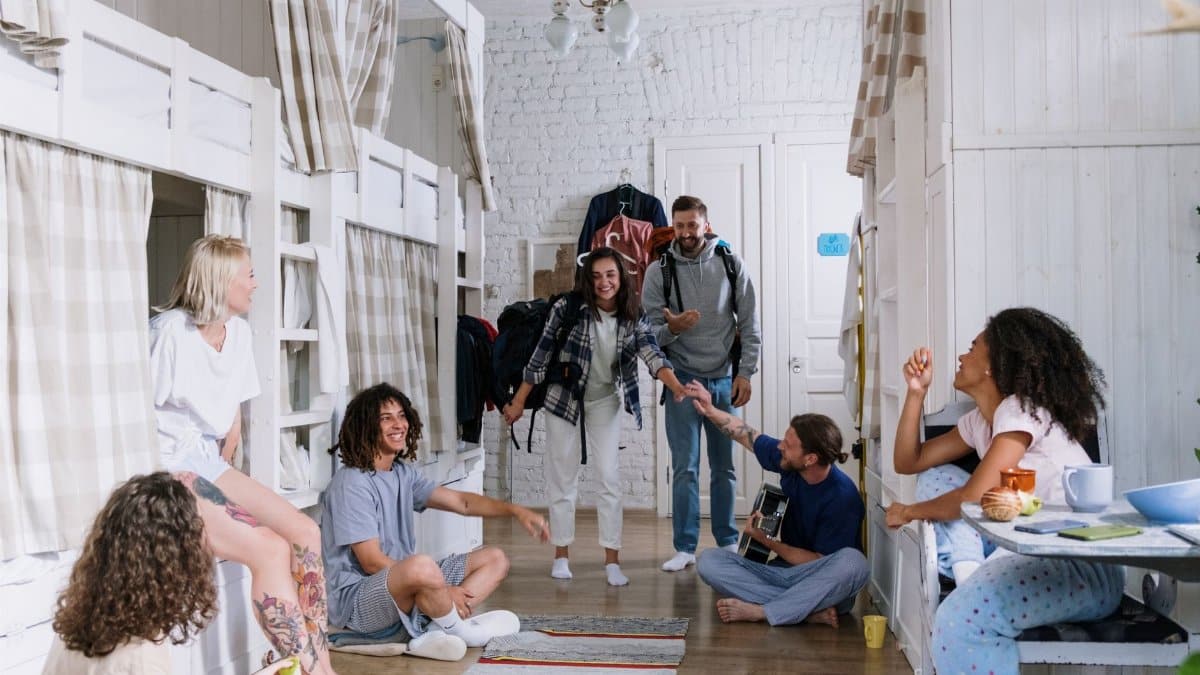
The lights stay on late in the residence halls above the river, long after seminars end and the buses thin out. For years, some of those halls held smaller circles inside the larger campus: floors and programs where students who shared a culture, a language, or a history were invited to live together and learn together. Next year, five of those cultural communities will disappear from University of Minnesota dorms, a decision that has left students angry and administrators explaining themselves in the careful language of compliance. The closures arrive as federal officials press colleges to justify programs that consider race, and as public universities try to guess which traditions will survive a new round of scrutiny.
A decision that landed harder than a memo
University officials have framed the change as a response to legal risk rather than a sudden loss of faith in community. Cultural living learning communities, long treated as a gentle pathway into college life, now sit in a category that lawyers read twice. When Washington signals that student programs organized around race may draw investigations, housing is not a side issue. A room assignment is a public benefit. A themed floor can look, to a hostile reader, like a preference. The university has chosen to close five cultural communities rather than defend each one in detail. Students hear something simpler. A place that felt like theirs is being taken off the map, and the explanation arrives in paragraphs that never quite sound like a home.
What those communities actually offered
Living learning communities are not fraternities, and they are not ethnic studies departments with beds attached. At their best they pair a residential theme with classes, mentors, and programming. A student might take a seminar with the people down the hall, cook with them before finals, and find an older student who already knows which advising office actually answers email. Cultural versions of that model were built for students who often arrive already translating: first generation collegians, children of immigrants, Black students on a predominantly white flagship, Indigenous students far from home communities. The promise was not a closed door. It was a floor where nobody had to explain the holiday, the hair, the name, or the news from home before they could get to the chemistry problem set.
That daily ease is easy to mock from a distance and hard to replace up close. Large universities sell choice. What they often deliver, in the first months, is anonymity. A cultural community narrowed the anonymity without pretending the rest of campus did not exist. Residents still went to lectures, labs, and jobs with everyone else. They simply returned at night to a smaller public.
Why federal scrutiny reached the residence hall
The pressure is not abstract. Federal agencies and political appointees have treated diversity, equity, and inclusion programs as suspect until proven otherwise. Attention has fallen on scholarships, hiring, training, and student services that use race as a criterion. Housing has drawn less notice than admissions, yet it is easier to police. A brochure that invites students of a particular background to apply for a themed community can be captured, circulated, and framed as exclusion. University counsel across the country have been rewriting websites, merging offices, and retiring program names that once won awards. Minnesota is not inventing this anxiety. It is responding to a climate in which a cultural floor can be redescribed, almost overnight, as a reserved benefit.
Public universities are especially exposed. They answer to legislatures, donors, courts, and families at the same time. A private college can sometimes absorb a fight as a matter of identity. A flagship spends public money and assigns public rooms. That difference does not make every themed hall unlawful. It does make delay expensive, and it rewards the official who can say the risky language is already gone.
Students who measure home in smaller units

Anger on campus has been less about legal theory than about the ordinary hours between classes. Students who lived in the communities describe them as the difference between enduring a campus and inhabiting one. In a hall of several hundred, it is easy to eat alone. In a community of a few dozen, someone notices. That is not a small thing in the first year, when the risk of leaving is real and loneliness is common. Critics of the closures say the university is sacrificing a trusted form of retention to avoid a fight it might win, or at least a fight it has not fully explained in public. Supporters of the change, including some students who never joined the communities, argue that public housing should not sort residents by identity at all.
Both arguments can be stated without caricature. Only one of them will shape move in next fall. The students most affected are not asking the campus to ignore the law. They are asking why a community that helped them stay was treated as the first thing to cut, and why the alternative still feels like a list of offices rather than a place to live.
The university case for what remains
Administrators have not, in the public telling, abolished every themed residence or every cultural program. Academic interest floors, language houses, and communities organized around a major can survive more easily because they do not sort by race. Officials can say, with some accuracy, that students will still find mentors, cultural centers, and student groups. The question is whether those substitutes carry the same daily weight. A center with office hours is not a hallway. A student organization that meets on Thursday is not the person who knocks when the music is too loud and then stays to talk. University of Minnesota dorms will still be full. Full is not the same as familiar.
There is also a fairness claim that deserves a straight hearing. If a public benefit is easier to enter for some students than for others, the students left out have a complaint that is not merely partisan. A lawful community has to be more than a welcome appended to a design that points one way. The university can insist on that standard. Insisting on it does not require pretending the loss is minor.
The legal line is narrower than the moral argument
Civil rights law does not forbid a university from caring about belonging. It does constrain how a public institution distributes benefits. After the Supreme Court limited admissions policies that consider race, colleges have been warned that other programs may be next. Housing is a benefit. If a community is open to all in theory but designed and marketed for one racial group in practice, a complainant can argue that the design itself excludes. Universities answer that cultural communities have welcomed students of every background who want to engage the theme. That answer may be true and still be hard to prove when the name, the history, and the photographs all point one way.
Closing the communities is the safest reading of a nervous moment. It is not the only reading. A university could publish neutral criteria, open every floor to every applicant, and keep the cultural programming as an invitation rather than a gate. That path takes more drafting, more staff training, and more willingness to be misunderstood. Caution has a cost, and the cost is paid by students who used those floors as a bridge.
Parents hear a different story than lawyers do

For many families, the cultural community was part of the pitch. A parent in greater Minnesota, or in a suburb, or in another country, could imagine a child not disappearing into a campus of tens of thousands. The communities offered a name to ask for during orientation. Without them, the pitch becomes thinner: we have dorms, we have clubs, we have staff who care. That may be enough. It may not be enough for the student who is the first in a family to leave home, or the student who has already spent high school as the only one in the room. Policy memos rarely capture that calculation. Families do it at the kitchen table, next to a deposit deadline.
Alumni hear the news in yet another register. Some remember the communities as the reason they stayed. Others remember them as optional, even unnecessary, and wonder why a public campus ever built housing around identity. A university that wants trust has to speak to both memories without flattering either. Nostalgia is not a legal defense. Neither is the assumption that every student can invent a community from a bulletin board.
The people who kept the hallways human
Programs like these do not run on slogans. They run on resident advisers, faculty mentors, and professional staff who learn the names, mediate the conflicts, and plan the events that look small on a calendar and large in a first semester. When a community closes, those jobs do not vanish in a neat way. Some staff will be reassigned. Some relationships will continue in offices far from the floor. The informal part, the part that happens because people share a laundry room and a late night, is what cannot be reassigned by memo.
There is a risk of talking about students as if they were only recipients. Many of them built the communities as much as they consumed them. They recruited, cooked, tutored, and argued about what the theme should mean. A closure does not erase that skill. It does remove the structure that made the skill ordinary rather than heroic. Asking eighteen year olds to rebuild the whole thing as a club, on top of work and classes, is a different demand than the one the university made when it housed them together.
Belonging is older than the current argument

There is a habit, in fights about campus life, of treating identity housing as a fashion. It is older than that. People have always sought a corner of a large institution where their particular life is ordinary. Religious houses, language tables, and cultural floors are variations on the same human need: a place to be unsurprised. I have watched enough students cross a quad alone to doubt that this need is theoretical. Calling it politics does not make the loneliness smaller. Nor does calling it sacred exempt a public university from the law.
The mature question is how to honor the need without building a benefit that the government will treat as a racial classification. Minnesota has answered, for now, by removal. Removal is clear. It is not especially imaginative. A campus can still feed the need through language, service, faith groups that students choose, and academic cohorts that do not pretend to be colorblind while quietly sorting by something else. Imagination, in this setting, is mostly administrative. It looks like calendars, budgets, and doors that open without a test of ancestry.
What other public universities are quietly doing
Minnesota is part of a wider retreat that rarely arrives as one announcement. Program names change. Staff titles change. A scholarship that once named a racial group becomes a scholarship for first generation students or for residents of certain high schools. A living community becomes an academic interest community with a cultural flavor that nobody is allowed to state too plainly. Some of this is honest reform. Some of it is camouflage. Students can tell the difference faster than trustees expect.
If the programming remains rich and the door remains open, a rename may preserve the good. If the rename is a prelude to a cut, the good leaves with the name. The five closures suggest that, in this case, the university chose the cut. When University of Minnesota dorms drop a cultural floor, other flagships take notes. They learn what can be ended with limited protest, and what kind of explanation satisfies a board. That is a bleak form of leadership, but it is leadership of a sort, and it will be copied.
A year from now, the test will be ordinary

The real measure will not be a press release. It will be whether students who would have lived in those communities find one another anyway, and whether the university spends money and staff time to help them do it without a racial gate. Mentors can be assigned by interest. Floors can be built around languages, majors, or service. Cultural centers can extend their hours and move some of their life into the halls after dark. None of that requires a criterion the government has put under a lamp. All of it requires attention, which is more expensive than a closure and easier to postpone.
If next fall brings only a quieter brochure, the critics will have been right. If it brings a sturdier, lawful version of daily community, the university will have done the harder thing. Students should not have to guess which outcome is intended. A public calendar, a staffing plan, and a plain account of who may apply would tell them more than another statement about values.
What the residence halls still have to answer

University of Minnesota dorms are not merely buildings. They are the university after dark, when the offices close and a student is left with a roommate, a hallway, and whatever story the institution told them about who belongs. Closing five cultural communities answers a legal question in the short term. It opens a civic one. Can a flagship campus under federal scrutiny still build thick community for students whose cultures have not been the default? The answer will not come from a slogan about inclusion. It will come from whether anyone in authority stays close enough to those students to notice when the hallway goes quiet, and whether the next design of campus life is built with them rather than merely about them.