
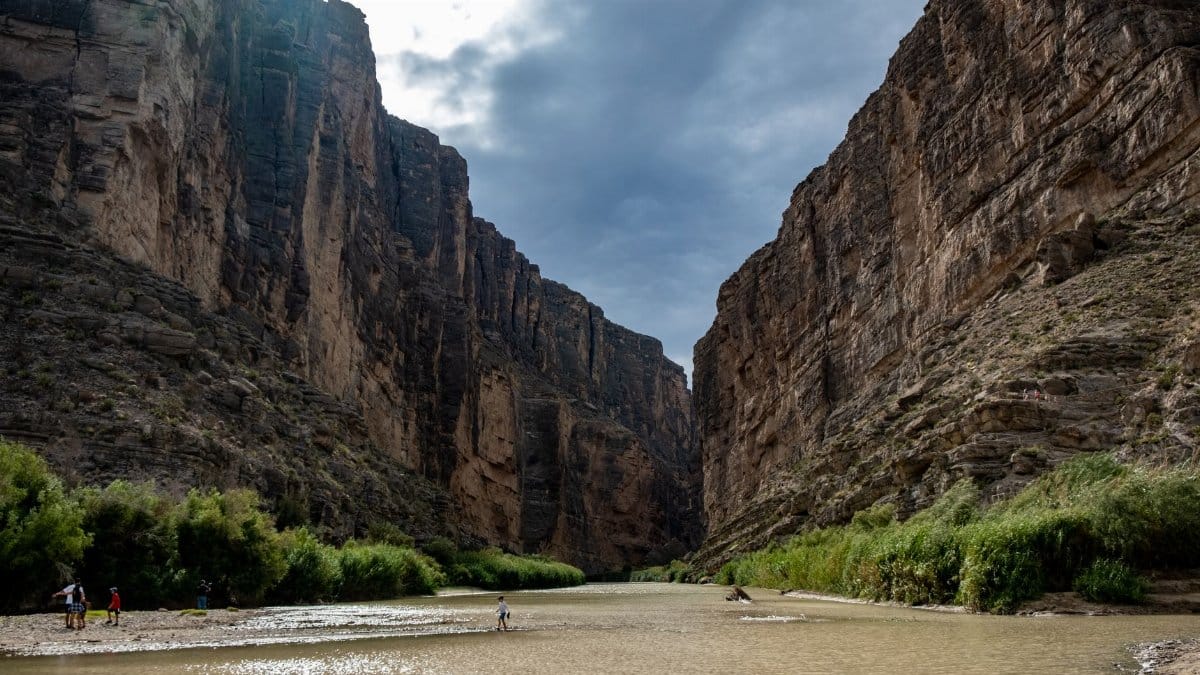
The river does not run in a straight line through the canyons of West Texas. It bends, drops, and slips into shadow between walls of limestone that have stood longer than any flag on either bank. Night comes early in those cuts, and the only steady sound is water moving over stone. Into that geography, a national argument has arrived with lawyers rather than survey stakes. The Trump administration has asked the Supreme Court to lift a lower court order blocking the Big Bend border wall, a project aimed at one of the least visited and most argued over stretches of the southern line.
A landscape that does not invite a fence
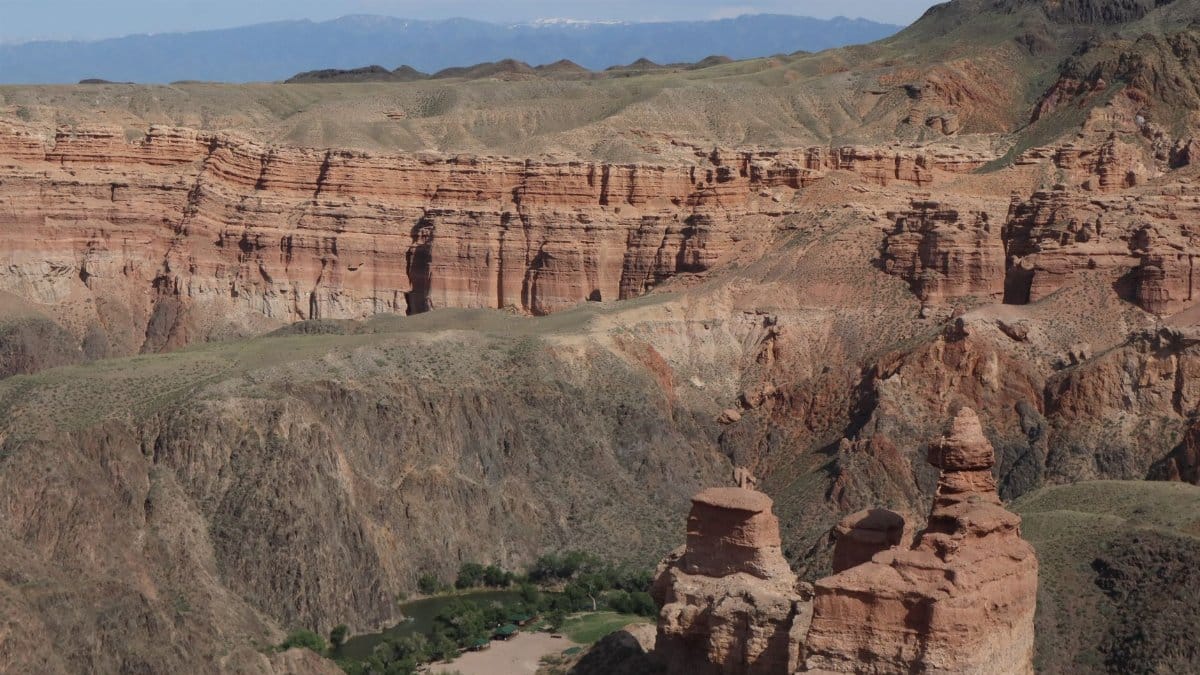
Big Bend is not the border most Americans picture when they hear talk of barriers, cameras, and busy ports. The country is vast, dry, and folded. Mountains rise abruptly from desert flats. Canyons pinch the Rio Grande into a ribbon that boaters know better than drivers. Towns are few, and the distance between them can feel like a small country of its own. For generations, people here have measured life by weather, livestock, and the condition of a single road, not by the volume of a crossing.
That remoteness is part of why the legal fight matters beyond the courtroom. A wall, or any hardened barrier, does not merely mark a line on a map. It changes how animals move, how floods behave, how ranchers reach a river pasture, and how a national park sits beside a working international boundary. In a place where the land already does much of the work of separation, the question is not only whether construction is lawful. It is whether the country understands what it is asking the land to hold.
What the administration wants from the justices
The request before the Supreme Court is, at bottom, a plea for speed. A lower court has halted construction across the Big Bend region of Texas, and the administration wants that halt lifted so work can proceed while the larger case continues. Governments often make this kind of ask when they believe a delay itself causes harm, whether to policy, to contracts, or to what they describe as security. Opponents answer that a rushed build can do damage that no later ruling can undo.
Readers should keep the posture of the case clear. Asking the Court to lift a halt is not the same as winning the merits. It is an argument about the status quo. One side says the status quo should be open ground and unfinished plans. The other says the status quo should remain a paused project until judges finish the harder questions about authority, environmental review, and the rights of people whose land sits in the path. The phrase Big Bend border wall will now sit in briefs as well as in headlines, which is a strange fate for a canyon country that most of the nation will never drive.
How a halt changes the calendar

Construction cases turn on calendars as much as on constitutions. Crews, steel, access roads, and seasonal weather do not wait politely for appellate opinions. A stay, or the refusal of a stay, can decide whether a project exists in fact before it exists in final law. That is why both sides treat emergency requests with such seriousness. A summer of waiting can become a year of waiting. A year of waiting can become a new administration, a new budget, or a new map of political will.
In West Texas, time also has a physical meaning. Heat, flash floods, and rock slides are not abstractions. Any agency that intends to build must plan around them. Any court that intends to pause must understand that a pause is not an empty gesture. It keeps machines out of a river corridor that is difficult to restore once it has been cut. I have watched similar fights in other regions turn less on speeches than on whether a judge believed the harm of waiting outweighed the harm of starting.
Why this stretch is not the Rio Grande Valley
Policy often flattens the border into a single problem with a single tool. The country along the Gulf is not the country of the Big Bend. Population density, crossing patterns, farmland, and port infrastructure differ sharply. A barrier that might be debated as a response to heavy traffic in one sector can look like a solution in search of a matching problem in another. That does not end the security argument. It does require the argument to be specific.
Officials who favor construction tend to speak of gaps, of routes used by smugglers, and of the need for a consistent line. Residents and park advocates tend to speak of distance, of low traffic relative to other sectors, and of a terrain that already slows movement. Both descriptions can be partly true. The journalistic task is to resist the temptation to treat every mile as interchangeable. A fence in a city sector and a barrier in a canyon are not the same public act, even if they share a statute and a press release.
People who already live with the line
The border here is not an idea. It is a river that families have farmed beside, guided boats upon, and crossed in ordinary life for trade, worship, kinship, and work. Small communities on the Texas side have long relationships with towns across the water. Those relationships do not erase sovereignty. They do complicate the picture of a blank frontier waiting for a federal design.
Ranchers worry about access. River guides worry about camps and put in points. Local officials worry about road damage from heavy equipment and about emergency response in country where help is already far away. None of these concerns automatically defeats a federal project. They do belong in any honest account of what a court order is protecting while it remains in place. A halt is not only a win for one legal theory. It is also a pause in the daily rearrangement of other people’s ground.
The park, the river, and a public trust
Big Bend National Park draws people who want dark skies, long trails, and a feeling of scale that cities cannot offer. The park is not the entire region named in the legal fight, and visitors should not confuse a headline with a trail closure. Still, the park’s presence shapes the moral weather of the debate. Americans have spent a century saying that some landscapes are held in common, not because they are useful every day, but because they teach proportion.
A barrier near such a place forces a choice about what the public trust includes. Security is a public trust. So is the integrity of a river corridor that cannot be rebuilt from a catalog. Judges are not hired to be poets, and they should not pretend to be. But the facts they weigh include ecology, access, and the irreversible character of certain cuts in stone and soil. Those facts are as real as a contract for steel.
Authority, review, and the fight underneath the fight

Border construction disputes in recent years have repeatedly turned on a deeper question. How far may an administration go, and how much ordinary review may it set aside, when it declares a barrier a matter of urgency? Environmental statutes, consultations with other agencies, and the claims of private landowners have all been part of that struggle. Waivers and emergency powers are lawful tools when Congress has granted them and courts have upheld their use. They are also tools that concentrate decision in few hands.
The Supreme Court, if it takes up the request in a meaningful way, will not be asked to design a fence. It will be asked to decide whether a lower court was right to keep the ground untouched for now. That sounds technical. It is technical. It is also the mechanism by which a democracy slows itself down. People who want the wall built hear delay as defiance. People who want it stopped hear speed as a way to win by bulldozer before the law has finished speaking.
Animals, floods, and a line that moves
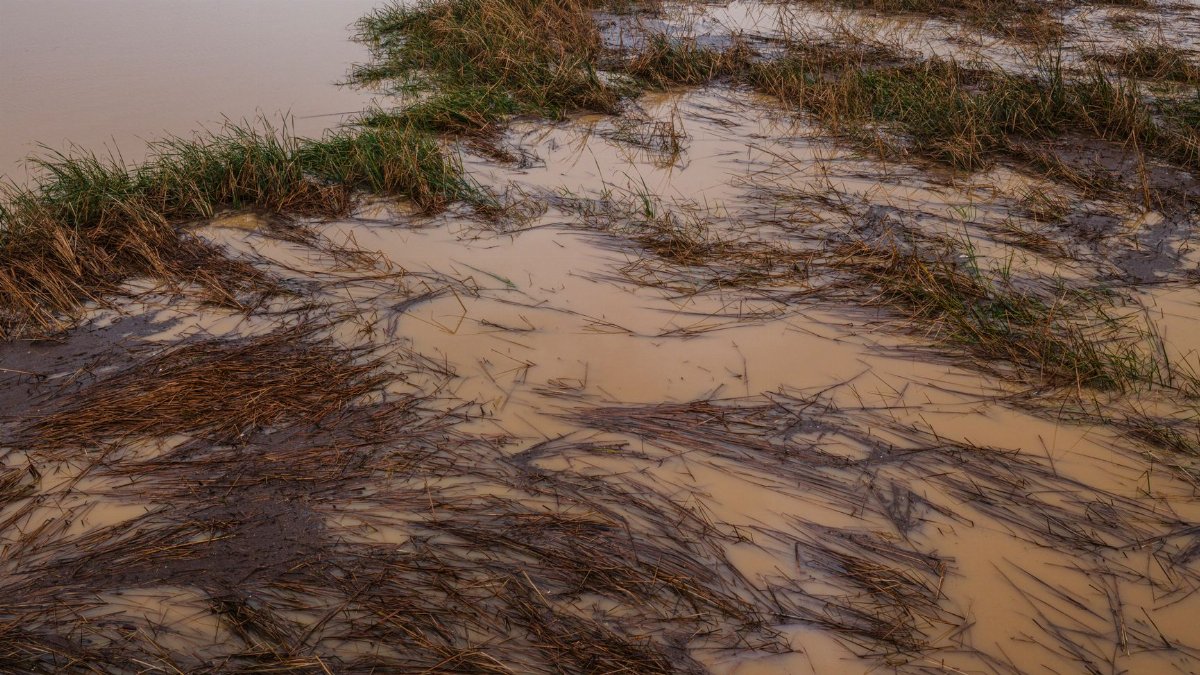
Wildlife does not acknowledge a survey marker. Deer, birds, and smaller creatures follow water and cover. A barrier can shift those paths, sometimes toward roads, sometimes toward places where movement becomes impossible. Floods add another complication. The Rio Grande is not a tame canal. In storm years it rises, spreads, and drops debris where engineers did not invite it. Structures in a floodplain have to reckon with water that keeps its own counsel.
Supporters of the Big Bend border wall argue that modern design can include gates, gaps, and access points that reduce those harms. Critics answer that promises made in planning documents often meet a harsher test in rock and weather. A court halt does not settle that scientific quarrel. It does keep the quarrel from being settled by default, which is what happens when construction outruns the record. In remote country, the record is hard to build and easy to lose.
Faith, kinship, and a quieter kind of crossing
There is a spiritual dimension to this story that has little to do with campaign language and much to do with how people locate themselves. Congregations in scattered towns pray for rain, for sons in distant cities, for relatives on the other bank. Pilgrimage here is often just a long drive to a familiar chapel or a family grave. The land is not a metaphor for those who bury their dead in it. It is a companion, sometimes a severe one.
To note that is not to baptize one side of a lawsuit. It is to remember that policy lands in communities that already have rituals of belonging. When a federal project arrives, it arrives beside those rituals. Some residents will welcome a harder line as protection. Some will experience it as a wound in a place they consider sacred in the plain sense, set apart by memory rather than by doctrine. A serious article can hold both without turning either into a slogan.
Politics at a distance from the canyon
Most of the votes that will judge this administration are cast far from Terlingua, Presidio, and the empty bends of the river. Border policy is national politics conducted through a local geography. That mismatch produces heat. Candidates speak of walls as symbols of resolve or of excess, and the symbol travels faster than any fact about a particular mile. The Court is supposed to be slower than a symbol. Whether it is, in a given week, is part of what the country is testing.
Journalists should be plain about incentives. An administration that promised barriers has a reason to show movement. Advocates who have spent years in court have a reason to treat every stay as precious. Local residents have a reason to distrust both, because both can leave when the microphones do. The fairest reporting keeps those incentives visible without pretending that motives replace law.
What a ruling would and would not decide
If the justices lift the halt, crews could gain a path to begin or resume work while appeals continue. That would be a significant practical victory for the administration, even if later opinions narrowed or rejected parts of the project. If the justices leave the halt in place, the administration must wait, redesign, or seek relief in some other form. Neither result writes the final chapter on immigration, asylum, or the wider border.
It is worth saying that aloud, because wall debates are often asked to carry more meaning than any structure can bear. A barrier can change movement at a site. It cannot, by itself, repair a strained asylum system, alter the economies that push people to travel, or settle the moral argument about who may ask to enter. Treating the Big Bend border wall as the whole of border policy is a category error. Treating it as a trivial local fuss is another.
The record the public can actually see

Readers who want to follow the case should look for the court’s own orders, the government’s application, and the responses filed by the parties who won the halt below. Those documents will matter more than any cable chyron. They will show what harm each side claims, what statutes each side invokes, and what remedy each side says is still available later. Until those pages are read, confidence should stay modest.
News organizations, including the Houston Chronicle report that brought this request to a wide Texas audience, are the first draft. They are not the judgment. A reader can hold the draft and the judgment in different hands. That habit is not cynicism. It is how a public stays free while remaining informed.
A canyon that will still be there
Whatever the Court does, the limestone will not file a brief. The river will keep its bends. People will still drive long distances for groceries, still watch the sky for storms, still argue at kitchen tables about safety and belonging. The legal question is urgent because construction is hard to undo. The human question is older, and it will not be closed by an order that either lifts a halt or extends one.
I keep returning to the scale of the place, not as romance, but as a check on abstraction. It is easy, from a newsroom or a capital, to speak of miles as units. It is harder to stand where the road ends and admit how little of the country a person can actually see. The fight over the Big Bend border wall deserves that kind of looking. Law can be precise and still leave room for humility about the ground it governs.