

On a warm weeknight in a quiet corner of Southern California, the charging stalls glow white under a low sky, and the cars that fill them do not belong to anyone waiting nearby with a grocery bag. They sit in neat rows, robotaxis EV chargers occupied for long stretches while human drivers circle the lot and check their phones. The scene has become familiar enough that neighbors talk about it the way they once talked about freeway backups: as a daily friction that arrived without a vote.
A lot that fills before dinner

The plaza sits beside a strip of small shops and a low apartment block, the kind of place city planners once treated as leftover land. Residents say the pattern is simple. Autonomous cars arrive in clusters, plug in, and remain. A retiree who walks her dog past the stalls each evening put it in a phrase that has stuck: they come in droves. She does not own an electric car. She notices because the glow never seems to dim, and because the human drivers who do own them have started parking on the side street instead.
What looks like hogging is, from the fleet side, logistics. A robotaxi earns money only when it is moving passengers or positioned for the next request. Electricity is the fuel that keeps that loop closed. When several vehicles finish shifts in the same zone, they converge on the same public plugs. The result is a private operating need expressed on infrastructure built for everyone.
What ordinary drivers describe
Ask the people who still plug in by hand and the stories rhyme. A nurse finishing a late shift finds every stall taken by cars with no one in the driver seat. A father with two children in the back row waits twenty minutes, then leaves with a battery too low for the morning school run. A rideshare driver who is not autonomous says he has started mapping chargers farther from the busy corridors, adding miles he does not get paid to drive.
None of these accounts, taken alone, proves a regional crisis. Together they describe a local mismatch. Public chargers were sold as a shared convenience, a way to make electric cars practical for people without a garage. When a commercial fleet treats those same stalls as a depot, the convenience thins. The cars are legal. The frustration is also real.
Why the vehicles linger
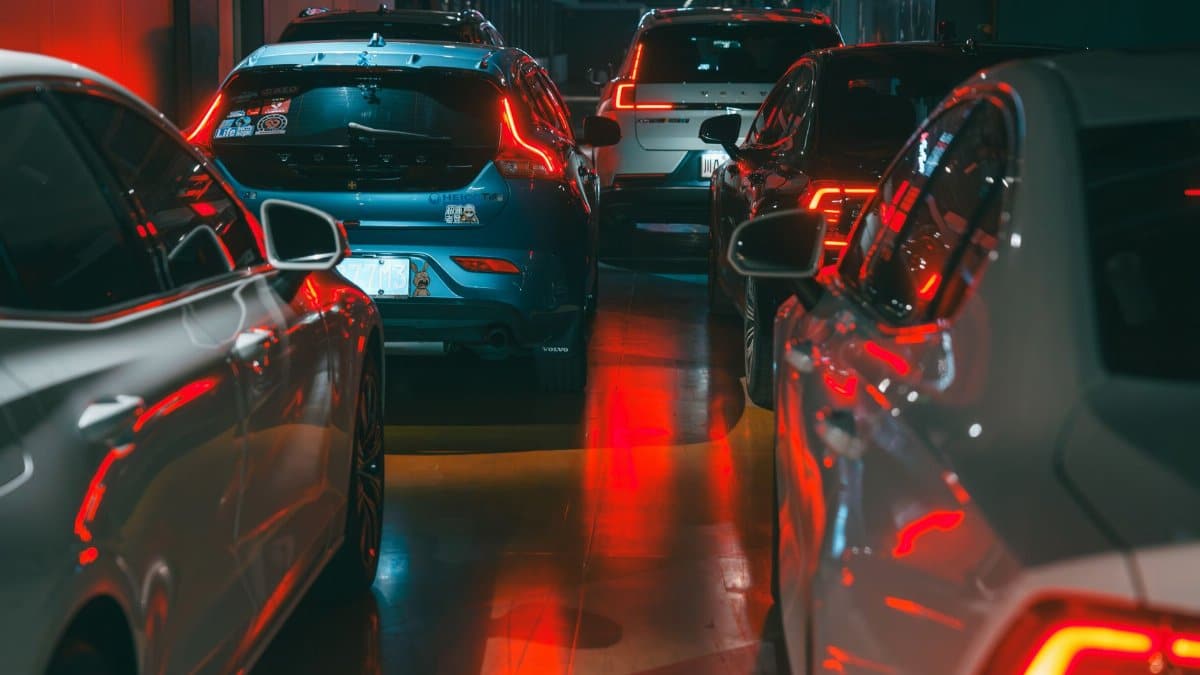
A private owner typically charges and goes home. A robotaxi has a different clock. It may top up between peaks, cool a battery after a long run, or wait because the next surge of rides has not started. Software can send many cars to the cheapest or closest plugs at once. Humans do not coordinate that way. They arrive by chance. Fleets arrive by design.
That design is not sinister. It is efficient for the company and clumsy for the curb. Batteries large enough for a full shift take time. If the only reliable plugs are the ones on a commercial corner, the cars will sit there until the percentage on the dash looks safe. Passersby see idling wealth. Operators see uptime.
The thin supply of public plugs
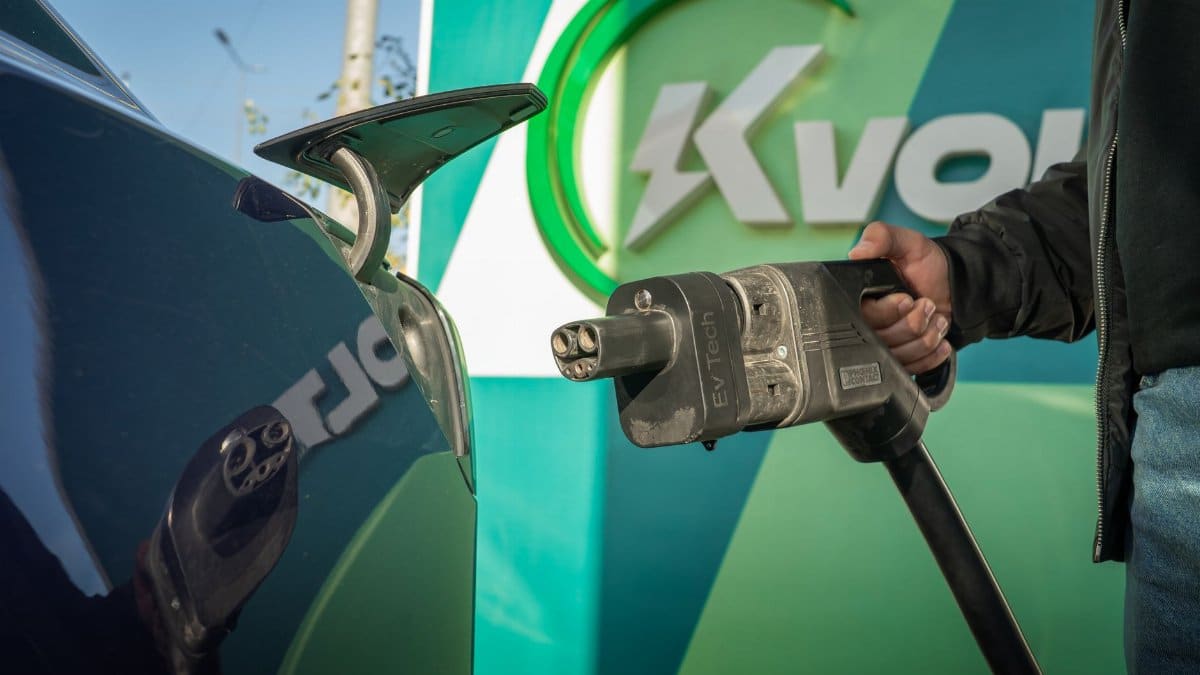
Southern California has more electric cars than most regions, and still not enough public plugs in every neighborhood. Garages and workplace lots absorb a large share of charging. The stalls that remain on open pavement carry the rest: visitors, apartment dwellers, and now fleets. When robotaxis EV chargers become a default pit stop, the scarce resource is no longer theoretical. It is a cable someone else is holding.
Urban planners have long warned that curbside space is political. Parking, bus lanes, outdoor dining, and delivery vans already compete for the same strip of asphalt. Charging adds a new claimant that cannot simply circle the block. A plugged car occupies land and electricity. Multiply that by a coordinated fleet and a corner lot starts to function like a yard the public did not agree to lease.
Companies and the quiet queue

Fleet operators argue, with some justice, that their cars remove other cars from the road and that electrifying those miles is a climate gain. They also note that many charging sites welcome any paying customer. A robotaxi that taps a card is, on the screen, just another session. Nothing in the transaction asks whether a person is standing beside the door.
Residents hear a different question. Who gets priority when demand spikes? A commuter trying to reach a safe charge before a night shift, or a company optimizing a map? Markets answer with price. Neighborhoods answer with patience, and patience runs out faster than kilowatts. The quiet queue is not a line of people. It is a line of vehicles that never complain.
How the hardware was meant to work
Most public chargers were financed and permitted under a simple story. Drivers would stop, fill, and leave, much as they once did at a gas pump, only slower. Site hosts expected turnover. Utilities expected a spread of demand across the day. Apartment dwellers expected a backup when the building had no plugs of its own.
Fleets bend that story. A cluster of robotaxis can raise load at a single transformer friendly corner and then vanish, leaving the next hour oddly empty. The hardware does not fail. The social contract around it frays. People who planned their lives around a dependable stall discover that dependable meant something else: available to whoever arrives with an account and a reason to stay.
Evenings when the pattern is worst

Drivers who keep informal notes say the crush peaks after the late afternoon rush and again before morning. That is when cars reposition for the next wave of trips and when human owners also want power. The overlap is the whole conflict in miniature. Two legitimate uses, one finite row of pedestals.
On those evenings the lot can look abandoned and occupied at once. No one leans on a door. No one chats. The only motion is a hatch closing or a car inching forward when a session ends and another vehicle, summoned by the same system, takes the stall. For a person who needed twenty minutes and a free plug, the choreography feels personal. It is not. It is a schedule.
What cities can actually control

Local governments rarely own the chargers. They do control permits, curb rules, and the terms attached to public land. Some officials have begun asking whether fleet charging belongs on dedicated depots rather than on stalls marketed to the general public. Others worry that strict rules will slow the shift away from gasoline, or push companies to wire private lots in ways neighborhoods also dislike.
The useful question is narrower than a ban. Can a site reserve a share of plugs for sessions under a time limit, or require a person to be present, or price long dwells so that a depot habit becomes expensive? Those tools exist in other parts of parking policy. Applying them to robotaxis EV chargers would not solve every shortage. It would admit that commercial use and household use are not the same errand.
Depots, prices, and other unglamorous fixes

The cleanest fix is also the least photogenic: company yards with their own power, built where industrial zoning already expects trucks and vans. Until those yards are dense enough, fleets will keep spilling onto public plugs. Price can nudge them. A higher rate after an hour, or a fleet account that pays more during neighborhood peaks, would not require new concrete. It would require hosts and networks to decide that turnover matters.
Drivers, for their part, are already adapting in small ways. Some leave earlier. Some join workplace programs. Some postpone the electric purchase because the public network feels less public. That last choice is the one climate advocates should take seriously. A charger that is technically open and practically captured does not recruit the next buyer. It teaches hesitation.
The climate promise meets the curb
None of this cancels the case for electric miles. Tailpipes still dominate urban air complaints, and robotaxis that run on electrons rather than gasoline are part of a plausible cleaner future. The conflict is about sequence. If the visible face of that future is a row of empty driver seats blocking the only plugs an apartment dweller can use, support thins. People do not experience policy in white papers. They experience it as a wait.
A fair network would make fleet charging visible and planned, not incidental. It would tell a resident whether a stall is likely to turn over before midnight. It would give operators a place to gather that is not disguised as a convenience store amenity. Until then, the corner lot will keep teaching the same lesson in fluorescent light.
A neighborhood keeping score
On recent nights the dog walker still passes the stalls and counts. Some evenings the ratio favors ordinary cars. Other evenings the droves return, and the side street fills with people who gave up. She does not want the robotaxis gone from the region. She wants the plugs to behave like a shared tool again.
That desire is modest, and it is also a test. Cities that invited electric cars into daily life now have to decide whether robotaxis EV chargers are a public service or a private staging ground. The answer will not be settled by a single lot in Southern California. It will be settled by whether the next person who needs a charge can find one before the battery icon turns red, and whether the car in the stall is there because a person is coming back, or because a map told it to stay.