

In a federal prison clinic, a nurse reads a new directive and a patient waits to learn whether a prescription that has kept her body stable will still be filled. That quiet pause is the human edge of a national legal fight. This week the Supreme Court trans inmates dispute reached a procedural stopping point, as the justices refused to let the Trump administration immediately enforce new limits on medical care for transgender people held in federal prisons. The order does not settle the constitutional questions. It does decide, for now, that the government cannot rush those limits into force while lower courts continue to examine them.
What the justices actually decided

The ruling is narrow, and that narrowness matters. The Supreme Court did not declare a permanent right to any particular treatment, and it did not strike down the administration policy on the merits. It declined an emergency request to lift a lower court block. In practical terms, existing medical arrangements remain in place while the case proceeds. Emergency applications often arrive with incomplete records and compressed briefing. Justices frequently prefer to let trial judges and appeals courts develop facts before the high court intervenes. Readers who hear only a headline may miss that distinction. A refusal to grant immediate relief is not the same as a final judgment, yet it can shape daily life for months.
Who lives inside the legal category

Federal prisons hold a small number of transgender people relative to the overall population, but the medical stakes for those individuals can be large. Some have received hormone therapy for years. Others entered custody after beginning treatment in the community. A few seek evaluations for surgery that prison officials have historically resisted. Gender identity, security classification, and medical need do not line up in a single pattern. Any national rule that treats the group as uniform will collide with individual charts, specialist opinions, and the ordinary mess of chronic illness. The legal category is tidy. The people inside it are not.
How prison medicine already works

Incarcerated patients do not choose their doctors the way people on the outside do. The Bureau of Prisons contracts care, reviews requests through utilization committees, and weighs security alongside clinical judgment. Delays are common even for conditions that no one disputes, from dental infections to cardiac follow up. Gender related care sits inside that same bureaucracy, with added layers of policy memos and political attention. When a court freezes a new restriction, it does not create a private hospital behind the walls. It preserves a status quo that already includes wait lists, second opinions, and uneven access from one facility to another.
The constitutional frame officials cannot ignore

Prison medical cases usually turn on the Eighth Amendment ban on cruel and unusual punishment. Decades of precedent require officials to provide adequate care for serious medical needs and forbid deliberate indifference to those needs. Courts have applied that standard to diabetes, mental illness, and delayed cancer treatment. Transgender patients argue that gender dysphoria can be a serious condition and that a blanket political limit, rather than an individualized clinical judgment, crosses the line. The government argues that it retains discretion to set standards, control costs, and avoid treatments it views as elective or poorly supported. Both arguments will be tested with records, not slogans.
What the administration sought to change

The Trump administration moved to tighten what federal prisons may provide, limiting access to hormones, related medications, and surgical procedures associated with gender transition. Supporters describe the shift as a return to biological definitions and a curb on what they call experimental care funded by taxpayers. Critics describe it as a targeted withdrawal of treatment from a politically unpopular group. The emergency posture asked the Supreme Court to let those limits operate at once, before full appellate review. By rebuffing that request, the Court left the prior regime in place and signaled that speed was not justified on the record presented.
Why timing is its own form of policy

Hormone regimens are not light switches. Stopping or sharply altering them can produce physical withdrawal, mood instability, and medical complications that clinicians must manage. A rule that takes effect overnight forces prison doctors to choose between a memo and a patient sitting in front of them. That is why emergency litigation in this area feels different from a fight over a future budget line. The weeks between an order and a final appeal are not empty time. They are treatment time. Judges who hesitate to bless an instant nationwide change are often responding to that medical reality as much as to abstract doctrine.
Security, housing, and the arguments that travel with medicine

Public debate rarely stays inside the pharmacy. Housing assignments, search procedures, and the safety of women in female facilities enter the same conversation, sometimes honestly and sometimes as a substitute for the medical question. Prison officials have a duty to prevent violence and sexual abuse. They also have a duty not to use security as a pretext for denying care that a qualified clinician finds necessary. A careful court will separate those issues. A political campaign often will not. The present order touches medical restrictions, not a comprehensive rewrite of housing policy, and readers should not treat it as a verdict on every related dispute.
Lower courts still hold the heavier work

The case returns to the ordinary path of injunction practice, discovery, and appellate briefing. Plaintiffs will try to show irreparable harm and a likelihood of success. The government will try to show that its standard is reasonable, uniform, and within executive authority over federal prisons. District judges may take testimony from endocrinologists, psychiatrists, and correctional officials. Appeals courts may split. Only after that record thickens is the Supreme Court likely to decide whether the dispute deserves full review. Until then, the emergency rebuff functions as a pause, not a proclamation.
States are writing a parallel map

Federal prisons are only one system. State departments of corrections have adopted conflicting approaches, some maintaining hormone therapy under court settlements and others imposing new statutory limits. A person who crosses a state line, or who moves from a state sentence into federal custody, can find the rules changed underneath an ongoing prescription. That patchwork invites forum arguments and unequal outcomes for similar diagnoses. It also means a single Supreme Court order about federal authority will not quiet every prison clinic in the country. Governors, legislatures, and consent decrees will keep producing their own versions of the same conflict.
Evidence, uncertainty, and the temptation to overclaim

Medical organizations and government reviewers do not speak with one voice about the long term evidence for every intervention, especially surgery. Honest journalism should not pretend that uncertainty is the same as a political talking point, or that a talking point is the same as a clinical chart. Courts are poorly suited to run national medical debates, yet they are routinely asked to decide whether a prison may ignore a specialist or substitute a categorical ban for individualized review. The better question for judges is often procedural. Who decides, on what record, and with what chance for a patient to be heard before care is withdrawn.
Faith, dignity, and a public that is not of one mind

Because this news lands in a season of spiritual argument as well as legal argument, it is worth saying plainly that Americans of faith disagree. Some congregations hear in these cases a call to bodily truth as they understand creation. Others hear a call to visit the prisoner and to refuse cruelty toward people already under state control. Neither reading cancels the Constitution. A society can hold moral disagreement and still insist that punishment not include the deliberate neglect of serious illness. That insistence is older than the current culture war, and it will outlast any single administration memo.
What families and advocates are watching
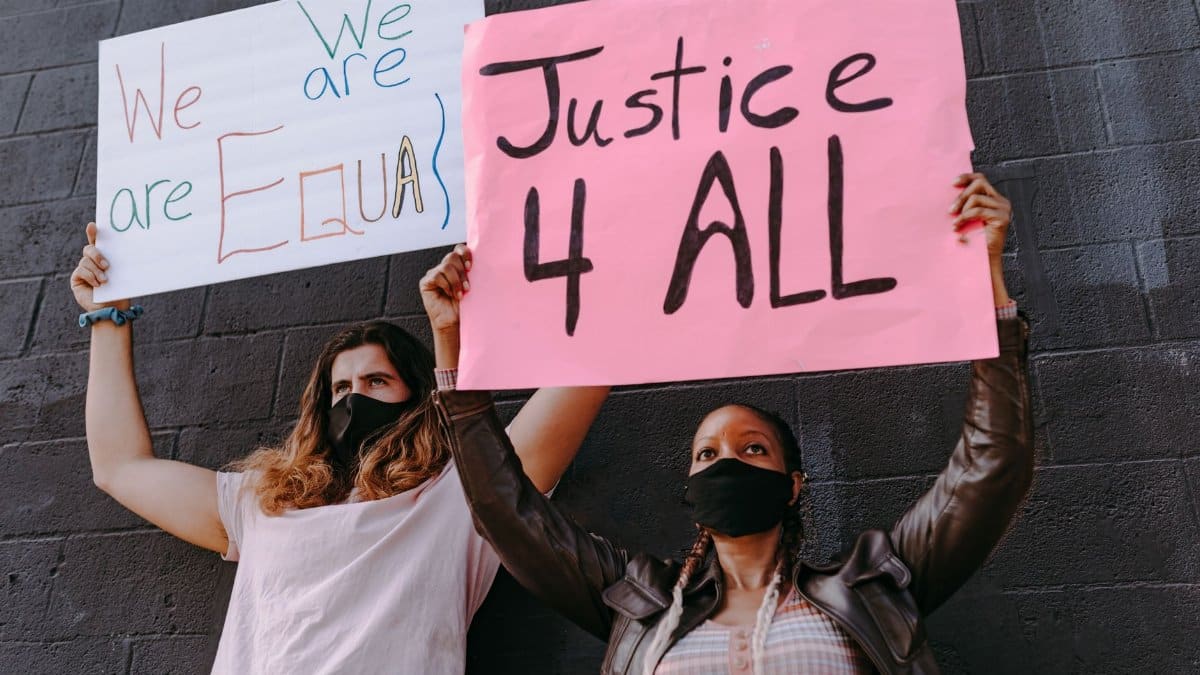
Outside the courthouse, parents, spouses, and volunteer lawyers track docket entries the way other families track lab results. Advocacy groups on both sides frame the pause as vindication. Families tend to ask smaller questions. Will the prescription be renewed this month. Will a transfer interrupt care. Will a grievance vanish into a stack of forms. Those questions do not make headlines, but they measure whether a legal victory is real. The Supreme Court trans inmates litigation will be cited in speeches. Its first test is whether a nurse can still order the medication a chart already lists.
Politics will try to enlarge a procedural order

Campaign language rarely respects the limits of an emergency docket. One side will say the Court protected radical medicine. The other will say it slapped down a cruel ban. Neither sentence matches the order. Voters can still argue about what federal prisons ought to fund. Legislators can still write statutes. Presidents can still direct agencies, subject to law. What they cannot honestly claim is that this week produced a final national rule on gender medicine behind bars. The enlargement of a stay denial into a culture war trophy is a political habit. It is not legal analysis.
The next filings to watch

Attorneys will now brief the merits with more time and a fuller record. Watch for whether the government narrows its policy to look more individualized, which could weaken the plaintiffs case, or doubles down on categorical limits, which could strengthen it. Watch for class certification fights, arguments about mootness if prescriptions are quietly continued, and requests for further emergency relief if a facility interprets the pause narrowly. Also watch the appeals court calendar. A split among circuits would raise the odds of a later, fuller Supreme Court argument. Until that happens, the story remains a stay fight with immediate medical consequences.
A pause that still leaves people waiting

The latest turn in the Supreme Court trans inmates battle keeps contested care available while judges do the slower work of reading records and hearing experts. That is a modest outcome, and modesty is the right scale. No order from Washington fills a prescription by itself. No dissent, if one appears in a later stage, comforts a patient whose treatment is interrupted by a transfer or a skeptical clinician. The country can continue to argue about sex, medicine, and the limits of punishment. Inside the clinic, the standard is older and plainer. Serious illness requires serious care, and the state that locks the door assumes the duty that comes with the key.