
The lights in the sanctuary were already warm when the crowd began to press into the aisles, programs folded in hands that had come from work, from choir practice, from kitchens still smelling of supper. Wheeler Avenue Baptist Church, a landmark of Houston’s Third Ward, does not lend itself to casual visits. People arrive with memory. On this night they also arrived with a question about a Senate campaign that has spent months talking about faith, schools, and the cost of living, and that now needed Black voters to decide whether the talk was enough. The Talarico Houston Senate rally was the moment James Talarico chose to ask for that decision in person, inside a church whose history makes political promises feel smaller than the room.
A church that does not treat campaigns as entertainment
Wheeler Avenue is not a rented hall with a temporary banner. It is a congregation shaped by the civil rights era, by pastoral leadership that has long treated voting as a form of stewardship, and by neighbors who can tell a visiting candidate from a familiar one within a few sentences. Talarico, a state representative and a student of ministry, walked into that setting with a style that is already familiar to many Texans who follow legislative hearings: plain speech, scripture used as argument rather than decoration, and a willingness to say that public power has moral consequences.
For a broad audience outside Houston, the scene can look like any church rally in a Democratic primary or a general election warmup. Inside Third Ward it read differently. The pews hold people who have been organized, disappointed, and organized again. A packed sanctuary is a compliment. It is not a contract.
Why this Senate race keeps returning to Black Houston
Texas statewide math has a blunt lesson that consultants repeat and candidates sometimes forget. No Democrat wins a Senate race here without a large, enthusiastic Black vote in Houston, Dallas, and a handful of other cities, paired with better performance in the suburbs than the party has managed in recent cycles. Black voters are not a niche. In Harris County they are a cornerstone of any coalition that hopes to be more than a moral protest.
That is why a week of digital ads cannot substitute for a night in Third Ward. Older congregants still remember candidates who appeared in October and vanished in November. Younger members, many of them renters or parents juggling two jobs, are less romantic about party brands. They ask what a senator will do about rent, hospital bills, voting access, and schools that ask families to fill gaps the state will not. Talarico’s bet is that a faith vocabulary can carry those kitchen table issues without sounding borrowed.
The uncomfortable polling picture
The backdrop to the night was not triumph. Public discussion of the race, including reporting in the Houston Chronicle, has described Talarico as trailing Attorney General Ken Paxton among Black voters. That finding, if it holds, is a warning more than a verdict. Paxton is a polarizing Republican with a long record of legal fights and a base that does not need Houston’s historic Black churches. A Democrat who is behind him with Black voters is not losing a rounding error. He is losing the premise of his coalition.
Campaigns often explain such gaps as name recognition. Some of that is fair. Paxton has been on statewide ballots for years. Talarico is still introducing himself beyond his legislative district and a growing audience that knows him from hearings and sermons about public schools. Name recognition, though, is also a polite way of saying that trust has not been built. Trust is what a rally either begins or pretends to begin.
Faith as argument, not costume
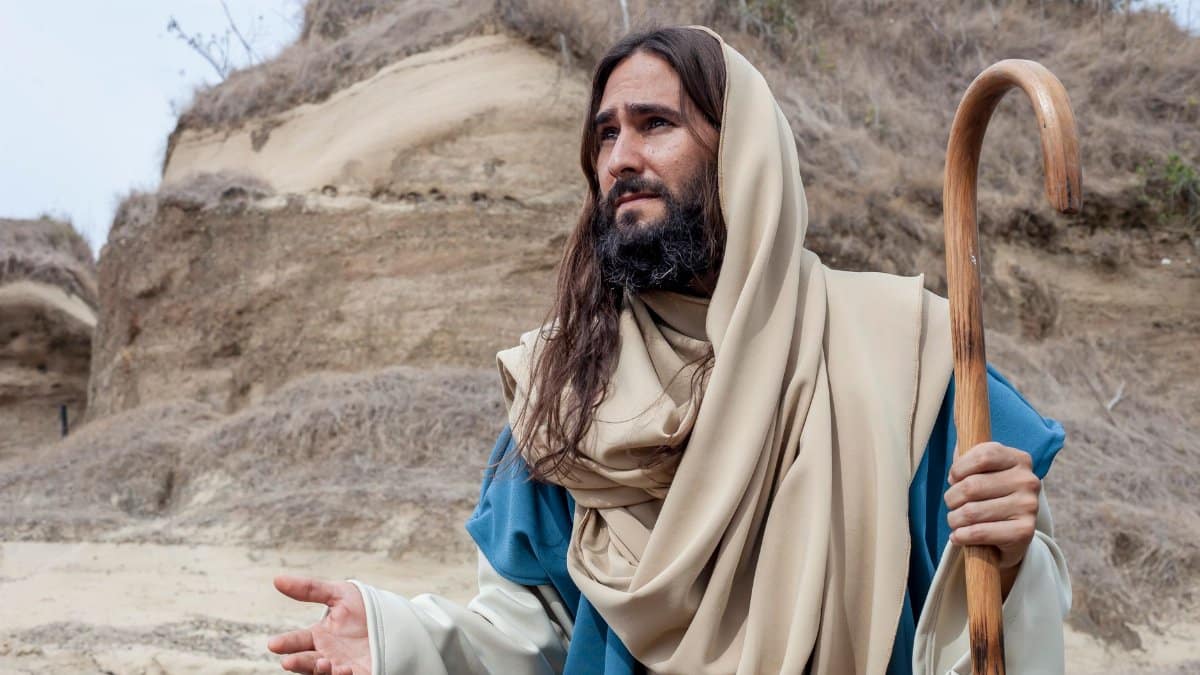
Talarico’s public identity sits at the intersection of church and capitol in a way few Texas Democrats attempt so directly. He talks about the Bible as a text that judges greed, cruelty, and the neglect of children, not as a tribal password. In a sanctuary like Wheeler Avenue, that approach can land. Many Black Protestant traditions already hold worship and justice in the same sentence. A candidate who can pray without performing, and who can criticize power without sneering at believers, has a chance to be heard.
The risk is the reverse image: a young white candidate treating Black church life as a stage that confers authenticity. Congregations notice the difference between a guest who has done the reading and a guest who has memorized the cadence. Spiritual language does not excuse thin policy. It raises the standard. If you invoke the least of these, people will ask what your Senate votes would mean for the least of these in Houston, not in a parable.
What Third Ward has already heard
Third Ward has hosted more campaigns than most neighborhoods in America. The speeches blur. What remains is whether anyone came back after the cameras left, whether the field office stayed open, whether a problem with a polling place or a flooded street produced a returned phone call. Older members of the church can recite the pattern. A surge of attention. A photo on the steps. A winter of silence.
That memory shapes how a packed rally should be read. Energy is real. So is skepticism. Talarico’s team can point to a full room as evidence that curiosity exists. Curiosity is the start of politics, not the end of it. The people who stood for the benediction will measure the next months by presence: at neighborhood meetings, at early vote sites, in conversations that do not begin with a microphone.
The Paxton contrast and the limits of contrast

Running against Ken Paxton offers Democrats a clear moral sketch. Paxton’s tenure as attorney general has been defined by lawsuits against federal policy, fights over voting rules, and a personal legal history that even many Republicans have called disqualifying. For voters who already oppose him, the indictment writes itself. For voters who are unconvinced that any Democrat will improve daily life, the indictment is not enough.
Black voters are not a monolith waiting to be reminded that a Republican is conservative. Many are socially traditional, economically pressed, and impatient with both parties. Some have cooled on Democrats over schools, crime, or a sense that the party speaks about them more than with them. A rally that only lists Paxton’s failures will fill time. A rally that explains what a Talarico Senate office would do about insulin, rent, and the right to cast a ballot without an obstacle course has a better chance of moving someone who is still deciding whether to vote at all.
Schools, money, and the moral case he prefers

Talarico has made his name in Austin largely through fights over public education funding and the influence of wealthy donors on policy that touches children. That record is the most concrete thing he can carry into a church. Parents in Third Ward do not need a lecture on the idea of public schools. They need a senator who will treat teachers, buildings, and special education as obligations rather than as bargaining chips in a culture war.
The spiritual frame he favors, that budgets reveal what a society worships, is not original. It is useful if it stays attached to numbers and names. Congregations have heard vague calls to justice for generations. They respond when a candidate can say which program he will defend, which tax advantage he will challenge, and which Texans will feel the difference. Abstraction is a kind of distance. Distance is what this campaign cannot afford in rooms like this one.
Age, race, and the work of being a guest

Talarico is young for a statewide contender, white in a sanctuary that is not, and educated in institutions that can sound far from the block outside the church doors. None of those facts is fatal. All of them require humility. The wrong lesson from a warm reception is that biography has been solved. The right lesson is that people were willing to listen.
Listening, in this context, means more than nodding at a pastor’s introduction. It means taking questions about immigration from members whose families are mixed, about crime from people who want both safety and fair policing, about abortion and gender from believers who do not share the platform of the national Democratic Party. A candidate who only visits churches where the theology already matches his talking points will never meet the Black electorate as it actually is. Wheeler Avenue is influential. It is not the whole of Black Houston.
Organizing after the amens

The test of the Talarico Houston Senate rally begins when the lights come up and the visiting staff fly home or drive back to a headquarters. Campaigns that treat Black churches as election month real estate tend to discover, too late, that pulpits are not precinct machines. Pastors may open a door. They rarely drag a congregation across a threshold the congregation has not chosen.
What works, when it works, is slower. It looks like trained volunteers who live in the neighborhood, rides to the polls that are arranged before the final weekend, and literature that does not assume everyone already knows the candidate’s first name. It also looks like a candidate who can return without a television crew. In a state the size of Texas, that kind of presence is expensive. It is still cheaper than discovering in October that admiration online did not become ballots in Harris County.
A party still tempted by assumption

Democrats have a recurring habit of describing Black voters as the base and then scheduling them last. The habit is not only rude. It is electorally stupid. When turnout lags, strategists speak of enthusiasm gaps as if enthusiasm were weather. Often it is the residue of campaigns that asked for loyalty and offered a mailer.
Talarico’s appearance in Third Ward can be read as a rejection of that habit, or as a late correction to it. The distinction will not be settled by one evening. If the campaign’s calendar in the coming months is thick with suburban lunches and thin with beauty shops, union halls, and weeknight services, the sanctuary crowd will have been a photograph. Photographs do not vote.
What a full room can honestly prove

A full church proves that Talarico can draw people who are willing to spend an evening on politics inside a sacred space. It proves that his mixture of seminary language and legislative detail does not immediately repel a Houston congregation with high standards for both. It does not prove that he has closed a gap with Paxton. It does not prove that undecided Black voters across the city, including those who never enter this particular sanctuary, have moved.
Honest campaigns say that out loud, at least to themselves. The alternative is the intoxication of applause. Applause is a gift. It is also a poor poll. The Talarico Houston Senate rally mattered because it put the candidate in the room where his coalition is either built or exposed as a theory. Exposure, if he treats it as information rather than as an insult, is useful.
The spiritual stake beneath the horse race
There is a reason this story belongs as much to the life of the church as to the horse race. Black congregations in Houston have carried civic hope through decades when the state government was indifferent or hostile. They have buried members, funded scholarships, and registered voters when parties were distracted. When a Senate candidate stands in that lineage, he is borrowing moral capital he did not earn. The only respectable response is to spend it on something other than his own momentum.
Talarico’s supporters argue that his faith is not a tactic, that he would legislate from the same convictions he voices at a pulpit. His skeptics will watch the votes, the absences, and the company he keeps. Between those poles sits the congregation itself, which has every right to enjoy a spirited night and still withhold its judgment. That withholding is not cynicism. It is discernment, a spiritual practice as much as a political one.
Leaving with the question still open

By the time the crowd moved toward the doors, the campaign had what it came for: images of a packed historic church, a candidate at ease with scripture, a signal that Houston’s Black civic core is at least willing to look him over. The city outside the church had not changed. Rents were the same. The attorney general was still the attorney general. The Senate map was still a steep hill.
What may have changed, slightly, is the terms of the introduction. Talarico is no longer only a figure on a screen explaining a bill. He is a man some of these congregants have now seen ask for their trust. The Talarico Houston Senate rally will be remembered less for the lines that draw cheers than for whether he treats that ask as the beginning of a long obligation. In Third Ward, politics that ends at the benediction is just another kind of noise. Politics that returns, and keeps returning, is the only kind this church has ever had reason to believe.