
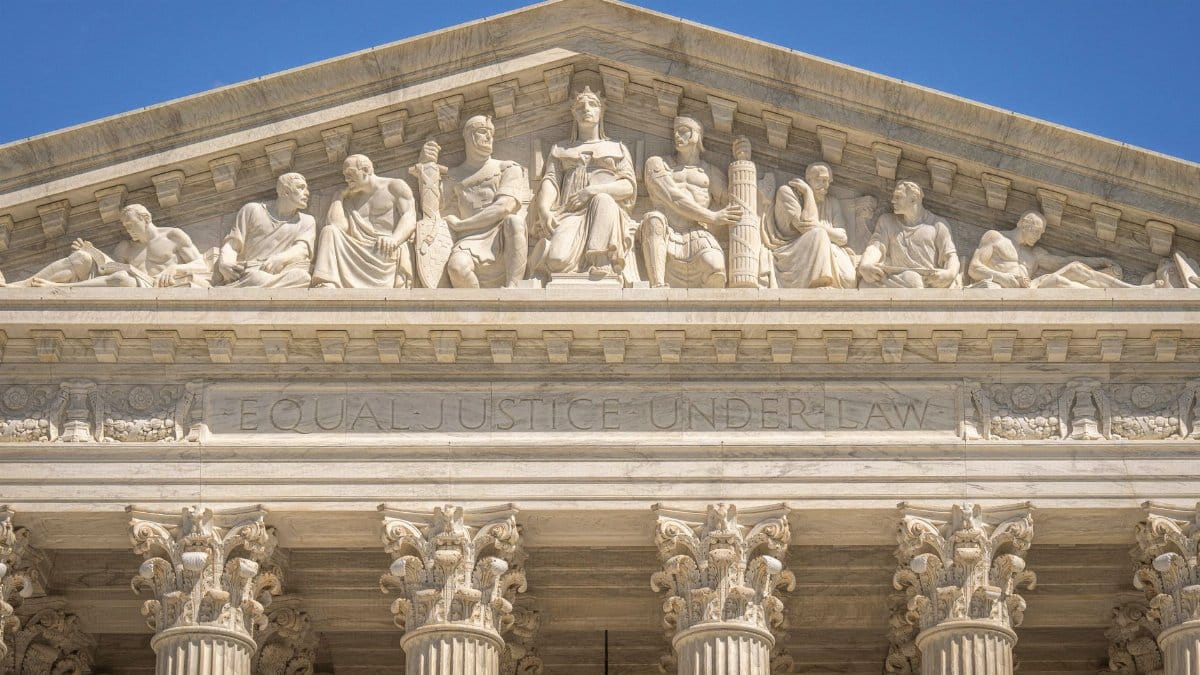
On the first Monday in October, the building across from the Capitol resumes a ritual that looks quiet from the sidewalk and feels loud everywhere else. Clerks stack briefs. Advocates rehearse the sentence they hope a justice will not cut off. Reporters refresh a calendar that, this year, points toward fights over fossil fuel liability, who may be removed from the country, and whether states may restrict certain rifles. The Supreme Court new term begins with those disputes already framed for a public that will live with the answers long after the arguments end. Reporting in the Chicago Tribune describes energy company appeals, deportation cases, and challenges to state rifle bans starting October 5.
A calendar that matters before anyone speaks

The opening of a term is less a ceremony than a sorting mechanism. Petitions that survived the summer become arguments with dates, and dates become pressure. Agencies, governors, and advocacy groups read the list the way farmers read a forecast. They do not need a final opinion to change behavior. A grant of review is often enough to freeze a rule, slow a prosecution, or push a legislature to wait.
That is why the mix of subjects matters as much as any single case. Climate, immigration, and guns touch different constituencies, yet they share a structure. Each asks how far a state or the national government may go when the constitutional text is short and the political stakes are not. Each also arrives in a country that already knows the names of the justices better than it knows the names of most cabinet officers.
Climate claims and the question of who pays
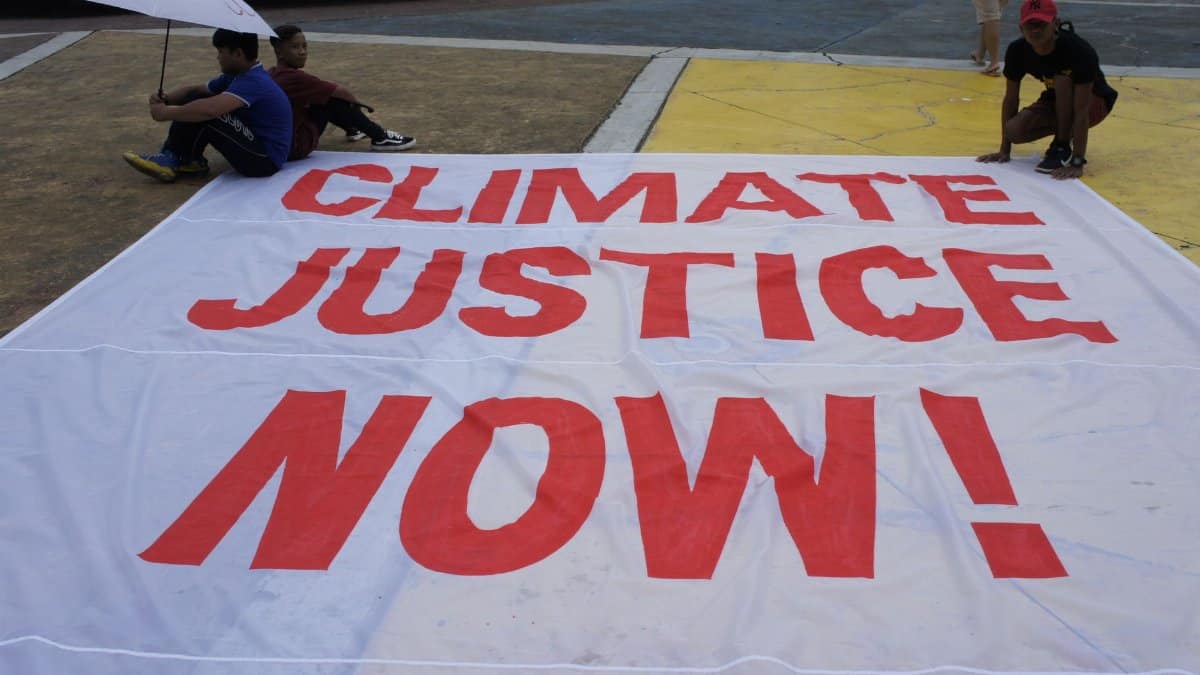
Energy company appeals sit at the edge of a long argument about responsibility for a warming planet. Cities, states, and private plaintiffs have tried to pull fossil fuel firms into court under state tort theories, consumer statutes, and public nuisance claims. Companies answer that those suits are really attempts to set national energy policy through damage awards, and that federal law should displace them.
The legal question can sound procedural. Which court hears the case. Which body of law supplies the rule. Whether a complaint about marketing and deception is different from a complaint about emissions themselves. Procedure decides power. If the claims stay in state court under state law, local juries and state judges become climate regulators in fact, even if they never write a single emissions limit. If the claims are pulled into federal court and then dismissed, the practical message is that Congress or an agency, not a damages suit, must carry the policy.
Readers should resist the urge to treat every climate case as a referendum on the science. The science is not what these appeals typically ask the justices to retry. The fight is about institutional assignment. Who is allowed to force a reckoning, and in what forum. That assignment will shape settlement pressure, insurance markets, and the willingness of local officials to file the next complaint.
What companies and governments each fear

For an energy company, the nightmare is not one loss. It is a map of overlapping suits, each with its own theory, its own jury pool, and its own measure of harm. A single adverse ruling on jurisdiction can multiply that map. For a coastal city or a state attorney general, the nightmare is the opposite: years of briefing that end with a door closed and no damages, no injunction, and no admission that the marketing at issue misled anyone.
Neither fear is abstract. Municipal budgets already carry the cost of floods, heat, and wildfire smoke. Corporate balance sheets already carry litigation reserves and the attention of investors who ask whether courts will treat carbon the way they once treated tobacco or asbestos. The Supreme Court new term will not invent those costs. It may decide which institution has to explain them.
A careful reader will also watch the remedy, not only the holding. Courts can dismiss, remand, or narrow. A narrow opinion can look modest in the syllabus and still drain a litigation campaign of its leverage. A broad opinion can look like a manifesto and still leave trial courts with room to distinguish the next complaint. The first paragraphs of any opinion will matter less than the last ones, where the justices say what remains open.
Immigration cases and the reach of removal

Deportation cases rarely arrive as clean morality plays. They arrive as arguments about statutes, bond, notice, and the power of the executive to carry out a removal order while a challenge is still alive. The human facts are specific. A person has a job, a child in school, a fear of return, or a criminal conviction that the government says ends the debate. The legal facts are often about timing. When may an official act. When must a judge wait.
That timing is the whole controversy for many families. A stay that lasts through appeal is the difference between a hearing in the United States and a hearing that never really happens because the person is already gone. A rule that favors speed is a rule that favors the government’s interest in finality. A rule that favors pause is a rule that favors the individual’s interest in not being removed on a record that a court might later call unlawful.
Congress wrote a dense code and then left large stretches of it to agencies and to courts reviewing those agencies. When the justices take a deportation case, they are often asked to say how much of that code is mandatory and how much is discretion dressed up as command. Discretion is where presidents of both parties have tried to set priorities. Mandatory language is where opponents have tried to stop those priorities in court.
Procedure is the policy

It is tempting to describe immigration argument as a clash of values and stop there. Values are present. They do not decide whether a notice was adequate, whether a deadline was jurisdictional, or whether a lower court had power to block a policy beyond the parties in the room. Those are lawyer questions with civilian consequences. A nationwide block can halt a removal program before it starts. A party specific block can leave everyone else exposed.
The Supreme Court new term is likely to be read, fairly or not, as a signal about how much running room the executive has on the border and in the interior. Administrations change. The opinions do not leave with them. A rule announced for one president’s enforcement memo becomes the rule the next president must either follow or ask the Court to revisit. That is why immigration lawyers treat October arguments as multiyear strategy, not as a single news cycle.
There is also a quieter docket inside the noisy one. Questions about counsel, about what counts as a conviction, about whether a state offense matches a federal removal ground, decide thousands of files that will never be famous. A term can be remembered for a marquee case and still do its most durable work in an opinion that specialists cite and the public never sees.
State rifle bans return to the foreground

Gun cases now travel with a recent map. After the Court told lower judges to look to history and tradition when they review firearm regulations, states and cities have been testing how far that instruction reaches. Bans on certain semiautomatic rifles, limits on magazines, and licensing rules have produced a scatter of appellate decisions. Some uphold the laws. Some strike them. The scatter is an invitation.
A state rifle ban asks a blunt question in a technical form. Is the weapon at issue a kind of arm that ordinary people have long kept for lawful purposes, or is it a category the government may treat as unusually dangerous and unusual. History does not answer in a single sentence. The record of regulation is uneven, the technology has changed, and both sides arrive with historians who do not agree on what the old statutes meant.
For residents of states with strict laws, the practical stake is whether a rifle now legal in much of the country remains a crime to possess at home. For residents of states with permissive laws, the stake is whether a ruling will be read as a ceiling on future legislation or only as a judgment about one statute. Gun politics nationalizes quickly. A footnote about “common use” can become a talking point in a legislature a thousand miles from the courthouse.
How one October rearranges ordinary plans

Put the three subjects side by side and the pattern is not ideology alone. It is allocation. Climate appeals allocate the cost of environmental harm between courts, companies, and legislatures. Deportation cases allocate delay and finality between individuals and the executive. Rifle cases allocate the power to define a lawful arm between states and a national constitutional rule. The Supreme Court new term is a term about who gets to decide, dressed in the facts of energy, borders, and weapons.
People outside the bar feel that allocation in ordinary plans. A city attorney decides whether to spend another year on a nuisance complaint. An immigrant family decides whether to renew a lease. A gun owner decides whether to keep a rifle in a state that may soon be told its ban cannot stand, or may soon be told the opposite. None of those decisions wait for a tidy headline. They wait for the remedy, the stay, the remand, the sentence that says the lower court was wrong about the test and must try again.
Journalists will be asked which case is the biggest. The honest answer is that size depends on the metric. A climate ruling can move markets. An immigration ruling can move people. A gun ruling can move statutes in a dozen capitals at once. Ranking them is a television habit. Living with them is not.
Reading the Court without a slogan

Public argument about the justices has hardened into teams. That hardening makes it harder to hear what an opinion actually does. A Court can disappoint environmental plaintiffs and still leave a narrow path for fraud claims. It can side with a removal order and still scold the government for a sloppy notice. It can strike one rifle law and uphold a different licensing scheme in the same term. Consistency is not the same thing as a single mood.
The better habit is to track three things in every argued case. First, the question presented, which is often narrower than the press release. Second, the standard of review, which tells lower courts how much respect to give the political branches. Third, the remedy, which tells everyone else whether life changes on the day the opinion arrives or only after another round of litigation. Those three items explain more than a count of which appointing president placed which justice.
There is room, even so, for judgment about direction. A Court that repeatedly chooses federal forums over state ones, speed over pause, and historical analogs over legislative findings is making a kind of constitutional weather. People can name that weather without pretending that every vote is a betrayal or a salvation. The Chicago Tribune account of the opening docket is a useful starting map, not a verdict.
What the first weeks will and will not reveal

Argument week is theater with a point. Questions from the bench are not votes, but they show which facts a justice thinks are missing and which theories are already in trouble. A lawyer who spends the first ten minutes on atmosphere may be told to get to the statute. A justice who asks about remedy before liability is signaling that the win, if it comes, may be smaller than the party hoped.
Transcripts reward slow reading. So do the briefs, which are public and more informative than most cable segments. The Supreme Court posts orders, argument audio, and opinions for anyone willing to look past the summary. That habit will not make a lay reader into a specialist. It will make the specialist summaries easier to test.
What the first weeks will not reveal is the coalition that holds in June. Early arguments can feature sharp questions from a justice who later joins a narrow concurrence and leaves the broad theory on the table. Predictions are part of the sport. They are a poor substitute for the text.
A public that has to live with the text
Middle aged readers have watched enough terms to know the pattern. Summer speculation, October ceremony, winter arguments, late spring decisions that reorder a debate and then vanish from the front page while agencies and trial courts do the actual work. The pattern is not cynicism. It is the design. The Court speaks last among the branches on the questions it agrees to hear, and then everyone else spends years applying the sentence.
This opening is unusually legible. Energy, removal, and rifles are not obscure corners of the docket. They are arguments the country is already having in legislatures, in newsrooms, and at kitchen tables. The justices will not settle the politics. They will settle, for a time, the legal frame in which the politics continues.
That frame is the story of the Supreme Court new term. It will be told in questions presented, in stays that arrive on short notice, and in opinions that try to sound narrower than their effects. The useful response is not a slogan. It is attention to what the Court was asked, what it refused to decide, and what it required the rest of the government to do next.