
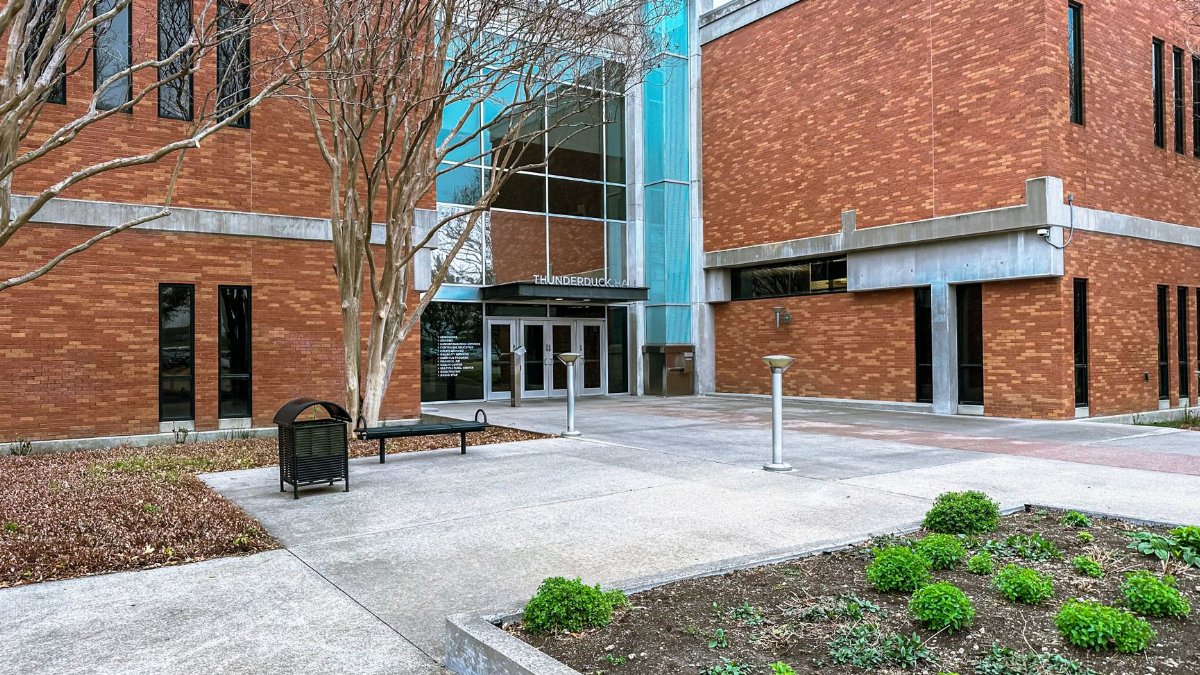
On a clear afternoon the limestone towers of Southern Methodist University catch the light above University Park, close enough to downtown Dallas that the skyline feels like part of the campus. For generations SMU has cultivated a reputation for polish, private resources, and students drawn from well beyond Texas. President Jay Hartzell is arguing that reputation is not enough. In public remarks connected to the SMU Dallas strategic plan, he has said the university must partner with the city around it, linking campus programs to regional jobs and to the growth of North Texas. The sentence is short. The obligation it names is not.
A hilltop school in a booming region

Southern Methodist has never been a remote college. It sits inside one of the fastest growing metropolitan areas in the country, a place where corporate headquarters, hospitals, logistics yards, and new neighborhoods keep arriving faster than public institutions can fully absorb them. Yet a private university can still behave as if the city were scenery. Students cross Hillcrest, attend class, and leave for internships in other states. Faculty publish for national journals. Trustees measure success by rankings, endowment, and the quality of the entering class.
Hartzell, who came to SMU after leading the University of Texas at Austin, is asking the campus to treat Dallas as a partner rather than a backdrop. That is a different kind of ambition. It does not abandon excellence. It insists that excellence show up in the labor market, in civic life, and in the neighborhoods that feel the pressure of growth most directly. A strategic plan is only paper until deans, donors, and city leaders treat that insistence as daily work.
What the president is actually proposing

The public case is straightforward. Campus programs should connect more tightly to the jobs North Texas is creating, and the university should see regional growth as part of its mission rather than as an external fact. Readers who have watched other presidential launches will recognize the vocabulary: partnership, relevance, impact. The harder question is what those words require when the institution is private, selective, and historically more comfortable with national prestige than with local accountability.
A plan of this kind usually touches several rooms at once. Academic affairs must decide which degrees, certificates, and research centers deserve new investment. Career offices must know employers by name, not by slogan. Advancement staff must explain to donors why a gift that serves Dallas also serves SMU. Government relations must learn how to sit with city and county officials without pretending the university can solve housing, transit, or school inequity on its own.
None of that is glamorous. It is scheduling, data, and the slow work of trust. Hartzell’s argument gains force only if those unglamorous pieces are funded and reviewed in public enough that Dallas can tell whether the promise is real.
Jobs are the test Dallas will understand

North Texas does not lack for announcements about talent. Companies say they cannot hire fast enough in engineering, health care, finance, data, teaching, and the skilled trades that keep a metro region running. Universities answer with new majors and career fairs. The gap persists because a job is not a press release. It is a set of skills, a supervisor willing to train, and a graduate who can afford to stay.
If the SMU Dallas strategic plan is serious about regional employment, it will have to be specific about fields where the university already has strength and about fields where it does not. Business, law, engineering, education, and the arts all touch the Dallas economy in different ways. A music graduate and a cybersecurity graduate do not need the same kind of partnership. Treating them as one “workforce” story would be a mistake.
Employers should be in the room early, not as ribbon cutters. That means internships with real supervision, adjunct faculty who still work in the industries they teach, and research questions that local hospitals, firms, and public agencies actually need answered. It also means honesty about pay. A partnership that funnels students into unpaid prestige and calls it opportunity will not survive contact with rent in this city.
Methodist roots and a civic vocation

SMU carries a religious name that many students encounter mainly as architecture and history. The Methodist tradition that founded the university spoke about education as formation, not only as credentialing. Service, neighbor love, and the idea that learning should be useful to a community were part of that inheritance, even when the campus later became known for wealth and national ambition.
A strategic plan is not a sermon, and it should not pretend to be one. Still, the call to partner with Dallas has a moral shape that fits the category of institutional soul searching more than the category of branding. Who is the neighbor? Is it the corporate partner who can endow a center, the first generation student from southern Dallas, the nurse who needs a flexible graduate program after a night shift, the congregation or nonprofit that has been doing the work for decades without a university logo?
I have watched universities invoke mission language when a campaign needs warmth. The test is whether the language changes the budget. If Methodist heritage means anything operational here, it should push SMU toward students and partners who do not already have easy access to private higher education, and toward research that serves people who will never wear the school colors.
Students will notice if the city is real

Undergraduates are quick to detect when a civic theme is a brochure. They will partner with Dallas if the partnership changes what they do on Tuesday. That might be a clinic, a design studio tied to a neighborhood plan, a semester with a city agency, or a research project whose findings a school district can actually use. It might also be simpler: courses that take Dallas history, inequality, faith communities, and economic change as seriously as they take abstract theory.
Graduate and professional students may feel the shift first. A law student placed with a legal aid office, an engineering student working on heat and flooding, an education student teaching in a district that needs teachers, a business student studying a family firm in Pleasant Grove rather than only a case from another coast: these are small decisions that add up to a culture.
Students from Dallas and from far away both benefit when the city is treated as a text worth reading. The out of state student learns that privilege includes the duty to understand a place. The local student sees whether the university on the hill is willing to know the blocks where their family lives.
Faculty incentives decide more than speeches

Presidents can set direction. Faculty decide, in practice, what counts. Promotion files still reward certain journals, grants, and books more readily than a decade of work with a public hospital or a community college. If partnership with Dallas is an add on, it will remain an add on. If it is recognized as scholarship, teaching, and service with standards as rigorous as any other work, it will spread.
That recognition has to be careful. Community engaged work can be thin, extractive, or self congratulatory. A good plan will ask for evidence: What changed? Who defined the question? Did the partner remain after the grant ended? Were students supervised well enough that no one was harmed by amateur help? Rigor is a form of respect.
Hartzell will also need chairs and deans who can translate a presidential theme into hiring. A cluster of appointments that ignore the region will quietly defeat the rhetoric. A cluster that only chases local contracts will shrink the university’s intellectual range. The balance is the job.
Neighbors have long memories

University Park and the Park Cities are not the whole of Dallas, and residents south and west of downtown have reason to ask what a new plan offers them. Private universities have sometimes expanded, policed their edges, and celebrated diversity while the benefits pooled near campus. Partnership language lands differently if the last institutional memory is a closed meeting or a short lived program.
A credible approach starts with listening that is not staged for a video. City officials, school leaders, hospital systems, faith groups, and neighborhood organizations already have plans of their own. SMU does not need to arrive as the author of Dallas. It needs to ask where a university is uniquely useful: independent analysis, trained students, convening power, and the ability to stay with a problem longer than an election cycle.
Trust also requires boundaries. The university should not launder a political agenda, and the city should not treat a private campus as a substitute for public investment. Partnership fails when either side wants the other’s credibility without sharing risk.
Growth is not the same thing as fairness

North Texas growth is the backdrop of almost every civic speech in this region. Jobs arrive. Cranes rise. Housing costs follow. A strategic plan that ties itself to growth has to say which kind of growth it will serve. Adding graduates to a hot labor market is useful. It is not the same as widening who gets those jobs, or easing the strain on families priced out of the neighborhoods where new investment lands.
SMU cannot zone the city or build the transit system. It can study displacement with the people affected in the room. It can train teachers, nurses, engineers, and managers who stay. It can use purchasing, hiring, and construction choices to spread opportunity a little further than the campus gate. Those are modest tools. Modesty is more persuasive than a claim to save the metroplex.
Readers should watch whether the plan names tradeoffs. Selectivity and access pull against each other. National rankings and local service do not always reward the same choices. A president who admits the tension is more trustworthy than one who promises everything.
How a decade of promises should be judged

Strategic plans fail in a familiar way. They launch with a speech, a microsite, and a set of pillars, then dissolve into annual reports that no one outside the cabinet reads. Dallas has seen enough of that from companies and from public agencies. A university plan deserves a plainer scoreboard.
Useful measures are not mysterious. How many students complete paid work with regional employers, and in which industries? How many of those students are from Dallas County, and how many remain in North Texas three years after graduation? Which research projects were requested by local partners, and what did those partners do with the results? How has financial aid changed for students from the city? How many faculty reviews actually counted public work?
The SMU Dallas strategic plan should publish those numbers on a schedule a skeptical resident can find. Vanity metrics, such as the number of events hosted, should not be allowed to stand in for outcomes. If a goal is missed, the correction should be visible. Accountability is the difference between a partnership and a campaign.
What Dallas can fairly ask in return

The city is not a passive beneficiary. If SMU opens its programs, Dallas institutions have to open doors too. Employers who want tailored talent must offer mentorship, not only brand exposure. Public agencies must share data and withstand independent findings they dislike. School districts must make room for student teachers without treating them as unpaid substitutes. Donors who love the campus must hear that some gifts will be judged by what they do on the other side of Central Expressway.
There is also a cultural ask. Dallas sometimes flatters its universities and then ignores them when the real decisions are made in boardrooms and at City Hall. A partner is invited into the hard meetings. If Hartzell is right that the university must come toward the city, the city should be willing to come toward the university without demanding that scholars become cheerleaders.
The risk that the plan stays a speech
Every new president inherits a calendar of expectations. Alumni want the team, the campus, and the reputation protected. Faculty want resources and autonomy. Students want affordability and a future. A pledge to partner with Dallas can be squeezed by all of those pressures until it becomes a paragraph in a viewbook.
The safeguard is repetition of a different kind: not repeating the slogan, but repeating the choices. Budget hearings, hiring plans, and public updates either mention specific Dallas partnerships or they do not. Over ten years, that pattern will tell the truth faster than any launch event.
Hartzell has put a clear claim on the table. The university must not stand apart from the city that gives it a name people recognize far beyond Texas. Whether the SMU Dallas strategic plan becomes a civic fact depends on work that will look, in the best case, almost ordinary: courses revised, internships paid, partners kept, numbers published, neighbors heard. Ordinary work is how a private university earns a public role. Dallas, which has never been short of grand announcements, should insist on nothing less.