
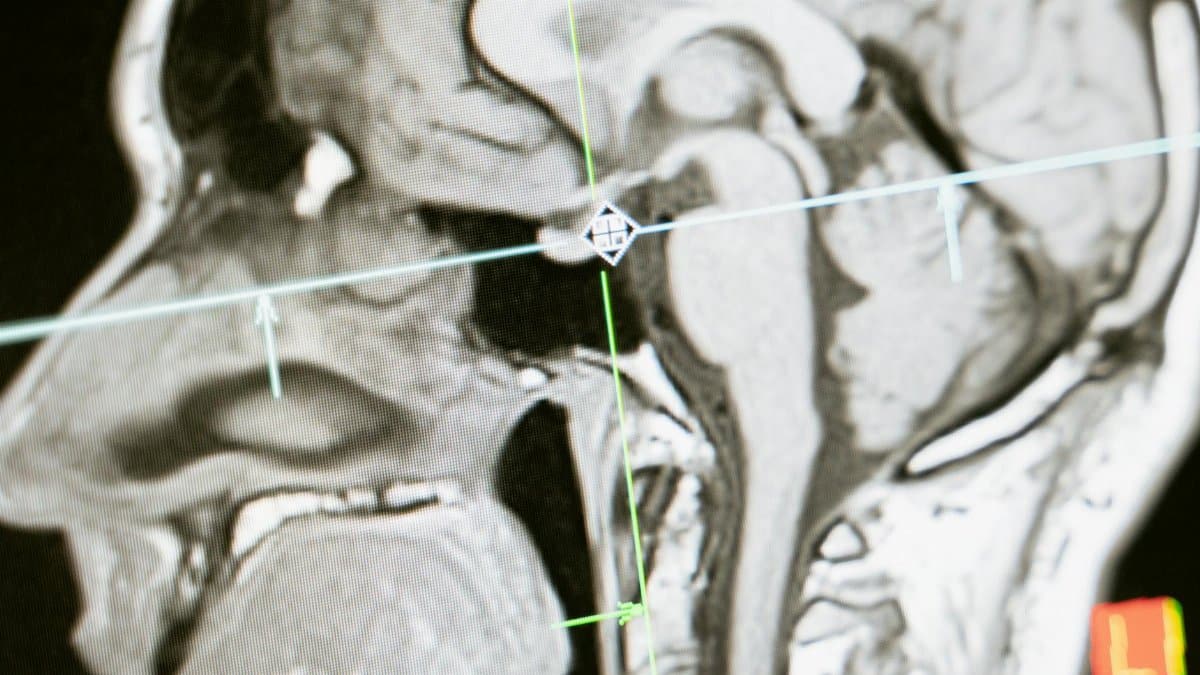
**New Brain Research Shows Exactly How We Weigh Evidence to Make Everyday Decisions**
We have all faced those quiet crossroads moments. Perhaps you sit at the kitchen table after the children have gone to bed, turning over whether to accept a job offer that would mean uprooting your family or to remain in the community where your aging parents live nearby. You turn the facts over in your mind, testing one possibility against another. What feels like intuition is actually a sophisticated neural process now coming into clearer view. Brain research has begun to map exactly how we gather fragments of evidence, assign them weight, and eventually commit to a choice. The findings carry surprising resonance for anyone who has ever sought guidance through prayer, reflection, or meditation.
The Neural Accumulator at Work

Deep within the parietal cortex, networks of neurons function like a biological scale. Rather than making instantaneous judgments, these cells slowly accumulate evidence until a threshold is reached and a decision emerges. The recent study detailed in Scientific American demonstrates this process with remarkable precision, showing how individual neurons ramp up their firing rates as supporting information arrives.
This accumulation does not happen in isolation. Other regions constantly feed context into the system: memories of similar situations, emotional associations, and predictions about future consequences. What we experience subjectively as careful thought is the brain running an evidence integration algorithm refined over millions of years of evolution.
From Laboratory Tasks to Real Life

The original experiments asked participants to judge the direction of moving dots on a screen. While the setup seemed abstract, the underlying mechanism governs far more meaningful choices. When you evaluate whether a romantic partner’s recent behavior signals lasting trouble or a temporary rough patch, your brain employs the same accumulation strategy.
Middle age often brings an abundance of these complex decisions: whether to pursue medical treatment with uncertain outcomes, how to guide teenagers toward independence while protecting them from harm, or whether to honor a long held dream of writing a book despite financial pressures. Understanding that our brains are literally tallying evidence can bring both humility and comfort.
Where Emotion Enters the Equation

Emotion does not muddy the process. It supplies crucial data. Fear, hope, resentment, and affection all arrive as legitimate evidence that must be weighed. The new brain research reveals that regions traditionally associated with emotion actively modulate the speed at which the accumulator reaches its threshold.
This finding aligns with what many in midlife have learned through experience. Purely logical analysis often fails to capture the full picture. The quiet unease that surfaces when considering a seemingly perfect opportunity deserves attention because it represents data the brain has already begun to integrate below conscious awareness.
The Spiritual Dimension of Evidence Weighing

Here the science begins to converse with spiritual traditions. Many faith practices speak of discernment, that patient sifting of spirits or listening for a still small voice. The neural accumulator model offers a biological correlate for this ancient wisdom. When we sit in prayer or meditation, we may be creating optimal conditions for evidence integration.
By reducing external noise and emotional reactivity, contemplative practices appear to allow the brain’s accumulation process to run more cleanly. Several studies now suggest that experienced meditators show altered activity in precisely the regions involved in evidence weighing. They reach decisions with less internal conflict and greater confidence in the outcome.
When the Mechanism Falters

Anxiety disorders and depression can hijack this delicate system. The accumulator may become stuck in a loop, repeatedly weighing the same threatening evidence while ignoring contradictory information. This neurological insight helps explain why anxious overthinking feels so compulsive. The brain is not being dramatic. It is simply failing to update its evidence threshold appropriately.
Recognizing this pattern can itself become liberating for readers navigating midlife challenges. What feels like personal weakness may partly reflect a temporary disruption in the brain’s decision circuitry. Therapies that combine cognitive techniques with mindfulness appear particularly effective because they address both the psychological and neurological dimensions.
Meditation as Decision Training

Regular meditation may function as a form of strength training for the brain’s evidence accumulator. By repeatedly returning attention to the breath amid wandering thoughts, practitioners strengthen their capacity to observe information without immediately reacting to it. This observational stance mirrors the patient accumulation process the new brain research has identified.
Many middle aged people report that after establishing a consistent meditation practice, decisions that once triggered weeks of sleepless rumination now arrive with greater clarity. They describe trusting their choices more fully, even when the path involves uncertainty. The spiritual practice and the neurological mechanism appear to reinforce each other.
Aging and the Accumulation of Wisdom

As we accumulate years, we also accumulate evidence in the deepest sense. The brain research suggests that older adults often employ slightly different strategies, drawing more heavily on accumulated life experience rather than processing every new detail. This shift helps explain the quality we recognize as wisdom.
Rather than laboriously weighing every variable, seasoned decision makers often recognize patterns faster. Their accumulators reach appropriate thresholds more efficiently because previous evidence has already been thoroughly integrated. This finding offers encouragement to those entering their later decades. The sense that one’s judgment has improved is not mere nostalgia but reflects measurable changes in how the brain weighs evidence.
Free Will and the Spiritual Life

The brain research inevitably raises profound questions about human freedom. If decisions emerge from neural accumulation processes, where exactly does the choosing self reside? The findings need not diminish spiritual understanding. Many traditions have long taught that true freedom lies not in arbitrary choice but in alignment with deeper truth.
When our evidence weighing operates clearly, unclouded by unexamined fears or cultural conditioning, the decisions that emerge often feel both deeply personal and mysteriously guided. The science and the spiritual perspective may describe the same phenomenon from different angles.
Practical Ways to Support Better Decisions

Understanding these mechanisms suggests concrete steps for daily life. Creating space for reflection becomes essential rather than optional. The accumulator needs relative quiet to perform its work accurately. Regular walks without podcasts, journaling that allows thoughts to unfold slowly, and periods of contemplative prayer all support this process.
Learning to notice physical sensations can also help. Many people experience subtle tension or expansion in the body when the neural threshold is approaching. These sensations offer another stream of evidence worth considering alongside analytical thought. Over time, this integrated approach often leads to decisions that feel more congruent with one’s whole self.
The Future of Understanding Choice

Scientists continue to refine their models of how we weigh evidence. New imaging techniques allow researchers to observe the accumulation process in increasingly natural settings. The hope is that deeper knowledge will lead to better support for those struggling with difficult choices, whether due to mental health challenges, neurological conditions, or simply the complexity of contemporary life.
For the rest of us, these discoveries invite both wonder and practicality. The next time you face a significant decision, you might pause to appreciate the remarkable system at work within you. Billions of neurons are patiently gathering evidence, integrating your hopes and fears, your memories and values, your spiritual longings and practical concerns. The choice that finally emerges carries the imprint of this extraordinary inner collaboration.
Brain research continues to reveal that the machinery of decision making is more sophisticated than we imagined. Far from reducing the mystery of human choice, these findings deepen our appreciation for the intricate relationship between biology and consciousness, between scientific discovery and spiritual wisdom. In an age of endless information and constant distraction, understanding how we actually weigh evidence may help us make choices that better reflect who we most truly hope to become.