

The first chill of autumn in San Francisco has a way of turning private opinion into public argument. Neighbors compare notes on the stoop. Campaign signs appear in windows that were bare a month ago. Into that seasonal noise, the San Francisco Chronicle Editorial Board has released its recommendations for the November ballot, a packet of judgments that will travel by phone, group text, and kitchen table long after the print edition is recycled. SF election endorsements still carry weight in a city that likes to pretend it has outgrown institutions, even as many readers insist they make up their own minds. The board backed Scott Wiener for Congress and urged a yes vote on Proposition A, among other local recommendations. Those two lines alone will dominate the week. The rest of the list deserves the same unhurried reading.
A civic ritual that refuses to retire

Newspaper endorsements are easy to dismiss and difficult to replace. They arrive without the soundtrack of a rally and without the gloss of a consultant. They ask a reader to sit with a set of choices made by people who spend their working lives on the unglamorous parts of public life: hearings, bond language, agency budgets, and the gap between a campaign promise and a statute. In a city saturated with opinion, that kind of slow attention still has a market. The Chronicle release is not a command. It is a public argument, offered in daylight, that other arguments can answer.
What has changed is the path those arguments travel. A generation ago, a household might encounter the list once, over coffee, and then argue about it at dinner. Now the same lines are clipped, forwarded, and stripped of context before lunch. A recommendation that took an editorial board weeks to reach can be reduced to a slogan in a group chat by noon. That speed does not erase the underlying work. It does change the duty of the reader, who has to decide whether a fragment is enough.
What the board actually put on the table

The headline facts are plain enough. The editorial board endorsed Scott Wiener for Congress and recommended Yes on Proposition A, and it paired those calls with a broader set of local recommendations for November. Readers who stop at the two most shareable lines will miss the point of a full slate. Local ballots in this city are crowded on purpose. Offices, measures, and appointments sit beside one another, and a serious guide tries to treat them as a whole rather than as isolated celebrity contests.
Wiener is a known quantity in state politics, a senator whose record, allies, and critics are already part of the civic furniture. A congressional endorsement is still a different kind of judgment. It asks not only whether a candidate has been effective in Sacramento, but whether that record translates to a House that runs on different rules, different coalitions, and a national audience that does not share San Francisco assumptions. Proposition A, whatever a voter ultimately decides, belongs in the same careful category. A yes from an editorial board is a conclusion, not a substitute for reading the measure.
Why a congressional nod still moves people

Congressional races compress local identity into a national frame. San Francisco voters are accustomed to being interpreted by outsiders, sometimes as a cautionary tale and sometimes as a model. An endorsement in that setting is partly about policy and partly about representation: who will carry the city voice into rooms where housing, transit, climate, immigration, and federal spending are argued at a scale no board of supervisors controls. SF election endorsements in a House race therefore function as both scorecard and signal. Campaigns know this. They quote the lines they like and ignore the paragraphs that complicate them.
Voters should reverse that habit. The useful part of an endorsement is rarely the verb at the top. It is the reasoning underneath: which accomplishments the board treats as decisive, which criticisms it grants, and which uncertainties it leaves standing. A reader who agrees with the conclusion for different reasons has not failed a test. A reader who rejects the conclusion after following the argument has used the piece as intended.
Proposition A and the discipline of a yes

Ballot measures reward a different kind of reading than candidate races. A person can be judged by temperament, history, and the company they keep. A proposition is language. It does what it says, plus whatever implementation, cost, and unintended consequence follow from that language. When an editorial board says yes, it is claiming that the likely benefits outweigh the likely costs, and that the text is tight enough to trust. That claim can be right and still deserve interrogation.
San Francisco has a long memory of measures that sounded tidy in October and proved tangled in March. Bonds, set asides, and governance tweaks all carry tradeoffs that campaign mail prefers to flatten. The Chronicle recommendation on Proposition A should send people back to the voter guide, not away from it. Agreement is allowed. So is a no reached after the same homework. What is harder to defend is a vote cast only because a familiar masthead, or a familiar opponent of that masthead, said so.
How an editorial board earns a hearing

Trust in endorsements is not inherited. It is rebuilt, election by election, through consistency and through a willingness to explain unpopular calls. Readers notice when a board seems captive to one faction, and they notice when it surprises them. They also notice silence: races waved past, measures treated as foregone, conflicts left unmentioned. A credible guide shows its work. It distinguishes fact from forecast. It admits where the evidence is thin.
I have watched neighbors treat the Chronicle list as a starting grid rather than a finish line, marking agreements in the margin and circling the items they intend to research before the weekend. That is a healthier relationship than either reverence or reflexive scorn. Institutions that publish judgments in their own name can be wrong in public. That exposure is part of their value. Anonymous slides and interest group scorecards rarely offer the same accountability.
The local ballot beyond the famous names
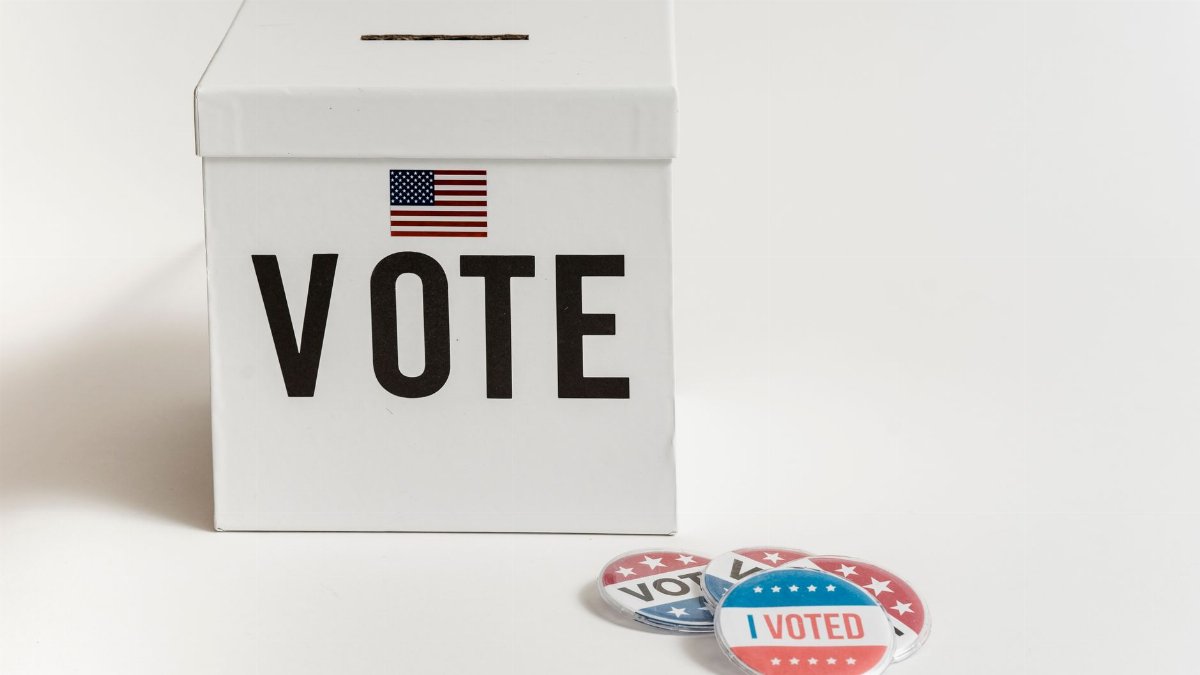
National politics has a way of swallowing November, especially in a city that already knows how it will vote for president. The more consequential reading may be lower on the card. Supervisors, school leaders, judges, and local measures shape daily life in ways a congressional speech cannot: shelter rules, street safety, classroom staffing, the pace of housing approvals, the integrity of local courts. SF election endorsements matter here because information is scarce and the choices are many. Name recognition is a weak proxy for competence when the office is obscure and the electorate is tired.
A good voter does not need to become an expert on every line. A good voter does need a method. Start with the offices that touch your own block. Read the arguments for and against each measure you do not already understand. Notice who is funding the mail. Then, and only then, compare your tentative view with the editorial board. If the two diverge, you have found the item worth another hour. If they converge, you have still done the work that makes the convergence meaningful.
Money, mail, and the quieter guides

Endorsements do not circulate in a vacuum. They compete with slate cards, labor lists, neighborhood clubs, and spending that can dwarf a newsroom budget. Some of those guides are serious. Some are transactional. The difference is not always visible on the card itself. A reader can ask simple questions. Who assembled this list? Do they disclose their criteria? Do they explain a no as carefully as a yes? Are they asking for your vote, your donation, or both?
The Chronicle list will be used by campaigns because campaigns use whatever is usable. That instrumental life does not define the document. A recommendation quoted on a door hanger is still only as strong as the paragraph it came from. Voters who want the full reasoning should seek the editorial itself rather than the excerpt chosen by a consultant. Context is not a luxury in a city where a single adjective can be made to do the work of an argument.
Faith, doubt, and the moral language of voting

People sometimes talk about elections as if they were purely technical, a sorting of platforms and price tags. They are also moral events. They ask what a city owes strangers, what it owes its children, and what it is willing to tax itself to repair. Religious communities and secular ones alike bring vocabularies of duty, mercy, stewardship, and justice to that asking. An editorial endorsement sits awkwardly and usefully among those vocabularies. It is not scripture. It is not neutral either. It is a reasoned preference offered to neighbors who share streets and do not share creeds.
That framing can keep the temperature down. Disagreeing with the board on Wiener, on Proposition A, or on a down ballot office is not a betrayal of the city. Treating opponents as illegitimate because they read the same facts differently is a quicker path to civic damage than any single measure. San Francisco argues in public because it still believes argument can change outcomes. Endorsements are one instrument of that belief, not the whole orchestra.
Readers who outsource their judgment

The lazier use of SF election endorsements is also the most common. A busy person wants a shortcut, and a respected page offers one. There is no shame in limited time. There is a cost when the shortcut becomes the only path, year after year, until the voter can no longer say why a name was chosen. Campaigns count on that fatigue. So do measure proponents who would rather not have their fiscal notes read aloud.
A practical compromise is available. Use the editorial board as a map of what informed observers consider close, not as a completed ballot. Spend real attention on the items where your instincts and the board diverge. Skim less where you already know the record. Talk to one person whose politics are not yours and ask what they saw that you missed. The point is not purity. The point is a vote you can explain without borrowing someone else sentence.
What the week after publication should look like
The days after a major endorsement release are noisy by design. Supporters celebrate. Opponents furnish rebuttals. Social feeds fill with selective quotation. A calmer response is available to anyone willing to wait a news cycle. Read the full recommendations. Note the races the board treated as easy and the ones it treated as hard. Then open the official voter materials and test one claim against the text. If the claim holds, your confidence should rise. If it bends, your confidence should narrow. Either result is more valuable than another hour of secondhand outrage.
Local journalism remains one of the few places where that testing can be done in common. Television will not walk through a municipal measure at the length it deserves. A national feed will not care who runs a neighborhood office. The Chronicle intervention, including its support for Scott Wiener and its yes on Proposition A, is an invitation to stay with the local card until it becomes legible. Invitations can be declined. They should not be confused with orders.
A ballot is still a personal act

No editorial board votes for you. That plain fact is the best defense of the form. SF election endorsements can inform, provoke, and organize attention. They cannot absorb the responsibility that belongs to the person holding the pen or the phone. November asks for a series of small, specific decisions made by people who live with the results. The Chronicle has published its decisions. The useful next step is not loyalty or revolt. It is reading, comparison, and a choice you are prepared to own when the signs come down and the city goes back to the work of governing itself.