
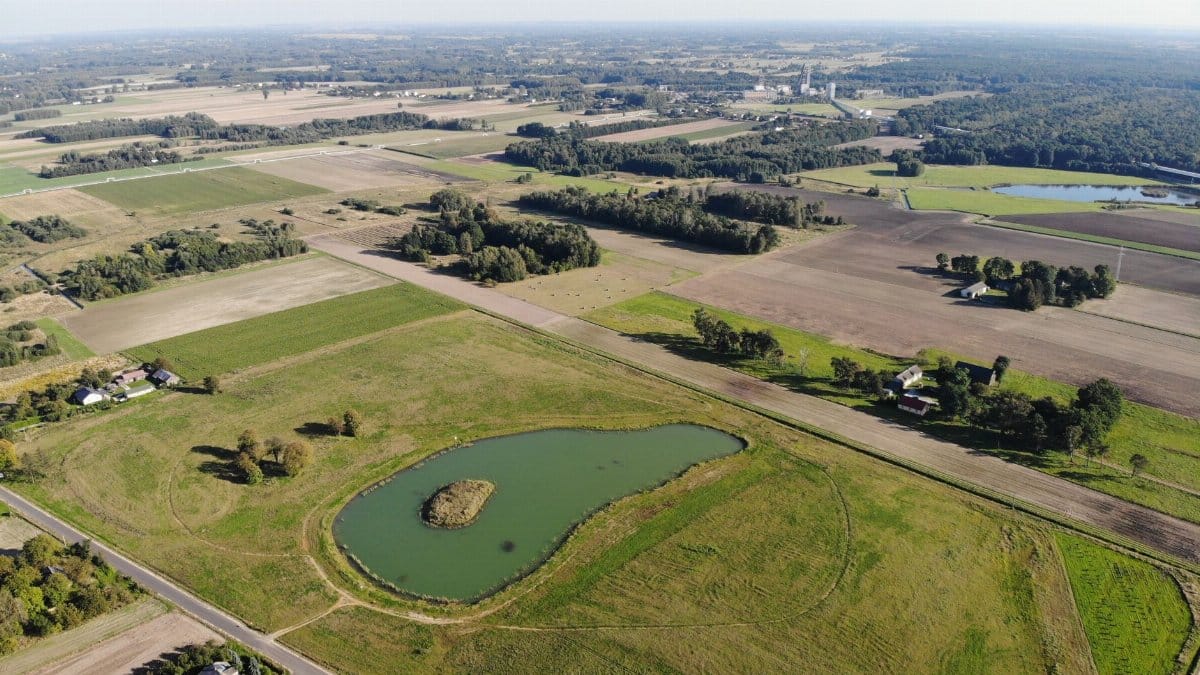
The roads south of Vineland still look like the South Jersey many people remember, with produce stands, low warehouses, and long views across open fields. That familiar landscape now shares space with a project of a different scale. Rowan University data center training is no longer only a classroom subject. Under a new program, paid engineering students will work at DataOne and its Vineland campus, a 300 megawatt site built to support Microsoft artificial intelligence tools. The Philadelphia Inquirer has described the arrangement as a direct bridge between a public university and one of the largest computing projects in the region. For readers who measure college by degrees and diplomas, the news raises a simpler question. What does it mean when the workplace arrives before the commencement speech?
A placement that skips the usual waiting period
Most engineering students still follow a familiar path. They sit through labs, chase summer internships, and hope a first employer will teach the parts of the job that never fit on a syllabus. The Vineland arrangement compresses that path. Paid students are expected to learn inside an operating campus rather than wait for a diploma to open the door.
That change will feel liberating to some families and unsettling to others. A paycheck attached to schoolwork can ease rent, transit, and the quiet fear that a degree alone will not be enough. It can also pull a nineteen year old into a schedule built for industrial uptime, not for midterms. The promise is experience. The risk is that experience arrives before a student has the judgment to use it well.
Public universities have chased this kind of closeness with employers for years. What is new is the setting. This is not a downtown office with a reception desk and a coffee machine. It is a computing campus whose value depends on electricity, cooling, security, and machines that do not take weekends off.
What stands on the Vineland land
DataOne is developing the Vineland site as a massive data center campus rated at 300 megawatts. In plain terms, that is a claim on a very large share of electrical capacity, closer to the demand of a small city than to the demand of a classroom building. The power is meant to run servers that support Microsoft artificial intelligence tools, which means the local project is tied to software people already encounter in search, office work, and automated assistants.
Readers do not need a tour of server halls to grasp the scale. A facility of this size is a land use decision, a utility decision, and a labor decision at once. It occupies ground that neighbors can see. It asks the grid for power that other users also want. It creates a workplace whose most important rooms may be closed to casual visitors, even while the name of a nearby university is attached to the training pipeline.
The phrase Rowan University data center can make the project sound like a campus annex. It is not. Rowan is not building a library stack with extra computers. Students are being sent toward a private industrial site whose customer is a global software company. That distinction matters when residents ask who benefits, who decides, and who lives with the substation, the traffic, and the night lighting.
Paid work inside a demanding campus

The program, as described in the reporting, places engineering students in paid roles. Pay is not a small detail. Unpaid internships have long favored students who can afford to work for credit alone. A wage makes the opportunity available to commuters, first generation students, and anyone whose family cannot subsidize a summer in a distant city.
Still, paid does not automatically mean fair, safe, or educational. A good placement tells a student what the job is, who supervises the work, how many hours are expected during the term, and what happens if a lab, a family duty, or a health problem collides with a shift. Those terms were not spelled out in the short public description of the deal. Until they are, families should treat the headline as a beginning, not as a contract.
Engineering students may be asked to watch systems, support maintenance, review drawings, or learn how operators keep a hall from overheating. None of that is glamorous. It is also the kind of work that separates a graduate who has only simulated a circuit from a graduate who has stood near the equipment and seen what failure looks like. The educational value lives in that gap, if the company and the university protect time for explanation rather than using students as flexible extra hands.
Why Microsoft demand redrew the local map

Artificial intelligence did not invent the data center. Banks, hospitals, and video services have needed large computing rooms for years. What changed is the appetite. Training and running advanced models requires dense clusters of machines, steady power, and cooling on a scale that older server rooms were never built to provide. Companies have gone looking for land, transmission access, and communities willing to host the load.
Vineland entered that search. A 300 megawatt campus is a bet that South Jersey can supply what a coastal city cannot, or will not, supply at the same price. Microsoft does not need the town for its brand. It needs power, space, and a workforce that can keep the buildings running. Rowan enters as the nearby institution that can supply some of that workforce before graduates scatter to Philadelphia, New York, or farther.
There is a civic logic here, and also a dependency. If student training is built around one employer and one campus, a change in corporate plans can ripple into course schedules and hiring promises. Universities have been burned before by partnerships that looked permanent in a press release and temporary in a budget meeting. The wiser reading is cautious optimism, with the paperwork kept where the public can see it.
Electricity, water, and the towns nearby
Neighbors of large computing campuses tend to ask three questions before they ask about student jobs. Where does the electricity come from. How much water does cooling require. What happens to roads, noise, and property values once construction crews give way to security gates.
Those questions are not hostility to technology. They are the ordinary concerns of people who already pay utility bills and sit in traffic. A site measured in hundreds of megawatts will show up in regional power planning whether or not a university logo appears in the announcement. If the power is drawn from the existing grid, other users may face upgrades, higher costs, or delayed projects. If new generation is built to match the campus, the environmental ledger depends on what kind of generation it is.
Cooling raises a similar issue. Some designs use large volumes of water. Others rely more on air and electricity, which merely moves the burden from the reservoir to the power plant. Without a clear public account of the Vineland design, it would be irresponsible to declare the project either a model of restraint or a threat to local supplies. What can be said is that students walking onto the site will be walking into a debate their coursework may not have named. Energy, water, and land are not side issues. They are the job.
Skills the students are expected to practice

A useful placement would teach more than how to badge through a door. Electrical engineering students could study distribution, redundancy, and the reasons a single fault must not darken an entire hall. Mechanical students could learn cooling, airflow, and the maintenance habits that keep equipment inside safe temperatures. Computer engineering students could see how physical limits shape the software people casually call the cloud.
The less obvious lessons may matter as much. Industrial sites run on procedures, logs, and a culture that treats small deviations as warnings. Students who have only known group projects with soft deadlines can find that culture harsh. They can also find it clarifying. A missed step in a lab report earns a lower grade. A missed step near high voltage equipment can injure someone. If the program is serious, safety instruction will come before any pride in being early to the industry.
Rowan will also have to decide what counts as academic credit and what counts as employment. Mixing the two without clear rules invites confusion about grading, intellectual property, and whether a student can speak honestly about problems seen on the job. A public university owes its students a written boundary. Work can inform a class. A class should not become a way to discipline a private employer’s staff.
Faculty hopes and student tradeoffs

Faculty who support the program will argue, with reason, that employers already complain about graduates who can pass exams and cannot troubleshoot a live system. A paid seat at Vineland is a direct answer to that complaint. It may also keep talent in Cumberland County and nearby towns, rather than training students only to watch them leave.
Students will run their own arithmetic. A wage and a line on a resume are real gains. So is the chance to learn whether this industry fits them before they borrow more money for another year. The tradeoff is time. Hours on a secured campus are hours not spent in a lab, a campus job, a family obligation, or the unstructured reading that still makes a university different from a training vendor.
I have watched similar bargains on other campuses, and the programs that age well are the ones that let students leave without penalty if the work is menial or the supervision is thin. The programs that sour are the ones that treat access to a famous company as a favor the student must repay with silence. Rowan should publish the exit rules with the same enthusiasm it publishes the announcement.
A South Jersey wager on technical jobs

South Jersey has heard promises about the next industry before. Warehouses brought trucks and some paychecks, along with arguments about wages and road wear. Energy projects brought construction jobs and fights over siting. A data center offers a different mix. Construction can be busy. Permanent staffing is often smaller than the building suggests, because the machines, not a large office floor, do most of the work.
That is why the student pipeline is politically useful and economically incomplete. Training local engineers can raise the quality of the jobs that do exist. It does not, by itself, create a broad employment base for residents who are not in an engineering program. County officials and readers should ask how many permanent roles are planned, which of them are open to people without a four year degree, and whether contractors will pay wages that match the cost of living near the site.
The Rowan University data center link can still be a regional asset if it is treated as education rather than as a ribbon cutting. A student who understands power quality, cooling limits, and public accountability can work for a utility, a manufacturer, or a public agency later. The skill does not have to remain captive to one campus in Vineland.
Questions the program has not answered

Several practical questions remain open in the public account. How many students will be placed in the first year, and in which majors. Will the work be available during the academic term or only in summer. Who employs the students, the university or DataOne, and who carries insurance if someone is hurt. Can students discuss what they see, or will nondisclosure agreements cover ordinary operations as well as genuine trade secrets.
There are civic questions beside the campus questions. What share of the 300 megawatts is committed to Microsoft, and what upgrade costs fall on other ratepayers. What water plan has been filed, and which agency reviews it. How will Vineland and Cumberland County report tax revenue against the cost of roads, emergency response, and utility work. None of these questions is an argument for stopping a program that gives students paid technical experience. They are the questions a serious region asks while the concrete is still new.
Transparency would also protect the university. If the partnership is as beneficial as its advocates believe, sunlight will not harm it. If the partnership is mostly a branding exercise, sunlight will reveal that faster than a commencement anecdote will.
What readers should watch next

The story to follow is not whether artificial intelligence is exciting. That argument is already loud. The story is whether a public university can attach its students to a private computing campus without losing the habits that make public education trustworthy. Those habits are plain. Clear hours. Real instruction. Safe conditions. The right to walk away. A public record of who pays, who learns, and who bears the power and water burden.
Parents scanning the news can ask advisers for the written placement terms before they celebrate. Local residents can ask utility and planning boards for the filings that turn a megawatt figure into a map. Students can ask what they will be allowed to learn, not only what they will be allowed to list on a resume.
Vineland’s fields and Rowan University data center ambitions now sit in the same sentence. That sentence can describe a practical education, a corporate convenience, or some uneasy mix of the two. The machines will run either way. The standard worth insisting on is older than the industry. People who live beside the project, and students sent to work inside it, deserve to know what they are being asked to carry.