
On a September afternoon when the news moved faster than the posters ever did, a Peter Max obituary began to circulate with the plain force of a color that refuses to fade. The flower power painter and poster artist died at 88, his son told the Associated Press, in an account carried by the Chicago Tribune. For readers who met him first on a dormitory wall, the notice felt both late and sudden. His cosmos of floating heads, striped skies, and smiling umbrellas had already outlived the decade that made him famous. What remained was the harder question of how a commercial mystic becomes part of the national memory.
A death reported, and a style that would not sit still

The report was spare. Family confirmed the death to the wire service. No long medical narrative accompanied the first notices, and none is required to understand why the name still stops a certain kind of reader. Max built a visual language so portable that it jumped from paper to postage, from album art adjacency to airline fuselage, from head shops to museum gift shops. People who never learned his biography could still describe the look: saturated primaries, soft contours, a figure drifting through a private galaxy.
That portability is why an obituary for him is also an obituary for a way Americans once pictured inner life. The work did not ask for a dark room or a specialist vocabulary. It asked for a wall and a willingness to believe that joy could be drawn with a hard edge.
Berlin, Shanghai, and the long way to Brooklyn

Peter Max Finkelstein was born in Berlin in 1937, a Jewish child whose family left Nazi Germany and spent years in Shanghai before later passages through Israel and, finally, the United States. The itinerary matters. His mature imagery is often filed under American psychedelia, yet the biography begins in displacement, port cities, and the visual clutter of places where cultures stack rather than blend politely.
In New York he trained in a tradition that still respected drawing. The Art Students League gave him the hand; the 1960s gave him the permission to let that hand loosen. Friends and early profiles described a young designer who understood posters as more than announcements. A poster could be the event. It could be the room.
The poster as a public spiritual technology
By the late 1960s Max had become, for a wide public, the illustrator of uplift. Umbrella Man, cosmic runners, and profile faces with stars for weather were not doctrines. They were invitations. In a country arguing about war, drugs, and the authority of institutions, his pictures offered a gentler counterproposal: consciousness as color, the self as something that could float without falling.
I have stood in front of those sheets in museum rotations and felt the odd honesty of their optimism. They do not pretend the decade was gentle. They pretend, or perhaps insist, that gentleness could still be printed at scale. That is a spiritual claim, even when the buyer was only looking for something bright above a desk.
Fame, licensing, and the charge of selling the vision
Success arrived with the usual American complication. Max was everywhere, which meant he was also available. Critics who wanted their avant garde poor and obscure found him too eager for billboards, product lines, and official commissions. Admirers answered that a spiritual picture which never leaves the studio is a private hobby. A picture on a stamp, a plane, or a magazine cover has already entered the argument about what the culture worships.
He painted for public occasions and patriotic spectacles, including imagery tied to the Statue of Liberty celebrations and other national pageants. Detractors called it cooptation. A fairer reading is that Max never accepted the split between festival and commerce. His cosmos was a brand because he believed a brand could carry wonder without shame. Whether that belief was naive is part of what any serious Peter Max obituary has to hold in the same hand as the praise.
The Beatles mixup and other myths that stuck
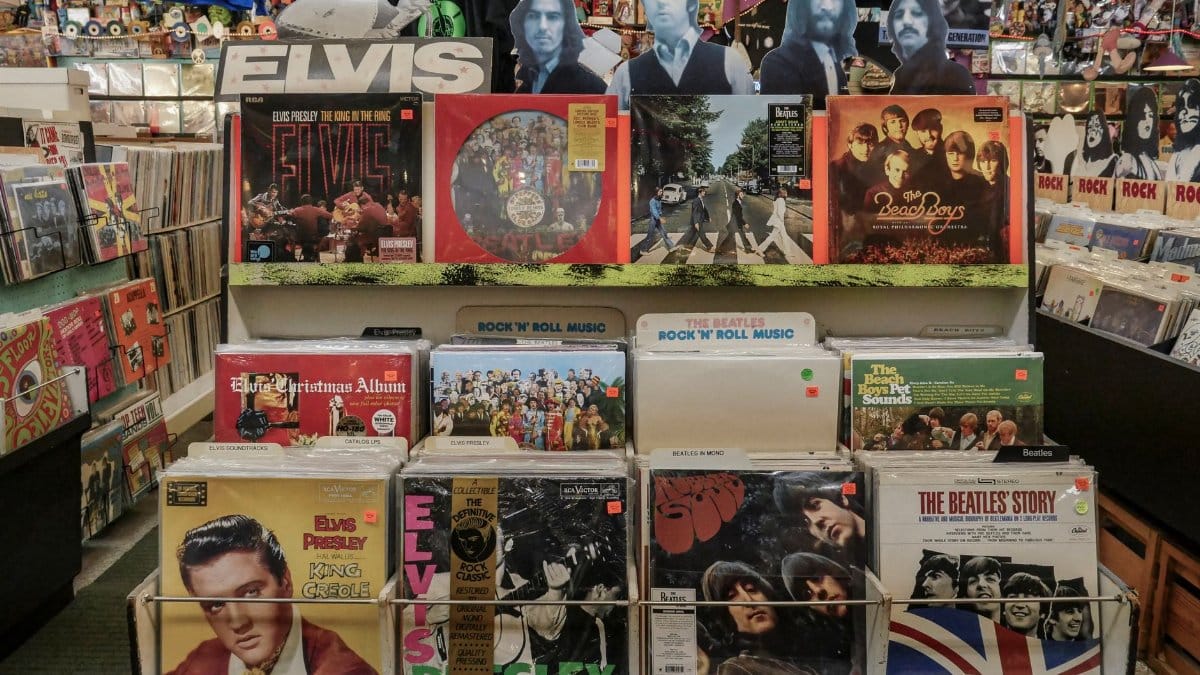
Popular memory likes a single author for a look. Max was often credited, loosely and wrongly, with the visual world of Yellow Submarine. The film’s design belonged to other hands, notably Heinz Edelmann. The confusion is instructive. When a style becomes the weather, people name the forecast after the celebrity they already know.
Max did not need the misattribution. His own posters, paintings, and licensed images were sufficient to fix him in the decade’s graphic imagination. Correcting the record does not shrink him. It returns him to the work he actually signed, which is plenty.
Yoga, cosmos, and a salesman for inner space

He spoke often, in interviews across the years, about meditation, yoga, and a cosmic consciousness that did not require a church. For a category of spiritual news, that talk can sound dated or freshly relevant, depending on the reader’s patience with the word energy. What holds up is not the metaphysics. What holds up is the pictorial ethic: the human face as a small craft in a large, kindly sky.
Plenty of 1960s spirituality sold transcendence as an exit from responsibility. Max’s better images do something slightly different. They keep the figure in the frame. Someone is still walking, still holding an umbrella, still smiling at weather that has not been abolished. That is closer to devotion than to escape, and it helps explain why the pictures survived irony.
When the artist could no longer guard the art
The later decades were harder, and any honest account has to say so without turning illness into spectacle. Reporting over many years described dementia and a painful tangle of care, guardianship, and control of the work. Court disputes and family conflict became part of the public file. Those stories do not erase the posters. They do warn against the sentimental habit of treating a famous painter as a logo who does not age.
Readers looking for a villain will not find a clean one here, and this account will not invent one. What can be said is that fame creates a second economy around a failing mind: inventories, signatures, caretakers, and the hunger of a market that still wants the old colors. The dignity owed to Max in illness was the same dignity owed to any person whose name is worth money.
What his son’s confirmation asks of the rest of us

The confirmation of death, given by his son to the Associated Press, closes the biographical sentence without closing the argument. An artist who lived in public leaves a public estate of images, some cherished, some overproduced, some sitting in closets behind newer posters. Families inherit both the person and the archive. The rest of us inherit the look.
A Peter Max obituary in that sense is not only a notice of an ending. It is a request to look again at objects we thought we had already understood. The umbrella is not only cute. It is a small theology of weather: you do not stop the rain; you walk under a bright idea of shelter.
Collectors, museums, and the aftermarket of joy
Dealers have long sorted Max into tiers: early posters, paintings with a firmer hand, later works whose authorship and condition require care. That sorting will intensify now, as it does after any well known death. Museums that once treated him as a popular satellite of pop art may have to decide whether popularity was the point rather than the problem.
Pop art, in the hands of Warhol and Lichtenstein, often cooled its subject until desire looked like a product code. Max heated the code until it looked like a blessing. Placing him only as a lesser cousin misses the difference in temperature. His audience was not asked to feel clever. It was asked to feel accompanied. That is a legitimate artistic ambition, even if it embarrasses critics who prefer distance.
A style that taught a generation to see

For middle aged readers, the encounter was often domestic. A sibling’s bedroom. A college corridor. A reprint bought cheap and framed badly. Those rooms trained the eye before any survey course did. You learned that a profile could contain a landscape, that a border could be as loud as a figure, that American graphic art could borrow India, Japan, and comic strips without filing a customs form.
The borrowing deserves the scrutiny it would get today. Max simplified other cultures into ornament, as many of his contemporaries did. He also widened the palette of what a mainstream American poster was allowed to love. Both sentences can stand. Obituary writing that chooses only one of them is doing public relations, not history.
The national mood he painted, and the one he missed

His peak coincided with a country that wanted symbols of renewal after assassination, riot, and war. He supplied them with unusual speed. What he did not supply, and did not pretend to supply, was a politics equal to the pain. The smile in the picture can read, from this distance, as a refusal to look. It can also read as a decision to keep a human face available when the news had become a machinery of grimness.
That tension is why the work still functions in a spiritual register. It does not solve suffering. It declines to let suffering be the only legal subject. In a news culture that rewards alarm, the refusal is easy to mock and harder to replace.
How to read the colors without the costume
If you still own a Max print, the useful ritual is simple. Take it off the nostalgia shelf. Look at the line, not the decade costume. Ask whether the drawing would hold if the cultural caption were removed. In the strongest sheets, it would. The contour is confident. The space is generous. The joke, when there is a joke, is affectionate rather than superior.
Weaker examples exist, and licensing multiplied them. An obituary that calls every Max a masterpiece is not a tribute. It is a blur. The artist earned a clearer sentence: he invented a publicly legible paradise, repeated it until the culture could hum it, and left later viewers to separate the hymn from the jingle.
What an obituary can honestly promise
No notice can rank a life against its images. Max was a designer, a painter, a celebrity, a man who became ill, a name fought over in court, and a visual inventor whose influence is wider than his critical standing. The death at 88, as reported, ends the chance of new interviews and new defenses in his own voice. It does not end the posters.
Anyone writing a Peter Max obituary owes readers that distinction. The person is gone, according to his family and the Associated Press account. The style remains a common property of American rooms. To stand in front of it now is to meet a belief that color could be a form of company. That belief was commercial, sincere, overexposed, and, in its best hours, strangely merciful.
A last look at the umbrella
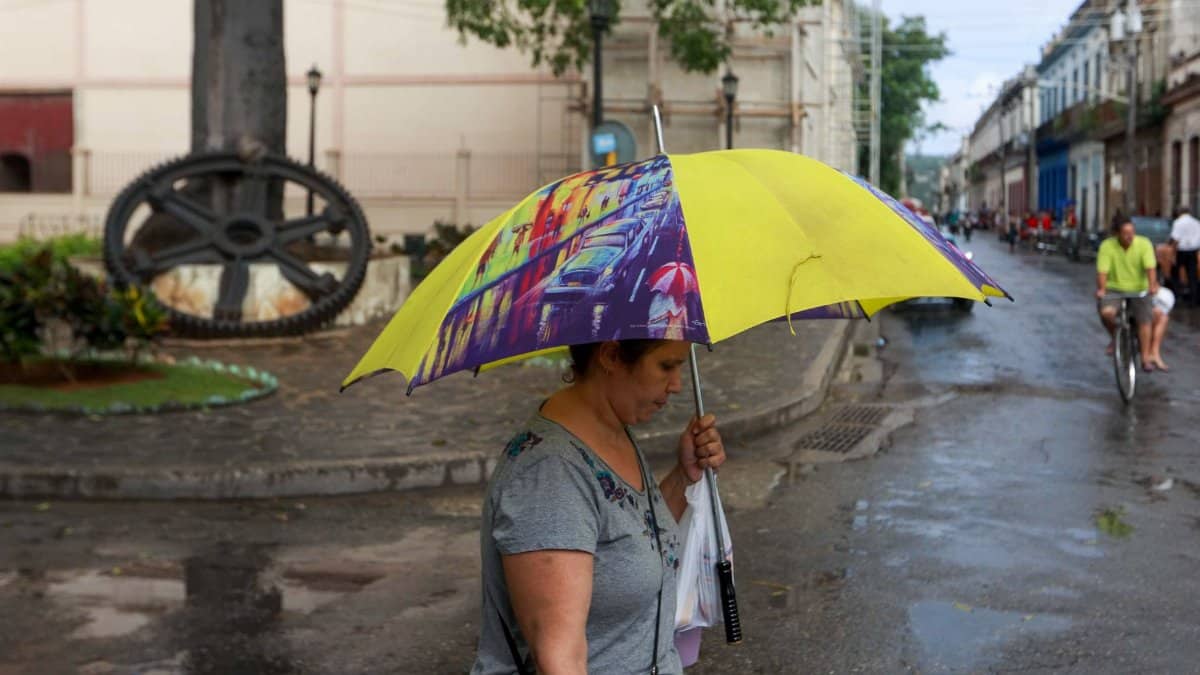
Picture the familiar figure once more, not as kitsch and not as scripture. A person walks. The sky is unreasonable. The umbrella is too bright for the weather and exactly bright enough for the picture. Max spent a career arguing, in pigment rather than in paragraphs, that such brightness was not a lie. It was a tool.
The argument will outlast the news cycle that carried his name this week. Readers who want the fuller file can start with the Chicago Tribune account of the death and with the long public record of the work itself. Between those two sources sits the only tribute that fits: attention, paid without costume, to a man who made inner space look like somewhere you could mail a postcard from.