
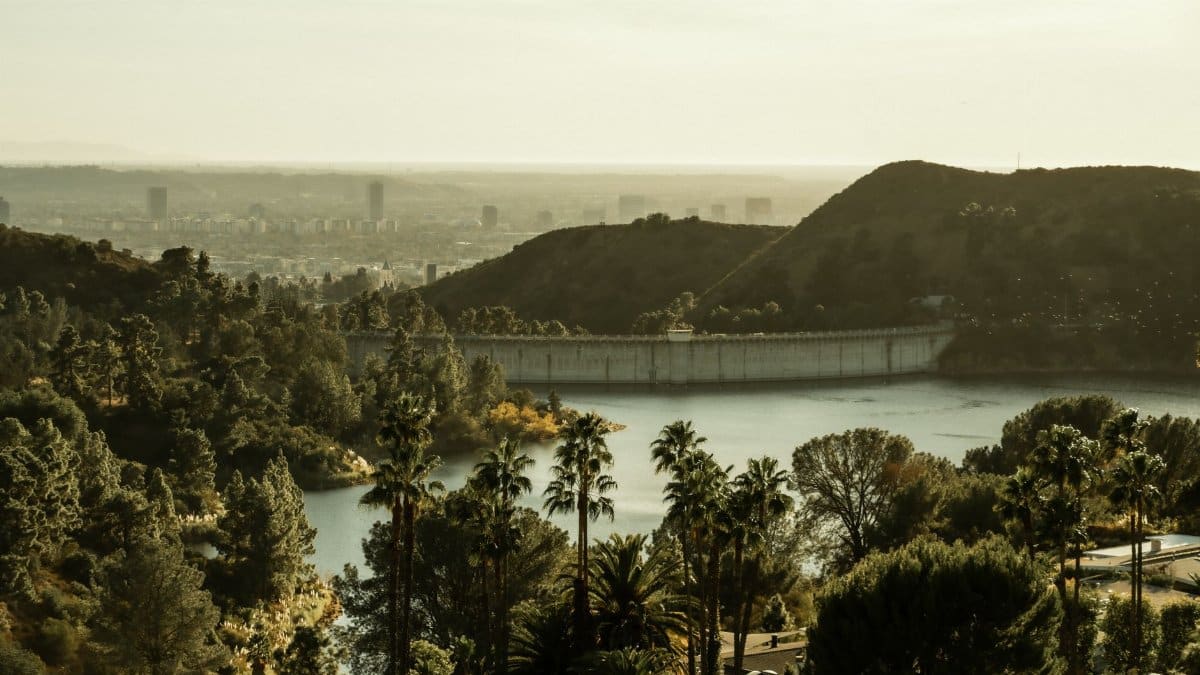
On a warm morning in mid September, the first sign of trouble in a private yard above the city was not thunder and not a crack in the street. It was a hose that kept running. Water rose past the tile line of a pool, crossed the coping, and soaked a slope that had been asked, for years, to pretend it was solid. The Hollywood Hills pool hillside collapse that followed was partial. A section of ground gave way. No one needs a disaster film to understand the point. A small, ordinary mistake met a landscape that does not forgive saturation.
A hose that would not stop
The public account is plain enough to repeat without decoration. A hose left running overflowed a pool. Water left the basin, found the downhill side of the property, and sent part of a Hollywood Hills slope sliding. The date attached to the report is September 18. The picture that forms is domestic, almost dull, until the ground moves. Pools in these lots are not lakes. They are engineered bowls set into cut pads, often with a view that costs more than the water they hold. A hose is a tool for topping off that bowl after a hot week. Leave it on, and the tool becomes a pump with no off switch.
Overflow is not a metaphor here. A pool has a finite freeboard, the small vertical distance between the waterline and the edge. Once that distance is gone, every additional gallon has to go somewhere. Coping, deck drains, and a polite spillway may handle a brief surge. They are not designed as a river. On a hillside, the somewhere is almost always downslope, through soil that was never meant to drink like a sponge under a fountain.
What saturation does to a slope
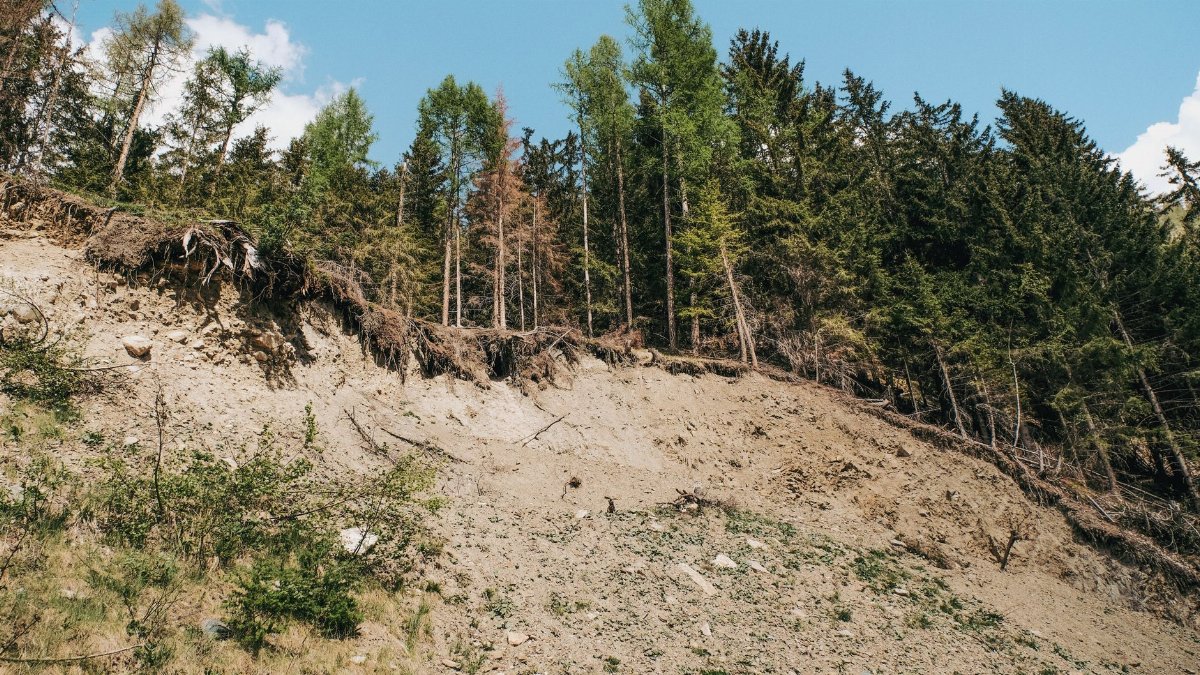
Hills fail for reasons that sound technical and feel simple once you have stood on one after a heavy rain. Soil and fractured rock hold themselves together by friction and by the slight glue of moisture in the right amount. Add too much water and two things happen at once. The material gets heavier. The friction drops, because water pushes soil grains apart. Engineers call the second effect pore pressure. Residents call it the moment a yard that felt firm in June turns soft in the hands.
A partial collapse is not a consolation prize. It means a piece of the slope, not the whole mountain, lost its grip. That piece can still take a deck, a wall, a planting bed, a length of fence, or the corner of a house. It can also block a narrow street below, where cars already negotiate blind curves and where a fire engine has little room to improvise. Partial is a word for the map. It is not a word for the people who live under the scar.
Why these particular hills keep the argument
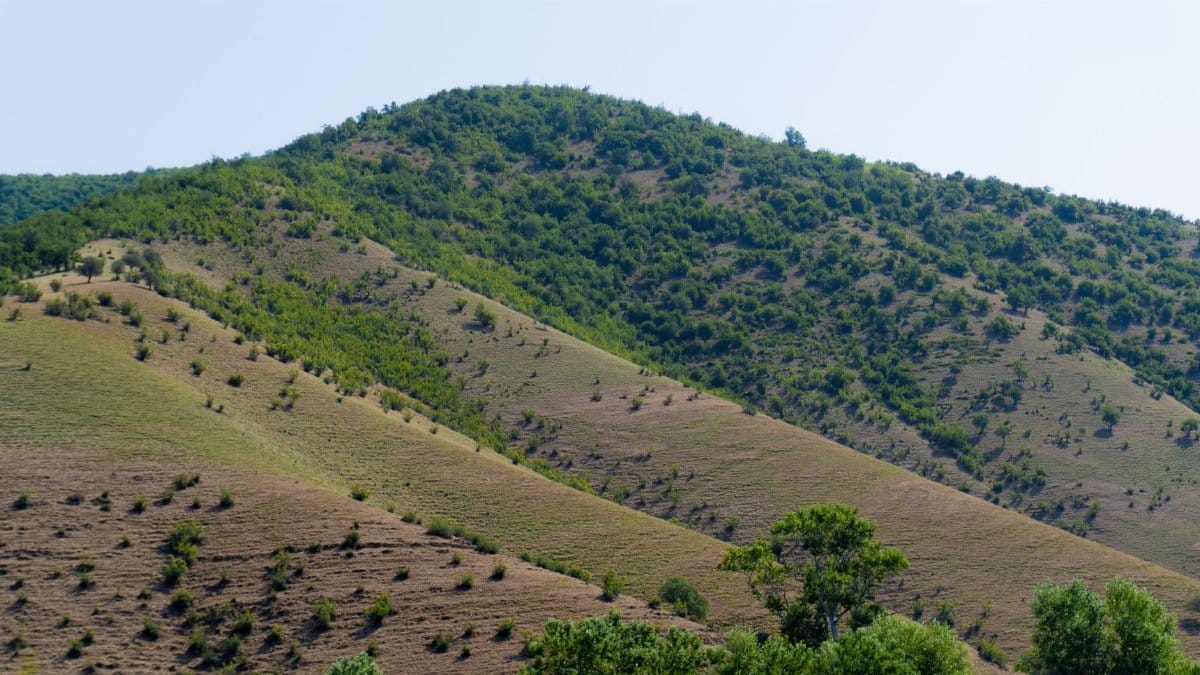
The Hollywood Hills sit in the Santa Monica Mountains, a young and broken terrain of sedimentary rock, old slide deposits, and pads cut and filled so that a flat backyard can exist at all. Many lots were shaped in decades when the view sold the house and the geology was treated as a contractor’s problem. Retaining walls, compacted fill, and drainage pipes were the answer. Those answers age. Pipes clog. Walls crack. Irrigation, which keeps gardens green through long dry months, can wet the same soils that winter storms will later test.
Los Angeles has spent a century arguing with gravity. After big storms and after the Northridge earthquake, hillside streets showed what steep ground does when it is loaded, shaken, or soaked. Slow moving ground at Portuguese Bend, far to the south, has been a long lesson in patience and expense. None of that history turns one overflowing pool into an earthquake. It does explain why a local failure lands with a familiar dread. People here already know the hills can move. They hope it will not be their slope, and not this week.
The pool as a stored weight

A swimming pool is a luxury and a load. Thousands of gallons sit in a shell that must be supported by the pad beneath it. When the shell is sound and the pad is dry enough, the arrangement holds. When water leaves the shell and enters the ground beside it, the load changes address. It is no longer carried by concrete and steel. It is carried by dirt. Dirt on a slope has a preferred direction, and that direction is down.
There is a second, quieter risk that hillside residents discuss in the same breath as hoses and timers. A leaking pool or a leaking irrigation line can wet a slope for weeks without a dramatic overflow. The September case, as described, was not that slow leak. It was a running hose and a pool that could not contain what the hose delivered. Sudden and slow are different stories for insurers and for engineers. They are the same story for the soil. Water arrived. The slope took more than it could keep.
What the street below is asked to absorb
Canyon roads in this part of the city are already a negotiation. Parking eats the shoulder. Sightlines vanish at the next bend. When a slope sheds mud, rock, or a slab of yard, the negotiation gets worse. Even a partial slide can push debris toward the curb, bury a drain inlet, or leave a raw face that will ravel in the next rain. Crews who respond to these calls are not only looking at the house that lost ground. They are looking at who lives underneath it, and at whether the remaining slope is still moving.
I have walked enough of these streets, on ordinary errands, to know how little margin they offer. A delivery truck and a school run can jam a block. Add a cordon, a geologist, and a pile of wet earth, and the ordinary day stops. That is the civic part of a private hose. The water started in one yard. The consequence does not stay there.
Reports, rumor, and the limit of what is known

Early accounts, including the Los Angeles Times report of the episode, center on the mechanism: overflow from a pool fed by a running hose, then a partial failure of the hillside. That is enough to grasp the cause. It is not enough to invent a floor plan, a famous neighbor, or a tally of injuries that the first telling did not establish. Hollywood Hills news travels fast because the place is a symbol as much as a zip code. Symbols attract embroidery. The useful discipline is to stay with the water and the slope.
The Hollywood Hills pool hillside collapse is a poor candidate for myth and a good candidate for attention. It did not require a bomb cyclone or a record year of rain. It required a hose, a basin with a rim, and a hill. Readers who want a villain will not find a satisfying one. Forgetfulness is ordinary. The ground is less forgiving than the person who forgot.
An old lesson in a local story

This item sits, oddly and then not so oddly, beside spiritual news. Traditions that talk about humility rarely mention pool coping. They do talk about the illusion that what we have built will hold because we prefer it to hold. Water is an old teacher in those traditions. It finds the low place. It does not respect the property line. A partial collapse on a famous hillside is not a sermon, and it should not be forced into one. It is still a reminder that care is a practice, not a mood.
Stewardship, stripped of soft language, means knowing what your land can bear. It means timers that shut off, drains that are cleared, walls that are inspected, and a willingness to hear a neighbor who says the yard below looks wet. None of that is mystical. All of it is a form of attention, which is what the older languages were pointing at when they warned against pride. The hill does not care whether the pride was expensive.
The morning after, and the bill that follows
After the water is shut off, the practical questions arrive in a stack. Is the remaining slope stable. Does the house still have a safe way out. Who pays for the geologist, the shoring, the removed soil, the broken deck. Homeowners in California often discover, in the worst week, that policies split the world into categories the eye does not split. A sudden discharge of water and a movement of earth are not always treated as the same event. The argument is legal and technical. The mud is not.
City hillside rules, grading permits, and drainage standards exist because this argument is old. They do not patrol every backyard hose. Enforcement is a blunt instrument for a failure that can begin with a forgotten timer on a Tuesday. The Hollywood Hills pool hillside collapse will be remembered, if it is remembered, as a case study in that gap. Codes can demand a wall. They cannot stand in the yard at dusk and turn the water off.
Living with a view that has a downhill side
People move to these ridges for light, quiet, and the long look toward the basin. The brochure does not linger on the downhill neighbor, the fill beneath the roses, or the way a pool shell depends on ground that must stay within a narrow range of wet and dry. That omission is not a conspiracy. It is how desire works. The view is the product. The slope is the condition of the product.
A mature hillside life accepts both. It keeps trees whose roots help, and it does not pretend roots are a retaining wall. It treats irrigation as a measured dose, not a mood. It assumes that a pool is a structure, inspected on a schedule, not a piece of furniture. And it assumes that a hose is capable of more damage than a storm that never came. Those are modest habits. They are also the habits that keep a partial collapse from becoming the next address on a list of streets closed until further notice.
What the scar asks the rest of us

A city can absorb one yard’s failure and still miss the instruction. The instruction is not that pools are reckless, or that hills should be emptied of houses. People will keep living up there. The instruction is that water plus slope is a loaded combination, and that the loading can be done by a household object no one fears. When the next heat spell arrives, thousands of hoses will run on purpose, for a few minutes, and be shut off. The ones that are not shut off are the ones that write the next report.
Journalism likes a larger cause, and sometimes there is one. Here the larger cause is the accumulation of small permissions: to cut a pad, to store a small lake on it, to pipe water uphill so the lake stays blue, to trust that the edge will hold. The Hollywood Hills pool hillside collapse does not indict that whole arrangement by itself. It shows the arrangement’s thin margin. A running hose was enough to spend the margin on a single September day.
If there is a trend worth naming, it is not spiritual fashion. It is the return of attention to things that do not trend: drainage, soil, the downhill side of a beautiful lot. The slope that moved will be repaired or stabilized or argued over. The hose will be coiled. The rest of the hills will look, from the freeway, as permanent as they did the day before. Permanence was never the honest description. Weight, water, and a hand on the spigot were.