
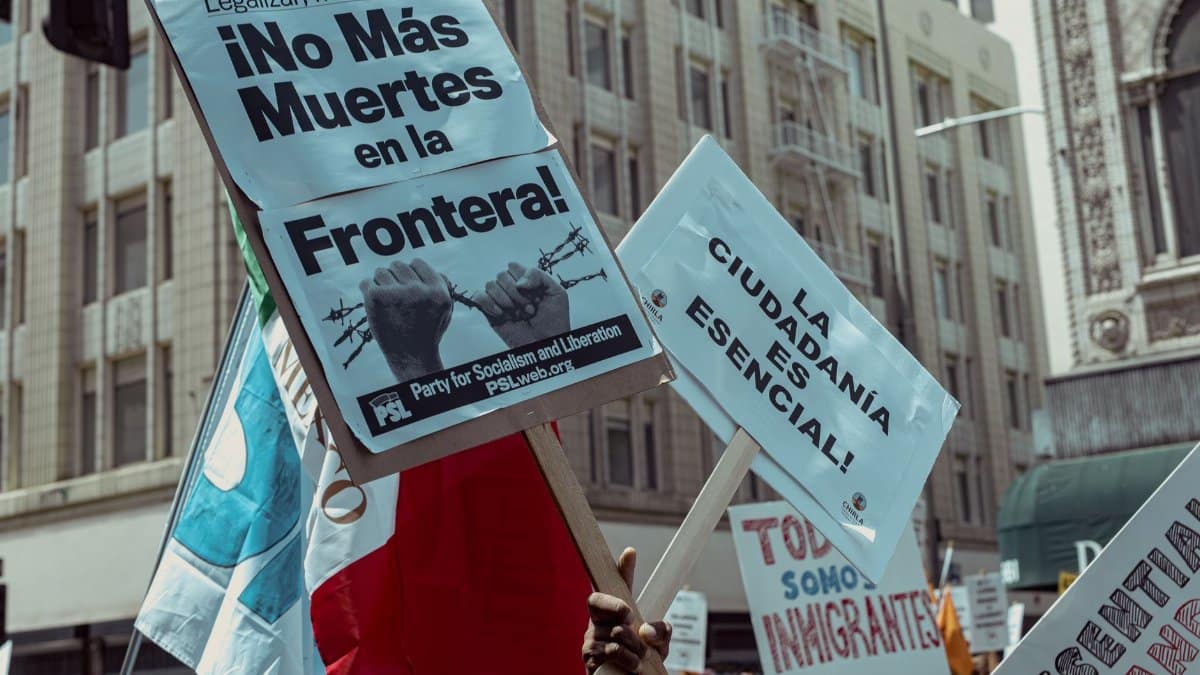
On a residential block in the San Fernando Valley, a stop can last only a few minutes and still reorder a family’s week. Neighbors film from porches. Children watch from cars. Agents sometimes arrive with faces covered, and equipment that can deliver an electric shock has entered the public argument over what force looks like on an ordinary street. This week Governor Gavin Newsom signed Newsom immigration bills that limit masks and shock gloves in immigration stops, placing those rules inside a wider set of more than 20 California laws aimed at federal enforcement tactics and at the expansion of detention.
What the signing is meant to signal
The ceremony was less a victory lap than a boundary marker. California cannot repeal federal immigration statutes, and Newsom did not pretend otherwise. What the state can do, his allies argue, is regulate conduct that touches state officers, state facilities, state contractors, and the public spaces where Californians live. The mask limits and the shock glove limits are the pieces most likely to be understood without a law degree. They translate a dense legislative package into images: a covered face, a gloved hand, a person who does not know who is taking them.
For readers outside Sacramento, the point is simpler than the bill text. Identification and proportionate force are being treated as conditions of legitimate policing, even when the officers involved answer to Washington rather than to a city council. Whether courts will accept that theory is a separate question, and it will not be settled by a signing pen.
Masks and the problem of the unseen officer
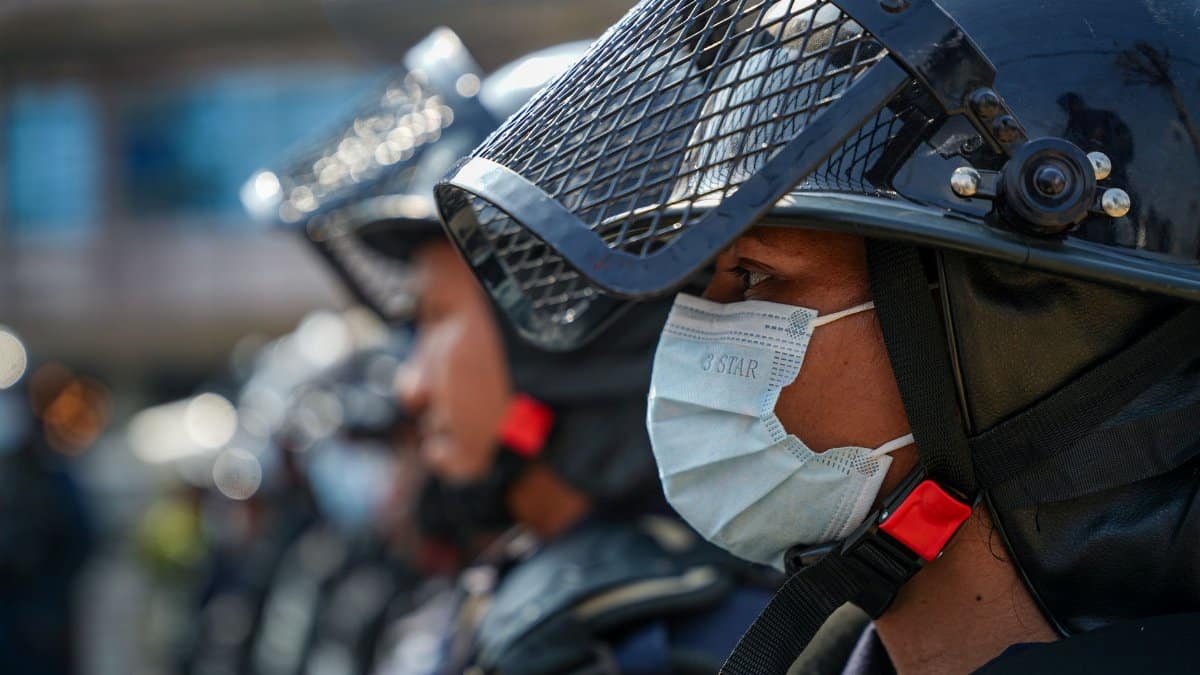
Face coverings are not new in tactical work. They appear in gang cases, in high risk warrants, and in situations where officers fear retaliation against their families. Immigration stops in parking lots and apartment courtyards are a different setting. People stopped there are often not accused of a violent crime. They may have no lawyer on the phone. If the officer’s face is hidden, a later complaint becomes harder to file and a mistaken identity harder to correct.
California’s new approach does not invent a universal ban on every covering in every operation. It tries to narrow the use of masks in immigration encounters so that anonymity is not the default. Supporters say sunlight is a form of restraint. Critics in federal ranks say the state is second guessing operational security and inviting harassment of agents whose names and home addresses already circulate online. Both claims can be true in part. A rule that demands identification can also create risk for the person required to show a face. The legislature chose, in this round, to treat hidden identity as the greater civic harm.
Shock gloves and the threshold for pain

Electric shock devices occupy an uneasy place in American policing. They are sold as alternatives to firearms. They are also tools that inflict pain on command, sometimes on people who are already in handcuffs or on the ground. Shock gloves concentrate that capability in ordinary contact. A grip can become a punishment. In an immigration stop, where the legal stakes are civil removal as often as criminal charge, lawmakers asked why that tool should be in the kit at all.
The bills do not settle the medical debate over electrical weapons. They do state a policy preference: immigration enforcement in California should not rely on gloves designed to shock. Advocates for immigrants describe the devices as intimidation dressed as equipment. Some officers describe them as protection in chaotic arrests. A journalist can report both descriptions without pretending they weigh the same. The people most likely to feel the glove are not the people writing the policy memo.
A package larger than two prohibitions

The mask rule and the glove rule are the headlines. They are not the whole stack. Legislative staff describe more than 20 measures touching detention capacity, information sharing, access to counsel, and the use of state resources in federal operations. Some bills are narrow, almost clerical. Others try to slow the construction or expansion of holding sites by tightening state permits, labor rules, or contracting standards. Taken together, the Newsom immigration bills are a strategy of friction. They do not nullify federal power. They make certain federal choices slower, costlier, and more visible.
Friction is a political art as much as a legal one. A delay in opening beds does not free anyone already in custody. A disclosure rule does not stop a dawn arrest. Still, scale matters. A single symbolic statute can be ignored. A shelf of statutes forces agencies to ask, on each new plan, which California rule might apply and which lawsuit might follow.
Detention expansion and the state’s indirect hand
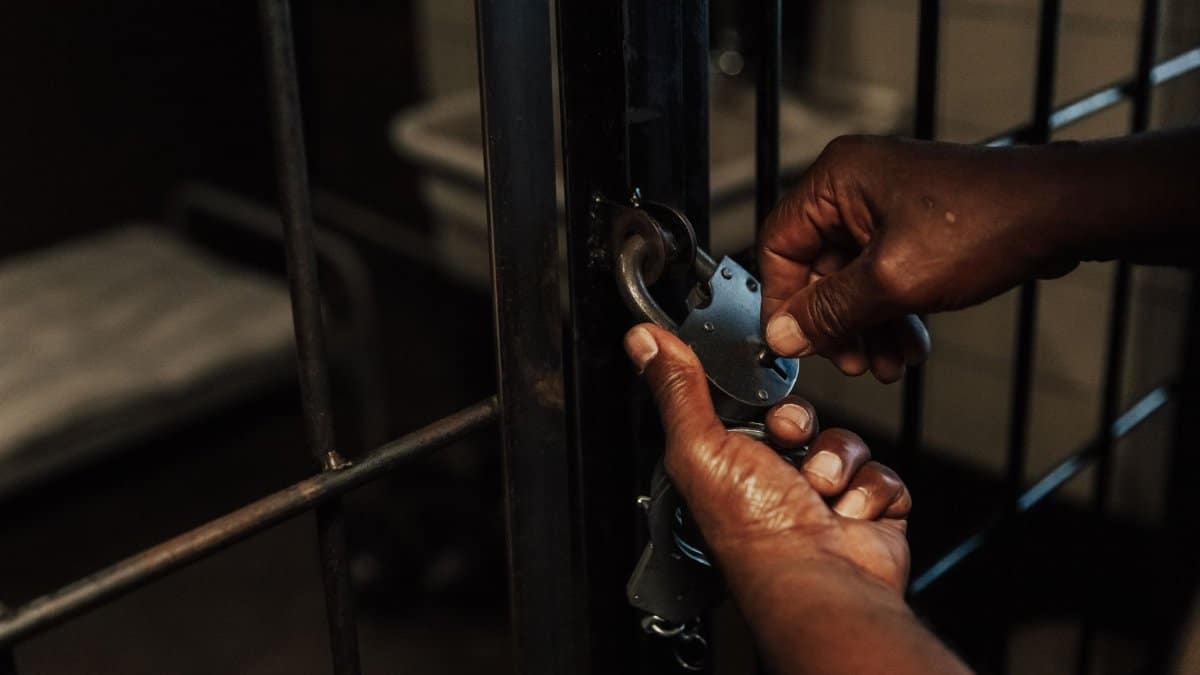
Washington has talked for years about more beds, faster processing, and fewer releases while cases proceed. California has answered, under more than one governor, by trying to exit the business of immigration jails and by discouraging local lockups from holding people for civil immigration purposes. The new laws extend that posture toward expansion itself. If a private operator wants power, water, building approval, or a workforce trained in state certified programs, Sacramento wants a say.
Indirect control is fragile. A determined federal administration can site facilities on federal land, fly detainees to other states, or rewrite contracts to dodge a local veto. Families feel that fragility immediately. A parent transferred overnight to another jurisdiction loses visitors, loses a local lawyer, and loses the thin comfort of a known courthouse. State bills can condemn that practice. They cannot always prevent the bus from leaving.
Schools, clinics, and places people thought were quiet

Another cluster of measures speaks to sensitive locations. Schools, hospitals, courthouses, and places of worship have long been treated, in federal guidance that has shifted with each president, as sites where enforcement should be rare. Guidance is not a statute. It can be withdrawn in a memo. California lawmakers have tried to add state consequences when enforcement actions spill into those places, or when state employees are asked to assist.
The practical effect depends on cooperation. A school district can train staff to ask for warrants and to call counsel. It cannot bar a federal agent from a public sidewalk. The value of these provisions is partly cultural. They tell teachers, nurses, and clerks that the state expects hesitation, documentation, and a phone call, not eager assistance. In immigrant neighborhoods, that expectation is itself a form of news.
What federal lawyers are likely to say

Expect a supremacy clause argument, and expect it soon. Immigration is a federal field. States may not create their own admission rules or their own deportation systems. The open question is how far a state may go in regulating masks, weapons, contracts, and data before a judge calls the effort an obstacle to federal law. California will answer that its police powers over safety and identification survive even in a preeminent federal domain. The United States will answer that a mask rule aimed only at immigration officers is discrimination against federal functions, not a neutral safety code.
Readers should be wary of predictions dressed as certainty. Similar fights over information sharing and detainer requests have produced mixed rulings for more than a decade. Some state limits stand. Others fall. The Newsom immigration bills will be read clause by clause, not as a single mood.
Communities that measure policy in mornings

Policy language rarely matches the morning after a stop. A man misses a shift. A child is late to school because a parent did not come home. A landlord hears a rumor and raises a question about the lease. In Los Angeles, the Central Valley, and the Inland Empire, those sequences are already familiar. The new statutes will matter to those families only if they change the next encounter: an agent whose face can be seen, a stop conducted without a shock glove, a jail that does not quietly add beds, a school office that does not hand over a schedule.
Community groups are preparing know your rights sessions, not celebrations. They have learned that a signed bill can coexist with a raid. Their counsel to residents remains plain. Do not open a door without a judicial warrant. Ask for a lawyer. Write down names and badge numbers if they are offered. The statehouse can add rights. It cannot stand in the hallway.
Law enforcement unease inside the state

Not every critic wears a federal badge. Some California police chiefs worry that rules written for immigration teams will blur into rules for their own tactical units. Others worry about joint task forces. If a local detective rides with federal agents, whose mask policy applies? If a shock device is banned for one purpose and allowed for another, who sorts the purpose in the moment? These are not abstract staffing charts. They are questions a sergeant asks before a shift.
Newsom’s office has framed the package as targeted, not as a general disarmament of police. That framing will be tested the first time a local union claims the language is broader than the press release. Legislative history will matter. So will training bulletins. A law that officers do not understand is a law that will be applied unevenly, which is its own injustice.
Politics on a national stage

Immigration remains a national argument conducted through state capitols. Newsom is a Democrat with a record of opposing Trump era enforcement, and the signing reads in part as a message to voters who want visible resistance. Republicans in California and in Congress will call the package theater that shelters people who broke immigration rules and that endangers agents. That exchange is predictable. It is also incomplete. Many of the people affected by stops have citizen children, long work histories, and pending claims. Many agents are doing a job Congress has not clarified and courts have not simplified.
A feature writer should not launder either slogan. Limiting masks is not open borders. Limiting shock gloves is not an attack on every officer’s safety. Expanding detention is not, by itself, a plan for a functional asylum system. The Newsom immigration bills sit in that gap, where state politicians use the tools they have because the tools they want belong to Congress.
Money, contracts, and the quiet provisions

Some of the least photogenic language may prove the most durable. Contracting rules, labor standards, and reporting duties do not trend on video. They do shape whether a company bids on a detention wing and whether a county can hide the cost in a facilities budget. If California requires public reporting of immigration related transfers, journalists and auditors gain a paper trail. Paper trails change behavior more often than speeches do.
There is a risk of overclaiming here. A disclosure form does not close a facility. A labor rule can be met by a contractor who still runs a harsh jail. Substance lives in enforcement of the fine print, in whether agencies audit, and in whether courts leave the fine print intact. Readers who stop at the mask headline will miss where the package either bites or dissolves.
Courts, timelines, and what tomorrow actually changes

Injunctions are likely. Federal agencies move quickly when they believe a state statute interferes with arrests or with officer safety. California will defend. While that litigation runs, some provisions may be frozen and others may take effect. People stopped next month should not assume that every line in the signing packet is already operational. Local governments will issue guidance. Advocacy hotlines will update scripts. Confusion in the first weeks is part of the story, not a footnote.
What can be said with care is this. The state has declared that covered faces and shock gloves do not belong in the ordinary immigration stop, and that detention growth should meet state obstacles rather than state hospitality. The Newsom immigration bills make that declaration in legal form. They do not federalize California, and they do not free the state from the union. They invite a judge to decide how much local dignity a state may demand when the arresting power is national.
A standard worth keeping in view

Identification, proportionate force, and honest accounting for jails are not partisan ornaments. They are minimums of a government that expects obedience. California has chosen to press those minimums against a federal apparatus that often treats immigration enforcement as an exception to ordinary visibility. The press should watch the cases, the contracts, and the street, not only the podium. If masks come off and shock gloves stay in the locker, the laws will have done something a speech cannot do. If they are enjoined, or ignored, the gap between Sacramento’s promise and a valley sidewalk will be the story that remains.