

On an ordinary evening in North Seattle, when kitchens were lit and traffic was thinning, word spread of a pursuit that did not end on asphalt. The Lake Washington car chase, as the episode will be remembered in the plain speech of neighbors and news desks, closed at the shoreline rather than at a curb. A 38 year old man allegedly left his vehicle and jumped into the lake. Little else belongs in print until police, medics, and the courts finish their work. Even so, the picture stays with people who live beside that water. A road, a flight, a cold dark surface. The combination asks a city to think again about speed, fear, and the narrow space between running and being saved.
What can be said, and what must wait

Journalism earns trust by refusing to invent a scene it did not witness. The public account, as framed by local reporting, is spare. A man of 38 is alleged to have led officers through North Seattle and then entered Lake Washington. Alleged is not a decoration. It is the difference between a rumor and a charge that a court may later test. Names, exact routes, speeds, injuries, and motives are not settled here, and they should not be guessed. Readers deserve the outline without a false sense of completeness.
That restraint is also a form of respect. Someone may have been in crisis. Officers may have faced a choice measured in seconds. People on sidewalks may have felt the rush of engines and then the strange quiet that follows sirens. Until official statements fill the gaps, the honest story is the one that admits its limits. A city can hold concern and caution at the same time.
A lake that is both commons and threshold
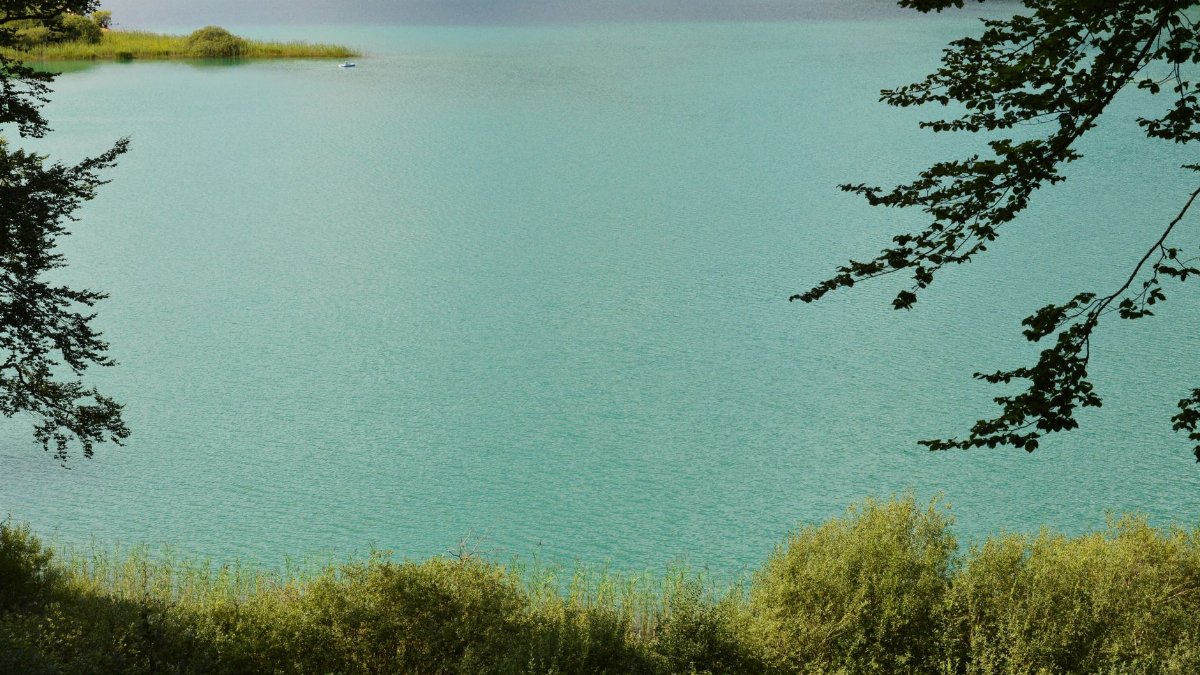
Lake Washington is not a metaphor until a night like this makes it one. On most days it is a working edge of the city: rowers at dawn, ferries and pleasure boats, families on docks, light moving across the water toward the Cascades. It is also deep, cold, and indifferent to the stories people bring to its shore. To jump from a chase into that water is to trade one danger for another. The road offers pursuit and collision. The lake offers shock, distance, and the chance of not being found in time.
Seattle has always lived with that double nature. The same expanse that softens a skyline can swallow a person who misjudges the cold. Residents who walk the Burke Gilman path or pause on a bridge know the beauty and the drop. When a police matter ends in the water, the lake stops being scenery. It becomes a place where public safety and private desperation meet, and where the outcome is no longer only a matter of traffic stops and tickets.
Why pursuits still divide the people who pay for them

Car chases occupy a painful corner of American policing. Departments across the country have spent years rewriting rules about when to follow and when to break off. The argument is not abstract. A fleeing driver can injure people who never chose the chase. An abandoned pursuit can let a dangerous person disappear into a neighborhood. Officers are trained to weigh both risks, often with incomplete information and a radio full of competing voices.
North Seattle is not a movie set. It is schools, clinics, bus stops, and houses set close to arterials. Any high speed run through those streets puts strangers in the frame. That is why pursuit policy is a civic question, not only a tactical one. Voters and city councils argue about it because they live with the consequences: damaged cars, frightened children, officers who carry a bad night home. A single alleged flight into the lake does not settle the debate. It reminds people why the debate exists.
Water changes the meaning of an ending
On land, a chase tends to end in a recognizable way. A vehicle stops. Hands are visible. Medics arrive. Handcuffs, questions, a tow truck. Water interrupts that script. A person in the lake may be trying to escape, trying to hide, or trying, in a darker sense, to leave the situation altogether. From the shore those motives can look the same. Rescue crews do not have the luxury of a seminar. They look for a head, a splash, a shape under a light.
Cold water shortens the window for clear thought. Muscles tighten. Breath fails. Even a strong swimmer can be overmatched if clothing, shock, or injury comes along. That is why a jump that looks, from a distance, like a dramatic exit is often a medical emergency first. The spiritual reading, if one is tempted, should come after the practical one. A life in the water is a life that other people may still be able to reach.
The streets that heard the sirens
North Seattle carries its own memory of noise. Residents near Aurora, Lake City Way, and the quieter blocks that feed them know the sound of a pursuit before they know the cause. Dogs bark. Phones light up. Someone steps away from a window. Later, in group chats and on porches, the story hardens into a few sentences, some of them wrong. That is how local legend starts, and why reporters have to keep returning to what was actually alleged.
The Lake Washington car chase will be retold in those shortened forms. A man ran. Police followed. He went into the water. Each retelling drops a detail and adds a guess. The duty of a careful account is to slow that process down. Neighbors are not wrong to feel unsettled. They are wrong only if unease becomes a verdict. The man at the center of the report is a person with a history the public does not yet hold, and perhaps never fully will.
A blotter item that brushes a larger question
This publication often looks for the spiritual thread in public life, and a police chase is an uneasy place to find one. Still, the thread is there if it is handled without ornament. Flight is an old human motion. People run from debt, from shame, from warrants, from pain they cannot name. Water, in many traditions, is a place of washing and of crossing. To enter it while pursued is not a ritual. It is a crisis. Confusing the two would be a kind of theft from the person in the water and from the families who love him.
What can be said, without pretending to know a soul, is that cities reveal their values in the minutes after the splash. Do we want only a capture, or also a rescue? Do we speak of the man as a problem that entered the lake, or as a neighbor whose night went terribly wrong? Those are moral questions, and they do not require a sermon. They require a habit of speech that leaves room for facts still coming in.
The people whose job is to go in after

Behind every shoreline emergency stands a small group of specialists who train for the moment everyone else dreads. Police marine units, firefighters, divers, and medics practice entries, searches, and the grim arithmetic of cold water. Their work is physical and exact. Lights, ropes, boats, radios. It is also, in a quiet way, an answer to the question of what a community owes a person who has just made a desperate choice.
None of that labor should be romanticized. Rescuers get hurt. Searches fail. A successful pull from the water can still lead to a hospital bed and a jail booking, or to grief. The point is narrower. When the alleged end of a chase is a jump, the next chapter belongs as much to rescue as to arrest. Public safety includes the officer who stops a car and the diver who looks under a pier. Both are part of the same civic promise, even when their tasks pull in different directions.
What remains after the lights leave the shore

By morning, a chase is often already a memory with a headline. The water looks the same. Commuters take the bridge. A few people linger where they think they saw lights. The man, if he was found, is in the care of doctors or in custody, and the legal process begins its slow walk. If he was not immediately found, the shore becomes a place of waiting, and waiting is its own kind of news.
For middle aged readers who have watched Seattle change, nights like this can feel like a verdict on the city itself. That feeling is understandable and usually too large. One alleged pursuit does not prove that a neighborhood is lost, or that policing has failed, or that the lake has turned hostile. It proves that risk still concentrates at the edge of ordinary life. A wrong turn, a decision made at speed, a body in cold water. The scale is human, which is why it unsettles.
Speed, judgment, and the stories we rush to finish

There is a kinship between a chase and the way a public consumes it. Both move too fast. A driver allegedly refuses to stop. A reader wants the ending before the rescuers have dried off. Social feeds reward the sharpest sentence, not the fairest one. The phrase Lake Washington car chase is already a small machine for attention. It is vivid. It is local. It invites a picture. The work of a longer account is to take that picture apart and ask which parts are known.
Known: an alleged pursuit in North Seattle, a man of 38, a jump into the lake, a story carried by regional reporting. Unknown, for the purposes of this reflection: the full why, the full how, the medical outcome, the charges if any, the names of people who may have been endangered along the route. Holding that distinction is not timid. It is how a free press stays worthy of the fear it sometimes has to describe.
A hope that does not outrun the facts

Hope, in a story like this, should be modest. Hope that whoever entered the water was reached. Hope that no bystander was struck on the way there. Hope that officers had a policy clear enough to follow and flexible enough to protect the street. Hope that the man, whatever he is alleged to have done, is treated as a person rather than as a clip. Those hopes do not cancel accountability. They sit beside it.
Seattle will have other pursuits. Lake Washington will have other emergencies. The useful memory of this one is not a myth about a dramatic leap. It is a reminder that public safety is a chain: drivers who stop, policies that limit needless speed, rescuers who train, reporters who wait for facts, and neighbors who refuse to turn a frightened night into a permanent judgment. The Lake Washington car chase belongs in that chain, not above it.
Living beside water and choosing our words

People who have spent decades near this lake learn a certain literacy. They can read wind on the surface. They know which docks ice first in a hard winter, and which beaches fill when the sun finally holds. They also learn, if they are paying attention, a literacy of trouble. Sirens near the water mean something different from sirens on a highway. Someone may be overboard from a boat, or in distress on a trail, or, as alleged here, at the end of a flight from police.
Words are part of that literacy. To say jumped is not to say why. To say chase is not to say that every mile of it was wise. To say man of 38 is to remember an age when many readers can picture a life already crowded with work, family, mistakes, and hopes. Spiritual news, if the label means anything durable, is news that refuses to flatten a person into the worst minute available on camera. The minute matters. It is not the whole life.
What readers can carry forward

If there is a practice to take from this night, it is attention without appetite. Notice the report. Ask what is confirmed. Leave room for rescue and for law. Talk with the teenagers in the house about why a chase is not a spectacle worth chasing in a car of their own. Support the unglamorous budgets that train divers and rewrite pursuit rules. When the next headline arrives, resist the urge to complete it in your head before the city has completed it on the ground.
The alleged jump into Lake Washington after a North Seattle pursuit is a hard fact pattern, and it is also unfinished. That unfinished quality is not a failure of storytelling. It is the condition of any honest account written close to the event. The water is still there in the morning. So is the obligation to speak about it carefully. In that care, more than in any dramatic closing line, a city shows what it believes a human life is worth.