

Shortly after dinner on a quiet Sunday, phones lit up from Thousand Oaks to Long Beach with the same startled question. Did you feel that. Within minutes the preliminary bulletin supplied a name and a number: a magnitude 3.3 El Segundo earthquake, centered offshore, and the fourth noticeable shake to pass through the Los Angeles region in four days. For most people the motion lasted only a few seconds, a low roll rather than a violent jolt. Cabinets did not empty. Freeways did not close. Still, in a basin that has learned to treat every tremor as a possible preface, even a modest offshore rumble can reorder an evening and send neighbors into the street to compare notes.
What the instruments recorded
Seismologists describe a magnitude 3.3 event as minor. It releases far less energy than the quakes that rewrite skylines, and it rarely damages modern buildings when the epicenter sits offshore and the depth is ordinary. That technical modesty does not make the measurement trivial. A preliminary magnitude is a first estimate, refined as more stations report arrival times. Location matters as much as size. An offshore point near El Segundo places the source under water west of the airport and the refinery corridor, rather than directly beneath dense housing. Depth, when it is later pinned down, tells residents whether the waves had room to weaken before they reached bedrooms and office towers.
Networks run by the U.S. Geological Survey and university partners turn those arrivals into maps within minutes. Automated systems post first, then analysts review. Readers who open a phone alert are often looking at a number that may shift by a tenth as the solution improves. That revision is not a correction of a mistake so much as the ordinary work of science catching up with a signal that crossed the seafloor in seconds.
A fourth shake in four days

The detail that gave this rumble its extra charge was the calendar. Four felt earthquakes in four days is a cluster, and clusters make people reach for patterns. Scientists are careful here. Small quakes can bunch in time without announcing a larger one. They can also be aftershocks of something residents barely noticed, or unrelated breaks on separate patches of fault. The honest public statement is usually the least satisfying one: the chance of a stronger quake is always present in Southern California, and a short run of modest events does not, by itself, prove that chance has sharply risen or sharply fallen.
Still, repetition changes how a city listens. The first shake of a quiet month is a curiosity. The fourth is a conversation. Parents text adult children. Night shift workers compare whether the plant floor moved. People who slept through the earlier ones feel oddly left out, as if the region held a meeting they missed. That social amplification is part of the story of any El Segundo earthquake that arrives in a busy week, even when the geophysics remains ordinary.
How far the rumble traveled
Reports of light shaking from Thousand Oaks to Long Beach sketch a wide felt area for a small magnitude. Sediments in the Los Angeles Basin can carry waves farther than hard rock would, which is why a quake offshore can announce itself in the San Fernando Valley and along the harbor in the same minute. Distance dulls intensity. What feels like a truck passing in El Segundo may register inland as a brief sway of a hanging lamp, easy to doubt until a neighbor confirms it.
Crowdsourced intensity reports help fill the gap between instruments. People mark what they felt, where they were, and whether objects moved. Those notes do not replace seismometers, but they show how a single source becomes many private experiences. A person on an upper floor often feels more motion than a person on the ground. Someone driving may feel nothing at all. The map of “who noticed” is therefore a map of buildings, attention, and hour as much as a map of geology.
Why an offshore source feels different
Quakes under the continental shelf do not behave like quakes under a city block. Water does not stop seismic waves, but it changes what people fear in the first seconds. The mind jumps to tsunami, even when the magnitude is far too small to push a damaging wave onto the coast. For a 3.3, that fear is not matched by the physics. Tsunami concern in this region is tied to much larger undersea earthquakes or to distant ocean events, not to a brief local jolt of this size. Officials say so plainly because rumor travels faster than the shake itself.
Offshore location also means fewer people sit directly above the rupture. Intensity drops with distance, and the nearest dense neighborhoods receive a filtered version of the motion. That is a mercy, and it is also a temptation to shrug. The same coastline sits beside larger fault systems capable of events that would not feel like a passing truck. A mild night is not a forecast. It is a reminder of address.
Faults beneath a working coastline
El Segundo is not a symbol chosen at random. It is a working edge of the metropolis: runways, tanks, power equipment, and neighborhoods pressed against the Pacific. The broader region is laced with faults, some well mapped, some still argued over in the scientific literature. The Newport Inglewood zone runs near the coast. Other structures lie offshore, where seismic surveys and old well data sketch breaks that residents never see. A small earthquake does not identify its host fault with courtroom certainty. It does place a pin on a map that planners already treat as active.
Industrial neighbors add a civic layer that pure geology does not. Refineries and airports design for shaking because they must. Their emergency plans, inspection routines, and shutdown thresholds are part of how a coastal city absorbs a rumble that most households experience as a thirty second story. When nothing spills and nothing halts, that silence is itself a form of news. It means thresholds were not crossed. It does not mean the equipment was never at risk on some future night.
The minutes after the notification
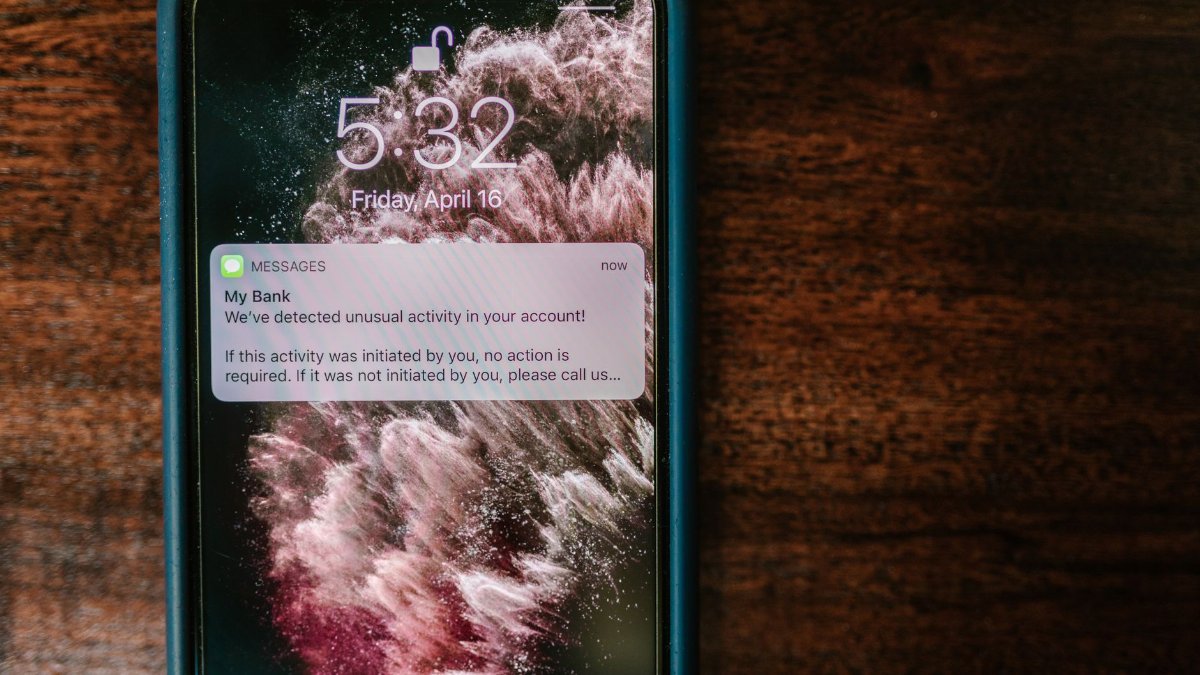
Modern alerts have changed the emotional sequence. Some phones buzzed as the waves arrived or just after, depending on distance from the epicenter and on whether the early warning system issued a notice for an event this small. Early warning is built for larger, more damaging earthquakes, where seconds can matter for surgeons, train operators, and people who can drop and cover. A magnitude 3.3 may sit near the edge of what the system chooses to push to the public. Residents should not treat a quiet phone as proof that the ground did not move.
What people do next is remarkably consistent. They open a browser. They check on parents. They stand in doorways even though safety guidance has moved on from that old advice, toward drop, cover, and hold on beside a sturdy table, away from glass. Habit lags behind the brochure. In apartments, someone always asks whether the building is “earthquake safe,” a question no group text can answer. Older masonry, soft first stories, and unbraced water heaters remain the practical worries, not the magnitude printed on a push alert.
Preparedness that does not wait for a headline

Emergency managers repeat a short list because the short list works. Water for several days. A flashlight that is not a dying phone. Shoes beside the bed. A family plan that does not depend on a single cell tower. Medications in a bag that can leave with you. Furniture strapped so a modest quake does not become a head injury. These steps are unglamorous, which is why they slip behind weekend plans until the floor moves.
Insurance is the other unfinished conversation. Standard homeowners policies in California do not cover earthquake damage. A separate policy, or a decision to self insure with savings, is a financial choice households postpone because the premium feels abstract until the cluster of small quakes makes risk feel scheduled. No Sunday night bulletin should be read as a sales pitch. It can, however, be read as a calendar reminder: the ground does not negotiate with procrastination.
Schools and workplaces already drill. The gap is often the home, where no one blows a whistle. A family that practices drop, cover, and hold on once a year is not paranoid. It is fluent. Children who know the plan are less likely to freeze, and adults are less likely to run outside into falling brick the moment a picture frame tilts.
How people make meaning of a small quake
A category of news that tracks spiritual life cannot ignore what shaking does to belief, even when the geophysics is plain. Some residents light a candle and sit with a prayer of thanks that the night stayed small. Others hear a warning in the timing, a nudge to reconcile, to call a sibling, to stop treating tomorrow as guaranteed. Faith communities in Los Angeles have long folded disaster into liturgy: collections for hard hit neighbors, vigils after larger quakes, sermons about stewardship of a fragile place. A magnitude 3.3 does not demand that apparatus. It can still open the same interior door.
There is a risk in spiritual reading, and honest clergy name it. Treating every tremor as a private message can shade into fear, or into the claim that suffering elsewhere was deserved. The more durable religious response in this region has been practical love: checking on the elder next door, offering a couch if someone is too rattled to sleep, refusing to mock the person whose anxiety outlasts the shake. Geology explains the waves. It does not explain why people reach for one another when the waves pass. That reaching is not data, but it is part of how the city remains a city.
Skeptics have a place in the same room. A rumble can be only a rumble. Meaning is optional. What is not optional, if one cares about neighbors, is accuracy. Sharing an unverified claim that “the big one is scheduled” helps no one pray and helps no one prepare. Reverence and restraint can occupy the same evening.
What scientists will watch in the coming days

After a felt event, monitoring tightens in a procedural sense even when the quake is small. Analysts look for aftershocks, for a revision of magnitude, for a clearer depth. They compare the new point to recent seismicity to see whether this El Segundo earthquake sits on a patch that has been murmuring or on a patch that has been quiet. A handful of smaller follow on shocks would be unsurprising. A sudden jump in rate would draw more attention. Neither outcome is a prophecy. Both are measurements.
The public role of those measurements is translation. Magnitude is not intensity. Offshore is not harmless by definition. Four days of shakes are not a countdown and not a clearance. Residents deserve sentences that hold those distinctions without condescension. The Los Angeles region has earned that respect through generations of drills, retrofits, and nights when the real damage arrived. A mild offshore roll belongs in that longer memory, not as climax, but as practice in paying attention.
Living with a coast that moves

By Monday morning most kitchens looked the same as they had on Sunday afternoon. Coffee was poured. Flights left the nearby runways. The refinery stacks continued their ordinary work. That return to routine is a civic skill, and it can also be a civic blind spot. The magnitude 3.3 El Segundo earthquake will fade from group chats. The faults will not fade from the map. Between those two facts sits the only useful response available to a broad public: learn the difference between a scare and a catastrophe, refuse to confuse them, and still keep water in the closet and a plan in the family.
Journalism sometimes strains to make every tremor historic. This one does not need inflation. It was widely felt, quickly located, and small enough to spare the region a night of sirens. Its value is instructional. It showed, again, how fast a notice can travel from seafloor to pocket, how far soft sediments can carry a modest wave, and how quickly neighbors turn a number into a shared story. If the next shake is larger, those same channels will matter more. If it is not, the evening still counted as a rehearsal conducted by the earth itself, with no admission fee and no promise of a gentler encore.