

On a November morning when Chicago radio still led with injury reports and the first hard frost had settled on the lakefront, a short bulletin moved through newsrooms and group chats alike: Fred Mitchell dies. For readers who grew up with the Tribune sports pages folded beside the kitchen table, the sentence landed with the bluntness of a final score. Mitchell was 78. He had been the paper’s first Black sports reporter, hired in 1974, and for decades he translated Bears winters, Cubs summers, and White Sox nights into prose that treated fans as adults. His death, reported by WTTW, closes a chapter in a city that has always argued about sports as if the argument were a civic duty.
A byline that became part of the furniture

Chicago sportswriting has never been a sideline hobby. It is one of the ways the city explains itself. Neighborhoods pick teams the way other places pick political parties, and a Monday column can start an argument that lasts until Thursday. Fred Mitchell occupied that space for so long that younger readers met him as an institution rather than as a newcomer who had to earn a seat. That familiarity can hide the harder fact. Someone has to be first through a door that was locked, and then has to do the ordinary work so well that the door stays open for the people behind him.
Obituaries often rush to list championships covered and famous names interviewed. Those lists matter. They also miss the daily labor: the early bus to a suburban practice field, the late phone call to a general manager who would rather not talk, the paragraph rewritten because a quote did not quite say what the player meant. Mitchell’s career sat inside that labor. Readers remember the big Sundays. Colleagues remember the Tuesdays.
The hire that changed a press box

In 1974 the Chicago Tribune named Mitchell its first Black sports reporter. The date is easy to recite and easy to underestimate. Major newspapers were still catching up, unevenly, to the athletes they covered. Black players had transformed professional football, basketball, and baseball. The people writing about them, credentialed and salaried, remained overwhelmingly white. A press box is a small room with a large influence. Who sits there decides which questions get asked, which locker room tensions get explained, and which communities see themselves as subjects rather than scenery.
Mitchell did not arrive as a symbol and then vanish into a footnote. He stayed. Staying is the part that history books sometimes skip. A first hire can be celebrated in a press release and isolated in practice. A long career suggests something sturdier: editors who kept assigning him, athletes who kept talking to him, and readers who kept finding his name worth their time. When people say Fred Mitchell dies, they are also marking the end of a tenure that began when the modern sports media industry was still forming.
Bears seasons and the grammar of winter

Covering the Chicago Bears is a particular kind of education. The franchise sits at the center of the city’s cold months, when baseball is a memory and basketball has not yet claimed the nightlife. Mitchell’s years on that beat coincided with eras fans still narrate in shorthand: the rise of a defense that became civic mythology, the coaching tenures that divided living rooms, the quarterback debates that never really ended. A sportswriter in that environment learns to separate noise from news without pretending the noise is irrelevant. In Chicago the noise is part of the sport.
Sideline reporting demands a double attention. You watch the play and you watch the people who will have to explain the play twenty minutes later. Mitchell’s reputation, as carried by colleagues and by the simple fact of his longevity, was that of a reporter who could do both. He was not hired to be a mascot for diversity initiatives that barely existed in 1974. He was hired to get the story. The dignity of that assignment is worth stating plainly. Access without craft is a press pass. Craft without access is a guess. He was expected to supply both, in a sport where coaches guard information as if it were a game plan.
Two baseball teams and one divided summer
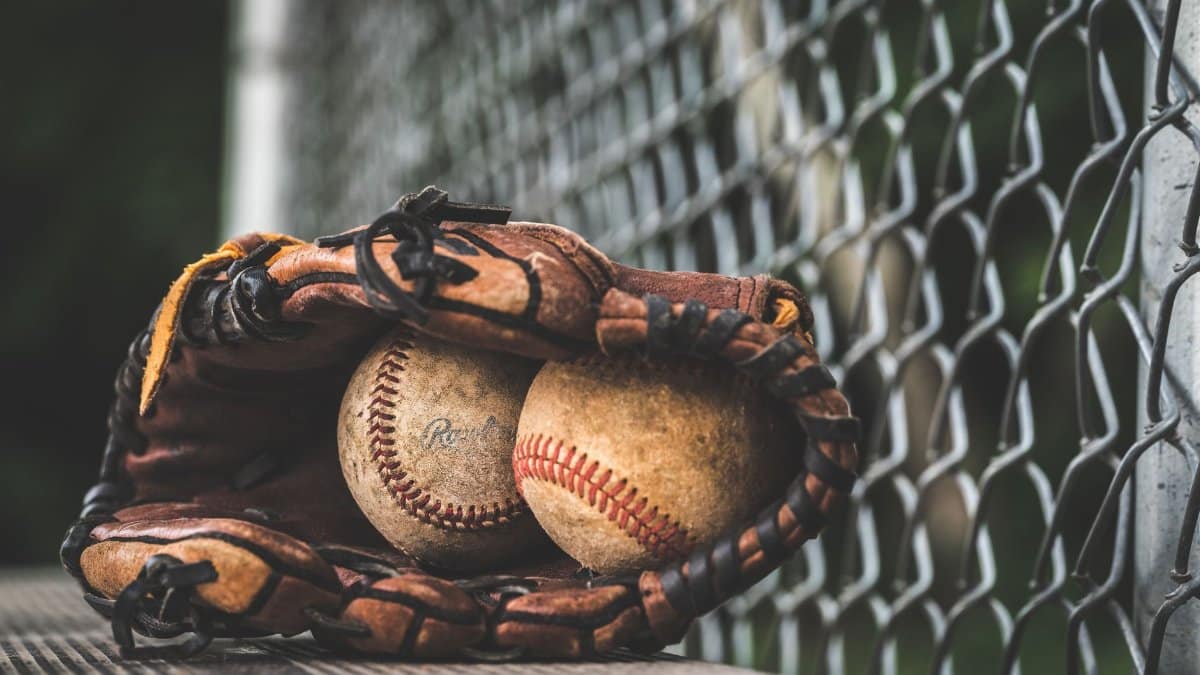
Baseball in Chicago is a split screen. The Cubs and the White Sox share a metropolitan area and very little else in the emotional lives of their followers. A writer who covers both, as Mitchell did across a long career, learns the city’s geography in a way that highway maps do not capture. North Side optimism and South Side skepticism are stereotypes, and like most stereotypes they are unfair and partly true. The job is to write about the teams in front of you, not the costumes fans wear to the ballpark.
That dual coverage also meant dual calendars. Spring training, the long summer, the trade deadline, the September mathematics of elimination. Readers who never bought a ticket still absorbed those rhythms through the paper. Mitchell’s work helped set them. When a franchise finally broke a historic drought, or when another extended a familiar disappointment, the writing had to hold joy and fatigue in the same paragraph. Sports pages are often accused of being trivial. Anyone who has watched a city reorganize its mood around a pennant race knows the accusation is incomplete.
What the first does not finish

There is a temptation, in pieces like this one, to treat a pioneering hire as the end of a story. It is the beginning. After 1974, Black reporters, editors, and columnists continued to press for seats, for beats that were not narrowly defined, and for the freedom to criticize teams rather than merely celebrate access to them. Progress in newsrooms has been real and incomplete. Ownership, top editing ranks, and the most prestigious national assignments still do not reflect the country that buys tickets.
Mitchell’s career sits inside that longer argument without needing to be inflated into a solitary hero tale. Pioneers are necessary and insufficient. They prove a door can open. They do not, by themselves, change who holds the keys a generation later. Remembering him honestly means remembering both the breach he made and the work that remained after he had a desk. Readers who only want inspiration will find plenty. Readers who want a clearer picture of American media should hold the inspiration and the unfinished business together.
The reader on the other side of the page

I grew up assuming that the sports section was a public utility, something a city simply had, like buses and library branches. That assumption was a luxury produced by people whose names I did not always notice. A byline becomes invisible when it is reliable. You trust it the way you trust a clock. Only when the clock stops do you realize how often you checked it.
Mitchell wrote for a broad audience in a period when the Tribune still functioned as a common text for a divided metropolis. Not everyone read him, and not everyone agreed with him. Agreement was never the point. The point was a shared set of facts about what happened on the field, offered in language that did not require a credential to understand. That bargain between paper and reader has frayed. When Fred Mitchell dies, part of what fades is a reminder of how sturdy the bargain once felt, even to people who argued with every other sentence.
Race, credibility, and the question of voice

Black sportswriters of Mitchell’s generation carried an extra weight that was rarely listed in the job description. They were asked, implicitly and sometimes out loud, to represent more than their own reporting. A missed fact could be treated as evidence about a group. A sharp criticism of a Black athlete could be scrutinized for loyalty. A sharp criticism of a white coach could be scrutinized for grievance. The fair request, then and now, is the same request made of any reporter: be accurate, be fair, and do not confuse access with affection.
Meeting that standard for decades is its own achievement. It does not require us to invent a perfect temperament or a spotless record of predictions. Sports writers are wrong in public all the time. What lasts is whether readers believed the person was trying to see the game clearly. By the evidence of a career that ran from the middle of the 1970s deep into the life of the modern Tribune, Mitchell earned that belief from a demanding audience.
How a city keeps score off the field
Chicago likes to rank its legends. Athletes get statues. Broadcasters get retired microphones. Writers usually get a shorter remembrance and a stack of yellowed pages. That imbalance is not entirely unfair. The game is the game. But the record of the game, the sentence that tells a child why a loss mattered or why a victory was not as simple as the highlight, is part of the civic archive too. Without it, memory collapses into myth faster than it should.
Mitchell’s archive is the columns, notebooks, and game stories he left in the Tribune and in the memories of people who worked beside him. It is also the quieter fact that a Black reporter could be a familiar voice on the biggest sports beats in town, not a guest on a special feature. Future historians of Chicago media will have to do the careful work of reading him in full. An obituary is not that reading. It is a marker that the reading is now closed, and that the pages remain.
Colleagues, competitors, and the shared deadline

Newsrooms are competitive in ways outsiders romanticize and insiders find exhausting. Beats overlap. Credit is scarce. Yet the death of a veteran reporter tends to suspend the small rivalries. People who fought for the same quotes remember the person who held the elevator, shared a phone number, or told a younger writer that a lede was not ready. Those stories rarely make the first bulletin. They are how a craft actually reproduces itself.
WTTW’s report of his death at 78 placed Mitchell back in public view for readers who had drifted from daily sports pages to apps and highlight clips. The format changed under his feet, as it changed under everyone’s. Print deadlines gave way to continuous publishing. Locker rooms grew more mediated. Athletes built their own channels. Through that shift, the core task stayed recognizable: find out what happened, say it clearly, and do not let the famous person write your story for you. Mitchell’s generation trained the next one in that task even when the technology made the training look old fashioned.
Grief without invention
It is a temptation to fill an obituary with scenes I did not witness and quotations I cannot source. That temptation flatters the writer and cheats the subject. What can be said with confidence is already substantial. Fred Mitchell was a longtime Chicago Tribune sportswriter. He became the paper’s first Black sports reporter in 1974. He covered the Bears, the Cubs, and the White Sox. He died at 78. Those facts are enough to locate him in the history of a city and a profession. They are not enough to counterfeit intimacy.
Readers who knew him personally will supply the rest in kitchens and group texts: the laugh, the habit, the grudge, the generosity. Public remembrance should leave room for that private knowledge. A polished anecdote invented for symmetry would be a poor tribute to a man whose job was to prefer the real detail over the convenient one.
The press credential as a kind of citizenship

A credential is a practical object. It gets you through a gate. In Mitchell’s case it also functioned as a quiet argument about who counts as a narrator of American play. Sports remain one of the few mass rituals that still pull strangers into the same emotional weather. The people authorized to describe that weather shape more than fandom. They shape which injuries we take seriously, which coaches we excuse, which cities we believe in.
Hiring Mitchell in 1974 did not fix those judgments. It widened the circle of people empowered to make them in one of the country’s most influential sports sections. Widening a circle is not a metaphor when you are the person walking into the room. It is a Monday morning with a notebook and a skeptical coach. The courage required is often undramatic. You show up again the next week.
What remains after the final edition
Papers still print sports pages, though fewer households build a day around them. The Tribune continues, altered by ownership struggles and by the economics that have thinned newsrooms across the country. Mitchell’s death arrives in that thinner landscape. It asks what kinds of careers are still possible, and whether a young reporter of any background can expect decades on a beloved beat or only a sequence of contracts and platforms.
The answer is not entirely bleak. Audio, newsletters, and independent sites have created new routes to readers. Some of those routes pay poorly and vanish quickly. Some have restored a sense of voice that chain ownership had sanded down. None of them erase the value of the institutional seat Mitchell held, the seat that put a Black reporter’s byline in front of hundreds of thousands of subscribers as a matter of routine. Routine is the highest compliment a daily newspaper can offer.
A city argument that outlasts its authors

Chicago will keep arguing about quarterbacks, managers, and whether this year is finally different. That argument is a form of belonging. Mitchell spent his working life inside it, giving readers sentences they could agree with, resent, or clip for a bulletin board. When Fred Mitchell dies, the argument does not stop. It loses one of the voices that taught people how to conduct it without abandoning either loyalty or evidence.
There will be formal notices, and there will be the informal kind: a name spoken in a press box, a column pulled from a drawer, a younger writer who realizes the path they are walking was cut by someone who did not get to choose the weather. Seventy eight years is a full life. A first in 1974 is a specific gift to a specific city. Both can be true without decoration.
Remembering the work, not only the milestone

If there is a useful way to mark this death, it is to read him, or to read the tradition he joined and extended. Black sportswriting in America did not begin with any single hire, and it did not end when one distinguished career closed. It includes reporters who covered Negro league baseball when white papers would not, columnists who challenged owners, and beat writers who simply refused to be amateur sociologists when the assignment was a baseball game. Mitchell belongs in that line as a Chicago figure, attached to three franchises that organize the local calendar.
The milestone matters because it was late. 1974 is not ancient history. Many of his readers are still here. They can remember a time when that first had not yet happened, and a longer time when his name was simply part of the sports report. Holding both memories is the respectful stance. Praise the breach. Then praise the ordinary excellence that followed, the only kind of excellence a daily paper can actually use.
An ending that stays in the city

Death notices travel faster now than they did when Mitchell started. A push alert can outrun a phone call. Even so, some news still moves at the speed of recognition. You see the name, you see the age, and you understand that a familiar narrator has left the conversation. Fred Mitchell dies is that kind of sentence. It is brief, and it is large enough to hold a press box, a lakefront city, and the long effort to make the people who tell the games look more like the people who play and watch them.
He covered teams that broke hearts and, eventually, teams that offered relief. He wrote through winters that felt endless and summers that refused to end. The proper thanks is not a myth. It is attention. Chicago has always been good at arguing and uneven at remembering who kept the record. This is a week to remember the record keeper.