
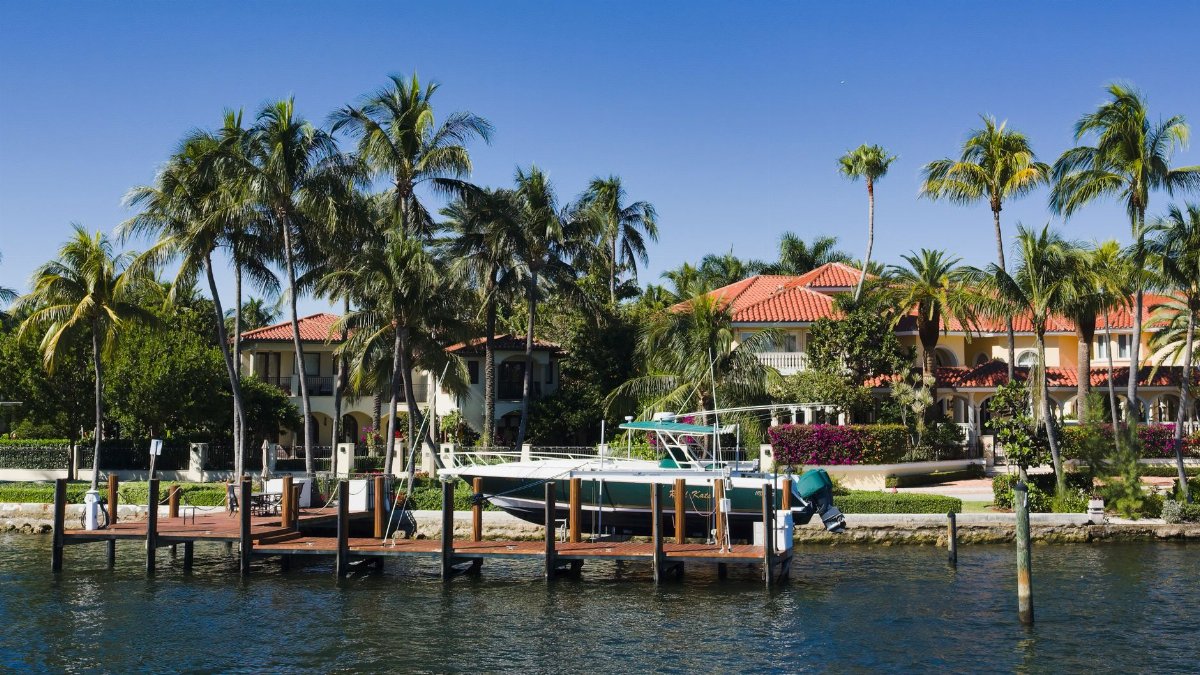
Lionel Messi has spent recent seasons making South Florida feel less like a posting and more like a place he intends to keep. A company called Sadani LLC paid $8 million for a house on Compass Lane in Fort Lauderdale, beside an earlier purchase reported at $10.8 million. The Messi Bay Colony home sits in a guarded waterfront pocket where docks, shade, and quiet streets matter as much as celebrity. For people who live nearby, the filing is less a gossip item than a signal that a famous neighbor is adding land, not merely renting a view for a season.
What the public record actually shows

Property deals involving famous athletes often arrive in public view through a limited liability company rather than a personal signature on the deed. Sadani LLC is the name attached to the Compass Lane purchase, and the price, $8 million, is the figure that circulated with the filing. The lot sits next to a house acquired earlier for a reported $10.8 million, which is the detail that turns a single splashy buy into a pattern. Reporters and neighbors can see addresses, prices, and entity names. They cannot see, from the record alone, who sleeps in which room or how a family uses a second kitchen.
That gap matters. A filing confirms money and location. It does not confirm intent, renovations, or whether the newer house will be occupied, lent to relatives, or held as a buffer. Honest coverage stays inside what documents support and treats the rest as context, not certainty.
Bay Colony as a place, not a backdrop
Bay Colony is a small waterfront community in Fort Lauderdale, the kind of enclave where boats, gates, and low traffic shape daily life more than nightclub maps do. Houses face canals or the broader water, and the appeal is proximity to the Intracoastal without the noise of a resort strip. For a player whose workweek includes travel, training, and stadium nights, that geography is practical. A short drive can matter more than a famous zip code.
The Messi Bay Colony home, taken as the pair of Compass Lane properties rather than a single postcard, reads as an attempt to control the edge of a private life. Two adjacent lots can mean a guest house, a staff stay, a yard that is harder for strangers to approach, or simply room for children to move without a camera at the fence. None of those uses is proven by a price. All of them are ordinary reasons wealthy buyers assemble land in tight neighborhoods.
Why the second house changes the story
One expensive purchase can be a lease in disguise, a seasonal perch, or a trophy. A second purchase next door is harder to shrug off. It suggests someone is solving a problem that a single house did not solve: privacy, family space, parking, security sightlines, or the simple wish not to share a wall of attention with the street. In real estate, adjacency is a strategy. Buyers who can afford it often pay a premium to own the lot that would otherwise become the neighbor with the best view of their pool.
Eight million dollars is not a casual add on, even for a global star. It is a decision with carrying costs, insurance, and upkeep on the water, where storms and salt are part of the budget. People who follow South Florida housing know that waterfront premiums have climbed for years, and that gated pockets hold value when broader markets wobble. The Compass Lane move fits that local logic as much as it fits a soccer narrative.
Fort Lauderdale after the arrival
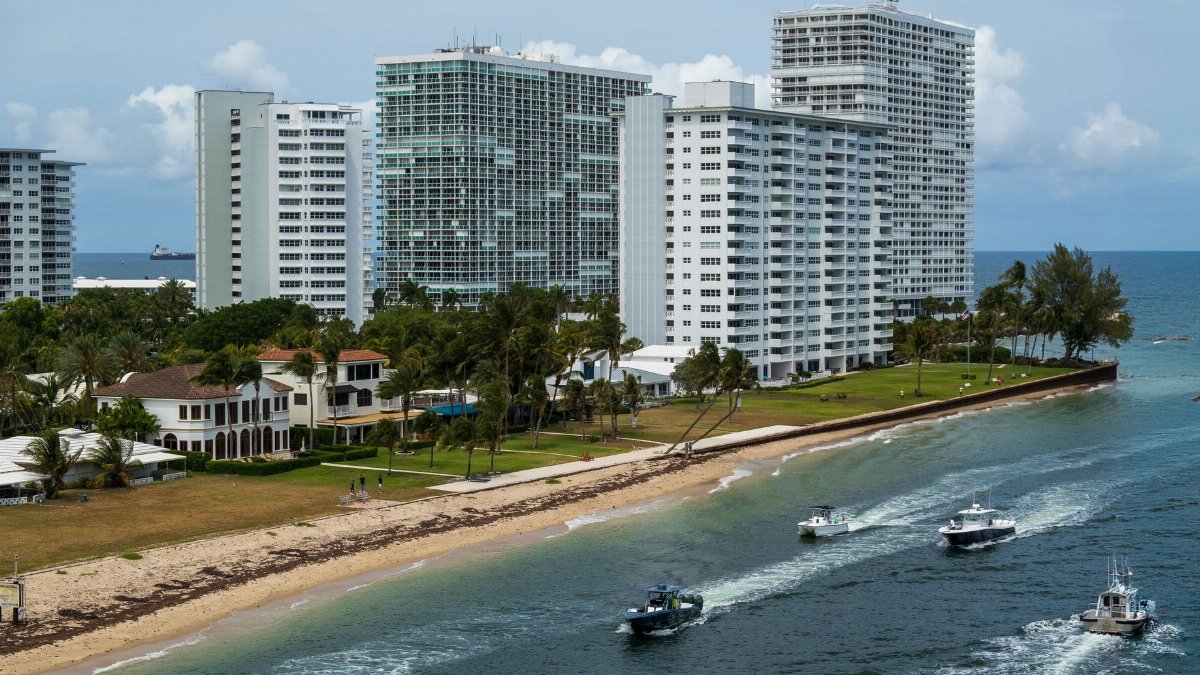
Messi joined Inter Miami and, with that move, pulled a different kind of attention toward Broward County and the beaches north of Miami. Match days fill roads. Training sightings become local folklore. Restaurants learn new names. Real estate brokers field calls from fans who want to be near the story and from residents who want to know whether their street will change. Most of those calls overstate what one family can do to a city. They understate what a sustained presence does to a cul de sac.
Fort Lauderdale already had wealth, yachts, and a service economy built around visitors. What it did not have was a single athlete whose schedule could reorder a Tuesday afternoon. The housing choice in Bay Colony is one answer to that pressure: live close enough to the club’s world, far enough from the open sidewalk, and inside a community that already expects discretion.
How athletes buy without putting a name on the deed
Limited liability companies are routine in American luxury housing. They can limit some personal exposure, simplify ownership among family members, and keep a homeowner’s name off the first line of a casual search. They do not make a purchase secret. County records still list the entity, the price, and the address. Neighbors still notice trucks. Journalists still match entities to known advisers when the pattern is obvious enough to report.
Sadani LLC, in that sense, is less a mystery novel than a standard tool. Readers should be wary of treating the company name as proof of a shell game. It is equally unwise to treat it as irrelevant. The useful question is what the entity bought and where it sits relative to the earlier house, not whether a famous person is allowed to use the same paperwork everyone else with counsel uses.
Water, risk, and the cost of a quiet dock

Waterfront ownership in South Florida is a bargain with weather. Insurance has grown harder to obtain and more expensive to keep. Docks need maintenance. King tides and hurricane season are not abstractions for people who keep cars and boats at grade. A buyer paying $8 million beside a $10.8 million house is also buying into that climate arithmetic. Fame does not negotiate with a storm surge.
Local officials and insurers have spent years warning that the prettiest lots carry the sharpest long term bills. That warning applies to athletes and retirees alike. If the Compass Lane properties are meant as a lasting base, the unglamorous work is elevation, drainage, and coverage, not marble. Coverage of the purchase that ignores those costs flatters the buyer and misleads the reader.
Neighbors and the ethics of looking

A gated community is not a stage, even when a resident is among the most recognizable people on earth. Residents who bought there for quiet have a reasonable interest in traffic, security details, and whether a second house means more staff vehicles or more visitors. They do not have a right to a guided tour. Journalists do not have a right to drone a backyard because a deed is public.
The healthiest version of this story is boring on purpose. Prices and entities belong in the paper. School runs, guests, and the interior of a family house do not. South Florida has learned, sometimes clumsily, how to host stars without turning every canal into a stakeout. Bay Colony will test that habit again if the second lot draws more lenses than the first.
What the market may read into the deal

Luxury brokers like a famous comparable because it gives clients a story. A Messi purchase can lift curiosity on nearby listings, even when it does not lift actual sale prices in a mechanical way. One transaction is not a market. A cluster of them, in a thin inventory of true waterfront houses, can change what sellers ask. Compass Lane is specific. The lesson some owners will take is general: adjacency to a known resident has a price, and that price showed up as $8 million.
Buyers who are not famous should not treat the figure as a new floor for every house in the area. Condition, dock rights, flood history, and lot shape still decide value. The celebrity premium is real in conversation and uneven in closings. Anyone shopping the corridor would do better to read recent non celebrity sales than to anchor on a single athlete’s second key.
A longer stay than a transfer window

Soccer careers move. Houses, once bought in pairs, are slower. The decision to add a Compass Lane property beside the earlier one looks like a bet on years, not months. Inter Miami’s project, the family’s adjustment to American schools and roads, and the simple pleasure of a dock at the end of a hard week all sit in that bet. None of them requires the public to mythologize a deed.
Still, the Messi Bay Colony home has become part of how South Florida tells its own sports story: not only a jersey and a stadium, but a street where the world’s best player chose to add land. That choice is ordinary in form and extraordinary in scale. Two waterfront houses, $8 million and $10.8 million, a company name on the paperwork, and a neighborhood asked to absorb the attention without losing its shape.
What readers should hold onto

Hold the facts that documents support. Sadani LLC paid $8 million for a Compass Lane property next to an earlier house tied to Messi at $10.8 million. The setting is Bay Colony in Fort Lauderdale, waterfront and private by design. The rest is inference: privacy, family space, a wish to stay, the ordinary machinery of luxury buying.
Hold also the limits. A filing is not a floor plan. A neighbor is not a character in a fan narrative. The Messi Bay Colony home will matter to the market as a comparable and to the block as a daily reality. It will matter to everyone else mainly as proof that a celebrated career, at this stage, is being built on a particular canal rather than out of a suitcase. That is a real estate story first, and a sports story only because of who signed the life that the paperwork now has to house.