
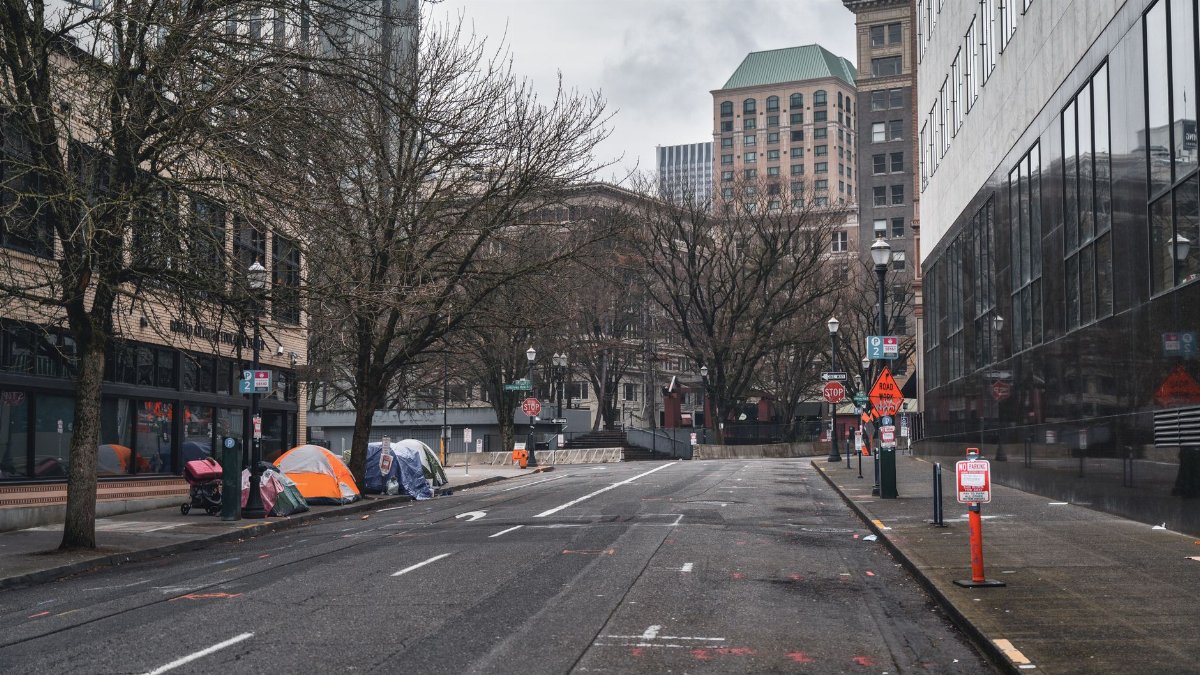
On a week when Los Angeles was still arguing over tents, shelter beds, and who gets to say a person has been housed, a quieter fight moved into the open. The phrase LA homelessness LAHSA city county dispute now describes more than a budget quarrel. It describes a struggle over the machinery that counts people, moves federal grants, and decides which government sits at the center of a crisis that has shaped the region for years. City leaders and county supervisors are no longer pretending a joint authority can absorb every political demand without a crack.
A partnership built for a smaller crisis

The Los Angeles Homeless Services Authority was created so the city and the county would not run two competing systems for the same streets. The idea was practical. One agency would contract with nonprofits, speak to Washington, and keep a shared picture of who needed help. For a time that bargain held, even as encampments grew and voters lost patience. The crisis outran the design. What began as a coordinating body became the place where blame collected, and blame is a poor management tool.
City Hall answers to neighborhoods that see tents on the same corner for months. The county answers for health care, mental health treatment, and a geography that stretches far beyond the city limits. Those are different clocks. They do not tick at the same speed, and they do not reward the same victories.
What the Continuum of Care actually decides

Behind the acronyms sits a federal structure with real power. A Continuum of Care is the local body that plans for homelessness and competes for certain grants from the Department of Housing and Urban Development. It is not a press office. It influences who is counted, how projects are ranked, and which institutions look legitimate when money is awarded. In Los Angeles that role has long been tied to the joint agency. Shifting pieces of it is not a clerical edit. It is a change in who gets to define the problem.
Readers who have never sat through one of these meetings can still grasp the stakes. If the body that speaks to Washington changes hands, the story told to Washington changes with it. Data definitions, project scores, and political alliances travel together.
A vote that moved the count and the grants
According to the public account of the latest clash, the Continuum of Care voted to shift the street count and related grant functions toward the county, while leaving other core systems unresolved. That is the heart of the LA homelessness LAHSA city county dispute. The annual count is more than a number for a headline. It shapes funding formulas, news coverage, and the sense of whether policy is working. Grants attached to that planning process pay for housing programs that nonprofits cannot invent on their own.
County officials can argue, with some force, that homelessness does not stop at the city line and that a regional government should hold the regional count. City officials can answer that Los Angeles carries a disproportionate share of unsheltered homelessness and cannot outsource the narrative of its own streets. Both claims can be true. A vote does not dissolve the tension. It relocates it.
The database that nobody wants to surrender

The piece that remains contested is less photogenic and more powerful: the shared database and the matching system that links people to beds and services. In the jargon of the field this is the homeless management information system and coordinated entry. In plain language it is the list, the history, and the rules for who is offered what. Whoever stewards that system sees the flow of names, disabilities, shelter stays, and housing placements. Whoever writes the matching rules decides which scarcities are treated as urgent.
A county run count with a city influenced database would be an awkward machine. So would the reverse. Providers already complain that they enter the same facts into too many portals. Splitting authority without splitting confusion would punish the agencies that actually meet people at 2 a.m.
Matching is policy, not software

It is tempting to treat a matching system as a technical upgrade, something engineers can finish once the politicians leave the room. That temptation is wrong. Prioritization is a moral and political choice dressed up as a workflow. Should a person who has been outside for years outrank a person leaving a hospital? Should families move ahead of single adults? Should a bed in the San Fernando Valley be offered to someone whose caseworker sits downtown? Those questions are not settled by better code. They are settled by who controls the code and who can be blamed when the offer never comes.
I have watched similar arguments in other public systems, and the pattern is familiar. The side that loses the vote on the visible function fights hardest for the invisible one. Here the invisible function may matter more.
Why the city wants a hand on the wheel

Los Angeles elected officials live with a daily referendum that supervisors in farther districts do not feel in the same way. Constituents send photos of sidewalks. Business groups send letters. Courts and settlement agreements add their own deadlines. In that climate, leaving the LA homelessness LAHSA city county dispute entirely to a joint body can look like an abdication. City leaders want metrics they can defend at a microphone and contracts they can accelerate when a corridor becomes a crisis.
There is a risk in that desire. A city that captures the narrative may also capture the blame for county functions it does not fund or staff. Mental health care, substance use treatment, and much of the safety net sit outside City Hall. A tighter grip on branding does not create clinicians.
Why the county sees a regional mandate
The county’s case is geographic and fiscal. Unsheltered homelessness in Los Angeles County is not a single downtown story. It appears in riverbeds, parking lots, and suburbs that do not vote in city elections. Federal grants and state homeless dollars often expect a countywide plan. Supervisors can say, fairly, that fragmenting the count would produce a patchwork no researcher could trust and no grantor would reward.
The county also carries the health system that homelessness constantly touches. Emergency rooms, psychiatric holds, and public hospitals see the same people the outreach teams see, often on worse nights. From that vantage, a city only command structure looks incomplete. The LA homelessness LAHSA city county dispute is, in this telling, a fight to keep the map as large as the need.
Nonprofits in the middle
The organizations that hold the contracts have the least interest in a symbolic win and the most interest in a clear boss. They hire outreach workers, lease buildings, and explain to landlords why a voucher is late. When city and county instructions diverge, those groups absorb the contradiction. Staff turnover is already high. A governance fight that rewrites reporting rules in the middle of a grant year can push experienced people out the door.
Philanthropy will not paper over that gap. Foundations can fund pilots. They cannot replace a coherent public system. If the count moves one way and the database stays contested, nonprofits will spend scarce hours reconciling spreadsheets instead of finding apartments. That is not a side effect. It is the predictable result of split command.
People who do not attend the hearings

None of this is abstract to the person waiting on a sidewalk for a bed that a computer may or may not offer. Governance stories bore the public until the failure shows up as a closed shelter, a missed voucher, or a count that suddenly drops or spikes for reasons no one can explain. Trust, once lost at that level, does not return because a committee passed a motion.
There is also a quieter harm. When governments fight over custody of the list, people on the list become inventory. The ethical duty runs the other way. Data exist to serve them, not to arm a press conference. Any settlement of the LA homelessness LAHSA city county dispute that forgets that order will look successful only in the hearing room.
Money, metrics, and mutual suspicion

Homeless spending in Los Angeles has been large enough to invite audits, lawsuits, and campaign ads. Some of that scrutiny was earned. Weak contract oversight and fuzzy outcome measures gave critics a permanent script. The danger now is that oversight becomes a pretext for capture. Each side can claim the other cannot be trusted with dollars, then use that claim to pull functions inward.
Metrics will not save the argument by themselves. A street count can be rigorous and still be politically useful. A housing placement number can be accurate and still hide how long people waited, how often they returned outside, and whether the unit was habitable. The public deserves numbers. It also deserves a narrator who does not own the number exclusively.
What a divided system would feel like

Imagine a winter in which the county runs the count and the grant competition, while the city and the joint agency still argue over the database and the matching rules. Outreach teams would ask which login is official. A person assessed on Monday might not match to a bed on Thursday because the rule set changed, or because two rule sets both claim to be current. Landlords, already wary, would hear another reason to wait. Reporters would publish two explanations for one encampment.
That scenario is not inevitable. It is the path of least cooperation. The alternative is dull and therefore unpopular: a written division of labor, shared access to data with privacy limits, and a public timetable for any transfer. Dull arrangements are how large governments avoid harming people by accident.
The politics of blame season

Elections make this harder. Homelessness is a top concern for voters, and no incumbent wants to be the official who gave away the microphone. Primary campaigns reward sharp contrasts. They punish joint statements. The LA homelessness LAHSA city county dispute offers each side a stage: the city as the impatient reformer, the county as the steward of the wider map, the joint agency as either a scapegoat or a last piece of common ground.
Voters can ask a better question than which logo should sit on the report. They can ask whether a person who asks for help on Tuesday will meet one system or three. They can ask who is accountable when the answer is none.
A narrow path that still exists

There is room for a settlement that does not pretend the governments are the same. The county can hold the regional count and the grant process if the vote in that direction stands, and if city data are fully included rather than treated as a courtesy. The database and matching system can remain shared, with an independent steward, published rules, and an appeals path when a match fails. Contracts can state, in ordinary language, which office answers which complaint.
None of that requires romance about unity. It requires officials to prefer a working system to a victorious press release. Los Angeles has tried the opposite often enough to know the cost.
What to watch before the next winter count

The next months will show whether the vote was a transfer or a prelude to a breakup. Watch whether the county publishes a count method that cities can audit. Watch whether access to the database is guaranteed in writing, not in a handshake. Watch whether matching rules are posted where providers and unhoused people can actually read them. Watch whether grant rankings change in ways that track need rather than jurisdiction.
Also watch the silence. If meetings multiply and the public explanations shrink, the fight has moved into staff offices where it is harder to see and easier to get wrong. The LA homelessness LAHSA city county dispute will not be resolved by another acronym. It will be resolved, if it is resolved, when a person seeking a bed encounters one set of rules and one accountable office. Until then the governments remain at odds, and the street keeps the minutes.