
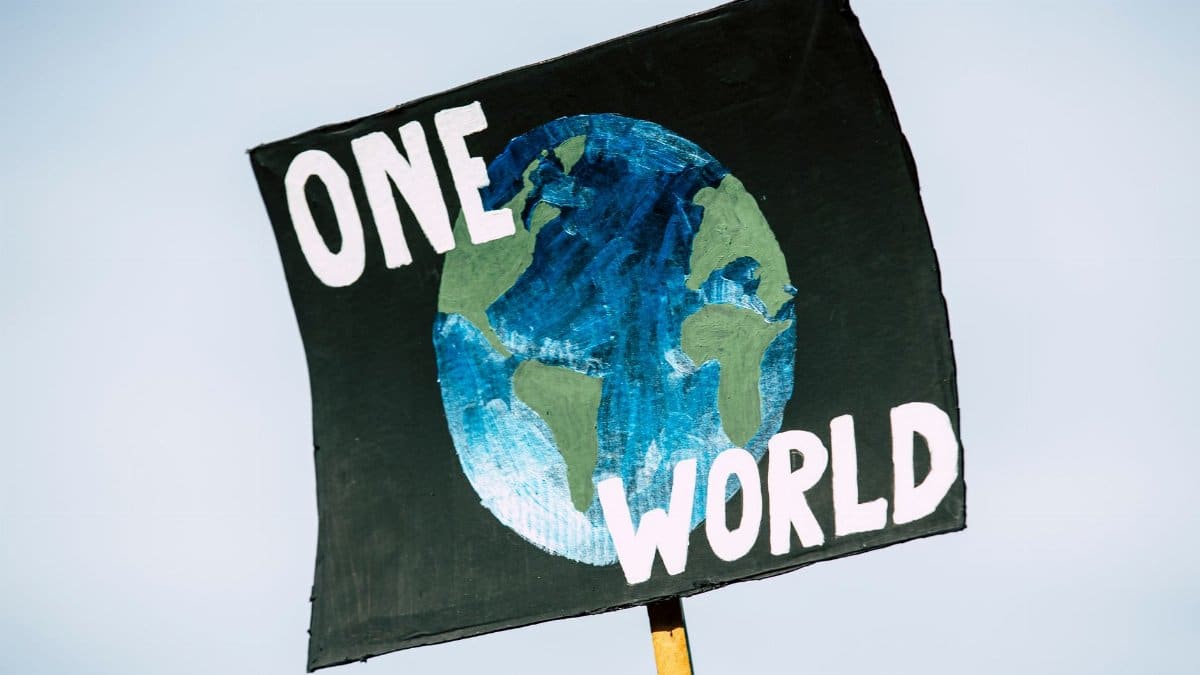
On a humid morning in Bangkok, a modest column of marchers moved past office towers, bus stops, and food stalls, carrying handmade signs that asked a question the closed meetings nearby were not built to answer in public. The IMF World Bank protests drew dozens rather than thousands, yet the slogans reached for large subjects: poverty that outlasts a news cycle, public debt that narrows a government’s choices, and inequality that shows up in wages, rents, and the quiet arithmetic of who gets heard. Traffic barely slowed. Photographers still found a story in the gap between the size of the crowd and the size of the claim.
A city accustomed to careful dissent
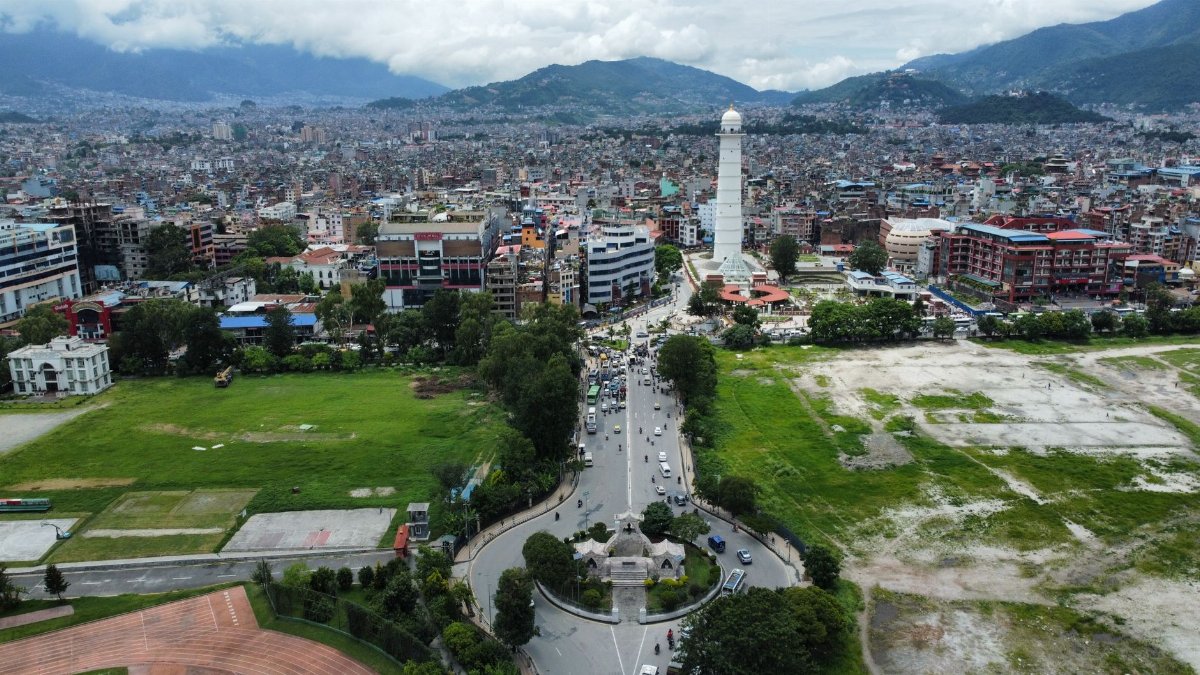
Bangkok has hosted grand conferences and smaller acts of dissent for decades. Demonstrators know the choreography of permits, police lines, and short routes that keep a march visible without shutting down a commercial district. That familiarity can make a small protest look routine. It should not make the message routine. People who join such marches are often students, union members, community organizers, and retirees who have watched economic promises travel faster than economic relief. They are not a single party, and they do not speak with one program. What they share is a suspicion that global financial gatherings can feel sealed off from the households those gatherings claim to serve.
A modest turnout is easy to dismiss. It is harder to dismiss the persistence of the complaint. When meetings of powerful lenders and finance ministers return to a capital, some residents treat the calendar itself as an invitation to speak. The street becomes a footnote to the official agenda, and sometimes the only footnote written in plain language.
What the signs actually said
The placards in Bangkok did not require a specialist’s vocabulary. They named hunger, job insecurity, expensive credit, and the fear that public services shrink while debt service remains sacred. Some marchers linked those worries to lending conditions that, in their view, push governments toward spending cuts at the worst moment. Others focused less on any single loan and more on a broader pattern: growth statistics that look healthy while wages lag, and recovery stories that never quite arrive in informal neighborhoods.
That mix matters. A protest can be both specific and symbolic. A chant about debt is also a chant about dignity, because debt decides which clinics stay open, which schools wait another year for repairs, and which young workers leave home. Inequality, in this telling, is not an abstract curve. It is a queue, a fare, a medicine bill, a parent calculating whether a child can stay in class.
Inside the meetings, a different tempo

Official gatherings of the International Monetary Fund and the World Bank move at another speed. Delegates discuss fiscal paths, climate finance, financial stability, and the technical design of support for countries under strain. Communiques favor measured verbs. Progress is partial. Risks are balanced. Cooperation is urged. None of that language is empty. These institutions employ economists who spend careers on poverty measurement, debt sustainability, and the design of safety nets. Their defenders argue that without a common table, crises would be managed even more clumsily, and that public criticism often ignores the constraints facing both lenders and borrowers.
The clash is partly a clash of genres. A march compresses an argument into a sentence. A ministerial session stretches an argument across annexes. Readers trying to understand both can hold two ideas at once: technical cooperation can be useful, and a useful institution can still deserve public pressure when its choices land hardest on people with the least room to absorb them.
Debt as the quiet protagonist

Debt is the subject that keeps returning, even when the banners change. Governments borrow to build, to stabilize, and sometimes simply to roll over older obligations. When interest costs rise, the budget argument shifts from what a country hopes to do toward what it must pay first. Protesters hear that shift as a moral ranking. Creditors, in this view, stand nearer the front of the line than patients or pupils. Officials reply that unmanaged default can be worse for the poor than a painful adjustment, because collapsed confidence raises prices and freezes investment.
Both claims can be true in different countries and different years. The argument on the sidewalk is less about denying arithmetic than about who helps write it. Civil society groups have long asked for more transparent restructuring, fairer burden sharing among creditors, and social spending floors that survive a crisis. Those demands are not new, which is precisely why they reappear whenever finance ministers gather. The IMF publishes extensive material on debt, and the World Bank publishes extensive material on poverty. The existence of that data does not settle the political fight over how the numbers should govern a budget.
Why a small crowd can still travel
Crowd size is a tempting scoreboard and a poor one. A few dozen people in Bangkok will not rewrite a lending framework. They can, however, force a sentence into the public record that the official schedule left out. Local reporters notice. Foreign correspondents notice. Delegates who never see the signs still meet the story later, in a briefing or a headline. In that sense the IMF World Bank protests function as a translation service. They turn dense disputes over conditionality, austerity, and distribution into images a nonspecialist can recognize.
There is a risk in that translation. A slogan can flatten a complicated loan, blame one institution for a crisis with many authors, or ignore domestic corruption that no external lender created. Honest coverage should say so. Honest coverage should also refuse the opposite flattening, the idea that a small march is mere theater and therefore meaningless. Political attention is scarce. People spend a morning in the heat because they believe someone inside a hotel ballroom might otherwise forget them.
Inequality after the recovery headlines
The Bangkok marchers spoke in the aftermath of years in which global headlines swung from emergency to rebound. Rebound is not the same as repair. Asset prices can recover while informal workers do not. A capital city can gleam while provincial clinics wait. Inequality is stubborn because it is reproduced by education, health, land, tax design, and the simple fact that shocks hit thin savings first. Protesters tend to describe that pattern in moral terms. Economists tend to describe it in distributional terms. The descriptions point at the same wound.
Middle aged readers who remember earlier battles over globalization may hear an echo. The street critique of the late nineteen nineties accused these institutions of privileging capital mobility over social protection. Some of that critique changed institutional language. Poverty reduction and social spending became more visible in official rhetoric. Critics answer that rhetoric moved faster than outcomes, and that new challenges, from climate damage to costly food, have reopened old injuries. The echo is not proof that nothing changed. It is evidence that the underlying dispute never left.
A moral argument wearing economic clothes
It is tempting to file this story only under economics. The category that keeps pulling at it is older. When people say a debt burden is unjust, they are making a claim about obligation, sacrifice, and neighborliness. When they say a growth number hides the poor, they are asking which lives count as the real product of a policy. That is not a call to replace analysis with sermon. It is a reminder that budgets are moral documents whether or not their authors admit it.
Faith communities and secular organizers have often stood near these marches for that reason. They bring a language of solidarity that balance sheets do not supply. They also bring a duty of accuracy. A spiritual instinct toward the vulnerable does not license a false statistic or a cartoon of officials as villains. The better tradition, religious or civic, asks the powerful to give an account and asks the critic to stay precise. In Bangkok, the signs were plain enough to meet that test without pretending to be a full economic model.
What officials can answer without a slogan
Institutions under protest usually respond in three ways. They point to programs that cushion the poor. They note that member governments, not a distant bureaucracy alone, set the mandate. They warn that abrupt rupture would harm the very people named on the signs. Those answers deserve a hearing. Mandates are real. Programs exist. Disorder is not a development strategy.
A fuller answer would also name tradeoffs in public. If a country must choose between faster debt reduction and slower cuts to health spending, citizens should see the choice rather than meet it later as a fait accompli. If climate finance is promised, delivery dates and grant versus loan distinctions should be legible. If inequality is treated as a side effect, someone should explain why it is acceptable. Protesters rarely get that briefing on the pavement. They still perform a service by making the omission visible.
Memory of larger streets
Anyone covering the IMF World Bank protests in a relatively quiet year should remember louder ones. Seattle, Prague, and other cities once saw mass confrontations that defined a generation’s picture of global finance. Those images can distort the present. Not every meeting produces a riot, and not every critic wants one. The Bangkok gathering, by all early descriptions, stayed small and orderly. That modesty is part of the news, not a disappointment for the sake of drama.
Large and small protests share a genealogy. Both insist that cross border economic governance is a public matter, not a private conversation among credentialed guests. Both struggle with the gap between a street demand and a negotiable text. The quieter version may even travel farther into mainstream conversation, because it is harder to dismiss as chaos. A reader can disagree with every chant and still grant the premise that meetings with global consequences owe the public a clearer account.
How to read the next communique
When the meetings end, the useful habit is to read the communique beside the protest, not instead of it. Look for whether debt treatments are described with timelines. Look for whether social spending is protected in practice or only praised in principle. Look for whether inequality appears as a central risk or as a decorative adjective. Then look at what national governments do after the delegates fly home, because that is where slogans meet appropriations.
Readers far from Bangkok have a stake in that reading. Supply chains, migration, food prices, and financial contagion do not stop at a conference badge. A modest march will not set those forces in motion or bring them to rest. It can still mark the place where official optimism met public doubt. The IMF World Bank protests in the Thai capital did that work with limited numbers and unlimited subject matter. The inequality they named will not be settled by a headline, a chant, or a closing statement. It will be settled, if it is settled at all, by choices that show up later in households that never entered the meeting rooms.
The measure that outlasts the march

By afternoon the route is clear again. Vendors return to their usual trade. Delegates return to sessions where the vocabulary is calm and the stakes are not. The photographs will show a small crowd, and the photographs will be accurate. Accuracy also requires the sentence the photographs cannot hold: modest protest is not modest concern. Poverty and debt do not become smaller because the column of marchers was short.
That is the lasting news from the IMF World Bank protests in Bangkok. A handful of citizens insisted that growth without fairness is an incomplete success, and that global institutions remain answerable to people who will never hold a delegate pass. The meetings will produce their papers. The street produced a reminder. Between those two records, the public still has to decide which promises are real.