
In a city that has spent a century arguing with itself about who belongs, a quieter fact has settled into the census tables. The SF Wasian population, people who identify as both Asian and white, now approaches 4 percent of residents, roughly triple the national rate. That figure is easy to miss beside louder fights over housing and tech wealth. It is harder to miss on a Sunday morning in the Richmond, or in a Sunset kitchen where dumplings and scrambled eggs share the same pan. San Francisco did not invent mixed families. It did make them ordinary enough that a generation grew up treating two inheritances as a single address.
A number that rewrites the usual story
Nearly 4 percent is not a majority, and it is not a novelty either. In a city of fewer than 900,000 people, that share is tens of thousands of residents who check more than one box and then go on with school, work, rent, and family obligation. Nationally, people who are both Asian and white remain a small slice of the whole. Here the slice is thick enough to shape classrooms, restaurant lines, and the private language of dating apps.
Demographers have a dry explanation. San Francisco has long held one of the largest Asian populations of any major American city, and it has also held a large white population with high rates of college education and late marriage. Where those groups share neighborhoods, universities, and offices, partnerships follow. The 2020 census made multiple race answers easier to see, but the families themselves are older than the form. Grandparents who arrived after 1965, or who never left Chinatown, now count grandchildren who carry two surnames and one area code.
The Census Bureau publishes the national frame for this kind of counting at census.gov. Local life fills in what a table cannot: the child who is asked to choose a side at a family reunion, the adult who refuses the choice, the clerk who still wants a single box.
Why this city, and not only this city
Los Angeles, Honolulu, and parts of the New York region also hold large mixed Asian and white communities. San Francisco still occupies a particular place in the national imagination, and in the practical map of who meets whom. The city is small. Transit and hills compress distance. A software office in SoMa, a medical campus in the Inner Sunset, and a public high school in the avenues can put people in the same week who might never share a zip code in a sprawling metro.
History matters as much as geography. Chinese exclusion, Japanese incarceration, and later refugee arrivals did not produce a simple tale of harmony. They produced institutions: family associations, churches, language schools, legal aid groups, and newspapers that taught later generations how to stay. White residents were never a single bloc either. Some were dockworkers. Some were academics. Some arrived with the gold rush myth still in their pockets. Intermarriage happened in the gaps between exclusion laws and in the decades after those laws fell. The children of those marriages are not a brand. They are a continuity.
The word itself, and the arguments around it

Wasian is a clipped coinage, Asian and white pressed into one syllable. Some people wear it lightly, the way a nickname sticks in a group chat. Others hear a joke that flattens a parent, a language, or a history of being treated as foreign. The term circulates most easily among younger adults who grew up online, where identity is both a badge and a punch line. In formal settings it rarely appears. On a census form it does not appear at all. People mark Asian and white, or they mark one and leave the other for a conversation that may never happen.
Journalists reach for the word because readers recognize it. Families often prefer a longer sentence: Chinese and Irish, Korean and Jewish, Filipino and German, Indian and Italian, Vietnamese and Mexican and white in a combination the shorthand cannot hold. The SF Wasian population is therefore both a statistical category and an argument about language. Counting people together reveals a pattern. Naming them with a blend can hide the specific kitchens they came from.
Tables, languages, and the ordinary week

Identity shows up less in slogans than in logistics. Whose holidays set the calendar. Which grandparents expect a visit on Lunar New Year, and which expect one on Christmas, and what happens when those days collide with a work shift. A child may understand Cantonese commands and answer in English. Another may attend a Saturday language class and quit at twelve, then regret the quit at thirty. White relatives sometimes treat Asian food as an adventure. Asian relatives sometimes treat a white in law as a guest who has overstayed the tour.
None of this is unique to San Francisco. What is distinct is the density. In many American towns a mixed child is the only one in the classroom and becomes a mascot or a target. Here the experience is common enough that teachers stop treating it as a special unit. That ordinariness can be a relief. It can also delay a harder talk about color, class, and who gets read as American on a sidewalk at night.
Schools as a second census
Public and private schools function as an unofficial recount of the city. In the avenues, student bodies have long reflected Chinese, Russian, Irish, and newer Asian migration side by side. In wealthier private schools, Asian and white families meet through admissions tours as often as through parish life. Children compare lunches. Parents compare test prep. The mixed child sits in the middle of those comparisons, sometimes praised as proof that the school is open, sometimes asked to represent a culture the child only half knows.
Educators who pay attention describe a quieter pattern. Students who are both Asian and white often report being treated as Asian when the topic is academics and as racially ambiguous when the topic is belonging. They learn early that other people will assign them a side based on a surname, a photograph, or a grade. The assignment rarely matches the home. A good school names that mismatch. A careless one turns it into a joke.
Money, rent, and the uneven welcome
Any honest account of San Francisco has to pass through housing. The same city that made mixed families visible also priced many of them toward the exits. Teachers, nurses, cooks, and city workers who anchored neighborhoods in the 1990s now commute from Daly City, Oakland, or farther. Tech wealth did not create intermarriage, but it changed who can stay long enough to raise children here. A couple with two professional salaries may remain. A couple with one salary and a parent who needs care may not.
Class cuts through the racial blend. Some families in the SF Wasian population hold property bought before the last boom and speak of the city as an heirloom. Others rent a room and speak of it as a lease that can end. Both may mark the same two races on a form. Their Tuesdays do not match. To treat the group as a single lifestyle is to confuse a census answer with a bank account.
Faith, ancestors, and the search for a rite
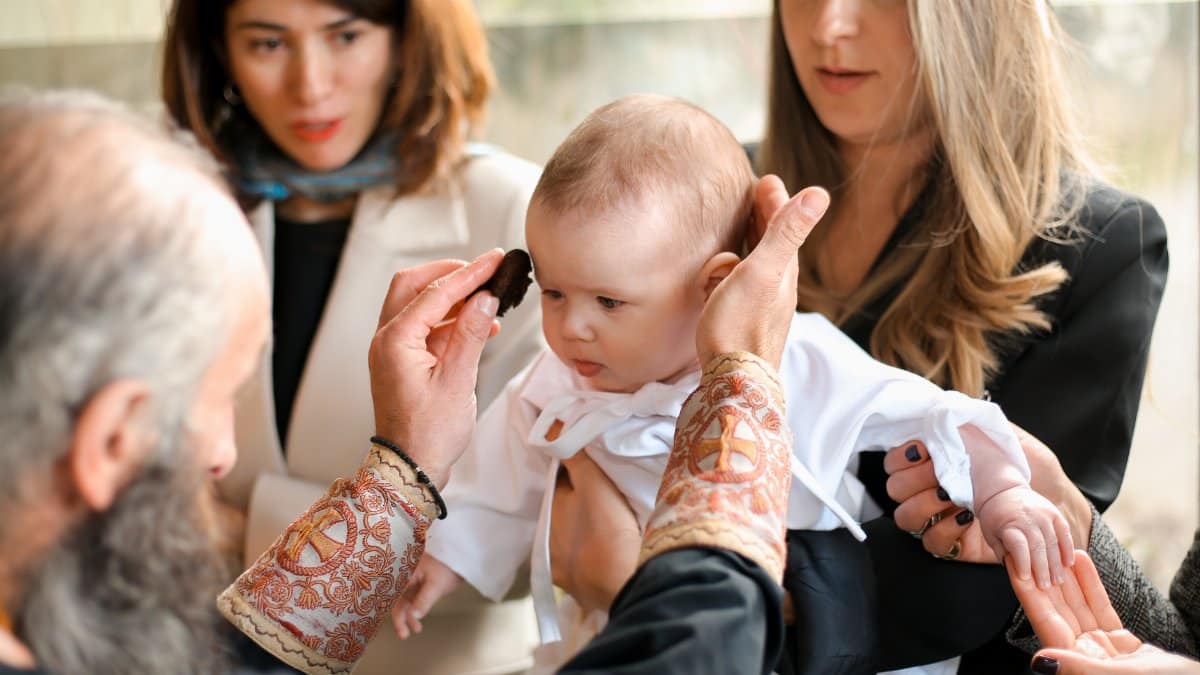
Spiritual life in these families rarely follows a single aisle. A child may be baptized, then bow at a grave in Colma with incense and oranges. A wedding may include a tea ceremony and a reading from a book the other family brought from a Midwestern church. Some adults drift from both traditions and feel the drift as loss. Others build a practice that would puzzle either set of grandparents and call it honesty.
Temples in Chinatown and churches in the Richmond still hold people who married across lines decades ago. Their children sometimes return not for doctrine but for a room that already knows their name. In a category filed under spiritual trends, the trend is less a new belief than an old need: a place to put grief, gratitude, and the dead. Mixed families do not escape that need. They often have twice the funerals to plan and half the shared script for how to stand.
The risk is sentiment. Not every household finds a graceful blend. Some parents refuse the partner. Some congregations still sort people by appearance at the door. The families who remain do so by negotiation, not by poster. That negotiation is the spiritual work, if the word spiritual means anything more than a mood.
How the rest of the country reads the city
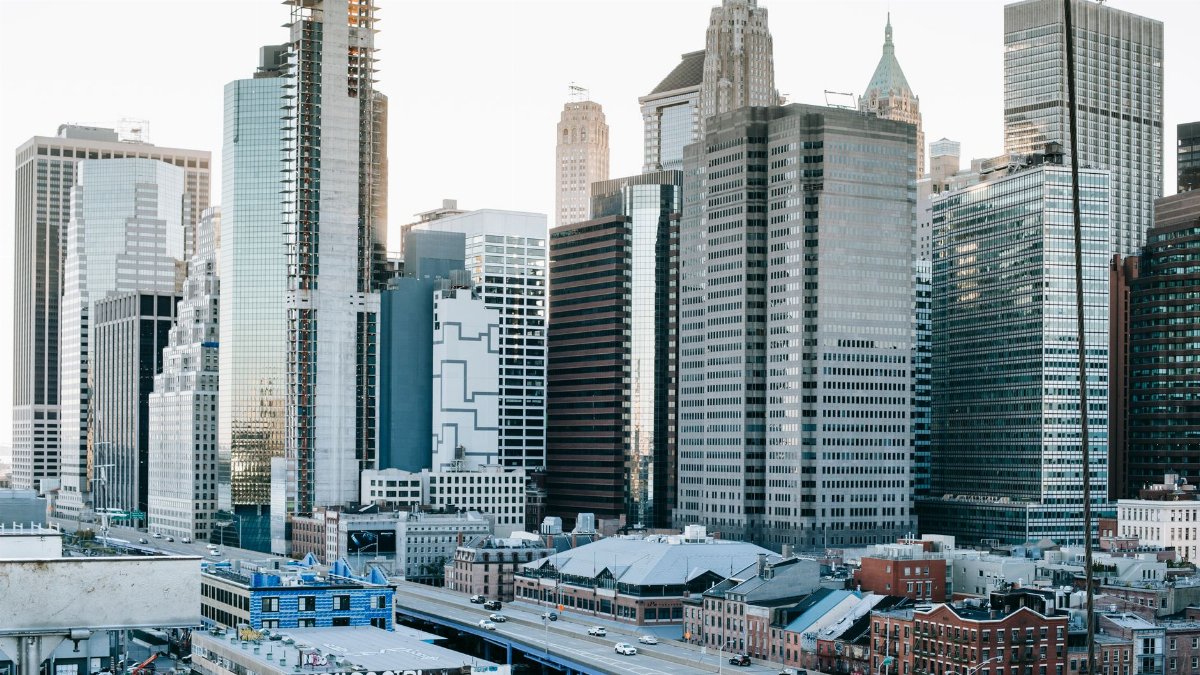
Outsiders like to treat San Francisco as a preview. Sometimes the preview is wishful. A high local rate of Asian and white identification does not mean the nation has solved race, housing, or the old habit of asking strangers to explain their faces. It means one expensive, highly educated, historically Asian city has produced more of these families than the average county. Exporting the vibe without the history produces bad policy and worse journalism.
Still, the local pattern is worth watching because the national multiracial population is growing, and Asian and white remains one of the larger combinations. What people here have already practiced, the double holiday, the split surname, the argument over the nickname, will arrive in smaller towns with less of a crowd to normalize it. Those towns will not become San Francisco. They may still need language better than a slur, a mascot, or a silence.
What the count leaves out
Every clean percentage hides a mess the form cannot love. People change answers between decades. A respondent may mark two races at twenty and one race at forty, after a year of being treated as only one. Immigrants may not trust the question. Parents may fill the form for children who would have answered differently. Some residents are Asian and Latino, or Asian and Black, or Asian and Native, and a story about the SF Wasian population should not crowd them off the page. Their numbers are part of the same multiracial rise, and their treatment in public is often harsher.
There is also the matter of who never appears. Couples who left for cheaper rent. Children raised by one parent after a split. People who pass, or who are passed over, and decline the label entirely. A capital of anything is a claim made by writers. Residents live in apartments, not in capitals.
A generation that refuses the single box

Walk the commercial strips and the claim becomes ordinary again. A bookstore reading draws a crowd that does not sort neatly by face. A youth sports team shares snacks that would have required a special trip a generation ago. None of this cancels harassment on a bus or a slur in a comment thread. It does change the baseline for people under thirty five. They are less likely to be the only mixed person in the room, and more likely to be impatient with adults who still find their existence remarkable.
Impatience is not the same as indifference. Many of these adults spend real time on what to pass down: a recipe, a festival, a church, a refusal to laugh at the old joke. They argue with siblings about whether the clipped name is affectionate or lazy. They argue with partners about schools. The arguments are the culture. They are how a statistic becomes a household.
Staying, leaving, and what remains
The open question is whether San Francisco will keep the people it counts. If only the affluent remain, the SF Wasian population will look more like a professional class and less like the city that produced it. If families keep leaving, the blend will show up in Concord, in Sacramento, in the Central Valley, and the origin story will thin. Cities do not own their children. They only host them while the rent and the work allow.
What should remain, wherever the address lands, is a clearer habit of description. Say the countries, the languages, and the class position. Say Asian and white when that is the honest pair, and say more when the pair is not enough. Resist the poster. The nearly 4 percent is a fact about forms and a hint about kitchens. It is not a moral victory. It is evidence that, in one hard city, two lineages learned to share a lease often enough to show up in the tables, and that their children are now old enough to decide what the tables failed to ask.