

In the flat light of the Everglades, a detention site acquired a nickname that sounded like a dare until the invoices arrived. Alligator Alcatraz ICE spending is now a phrase auditors use for federal money that moved toward that remote compound without the contract federal rules ordinarily require. For readers far from the sawgrass, the story is less about reptiles than about whether emergency politics can outrun the ordinary discipline of public finance. The Government Accountability Office, according to reporting in the Miami Herald, found that Immigration and Customs Enforcement put taxpayer funds into the project without a proper agreement in place. That finding lands in a season when detention capacity, state ambition, and federal budgets are already colliding in public view.
A nickname that became a budget line

Alligator Alcatraz began as a Florida idea with a marketing instinct. Officials wanted a detention site deep in the southern wetlands, framed as a tough answer to unauthorized migration and as a symbol that the state would not wait on Washington. The name did the political work. It evoked isolation, punishment, and a landscape that does not forgive mistakes. It also made a complex procurement question sound like a slogan. Once a project has a nickname, the paperwork can look like a nuisance rather than the point. Auditors are paid to ignore the slogan. They ask who authorized the money, under what instrument, and whether the agency followed its own rules before the checks went out.
What the auditors say they found

The Miami Herald account of the review is blunt. GAO reviewers concluded that ICE spending tied to the Everglades site proceeded without a proper contract. In federal practice, a contract is not a courtesy. It is the document that sets price, scope, performance, and the right to stop paying when work fails. Without it, an agency can still move money, especially when political pressure is loud and legal theories are elastic. It cannot easily show Congress, or the public, that the expenditure was bounded. The Herald report is here: https://www.miamiherald.com/news/local/immigration/article317420258.html. Readers should treat that article as the public record of the finding, not as a substitute for the underlying audit language.
Why a missing agreement is not a technicality

People who have never sat through a procurement review often hear “no contract” as a clerical lapse. It is closer to driving without a license and then arguing that the destination was urgent. Federal acquisition rules exist because detention, construction, security, food, medical care, and transportation are exactly the services where vendors can overcharge and agencies can under specify. A contract forces someone to write down what the government is buying. It creates a trail for inspectors general, for GAO, and for journalists who file records requests months later. When that trail is missing, disputes about quality become arguments about memory. Memory is a weak control on a project this contested.
Speed as a governing style

Florida leaders sold the site as proof that delay itself was the problem. In that frame, environmental review, interagency agreements, and contracting competitions look like obstacles erected by people who do not feel the pressure at the border. There is a real tension here. Governments do face surges, and surge response cannot always wait for a perfect bid cycle. Congress has built emergency authorities for that reason. Those authorities still expect documentation. Speed without a written deal does not become lawful because the rhetoric is confident. It becomes a bet that oversight will arrive too late to matter, or that allies will treat the violation as a feature of resolve.
The federal state tangle

Alligator Alcatraz sits in a jurisdictional thicket. The state wanted a facility it could point to. ICE holds the detention mission and the federal purse that usually pays for it. Land in and around the Everglades is already governed by a web of park rules, water management duties, and tribal and local interests. When a state moves first and a federal agency follows with money, the contract is supposed to translate political alignment into legal responsibility. If ICE spent without that translation, taxpayers in Ohio are underwriting a Florida showcase without the ordinary federal terms. That is not a regional quirk. It is a template other governors may try when they want Washington’s cash and their own stage.
What detainees cannot audit
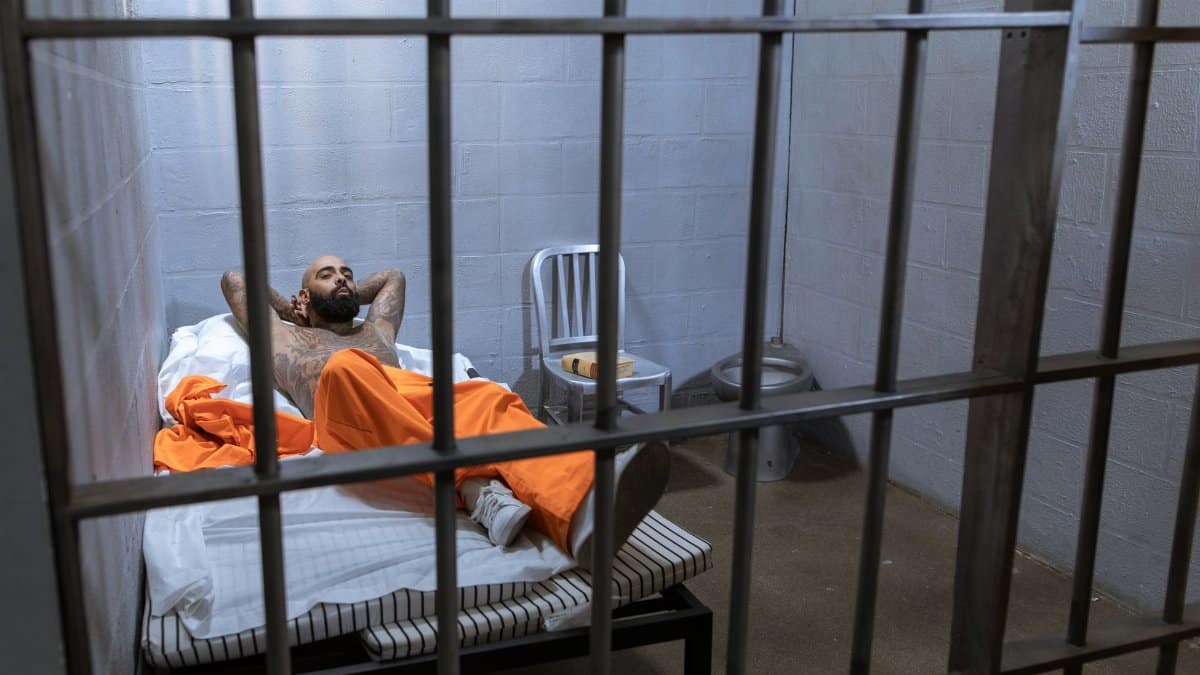
Budget findings can sound bloodless next to the human use of a remote jail. People held for immigration violations do not get to negotiate the contract that pays for their beds, their medical visits, or the officers on the perimeter. Advocates have long argued that isolated sites make counsel harder to reach and make family contact a luxury. A missing agreement does not by itself prove abuse inside the fence. It does weaken the levers that usually connect conditions to payment. If the government cannot point to a scope of work, it is harder to withhold funds when food is late, when medical staffing is thin, or when transports fail. Oversight of liberty and oversight of invoices are not the same job. They fail in similar ways when nobody owns the paper.
The wetlands are not a backdrop

The Everglades is not empty land waiting for a metaphor. It is a slow river of grass, a restoration project measured in decades, and a place where construction leaves a mark that press releases cannot drain. Environmental groups warned that a detention footprint, with roads, lights, waste, and security perimeters, sits badly beside efforts to repair water flow. Those warnings can be overstated, and they can also be ignored because they arrive in a different political dialect from border speeches. A lawful contract would not have settled the ecological argument. It would have forced the agencies to name mitigation, access, and an end date. Absence of that document leaves the landscape exposed to a project whose fiscal basis is already in dispute.
How Alligator Alcatraz ICE spending tests Congress

Congress appropriates. Agencies execute. GAO watches the gap. When auditors say money moved without a proper agreement, the next question is whether appropriators treat that as a one off embarrassment or as a reason to tighten report language. Members who favor stricter immigration enforcement have an interest in clean books, because sloppy execution hands opponents a scandal that has nothing to do with the border itself. Members who oppose expanded detention have an interest in more than a press hit. They can demand the obligation documents, the intergovernmental letters, and a public accounting of what was bought. Hearings that chase only the nickname will waste the finding. Hearings that chase the authority will not.
The politics of looking tough

There is a market for severity in immigration politics, and Alligator Alcatraz was built to trade in it. The name promises that discomfort is the policy. Voters who feel the asylum system is abused hear that promise as honesty. Voters who see detention as a civil process hear it as theater with handcuffs. Either way, theater is expensive. Guards, kitchens, generators, and legal processing do not become cheaper because the branding is harsh. If Alligator Alcatraz ICE spending occurred outside a contract, the toughness was not matched by the managerial virtue politicians also claim. A government can be firm and still keep receipts. The audit suggests firmness arrived first and receipts did not.
Vendors, silence, and the cost of ambiguity

Companies that build fences, staff dorms, or haul supplies prefer a contract even when they like the client. A written deal is how they get paid on time and how they limit liability when a project becomes a lawsuit. Operating in the gray may tempt a vendor who expects political cover, but gray is where invoices get stuck and reputations get scorched. If ICE spent without a proper agreement, vendors and subcontractors now sit inside a story they did not write. Some will say they followed direction from officials with badges and titles. Direction is not the same as authority. The public still does not have, in one plain document, a price, a schedule, and a definition of done.
What a repair would look like

Repair is unglamorous. It means publishing the audit findings in full, identifying every obligation tied to the site, and stating whether any payment must be recovered or ratified under whatever statute actually applies. It means pausing new obligations until a lawful instrument exists. It means separating the policy fight over detention capacity from the bookkeeping fight over this site, so that neither is used to smother the other. Ratification, if lawyers later argue for it, should not be a quiet retroactive blessing. It should come with an explanation a nonspecialist can read. I have covered enough spending scandals to know that the apology usually arrives in the passive voice. The fix should not.
A standard that should not depend on the zip code

Federal money follows federal rules whether the project sits in a city jail, a military base, or a clearing west of Miami. Geography is not a waiver. Neither is a governor’s impatience, nor a president’s enforcement priority, nor the fear that migrants will keep coming while lawyers argue about forms. The forms are how a republic distinguishes a program from a favor. Alligator Alcatraz ICE spending, as auditors described it through the Herald’s reporting, failed that distinction at the start. That does not decide how many beds the country should fund. It decides whether this bed, in this swamp, was bought in a way the rest of us can audit.
Questions the next report should answer

A useful follow on from GAO or from the Department of Homeland Security inspector general would answer a short list without euphemism. Who directed the spending. Which account was charged. What services were delivered. Were detainees held there under a federal agreement or under a state arrangement that federal dollars quietly supported. Did environmental and health authorities sign anything that still binds the operators. Were local governments asked to absorb emergency calls they cannot staff. Those questions are not hostile to enforcement. They are the minimum a serious agency asks of itself before it invites cameras to a ribbon cutting in the wetlands.
The phrase will outlast the news cycle

Nicknames linger. Alligator Alcatraz will remain a shorthand in campaign ads long after the generators are quiet, if they ever are. The quieter phrase, Alligator Alcatraz ICE spending, deserves to linger in a different way. It names a habit: announce the spectacle, move the money, and treat the contract as optional scenery. Middle aged taxpayers who do not follow immigration dockets still recognize that habit from bridges, stadiums, and disaster contracts that somehow never quite close. The Everglades version is simply harder to ignore, because the setting is so stark and the legal status of the people inside is so unsettled. Spectacle is not stewardship. Auditors just said so in the language of missing paper, which is the only language some budgets understand.