

On a mild afternoon in Atlanta, motorcades idled outside a downtown hotel while foreign ministers from the world’s largest economies prepared to leave without the document their hosts had hoped to publish. Staffers carried folders that would not become a joint communique. The meeting, billed as a chance to show that rivalry among major powers need not freeze every channel of cooperation, ended in a familiar impasse. Divisions over Ukraine and a cluster of other global files proved too wide for a single text. What remained was a chairman’s statement and a phrase already moving through briefing rooms: the G20 Atlanta consensus, a name for agreement that never quite formed.
Atlanta becomes an unlikely stage

The Group of 20 began as a forum for finance officials after financial crises shook emerging markets in the late 1990s. Over time it grew into a regular gathering of leaders from rich countries and large developing economies, a place where debt, trade, energy, and, increasingly, war sit on the same agenda. Hosting foreign ministers in Atlanta rather than in Washington placed that machinery in a city better known for commerce, civil rights history, and a busy airport than for summit theater.
That setting mattered. Atlanta is a crossroads for business with Africa, Latin America, and Asia, and it carries a civic memory of negotiation under pressure. Diplomats who spend their lives in capital cities sometimes hear a different register when the backdrop is a southern downtown rather than a palace or a beach resort. None of that scenery, however, can manufacture consent. A host can set the table. A host cannot force every guest to sign the same menu.
According to reporting by the Seattle Times, the ministers were set to close the Atlanta talks without a joint communique, with Secretary of State Marco Rubio expected to issue a chairman’s statement instead. That outcome is procedural on its face and political underneath.
The communique that never left the draft folder
A joint communique is a peculiar object. It is not a treaty, and it rarely changes a battlefield. It is a negotiated paragraph, sometimes many paragraphs, in which governments agree to describe the world in language each can defend at home. Drafters fight over verbs. They argue about whether a war is condemned, deplored, or merely noted. They haggle over whether climate language should be urgent or cautious, and over whether debt relief is a moral duty or a market question.
When those fights cannot be settled, the draft stays a draft. Officials who have sat through such sessions describe the last hours as a search for sentences that offend no one and therefore say little. If even bland sentences fail, the chair has a choice: pretend unity that does not exist, or admit division and speak in a personal capacity as host. Atlanta took the second path.
Readers should not confuse that failure with chaos. Meetings can be orderly, courteous, and still unable to produce a text. The absence of a communique is itself a message, and it is often a more honest one than a document stuffed with caveats.
Ukraine and the limits of shared language
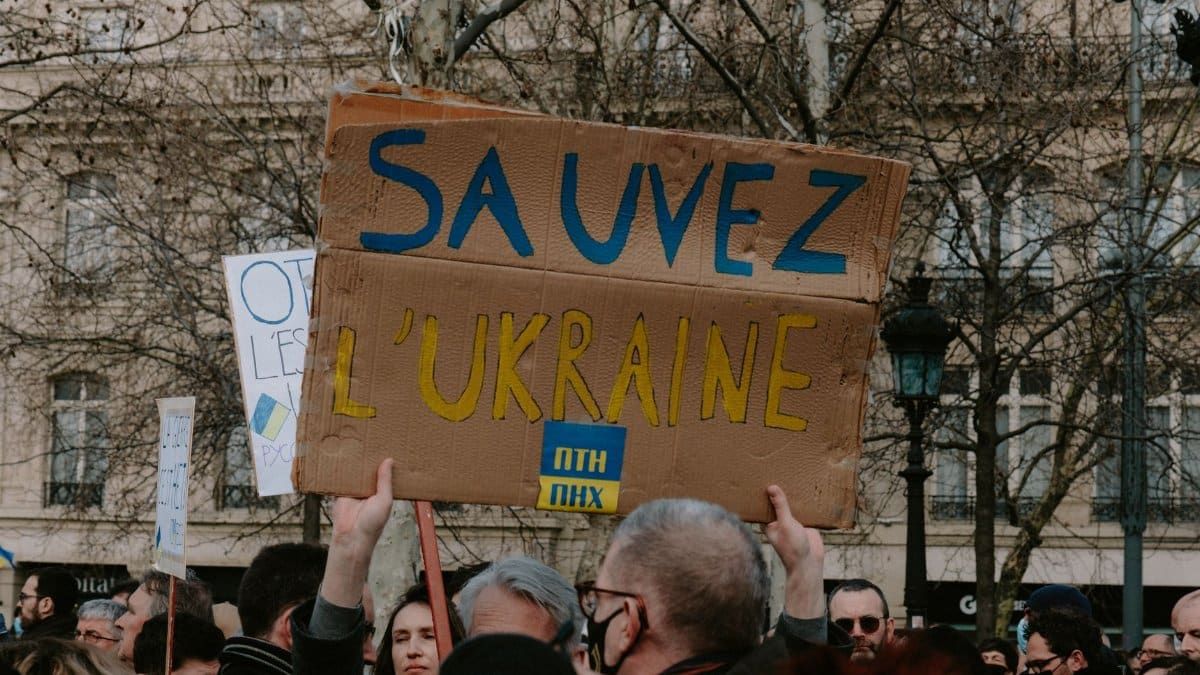
Ukraine remained the clearest fault line. Since Russia’s full scale invasion, Western governments have pressed global forums to name aggression and to uphold the principle that borders are not revised by force. Several large members of the G20 have refused that framing, citing their own ties to Moscow, their suspicion of Western lecturing, or a desire to keep channels open for grain, energy, and diplomacy.
Those positions did not originate in Georgia. They have stalled statements at leader summits and at ministerial meetings on several continents. What Atlanta confirmed is that time alone has not softened the split. Ministers can share a room, exchange notes on humanitarian access, and still decline a paragraph that would be read in Kyiv, Moscow, Brussels, or Beijing as a victory for one side.
The cost of that stalemate is not only symbolic. Families displaced by the war, and governments trying to plan grain shipments and energy prices, look to these gatherings for even a thin layer of common purpose. When the layer is missing, national policies continue, but the claim that the major economies can speak together grows thinner.
A chairman statement in place of a group text

A chairman’s statement is a diplomatic compromise with a long pedigree. The host summarizes what was discussed, records points of convergence, and, if the chair is candid, notes where members disagreed. It carries the authority of the presidency of the meeting, not the authority of every capital. Allies can welcome it. Critics can dismiss it as one country’s view dressed in multilateral clothing.
For the United States, the device has a practical use. It lets Washington describe its priorities, including support for Ukraine and concern about other conflicts, without waiting for holdouts to bless every line. It also limits the embarrassment of a failed draft leaking in fragments. For members who opposed stronger language, the same device is useful in another way: they are not on the record as signatories.
Rubio’s decision to speak as chair rather than as editor of a unanimous text fits that pattern. The statement will be parsed for tone, for what it includes about Ukraine, and for what it says, or does not say, about Gaza, climate finance, and economic coordination. Absence will be read as carefully as presence.
What people mean by the G20 Atlanta consensus
In the hours after such a meeting, shorthand spreads faster than footnotes. The G20 Atlanta consensus is already being used in two opposing ways. Some officials and commentators treat it as a wry label for nonagreement, a reminder that the club can convene and still fail to converge. Others use it to describe a thinner kind of understanding: that the group will keep meeting, keep talking about practical files, and stop pretending that political unity is available on demand.
Both uses contain a truth. Consensus, in this setting, never meant enthusiasm. It meant the absence of a formal objection strong enough to block a text. When objection is structural, rooted in alliances and in domestic politics, no scheduling trick restores the old habit of papering over splits. Naming that fact can be clearer than another round of ambiguous adjectives.
There is a risk in the label, too. If the G20 Atlanta consensus comes to mean that disagreement is the new normal, governments may invest less effort in the narrow areas where wording still matters, such as debt workouts for vulnerable states or rules for food exports during war. Cynicism is an easy lesson. It is not always the useful one.
Debt, climate, and files that also stalled

Ukraine was not the only unresolved file. Ministers arrived with briefs on sovereign debt, climate finance, the wars and ceasefire talks of the Middle East, competition over technology, and the health of global trade. Each of those subjects has its own coalition map. A country that wants strong language on territorial integrity may resist strong language on fossil fuels. A country that wants faster debt relief may resist scrutiny of its lending.
The result in Atlanta was a pile of partial overlaps rather than a single bargain. That is how modern summitry often works. Progress, when it happens, is delegated to smaller groups, to technical committees, or to later meetings of finance ministers who can discuss numbers without relitigating the war. Foreign ministers are asked to supply political cover. When they cannot, the technicians keep working in a dimmer light.
None of this makes the other files trivial. A stalled sentence on debt can delay a restructuring that a low income government needs in order to pay teachers. A stalled sentence on climate finance can feed the charge that rich countries promise and do not deliver. The communique is not the policy, but it is one of the few public scorecards these governments share.
How capitals will read the silence

In Washington, the outcome will be framed as proof that the United States will not dilute its view of Ukraine in order to purchase a photo of unity. In capitals that resisted that view, the outcome will be framed as proof that the G20 is not a Western caucus and cannot be used as one. Both frames can be true at once, which is why they do not resolve anything.
Markets rarely trade on a missing communique unless the text was expected to signal a concrete economic step. Politics trades on it more readily. Opposition parties at home will ask why a meeting produced no shared paper. Supporters will say that dignity required refusal. Diplomats in the middle, especially from countries that try to hedge, will emphasize the conversations in the corridors: the bilateral meetings where a hostage file, a sanction waiver, or a grain corridor can move without a plenary blessing.
That corridor work is real, and it is also easy to romanticize. Private talks can solve specific problems. They cannot substitute for a public norm when the question is whether aggression will be named. The G20 Atlanta consensus, understood as a record of open division, tells smaller states that they should not wait for this forum to settle the largest security questions of the decade.
Listening as a political practice

There is a habit, in coverage of summits, to treat agreement as virtue and disagreement as failure of character. Religious and civic traditions offer a more demanding standard. Listening is not the same as yielding. A community can gather, hear the wound each member carries, and still decline a false peace. In that sense a meeting without a communique can be more serious than a meeting that prints harmony it does not feel.
Atlanta’s own history of moral argument, from the pulpit to the street, is a reminder that consensus has sometimes been the enemy of justice and sometimes the only path through a crisis. Foreign ministers are not pastors, and a hotel ballroom is not a congregation. Still, the discipline is similar in one respect: words should match reality. A chairman’s statement that admits division respects the people who will live with the consequences more than a unanimous text that hides them.
Readers who come to international news looking for a moral through line can hold two ideas without strain. Major economies have a duty to reduce the harm of war, debt, and climate disruption. They also have a duty not to counterfeit agreement. The second duty does not cancel the first. It simply refuses a shortcut.
What comes after the motorcades leave

The practical sequence is familiar. The chairman’s statement will be posted, translated, and argued over. Sherpas will begin shaping the next leader level agenda, testing which sentences might survive a later round. Ukraine will remain on every draft until the war’s politics change or until members accept a lower ceiling of language. Other files will move, slowly, in working groups that rarely make headlines.
For the host city, the motorcades will vanish and the hotel will return to ordinary guests. The phrase that traveled with the ministers will linger in articles and speeches. If the G20 Atlanta consensus means only that this particular meeting could not agree, it will fade by the next summit. If it means that the group has entered a period in which chair statements replace joint texts as a matter of course, then Atlanta will be remembered as a marker, not an exception.
Either reading asks the same question of the governments involved. Can they protect a minimum of cooperation on food, debt, and disaster while they remain divided on war? The answer will not be found in a slogan. It will be found in whether shipments move, whether restructurings close, and whether the next gathering tells the truth about what it can and cannot decide.