
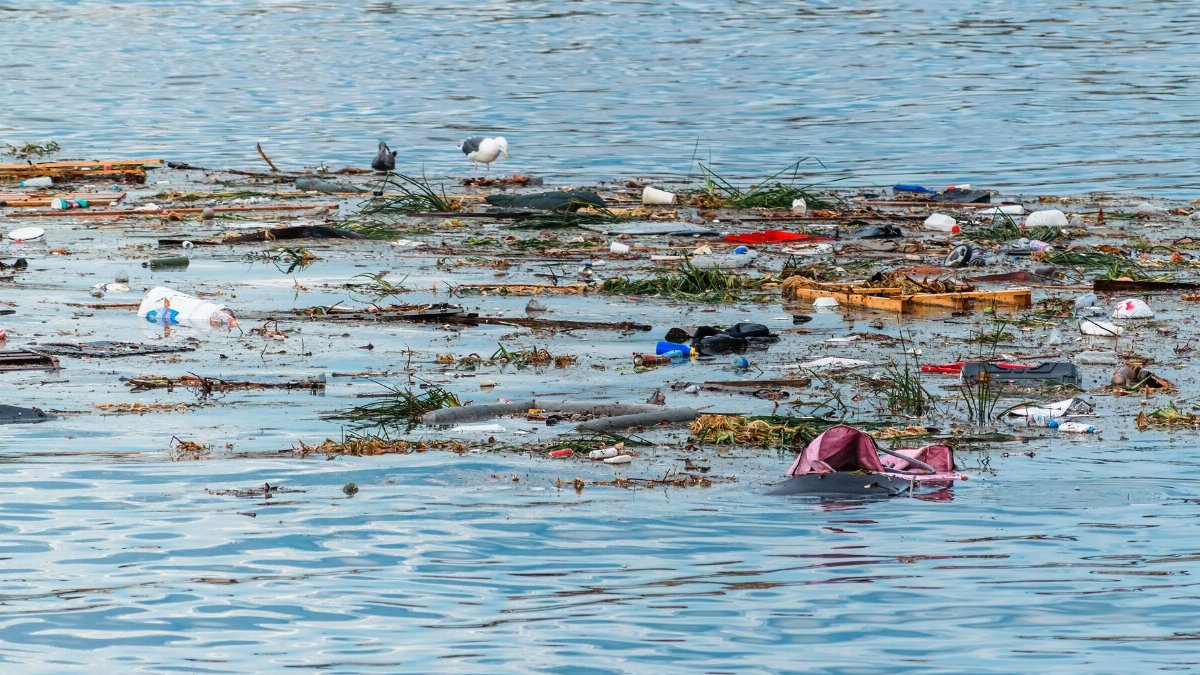
On a gray autumn morning the Delaware looks ordinary, a wide working river carrying barges, gulls, and the quiet assumptions of a city that treats its water as a given. Laboratory results now complicate that picture. Sampling across Pennsylvania and New Jersey has found PFAS forever chemicals Philly rivers share with scores of other waterways, a class of synthetic compounds that do not readily break down and that public reporting has placed in more than 90 percent of tested streams in the two states. The finding is not a single spill. It is a portrait of how modern chemistry lingers in the places people fish, boat, and, after treatment, drink.
What sampling across two states is showing
Public water testing has moved these compounds from a specialist worry into a regional fact. Reports tied to Pennsylvania and New Jersey sampling describe detections in the great majority of tested waterways, a list that includes the Delaware and, by the geography of the watershed, waters that shape daily life in Philadelphia. That is the context in which PFAS forever chemicals Philly rivers now belong in the same sentence: not as a distant industrial story, but as a measurement taken in streams people already know by name.
When scientists say detected, they do not always mean dangerous at the tap. Concentration, treatment, and which compound is present all matter. Still, a detection rate that high tells a plain story about spread. These substances have left factories, airports, military sites, landfills, and household products and entered the moving system of creeks and rivers. Dilution is real. Disappearance is not.
Why the chemistry refuses to leave

PFAS refers to per and polyfluoroalkyl substances, a large family of manufactured compounds built around chains of carbon and fluorine. That bond is among the strongest in organic chemistry. It makes coatings resist heat, oil, and water. It also makes many of these molecules stubborn in soil, sediment, and living tissue.
The popular name forever chemicals is blunt, and it is useful. Unlike many pollutants that sunlight or microbes eventually dismantle, a number of PFAS persist for years. Some travel with ground water. Some bind to particles and settle. Some pass through conventional filters designed for bacteria and older industrial waste, not for molecules measured in parts per trillion. The practical result is a pollutant that can outlast the product that carried it, the company that made it, and the permit that once allowed a discharge.
A working river that is also a water source

Philadelphia drinks from the Delaware and the Schuylkill after substantial treatment. That fact should calm panic and sharpen attention at the same time. River water is not tap water. Utilities add barriers a kayaker never sees. Even so, the river is the raw material. What accumulates upstream becomes the problem the plant must solve, at a cost paid by ratepayers.
I have stood on the bank on ordinary weekdays and watched the surface look clean enough for postcards. Appearance is a poor chemist. PFAS forever chemicals Philly rivers carry do not color the water or announce themselves with odor. Anglers, rowing clubs, and families on the trails meet a risk that is mostly invisible, which is why laboratory programs matter more than a glance from a bridge.
What health agencies actually say

Health agencies do not treat every PFAS compound as identical, and readers should resist that shortcut. The Environmental Protection Agency has set national drinking water standards for several of the best studied compounds and keeps a broad public guide to the class. The Agency for Toxic Substances and Disease Registry summarizes associations researchers have examined, including effects on immune response, cholesterol, thyroid function, and certain cancers. The strength of evidence varies by chemical and by study design.
Association is not a personal diagnosis. A detection in a river does not assign an illness to a neighborhood. It does justify reducing exposure where practical, especially through drinking water, and continuing research on mixtures, because people encounter more than one compound at a time. Pregnant people, infants, and those who eat a great deal of local fish are often discussed as groups for whom lower exposure is particularly sensible. State fish advisories remain the right guide for what to keep and what to release. Readers who want the primary documents can start with the EPA PFAS overview and the ATSDR summary.
Rules on both sides of the river

Regulation has accelerated, unevenly. Federal drinking water limits now cover several PFAS, which forces many utilities to test and, where needed, to treat. States can move faster on cleanup, discharge permits, and site investigation. New Jersey built an early reputation for strict drinking water limits on specific compounds. Pennsylvania has expanded testing and begun to reckon with contaminated sites, including areas tied to fire fighting foam.
For residents, the split between river conditions and tap standards is the detail that prevents sloppy headlines. A river can fail a narrative of purity and still yield legal drinking water after carbon or other advanced treatment. The reverse can happen if a utility is still building that treatment. Asking which system, which compound, and which latest result is more useful than treating the entire watershed as a single verdict. In that sense, PFAS forever chemicals Philly rivers debates are really debates about measurement, money, and time.
The price of taking them out

Removing PFAS is possible and expensive. Granular activated carbon, ion exchange resins, and high pressure membranes can reduce concentrations. Each method creates its own leftover problem: spent carbon, concentrated brine, or filters that must be handled so the chemicals are not simply moved to another town. Destruction technologies, including very high heat under controlled conditions, are advancing, but they are not yet a cheap switch a small utility can flip.
Philadelphia and neighboring systems face the same arithmetic as towns across the country. Capital projects run for years. Rate cases follow. Households with the least room in a budget feel the increase first, even though they did not design the molecules. That inequality is part of the environmental story, not a side note. A cleaner river that only wealthy districts can afford to finish treating is an incomplete public good.
How the compounds get into the water

Sources are multiple, which is why a single villain narrative fails. Historically, PFAS appeared in non stick cookware, stain resistant fabrics, food packaging, and some cosmetics. Industrial users employed them where a surface that shed oil and water was the point of the product. Airports and military bases used foams that smother fuel fires, and those foams have left some of the highest ground water concentrations in the country.
Closer to a city, the pathways look mundane. Residual chemicals can leave homes through washing machines, enter waste water plants that were not built to destroy them, and reach rivers in effluent. Landfills can leak. Rain can carry dust from contaminated soil into storm water. The Schuylkill and Delaware gather those tributary stories and deliver them downstream. Mapping every pipe is slow work. It is also the work that eventually supports fairer cleanup, because the public should not pay alone if identifiable polluters can be tied to releases.
Practical steps that are not theater

People want a list, and an honest list is shorter than marketing suggests. If a utility has posted PFAS results, read them and compare them with federal limits rather than with a stranger’s summary online. A certified home filter can help for specific compounds if it is maintained. A pitcher with no relevant certification is a comfort object. Boiling does not remove PFAS and can concentrate them as water evaporates.
Incidental contact while rowing or wading is a different question from drinking untreated river water, which no one should do for reasons older than this chemistry. Fish consumption should follow state advisories. Reducing new PFAS in commerce, through purchasing and through law, matters more over a decade than any single kitchen ritual. The phrase PFAS forever chemicals Philly rivers is useful here as a reminder of place: the issue is local enough to justify a direct question to a utility, and large enough that private caution cannot replace public treatment.
Stewardship and a civic river

Environmental news sometimes lands in a spiritual conversation, and the fit is less strange than it first appears. Congregations along these banks already treat rivers as more than infrastructure. Baptismal imagery, harvest prayers, and simple picnic graces all assume water that can be received without fear. When that assumption weakens, the moral question is not abstract purity. It is whether a community will tell the truth about harm and then pay to reduce it.
Houses of worship can do small, concrete things: host utility briefings, help households read test reports, and resist panic that blames neighbors instead of chemistry and policy. They can also keep a longer frame that daily news sometimes drops, the sense that a river is a trust held for people not yet born. Reverence without measurement is sentiment. Measurement without a shared duty becomes a technical memo that nobody funds. A serious city needs both.
What to watch next

Watch three clocks. The first is utility construction: which plants install new treatment, and whether finished water stays under federal limits after the equipment is running, not merely after the announcement. The second is source control: whether permits, foam replacements, and product rules actually shrink what enters creeks. The third is science: which additional compounds earn clear health values, because the family is large and standards have so far named only a subset.
None of this requires dread as a daily posture. It requires the habit of looking up the latest numbers, asking who pays, and refusing both denial and fatalism. The Delaware will still look calm on a gray morning. The work is to make that calm a little more deserved, including for the PFAS forever chemicals Philly rivers conversation that will outlast any single newsletter.