
On most afternoons the corner does not look like a stage. Cars wait at the light. A shuttle turns toward the medical campus. Someone crosses with coffee and a phone. Then a man in costume lifts a flag and begins to dance, and the block changes temperature. Drivers tap a horn. A child waves from a back seat. In Rochester, Minnesota, that dancer is known as Second Street Joe.
A ritual that outlasted the novelty
Public joy is easy to dismiss when it first appears. A costume can read as a stunt. A flag can read as noise. What separates a passing gag from a civic habit is time. Joe Johnson has been out there since 2005, waving flags and dancing near the Ronald McDonald House, according to reporting in the Star Tribune. He is 59. The performance is not a weekend experiment that faded when the weather turned. It is a long practice, repeated often enough that strangers come to expect the color at the edge of their commute.
Repetition does a kind of work that a single appearance cannot. The first time, people stare. The tenth time, they nod. After years, the dancer becomes part of the mental map of the street, the way a familiar tree or a bus shelter does. That familiarity is not boredom. It is recognition. Rochester has had nearly two decades to decide whether this man belongs in the picture, and the picture has kept him.
The name on the street and the name on the birth record
Second Street Joe is the name the corner gave him. Joe Johnson is the name he carries into the rest of his life. The gap between those names matters. One is a role, built in public, visible to anyone who happens to pass. The other is a person with an age, a history, and reasons that no sidewalk can fully explain. Good community reporting holds both at once. It does not flatten a man into a mascot, and it does not pretend that the mascot name is meaningless. The street name is evidence that neighbors needed a way to point and say, that is him, the one who dances.
Nicknames earned in public are a kind of unofficial census. They mark who has stayed. Cities are full of people who pass through hospital districts once, under terrible private pressure, and never return. A figure who returns by choice, year after year, becomes a fixed point in a landscape otherwise defined by arrival and departure.
Why this corner, and not another
The setting is not incidental. The Ronald McDonald House exists because families travel for pediatric care and need a place to sleep that is not a hospital chair. The sidewalk outside such a house is a threshold. People there are often tired in a way that sleep does not fix. They are counting hours, waiting on news, trying to look steady for a child. A dancer on that threshold is not entertaining a festival crowd. He is interrupting a corridor of worry.
That interruption can be small and still count. A flag in the wind does not shorten a diagnosis. A costume does not pay a bill. What it can do is offer a few seconds in which the body remembers something other than bracing. For families who did not choose Rochester except as the place where help might be found, a local man who chose to stand there sends a simple signal: someone who lives here is paying attention to the fact that you are passing through.
Costume, flag, and a vocabulary without a speech
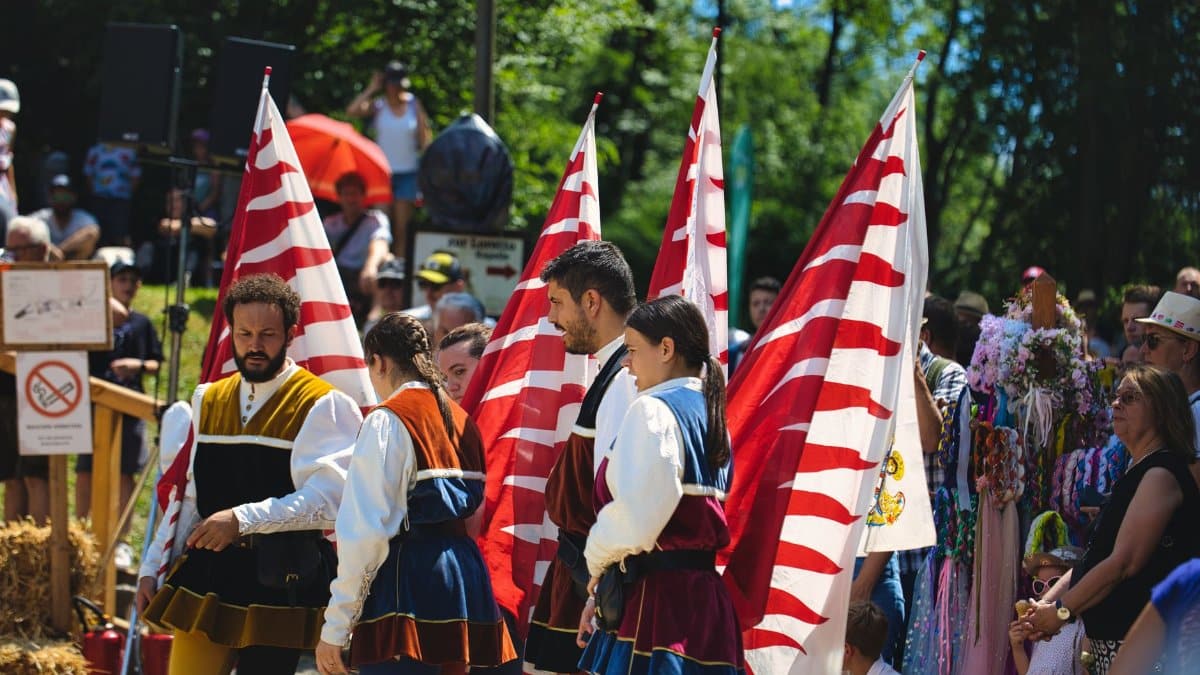
Johnson’s method is physical rather than verbal. He waves flags. He dances in costume. He does not, in the public account of his mission, hand out pamphlets or deliver a sermon. The message is the motion. Flags are old technology for saying look here, and also for saying this place has a spirit worth marking. Dance is older still. It recruits the watcher into a rhythm even if the watcher never leaves the car.
Costume does something particular in a medical district, where most clothing signals role: scrubs, badges, visitor stickers, winter coats pulled tight. A costume refuses that code. It says the person wearing it is not here as staff and not here as patient. He is here as a volunteer of attention. Some people will find that unserious. Seriousness, though, is not the only adult virtue. In a place organized around expertise and protocol, an unserious gesture can be the one thing that does not ask a family to perform competence.
What joy is doing when it is not a mood

The stated mission is to spread joy to passersby. Joy, in that sentence, is not a private feeling Johnson claims to install in strangers. It is closer to an offering. He cannot know who will receive it. A nurse at the end of a shift may barely register the flags. A grandparent may cry, not because the dance is profound, but because someone noticed the day. Journalism should be careful here. We do not have a meter for transferred joy. We have a durable pattern of showing up, and a stated intention that has not been swapped for a more fashionable cause.
Spiritual traditions have long treated joy as a discipline rather than a accident of good news. Not happiness as a reward, and not denial of pain, but a practice of orientation. Johnson’s corner does not announce a denomination. It does not need to. The structure resembles devotion anyway: a set place, a repeated gesture, a gift aimed outward, a refusal to wait until conditions are perfect. Readers who want a creed will not find one in a flag wave. Readers who want evidence that spirit can look like a body in motion on a weekday will find plenty.
The unglamorous part of staying visible
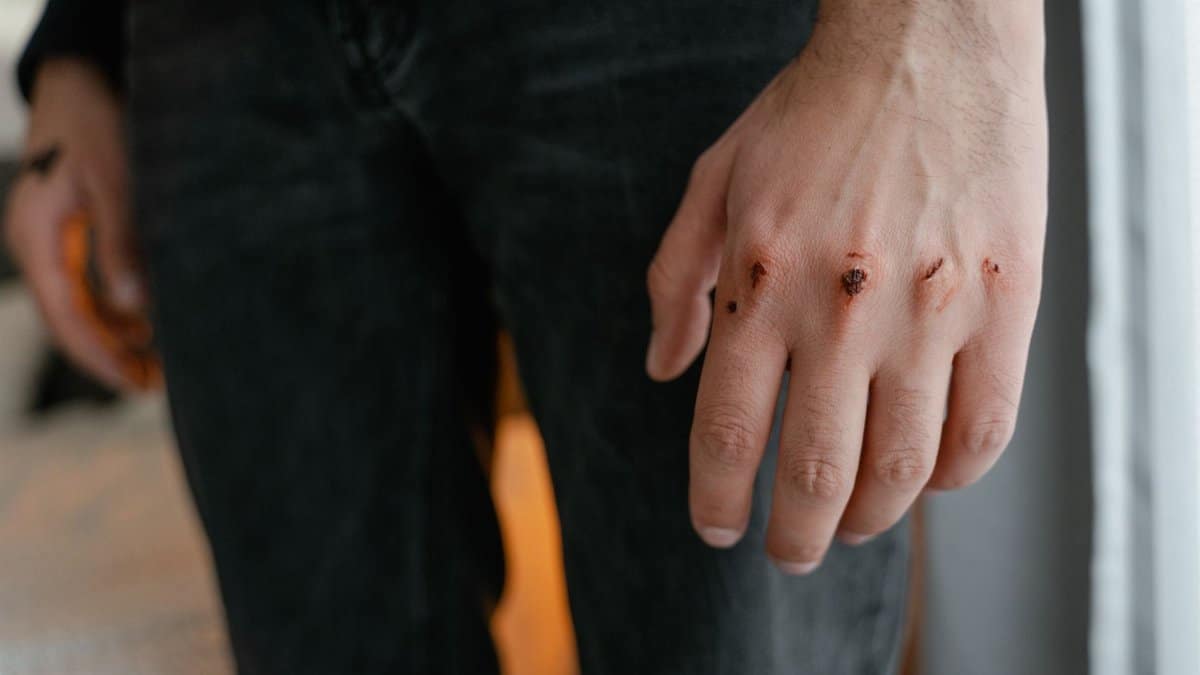
Anyone can dance once. Staying visible is a different assignment. Minnesota weather is not a backdrop. It is a participant. Wind takes flags seriously. Pavement in January is an argument against costume. A public figure without an institution behind him also absorbs the ordinary risks of the sidewalk: indifference, mockery, the odd hostile driver, the fatigue of being recognized only in one outfit. None of that cancels the good. It explains why the good is rare.
There is also the risk of being misunderstood. A man who performs cheer near suffering can be accused of papering over it. The fair reply is proportion. Johnson is not running the hospital. He is not asking families to smile for him. He is occupying a few yards of public space with color. If the gesture were mandatory, it would be cruel. Because it is optional, and because people can look away, it functions as an invitation rather than a demand.
How a city keeps a person like this
Communities do not only produce volunteers. They also decide whether volunteers are allowed to remain odd. A dancer with flags could have been nudged indoors, regulated into a scheduled appearance, or quietly discouraged as a distraction. The fact that Second Street Joe is still a street name, not a canceled experiment, suggests a local tolerance for unscheduled kindness. That tolerance is a civic resource, easy to overlook until it is gone.
Institutions can learn from the pattern without absorbing it. Houses that host families already do the heavy work of beds, meals, and quiet rooms. A neighboring ritual does not replace that work. It complements it by marking the outside of the building as something other than a drop off zone. Cities that want more of this should resist the urge to professionalize every good idea. Some practices survive because they belong to one person who will not delegate them.
A witness, not a solution

It is tempting to turn a beloved local figure into proof that individual spirit can fix what systems break. That temptation should be refused. Pediatric illness, travel costs, and the strain on families are structural facts. A dance does not audit a bill or shorten a wait for a specialist. Pretending otherwise flatters the audience and burdens the dancer. The honest claim is smaller and sturdier. In a district organized around crisis, one resident has spent years offering a visible sign that delight is still permitted in public.
I have stood on enough hospital sidewalks to know how loud ordinary traffic feels when you are waiting on news that is not ordinary. A stranger’s kindness in those minutes is not magic. It is company. Company from someone who owes you nothing is one of the older definitions of grace, whether or not anyone on the corner uses that word.
What the rest of the block is asked to do

The story asks something modest of people who will never wear the costume. Notice the person who has been doing the same generous thing for a long time, and do not wait for a fundraiser to treat that consistency as real. If you drive that stretch of Rochester, the response can be as small as a wave returned. If you tell the story, tell it with the name and the years attached, so it does not dissolve into a generic tale about random acts. Specificity is a form of respect.
There is also a private question, and it does not require a flag. Where do you already pass people who are carrying more than they show, and what repeatable gesture is actually yours to offer? Most of us will not dance on Second Street. Most of us can still choose a corner, a shift, a neighbor, and decline to treat kindness as a mood we will get to later.
The measure of a long welcome

Joe Johnson’s record, as described in published accounts of his dancing outside the Ronald McDonald House, is not a list of trophies. It is a duration. Since 2005 he has treated a sidewalk as a place where joy can be attempted in costume and in motion, aimed at whoever happens to be going by. That is a thin description of a life, and it should stay thin where the reporting is thin. What it is thick enough to support is this: a city can be changed at the scale of a corner, and a corner can be changed by one person who refuses to treat joy as a private luxury.
Readers far from Rochester can still use the example without copying the outfit. Look for the person whose kindness has become local infrastructure. Thank them while they are still out there. And if you are the one with a strange, durable gift for lifting a hard day by a few degrees, do not wait for permission from a committee. The street has been naming its own saints for a long time. Sometimes the name is as plain as Second Street Joe.