
For households stretching a paycheck across rent, groceries, and a car payment, the price of money has become as tangible as the price of milk. This week the central bank is widely expected to leave its benchmark unchanged, a pause that would signal caution rather than victory. Federal Reserve rates sit at levels that would have seemed extraordinary only a few years ago, and officials appear reluctant to push them higher while inflation, though cooler than its peak, remains uncomfortably elevated. The choice lands in a political season when voters are already judging Washington by what they pay at the pump and the checkout line. A hold would not end the debate. It would simply move it from the question of whether to tighten again to the harder question of how long restraint should last.
A pause is not a declaration of victory

Officials have spent the past two years teaching the public a blunt lesson. Inflation that gets entrenched is harder to dislodge than inflation met early with higher borrowing costs. That lesson still shapes the room. A decision to skip another increase does not erase it. It reflects a judgment that the existing setting may already be restrictive enough to keep doing the work, provided demand does not surge again and provided price pressures do not broaden.
The distinction matters. A hike is a discrete act, easy to headline and easy to argue about on television. A hold is quieter. It asks households and investors to live with costs that already bite, and to accept that relief, if it comes, will arrive slowly. Several regional bank presidents have described policy as a place where further moves should depend on incoming evidence rather than on a preset march upward. That is less dramatic than a surprise increase. It is also harder to reverse if the evidence later disappoints.
Inflation has cooled unevenly
The improvement from the worst months of the surge is real. Goods prices, scrambled by snarled supply lines and a burst of pandemic spending, have behaved better. Services have not offered the same comfort. Housing costs move through the official measures with a lag, so rent relief that tenants already notice can take time to appear in the indexes that guide policy. Medical care, insurance, and restaurant meals still remind families that the old pace of prices has not fully returned.
That unevenness is why a pause can coexist with anxiety. Officials can acknowledge progress and still refuse to declare the job finished. Wage growth has eased from its hottest readings, yet in some industries pay is still rising faster than productivity, a mix that can keep service prices firm. Energy can jolt the monthly numbers without changing the underlying trend, which is why one warm report rarely settles an argument and one cool report rarely ends it. The committee is being asked to steer by a dashboard whose dials do not all point the same way.
The labor market still gives them room

A weak job market would make the case for easier money almost by itself. That is not the picture most analysts describe. Hiring has slowed from the frantic pace of the reopening, and vacancies have come down, but unemployment remains low by historical standards. People who want work can still find it in much of the country. Layoffs, outside a few visible industries, have not spread into a broad retreat.
That strength pulls in two directions. It supports spending, which can keep inflation aloft. It also means the central bank does not have to rush toward lower rates to rescue employment. The painful memory of the last inflation fight is that waiting too long can force a harsher correction later. The opposing memory, fresher for some voters, is that tight money can cool a labor market that finally began to lift wages for workers who spent years falling behind. Holding steady is an attempt to respect both memories at once, without pretending the tension between them has been resolved.
Borrowers are still living with earlier increases
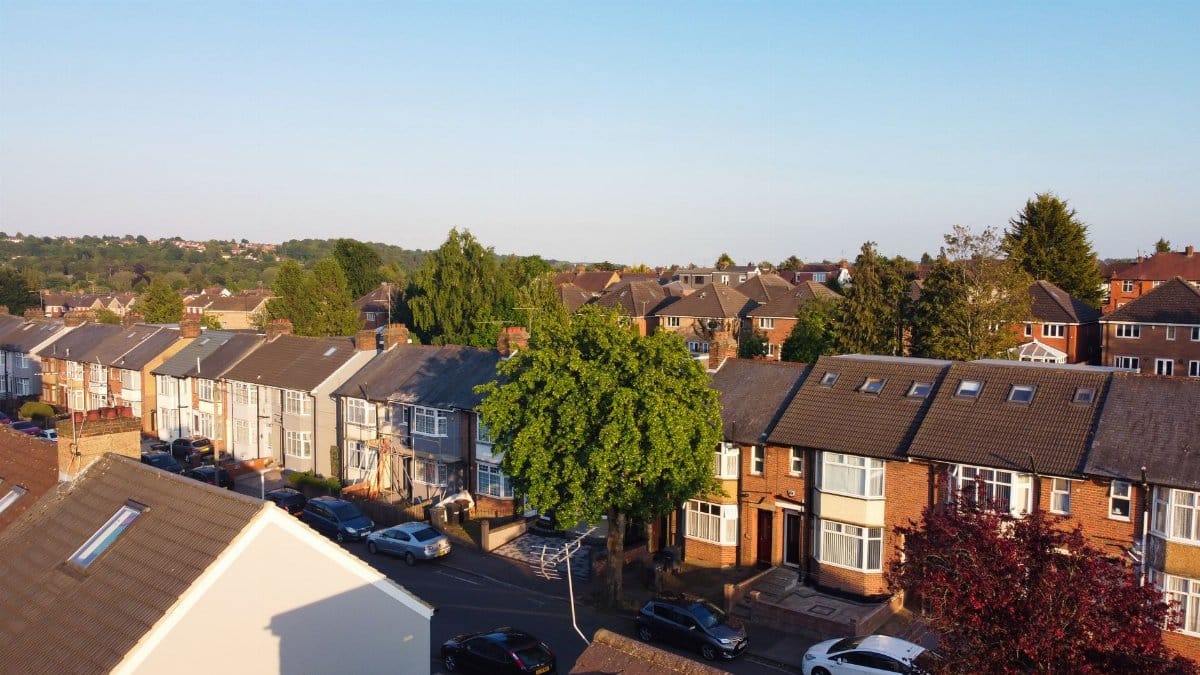
Whatever happens this week, the hikes already delivered are not theoretical. Mortgage costs have made a first home feel out of reach for many buyers who watched prices climb and then watched financing costs climb on top of them. Small firms renewing a credit line discover that the cheap money of the previous decade is gone. Credit card balances, for households that carried them through the inflation spike, now compound at levels that turn a grocery shortfall into a longer obligation.
Federal Reserve rates do not pass through to every loan at the same speed. Some borrowers locked in low fixed costs years ago and feel the squeeze mainly as consumers, not as debtors. Others, including many younger renters hoping to buy, feel it immediately. Savers, by contrast, finally earn something on cash that sat idle. That split, between those who benefit from higher yields and those who pay higher borrowing costs, is one reason the politics of a pause are messier than a simple cheer for cheaper money.
Politics hover nearby without taking a seat

The central bank’s formal independence is a point of pride and a point of friction. Chairs from both parties have argued that setting borrowing costs to please an election calendar is a reliable way to get inflation wrong. Voters do not experience policy as a seminar. They experience it as a monthly payment and a grocery receipt, and they render a verdict at the ballot box with little patience for lags in the data.
A skip this week would not be a favor prepared for one party. Higher borrowing costs have been a burden under the current administration, and they were rising before that. Inflation itself became a defining complaint well before this meeting. Still, timing is never neutral in a midterm year. Critics will say officials blinked. Defenders will say blinking would have been another hike untethered from the evidence. The more honest reading is that the committee is trying to look past the calendar while knowing the calendar is watching.
Markets have already placed a bet

Traders hate surprise more than they hate high rates. In the days before a meeting, futures markets tend to converge on a probability, and this time that probability has pointed toward no change. If officials deliver the hold that investors expect, the immediate reaction may be modest. The sharper moves often come in the press conference, when a chair signals whether the next step is more likely to be another increase, a long plateau, or the start of cuts.
Federal Reserve rates are a forecast as much as a setting. When investors believe the peak is in, they mark down yields on longer bonds, and mortgage offers can ease even if the benchmark itself does not move. When they fear a renewed campaign of hikes, those offers tighten again. That is why a pause can feel like relief in one neighborhood of the bond market and like a warning in another. The words that follow the decision may matter more than the decision, because markets trade the path, not the snapshot.
The case for patience inside the committee

Patience is not passivity. The argument for waiting runs through the lags that economists describe and households feel. A rate increase does not land in a grocery aisle the next morning. It works through housing, through business investment, through the willingness of banks to extend credit, and through the slow repricing of contracts. Officials who believe those channels are still transmitting earlier hikes can reasonably ask for more time before adding more restraint.
There is also a practical concern about overdoing it. If demand is already cooling and if supply lines are healthier, an extra increase could slow hiring more than it slows prices. The committee has shown it can move quickly when it must. Choosing not to move is a way of preserving that option. Patience, in this telling, is a reserve of credibility rather than a loss of it. The test is whether officials use the time to watch the economy, or merely to postpone a choice they already know they should make.
The danger in waiting too long

The opposing case is not obscure. If inflation settles above the level officials have promised to restore, a pause can look like drift. Expectations are the quiet variable in every inflation fight. When businesses assume they can keep raising prices, and when workers assume those prices justify higher pay demands, the pattern does not need a crisis to sustain itself. It needs only a shared belief that the old norm is gone.
A skip also carries a communication risk. Households may hear a hold as an all clear, spend more freely, and push demand back up. Investors may hear it as the start of a cutting cycle and ease financial conditions before officials are ready. Either reaction would undermine the pause itself. That is why careful language matters, and why a decision to stand still has to be explained as conditional. The condition is simple enough to say and hard to guarantee: if the price data worsen, the committee can tighten again.
The rest of the world feels the setting

American borrowing costs do not stop at the border. When yields here are high, capital looks homeward, and other currencies can weaken against the dollar. That raises the local cost of imported fuel and food in countries that did nothing to set United States policy. Emerging markets with dollar debts feel the strain directly. Allies running their own inflation fights must decide whether to match the stance or accept a cheaper currency.
Federal Reserve rates therefore operate as a kind of global weather. A pause in Washington does not calm every capital, but it can reduce the fear of a further dollar surge. Central banks in Europe and elsewhere have their own inflation stories, some driven by energy, some by wages, some by housing. They watch this meeting because a surprise hike, or a surprise hint of cuts, would reorder their choices. In that sense the decision is domestic in law and international in effect.
What a hold would and would not change
A steady benchmark would not rewind grocery prices to where they stood before the surge. It would not make a mortgage from three years ago available again. It would tell borrowers that the aggressive phase of tightening is at least interrupted, and it would tell savers that yields are not about to collapse overnight. For the committee, it would buy time to read another round of employment and price reports without adding a new shock.
Federal Reserve rates will remain the hinge on which a great deal of ordinary life still turns: the bid on a house, the terms of a small business loan, the return on a retirement cash account, the cost of carrying a credit card through a tight month. The likely skip is a judgment that the hinge is already set high enough. Whether that judgment holds will depend less on the rhetoric of this week than on the numbers that arrive after it, and on whether officials are willing to admit a mistake in either direction.