

On a warm evening in Salisbury, a county hearing room filled with residents who wanted one figure written in plain ink. How much do local services spend in connection with immigration, and who pays? Clerks, school leaders, and hospital administrators answered in nearly the same words. They do not collect the status information that would let them build that figure. The debate over Eastern Shore immigration has grown loud in church basements and budget workshops, yet the ledgers still have no matching line. Without a question on the form, fiscal impact records do not exist.
A number the budget books cannot show

The Eastern Shore of Maryland is a string of small cities, farming towns, and waterfront counties stretched between the Chesapeake Bay and the Atlantic. Public budgets there are already tight. Property taxes, income taxes, and state aid pay for classrooms, clinics, roads, courts, and emergency response. When residents ask what share of those bills is tied to immigration, finance officers say the books were never designed to answer.
Most local agencies serve people as residents of a place, as patients in distress, or as children entitled to a public education. They record addresses, ages, medical needs, and program eligibility under rules written for those purposes. Immigration status is often absent from the file. A missing field cannot be totaled at the end of the fiscal year. That is not a minor clerical gap. It is the reason a clean countywide cost estimate has not appeared, even after years of public pressure.
Auditors can still describe spending in broad categories. They can say what a school district spent on English language instruction, what a hospital wrote off as uncompensated care, or what a sheriff spent on jail beds. They cannot say, with confidence, how much of each category is attributable to immigration status. Mixing those ideas is how rumors become spreadsheets that do not survive a second look.
Why status questions stay off the forms

Local officials describe a practical and legal caution, not a secret policy of silence. Public schools enroll children under longstanding education rules that do not turn on immigration papers. Emergency rooms treat patients first. Many health programs ask about income, household size, and insurance, not about how a person entered the country. Police reports focus on the incident, the victim, and the suspect, not on a civil immigration file.
Asking more would change the nature of the service. A clerk who demands papers at a clinic window may deter people from care that public health officers want them to receive, including vaccines and treatment for contagious illness. A school registrar who treats enrollment like a status check may conflict with state and federal education practice. County attorneys, speaking in general terms at public meetings, have warned boards that new questions can create new legal risk without producing reliable fiscal data.
There is also a data quality problem. Status is not a single yes or no that stays fixed. People move between temporary protections, pending cases, work authorization, and no paperwork at all. A snapshot on a Tuesday intake form may be wrong by Friday. Finance staff say they will not build a cost model on a field they cannot verify and are not trained to judge.
Schools carry the most visible load

If any local institution feels immigration in daily life, it is the public school. Classrooms on the Shore have long included children from poultry plant families, seafood crews, farm labor households, and newer arrivals in rental housing near Route 50 and Route 13. Teachers notice language needs, interrupted schooling, and families who change addresses with the work season. Those needs show up as staffing requests, translation contracts, and extra counseling time.
District budget writers can count students who qualify for language support. They can count children who qualify for free or reduced meals. They cannot lawfully or practically sort those counts into an immigration ledger. A child born in a Salisbury hospital to parents who arrived years earlier may need the same language help as a child who crossed a border last spring. The cost is real. The label residents want is not in the student information system.
Board members sometimes hear the opposite claim, that immigration has no budget effect at all. That claim also fails. More students mean more teachers, more bus routes, and more classroom space, whatever their parents papers say. The honest statement is narrower. Schools can describe growth and program cost. They cannot isolate Eastern Shore immigration as a separate bill.
Hospitals and clinics face the same blind spot

Rural hospitals on the Shore already operate with thin margins. Uncompensated care, Medicaid shortfalls, and staffing shortages are familiar lines in their reports. Immigration enters the conversation when uninsured patients appear in emergency departments or when community clinics see rising demand for prenatal care, diabetes treatment, and interpretation.
Hospital financial officers track insurance type, not immigration category. An uninsured patient may be a citizen between jobs, a seasonal worker, or a person without legal status. Charity care policies often follow income and residency rules. They do not produce a report titled immigration cost. Public health departments similarly track outbreaks, vaccinations, and maternal outcomes. Their mission is disease and prevention. A fiscal attribution study would require a data match they say they do not perform and, in many cases, are not allowed to perform.
That leaves advocates on every side free to invent a number. Some multiply a national estimate by a local population guess. Others assume every new uninsured visit is an immigration cost. Neither method is an audit. Both can mislead a county council that is trying to set a tax rate.
Sheriffs, courts, and the cost of not knowing
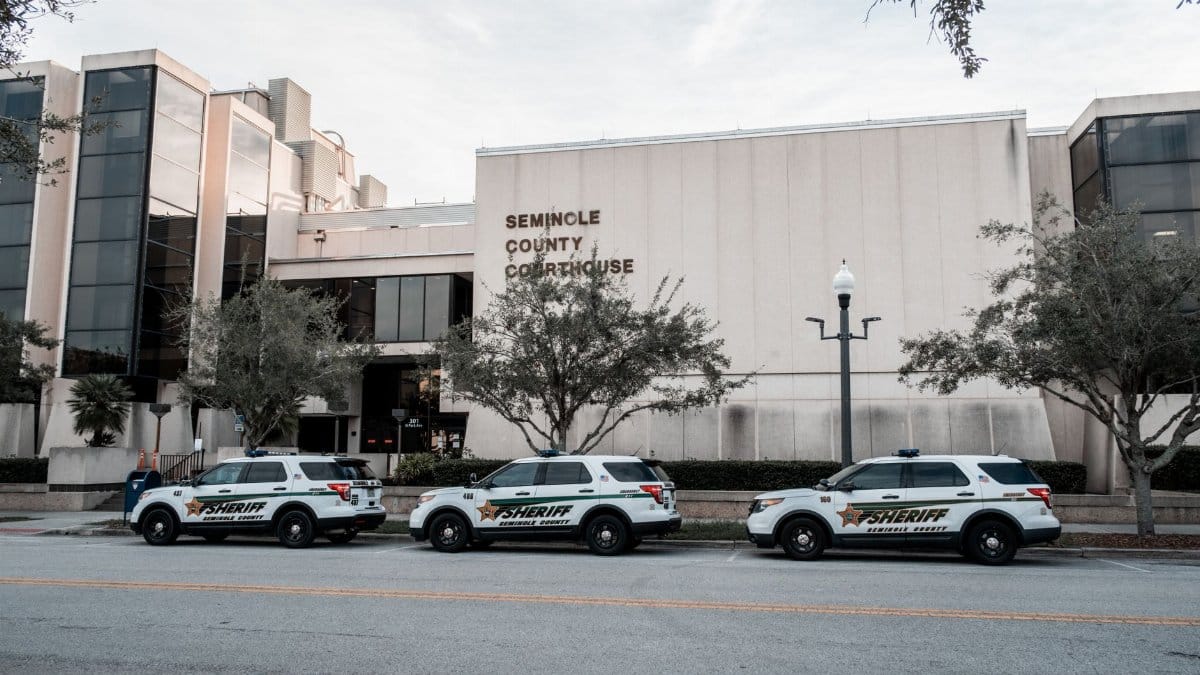
Law enforcement spending is easier to see and harder to interpret. Jail days have a daily rate. Court hearings have staff time. Transport to a detention facility has mileage and overtime. When federal immigration authorities place a detainer or request cooperation, some of those costs become visible in a booking log. Even then, local jails do not hold a complete account of civil immigration in the county. Most people never enter a cell.
Sheriffs on the Shore have differed in how closely they work with federal agents. Those policy choices affect overtime and community trust, and they are fair subjects for public debate. They still do not answer the larger question residents ask at budget time. The cost of policing, prosecution, and emergency response for an entire population cannot be rebuilt from jail records alone. Traffic crashes, domestic calls, and theft reports do not carry an immigration code.
Court clerks add another limit. They can report interpreter hours in Spanish, Haitian Creole, or other languages. Language need is not status. A citizen, a permanent resident, and a person without papers may all need the same interpreter. Counting those hours as an immigration cost would be a political choice, not an accounting identity.
Churches and pantries fill gaps without ledgers

Much of the practical support never touches a county balance sheet. Congregations in Easton, Cambridge, Crisfield, and Pocomoke City run food pantries, rent assistance funds, and English classes in fellowship halls. Volunteers drive neighbors to prenatal appointments. Pastors sit with families after a workplace injury or an arrest. These efforts belong to the moral life of the Shore as much as to its social safety net.
Church treasurers can often say what the pantry spent on rice, oil, and diapers. They rarely ask for papers at the door, and many say they will not. Their books therefore share the same blind spot as the health department. A ministry can witness need. It cannot certify a fiscal impact for the county council. When public agencies point to this private help, they are describing a real transfer of burden onto donations and volunteer hours. They are not producing the missing government total.
That transfer matters in a spiritual sense as well as a budgetary one. Congregations argue about welcome, law, and fairness in the same week they argue about the boiler fund. The absence of official numbers does not calm those arguments. It leaves them to scripture, rumor, and personal encounter.
State rules and local discretion

Maryland sets much of the frame. Education access, some health coverage rules, and limits on what local officers may do in civil immigration matters come from Annapolis and from federal law. Counties still decide school staffing, hospital subsidies, police overtime, and how aggressively to chase grant dollars. The result is a patchwork. One county may fund more community health outreach. Another may put new money into jail operations or language access in the courts.
Grant programs sometimes require demographic reports. Those reports can include race, language, and income. They seldom require a verified immigration status for every client, and when they do, the data stay inside the grant file. They are not automatically merged with the general fund. A diligent reporter can collect pieces. A budget director still cannot publish a single defensible total and stand behind it under oath.
Residents sometimes hear that other states have produced such totals. Those studies, when they exist, usually rely on estimates, surveys, and assumptions about tax payments and service use. They are models, not cashier receipts. Applying a model built for a large metro area to Somerset or Kent County would repeat the error local officials say they are trying to avoid.
What residents hear at public hearings

Public comment on the Shore has grown sharper. Some speakers describe crowded rentals, wage pressure in packing plants, and classroom strain. Others describe neighbors who pay sales taxes, fill hard jobs, and keep main street shops open in towns that have been losing young people for decades. Both portraits can be true in the same zip code. Neither portrait is a cost study.
Officials who say the records do not exist are often heard as evasive. In a small county, evasion and ignorance can sound alike. A clearer explanation helps. The agency is not claiming that immigration is free. It is claiming that its data system cannot see the category the question assumes. That distinction rarely fits on a handmade sign, but it is the heart of the administrative answer.
Local journalism has tried to narrow the gap with interviews and public records requests. Requests for status based cost breakdowns come back with a polite refusal or a stack of budgets that do not contain the field. The story then becomes the absence itself. Eastern Shore immigration remains a political fact and a human fact. It is not yet a line item.
The politics of an absent spreadsheet

An empty cell invites politics to do the arithmetic. Campaign mailers fill the blank with large round numbers. Advocacy groups fill it with tax contribution estimates that are just as hard to audit at county scale. Both moves respond to a real public hunger for proportion. People want to know whether the change they see on their street is a crisis, a manageable strain, or a renewal of the workforce.
Proportion requires a numerator and a denominator. Service costs are only half. Sales taxes, property taxes paid through rent, payroll taxes, and business activity sit on the other side. Local governments also struggle to tally those contributions by immigration status, for the same reason. Employers report wages. They do not file a county schedule of workers by legal category. A debate that counts costs without revenues, or revenues without costs, will stay lopsided no matter how often it is repeated at the podium.
There is a further political cost to the missing number. Trust erodes when residents believe someone is hiding the books. Trust also erodes when leaders pretend a rough guess is an audit. The more responsible posture is slower and less satisfying. Describe what is counted. Name what is not. Refuse to launder an estimate into a fact.
What a better accounting would require

A serious accounting would start with humility about method. It would define the population with care, separate citizens, permanent residents, temporary workers, and people without authorization, and admit that local offices may not be the right place to verify those categories. It would match service use to tax contributions using data that state and federal agencies already hold, under strict privacy rules, rather than asking a school nurse to become an immigration officer.
It would also separate direct costs from arguments about wages, housing prices, and culture. Those arguments matter. They are not the same as a jail invoice or a special education bill. Lump them together and the spreadsheet becomes a speech.
Even a careful study would arrive late and age quickly. Populations move. Policies change. A poultry plant expands or a plant closes. A model published in one summer can mislead the next budget cycle if it is treated as permanent truth. Counties that want repeating answers would need a repeating method, with public documentation of every assumption. Until that exists, officials are right to say they cannot tally the cost with the records they hold.
Living with uncertainty on the Shore

Uncertainty is not an excuse for indifference. School boards can still fund language teachers when enrollment requires it. Hospitals can still report uncompensated care without pretending to know each patients papers. Sheriffs can still explain cooperation policies in open session. Congregations can still decide whom they will feed. Those choices are visible, debatable, and local.
What remains invisible is the single sum that would settle the argument. It is invisible because the Shore, like much of the country, built its service systems to deliver aid and enforce criminal law, not to run a continuous immigration census. Residents can demand better research from the state. They can demand plain speech from county managers. They should not expect a clerk in a small courthouse to invent a total the forms were never written to produce.
The argument over Eastern Shore immigration will continue in hearing rooms, parish halls, and packing plant parking lots. The fairest reporting starts from the administrative fact that local agencies do not ask, and therefore do not know, in the precise way budget season demands. Until a lawful and competent count exists, the cost is a question, not a number, and anyone who offers a number should show the method before asking the public to believe it.