
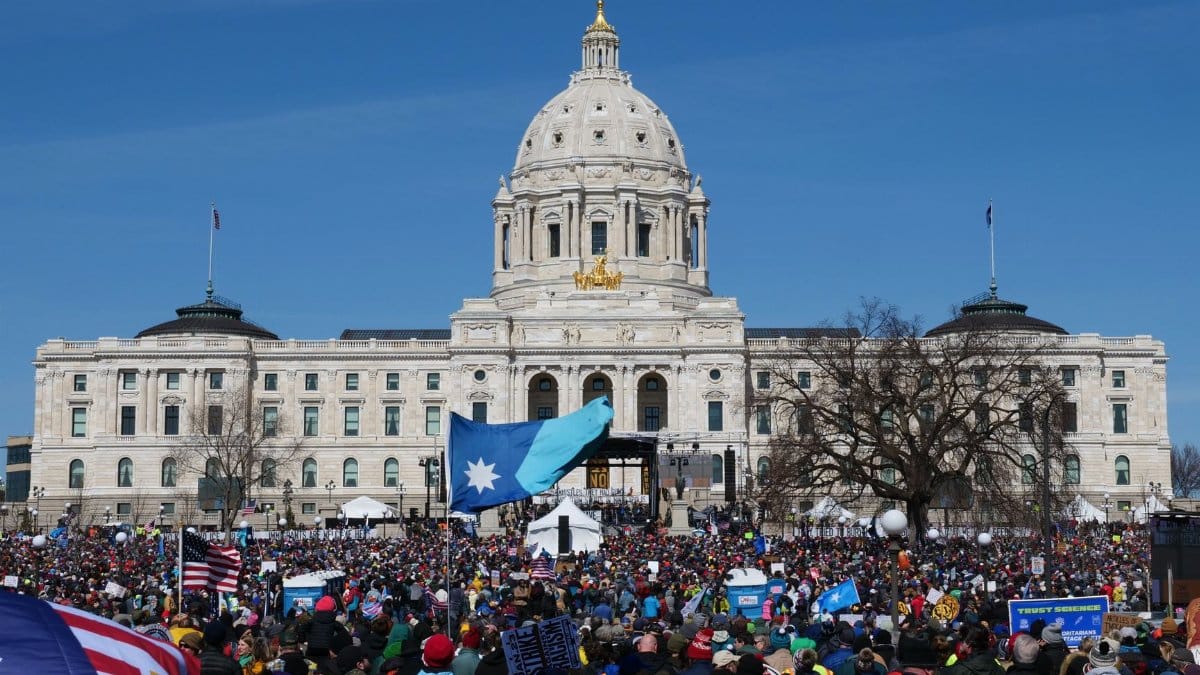
On a weeknight when most of the city had already turned toward dinner and homework, a notice about federal scrutiny began to move through inboxes in St. Paul. Parents forwarded it. Teachers read it twice. The St. Paul schools investigation, opened by the U.S. Department of Education, asks whether district rules on gender identity collide with federal student privacy law and with the rights of parents. It is a bureaucratic sentence with a human weight. Somewhere in those schools, a teenager is deciding which name to use in a classroom. Somewhere else, a mother is deciding whether the institution she trusted has been keeping a secret from her.
A narrow legal question inside a wide argument

The department has framed the review as a question of law rather than a referendum on identity. News accounts of the announcement describe a probe into whether gender inclusion policies violate the Family Educational Rights and Privacy Act, known as FERPA, and whether those policies sideline parents. That brief is narrower than the argument already running through comment threads and church basements. A compliance review does not ask a city to settle theology or adolescent medicine. It asks whether records were created, who was allowed to see them, and whether employees followed guidance that kept information from the adults the statute often treats as the people entitled to it.
St. Paul, like many urban districts, has spent years writing rules meant to make transgender students safer in hallways, locker rooms, and on class rosters. Those rules now sit under a federal lamp. That is why the St. Paul schools investigation matters beyond a single memo. A finding, or even a forced rewrite, would travel. Other boards are watching to see whether a promise of inclusion can survive contact with a privacy statute written long before this fight had its present vocabulary.
How a support plan becomes a file

Schools sometimes build a quiet plan around a student who asks to be addressed by a different name or pronoun. The plan may live in a counselor’s notes, a shared staff message, or a form that never reaches the household. FERPA generally gives parents of minor students the right to inspect education records. The hard question is which documents count. A casual nickname in a teacher’s memory is not a file. A written directive that staff must conceal a social transition from home looks much more like one.
Lawyers will argue over definitions. Families will argue over trust. The St. Paul schools investigation is, at bottom, a dispute about whether care for a student can be organized in writing without becoming a record a parent is entitled to read. If the answer is yes, districts will need a practice that is both humane and visible. If the answer is no, a great deal of recent guidance will have to be rewritten in plain sight.
The fear that disclosure can wound

Advocates for transgender students do not describe silence as a hobby. They describe it as protection. Some adolescents say home is the place where a new name would be punished, mocked, or treated as a crisis to be crushed. Counselors hear those accounts and feel a duty that runs toward the person in the chair, not only toward the adults who pay the taxes. A rule that requires immediate notice to parents can, in that telling, turn the school into an informant.
Defenders of the district will say the federal probe mistakes shelter for subversion. They will ask investigators to weigh the risk of rejection, instability, and despair. They will also note that a school is sometimes the first adult institution a student trusts. That claim deserves a hearing. It does not, by itself, answer the statutory question. Compassion is not a waiver, and neither is fear. Both have to be stated without being used as a trump card.
The fear that silence can wound
Parents on the other side hear a different injury. They say a public school may not help a child live a divided life and then call that care. Appointments, worship, sleep, and the words used at the dinner table all sit downstream of what a parent knows. A hidden name at school can collide with a legal name on a prescription, a sports form, or a call from the nurse. The practical mess is part of the moral claim.
Religious parents, and plenty of parents who are not religious, argue that forming a child is not a task the state may quietly reassign. In a city of churches, mosques, and temples, that claim is not abstract. It is about who answers for a minor when the minor is still, in law and in most homes, somebody’s child. To treat that conviction as mere panic is to misunderstand why the letters home feel, to these families, like a breach of an old covenant between school and household.
Staff who have to say the words

Teachers are the ones who must remember which name belongs in which room. I have sat in enough of these meetings to recognize the look on their faces. They are not, in the main, activists or villains. They fear a complaint if they slip. They fear a parent’s rage if they comply. They fear being asked to speak in a way that feels, to them, like a lie told in a professional voice.
A district can publish a polished policy and still leave a novice teacher alone with a hallway question before the first bell. The St. Paul schools investigation will read memos and training slides. It should also notice the human bottleneck. A rule is only as stable as the person who has to apply it between classes, without a lawyer in the room. If the guidance cannot be followed by an ordinary adult of ordinary courage, it is not yet a policy. It is a wish.
What Washington can actually compel

The Office for Civil Rights does not run the schools. It requests documents, interviews staff, and looks for a pattern. If it finds a violation, the ordinary path is a resolution agreement: change the policy, train the employees, report back. The dramatic threat, a cutoff of federal money, is real on paper and rare in practice. That gap matters. A district can feel besieged by a headline and still have months of negotiation ahead.
Families can feel vindicated by an opening letter and still wait a long time for a finding narrower than they hoped. Readers should treat the start of a probe as a start, not as a verdict. Examination is not the same word as condemnation. The agency can clarify the floor. It cannot supply the trust a city has to rebuild on its own once the letters stop arriving.
A city that already argues in public

St. Paul is not a blank slate for this fight. The district has presented inclusion as part of its identity, a promise that a student can walk into a building and be addressed as the person they say they are. That promise won support from many educators and from students who felt unseen. It also produced a quieter opposition that did not always reach the microphone: immigrant parents wary of American school fashions, parishioners who hear a different account of the person on Sunday, and liberals who support transgender adults but hesitate when the subject is a child of thirteen.
The city knows how to hold a rally and how to write a sharp email. The coming months will test whether those skills can survive contact with a statute. Volume is not the same thing as persuasion. A school board that has treated dissent as bad manners will find a federal file less forgiving than a public comment period. A protest movement that treats every worried parent as an enemy will miss the families who might have been reachable with a plainer explanation.
Truth, care, and who a school is for

There is a spiritual question under the paperwork, and it is not owned by one party. Every serious tradition that talks about children talks about protection of the weak and about truthfulness. A school that humiliated a transgender student would fail the first test. A school that trained adults to deceive parents would fail the second. The difficulty is that people of good faith locate the weak party in different rooms.
Some see the vulnerable child as the one whose identity is denied at home. Others see the vulnerable child as the one whose uncertainty is being ratified by an institution before the family even knows. A feature cannot award that argument. It can refuse the lazy claim that only one side is acting from conscience. Care without truth becomes management. Truth without care becomes a weapon. A public school has to attempt both, in a building full of minors who did not write the policy and should not be made to carry the symbolism of a national quarrel.
What is still unknown
Several facts are still missing, and honest reporting should say so. Early accounts do not yet give the public a complete picture of every policy paragraph under review, or of how individual files were handled in real cases. Until investigators publish more, commentary that claims to know the outcome is performance. The useful questions are plainer. How broad are the document requests? Does the district revise its guidance while the review is open? Are students spoken about as symbols, or as minors with particular lives?
The St. Paul schools investigation will produce paper. The more important product is whether families and staff can still share a building when the paper is done. A city school is a daily practice of trust. Federal letters can police the edges of that practice. They cannot invent the trust if the adults have already spent it. The teenager choosing a name, and the mother reading a notice at the kitchen table, will still have to meet in the same hallway. Policy can make that meeting more honest. It cannot make it easy.